

I remember the first time I had new sod laid in my yard. I was staring at it every day, wondering, is it ready yet? Mowing too soon can ruin everything you paid for.
This article covers when to mow new sod for the first time, how to prepare, and what mistakes to skip.
I’ve spent years working with lawns. I’ll walk you through every step clearly. You’ll know exactly what to look for before starting your mower.
No guessing. No wasted effort. Just simple, proven steps.
How Long Should You Wait Before Mowing New Sod?

Getting the timing right is everything with new sod. Most experts recommend waiting 2 to 3 weeks after installation before the first mow, and some grass types need up to 4 weeks.
To check readiness, tug a corner of the sod gently. If it lifts easily, wait longer. Your grass should be 3 to 4 inches tall, feel firm underfoot, and look healthy and green.
Mowing too early pulls up shallow roots, stresses the grass, and slows growth. Patience at this stage saves you money and protects your lawn from disease and damage.
Understanding New Sod Growth and Root Establishment

Before you grab the mower, it helps to understand what is happening underground. New sod is not just sitting there. It is actively working to survive.
How New Sod Develops Roots After Installation
Right after installation, sod begins pushing roots into the soil. This process starts within the first few days.
By the end of week two, you should see meaningful root growth if watering has been consistent.
Root development happens fastest when soil temperature is warm and moisture is steady.
Why Root Attachment Matters Before Mowing
Roots anchor the sod in place. Without strong attachment, mower wheels and blade suction can lift or tear sections of turf.
Strong roots also mean the grass can handle the stress of being cut. Weak roots lead to brown patches and slow recovery after mowing.
How Watering Affects Sod Growth and Mowing Time
Overwatering makes soil soggy and soft. Soft soil cannot support mower weight without compressing or shifting.
Under-watering slows root growth and delays the time when sod is ready to mow.
The sweet spot is consistent moisture without standing water. Reduce watering slightly in the days leading up to your first mow so the soil firms up.
How to Prepare Before You Mow New Sod Grass

Good preparation makes the first mow safer and more effective. Do not skip these steps.
Reduce Watering Before the First Mow
Stop watering 2 to 3 days before your planned first mow. This allows the top layer of soil to dry and firm up.
Mowing on firm ground protects the roots and prevents soil compaction from mower wheels.
Check Soil Firmness and Grass Height
Walk slowly across the lawn. Your feet should not sink deeply into the soil. If the ground feels soft or wet, wait another day or two.
Grass height should be at least 3 inches. Ideally, wait until it reaches 3.5 to 4 inches so you can cut safely without going too short.
Choose the Right Mower for Newly Installed Sod
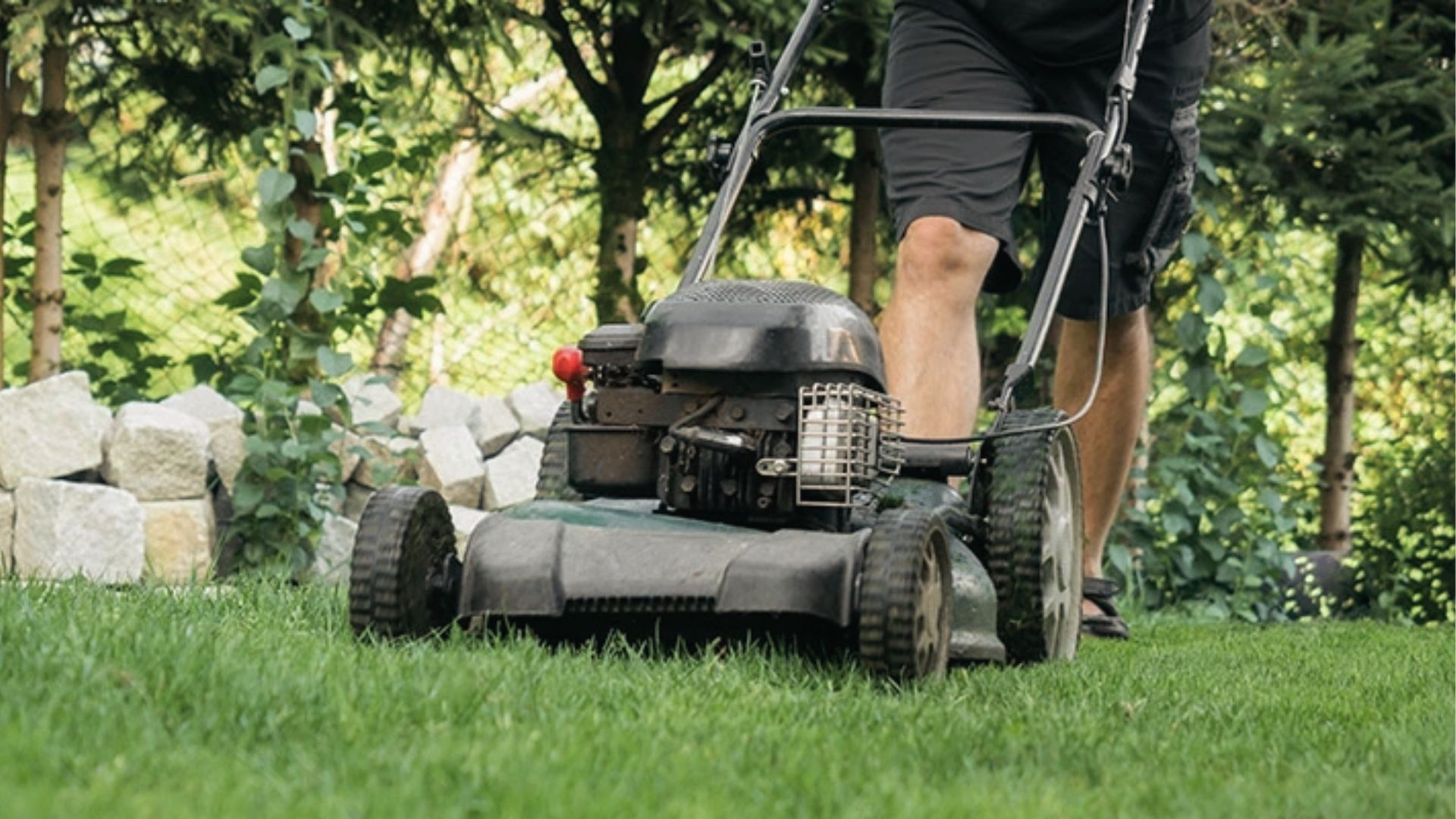
A lightweight push mower is the best choice for the first cut. It puts the least amount of pressure on fragile roots.
Avoid heavy riding mowers for the first few cuts. Their weight can compress soil and pull up sod sections that are not fully rooted.
Why Sharp Mower Blades Are Important
Dull blades tear grass instead of cutting it cleanly. Torn grass tips turn brown, heal slowly, and invite disease.
Sharpen your mower blades before the first cut. A clean cut heals faster and keeps your lawn looking neat right from the start.
Best Practices for Mowing New Sod for the First Time
You have waited, you have prepped. Now let’s talk about how to actually mow it right.
Set Mower Blades to the Highest Setting
Start with the highest blade setting your mower offers. This keeps cuts gentle and avoids scalping the lawn.
You can gradually lower the blade height over the next few mowing sessions as the sod becomes more established.
Follow the One-Third Mowing Rule
Never cut more than one-third of the grass blade in a single mow. Cutting too much at once shocks the plant and slows root development.
If your grass is 4 inches tall, cut no more than 1.3 inches off in one session.
Mow Slowly to Avoid Damaging the Sod
Go slow on your first pass. A slower pace gives the mower time to cut cleanly without dragging or pulling the turf.
Fast mowing on new sod is one of the most common reasons people end up with lifted or damaged sections.
Push Mower vs. Riding Mower for Fresh Sod
For the first two to three mows, always use a push mower. A riding mower is too heavy for newly installed sod and can leave ruts or pull up sections that are still rooting.
After about six weeks of healthy growth, a riding mower becomes a safer option.
Common Mistakes to Avoid When Mowing New Sod
Knowing what not to do is just as important as knowing what to do.
- Mowing too soon pulls up unrooted patches and sets your lawn back by weeks.
- Cutting too short strips protective leaf blades and exposes soil to heat and dryness. Always follow the one-third rule.
- Mowing wet sod clogs your mower, leaves uneven cuts, and compacts soil under mower pressure.
- Dull blades tear grass instead of cutting it cleanly, opening the door to fungal diseases and pests. Keep blades sharp all season.
Lawn Care After the First Sod Mowing

The first mow is a milestone, but the care does not stop there.
Watering Schedule After the First Cut
After mowing, return to a regular watering schedule. Water deeply but less frequently to encourage roots to grow downward in search of moisture.
Aim for about 1 inch of water per week, including rainfall.
When to Fertilize New Sod
Wait at least 4 to 6 weeks after installation before applying fertilizer. Early fertilization can burn shallow roots.
When you fertilize, use a starter formula designed for new lawns.
How Often to Mow New Sod Grass
After the first cut, mow every 7 to 10 days during the growing season. Adjust based on how fast your specific grass type grows.
Tips to Keep New Sod Healthy Long-Term
Good habits early lead to a strong, thick lawn for years.
- Stick to the right mowing height for your grass type. Bermuda does well at 1 to 2 inches, while Fescue prefers 3 to 4 inches.
- A thick lawn fights weeds on its own. Avoid over-watering and apply pre-emergent weed control after 8 weeks of establishment.
- Mow less in cooler months when growth slows, and adjust watering up in summer and down in fall.
- Feed and aerate regularly. Use the right fertilizer at the right time and aerate once a year to keep soil loose and healthy.
- Overseed thin spots in early fall to keep your lawn thick, green, and full throughout the year.
Conclusion
I know waiting is not easy, especially when you have a fresh lawn just sitting there. But trust me, giving your sod the time it needs is the best thing you can do.
I have seen lawns ruined by one impatient mowing session and I have seen them thrive with just a little patience.
Give your sod 2 to 3 weeks, prep well, and mow gently. Your lawn will reward you with deep roots and thick, green grass all season long.
Found this helpful? Drop a comment or share it with a neighbor who just got new sod!
Frequently Asked Questions
Can I Mow New Sod After One Week?
In most cases, one week is too soon. Wait at least 2 to 3 weeks, or until the sod passes the tug test and grass reaches 3 to 4 inches in height.
How Tall Should New Sod Be Before Mowing?
Your new sod should be at least 3 inches tall before the first mow. Waiting until it reaches 3.5 to 4 inches gives you a safer buffer and healthier results.
Should I Bag or Mulch Grass Clippings?
For the first mow, bagging clippings is a good idea. This prevents clumps from smothering young grass. Once the sod is established, mulching clippings returns nutrients to the soil.
Can Mowing Damage Newly Installed Sod?
Yes, it can. Mowing too early, using a heavy mower, or cutting with dull blades can all pull up, tear, or stress sod that has not fully rooted.
When Can I Use a Riding Mower on New Sod?
Wait at least 6 weeks before using a riding mower. By then, roots should be deep enough to handle the added weight without lifting or compressing.