
If you have ever stood in a garden center staring at bags of mulch and thought, what is mulch made out of exactly, you are not alone.
I asked the same thing when I first started gardening. Some bags said hardwood mulch. Others said rubber or shredded bark. I had no idea which one to pick or why it mattered.
So I researched, tested several types myself, and watched what actually worked in my garden beds.
In this blog, you will learn what organic mulch is made out of, what rubber mulch is made out of, and how inorganic options compare.
I also cover pros and cons, eco-friendliness, and common mistakes. I have years of hands-on gardening experience, and this guide keeps it simple and practical.
What Is Mulch?
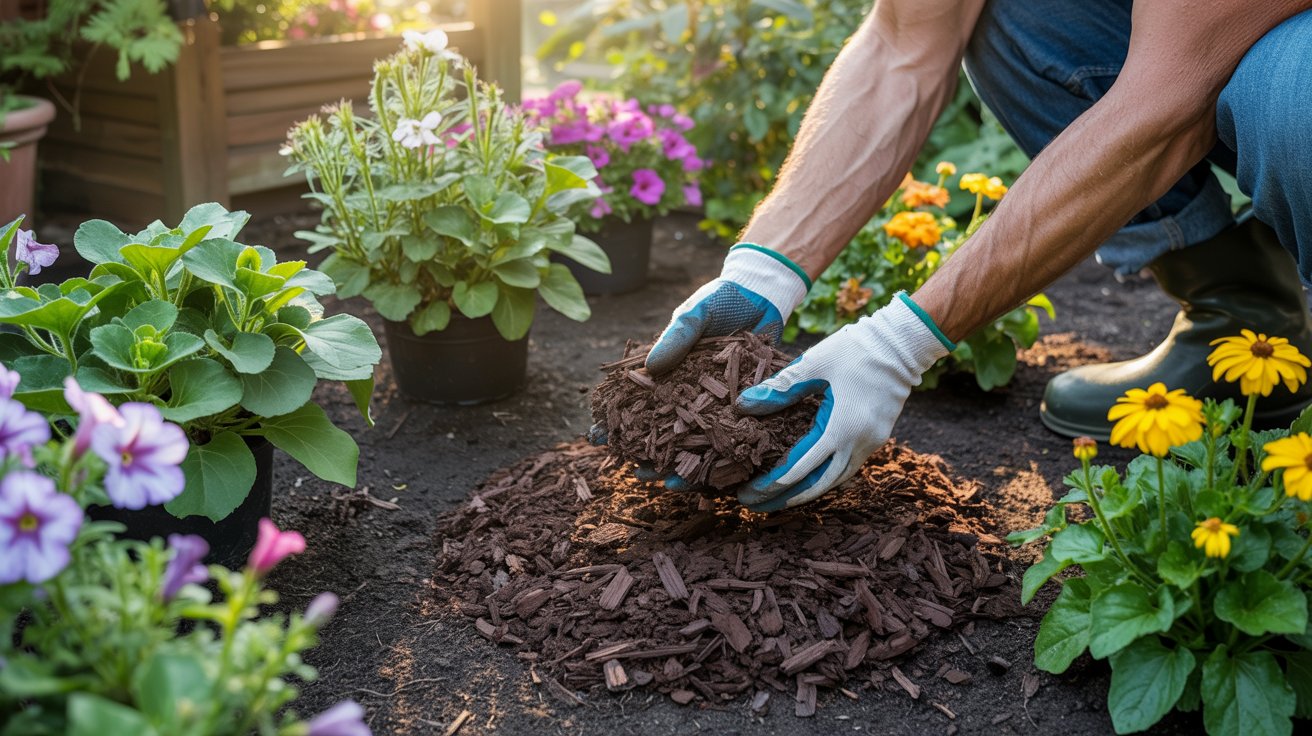
Mulch is a layer of material spread over the soil surface.
It sits on top of garden beds, around trees, or along plant rows.
It holds moisture, blocks weeds, and acts as soil insulation. Depending on what it is made from, it can slowly feed your soil too.
What Is Mulch Made Out Of?
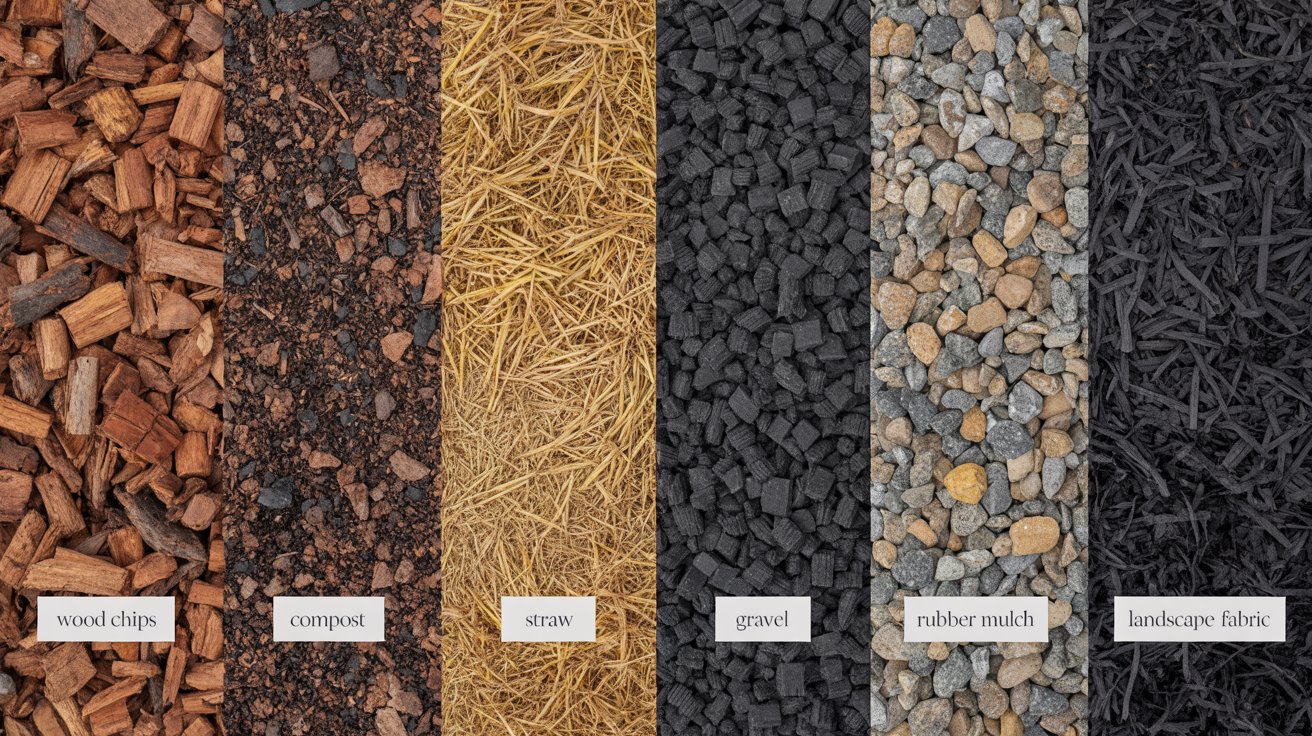
Mulch is made from two main categories:organic and inorganic materials.
Organic mulch comes from things that were once alive. Wood, straw, leaves, compost. Inorganic mulch comes from materials that do not decompose. Rubber, gravel, plastic.
What mulch is made of determines how it performs in your garden.
Organic Mulch Materials (Natural and Soil-Boosting)
Organic, biodegradable mulch works with your soil rather than just sitting on top of it.
Wood-Based Mulch
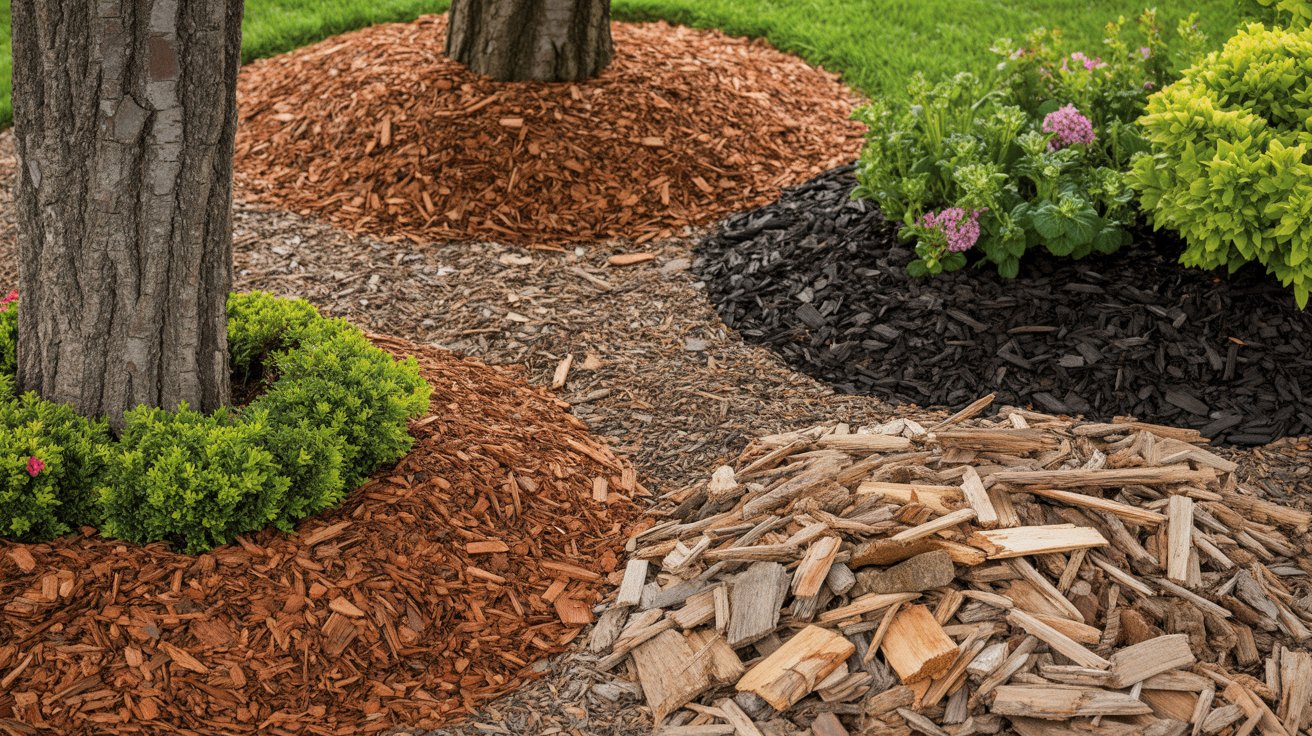
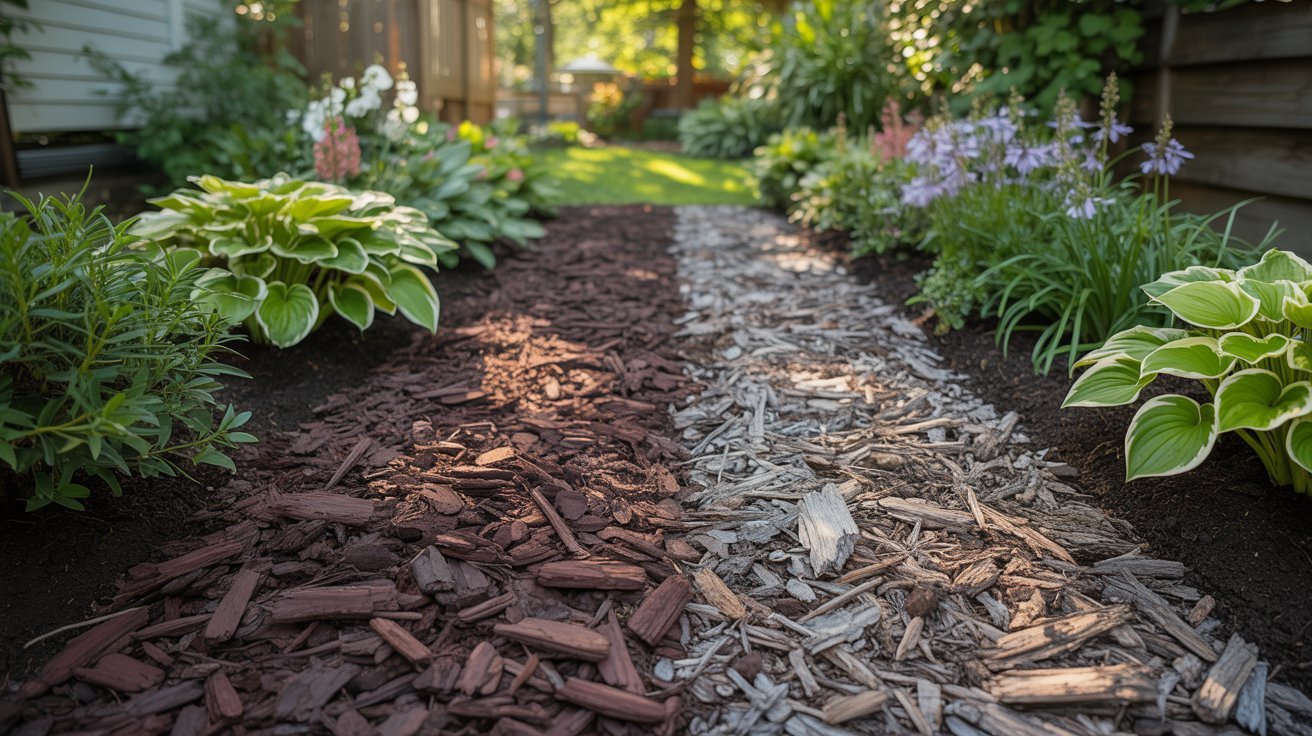
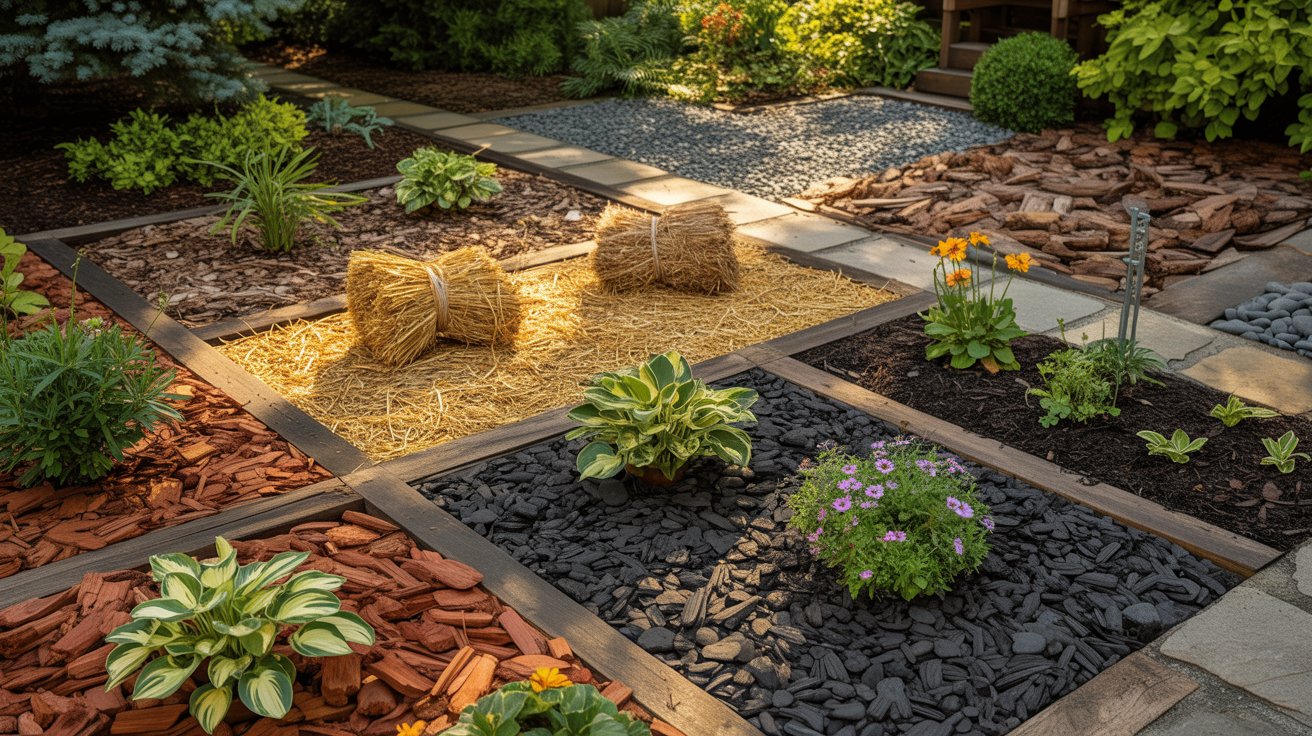
Wood-based mulch includes arborist wood chips, hardwood mulch, cedar mulch, pine bark mulch, and shredded bark.
Arborist wood chips come from tree trimmings and chipped branches run through a mechanical chipper. These are often forestry by-products from municipal tree work.
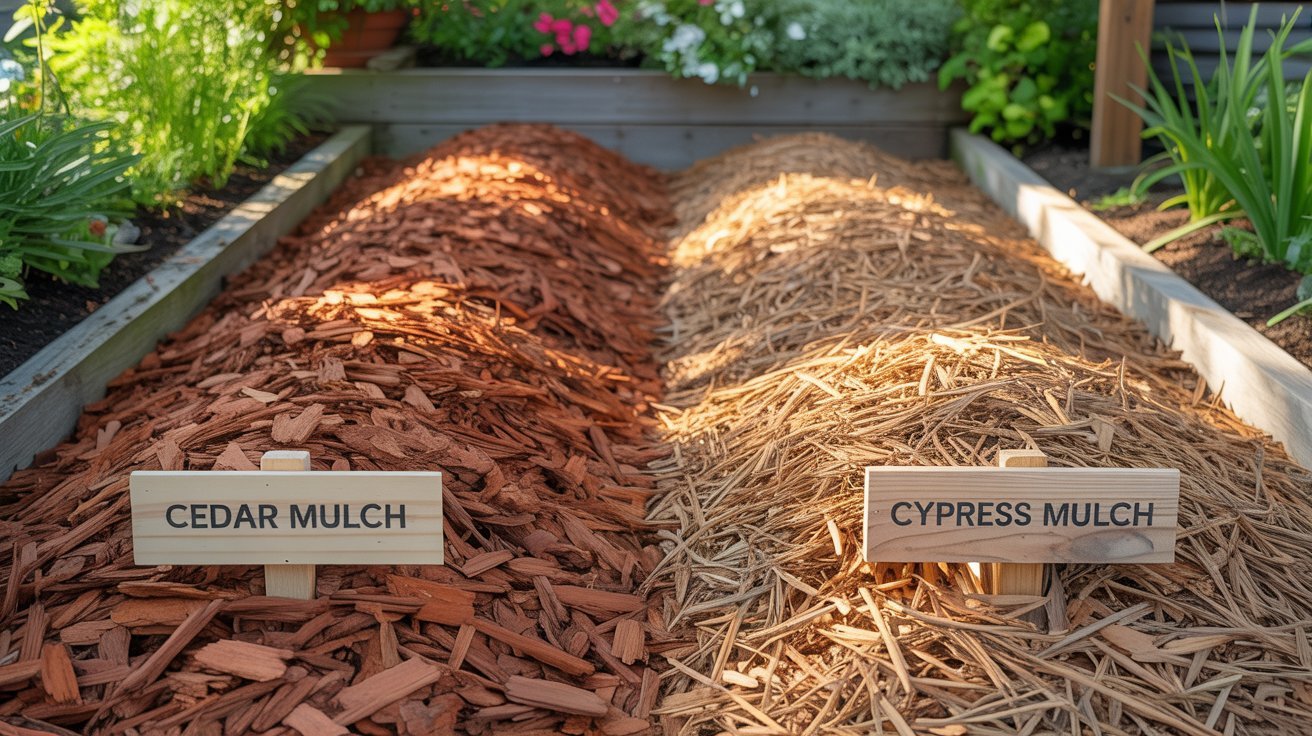
Hardwood mulch is made from shredded hardwood trees like oak or maple. Cedar mulch is stripped and shredded from cedar logs, and it naturally repels insects.
Pine bark mulch comes from the outer layer of pine logs left during lumber processing. Bark fines are the smallest particles left after shredding, often used as a soil amendment.
I noticed my flower beds stayed weed-free almost the entire season after switching to cedar mulch. Before that, I was pulling weeds every two weeks.
Plant-Based Mulch
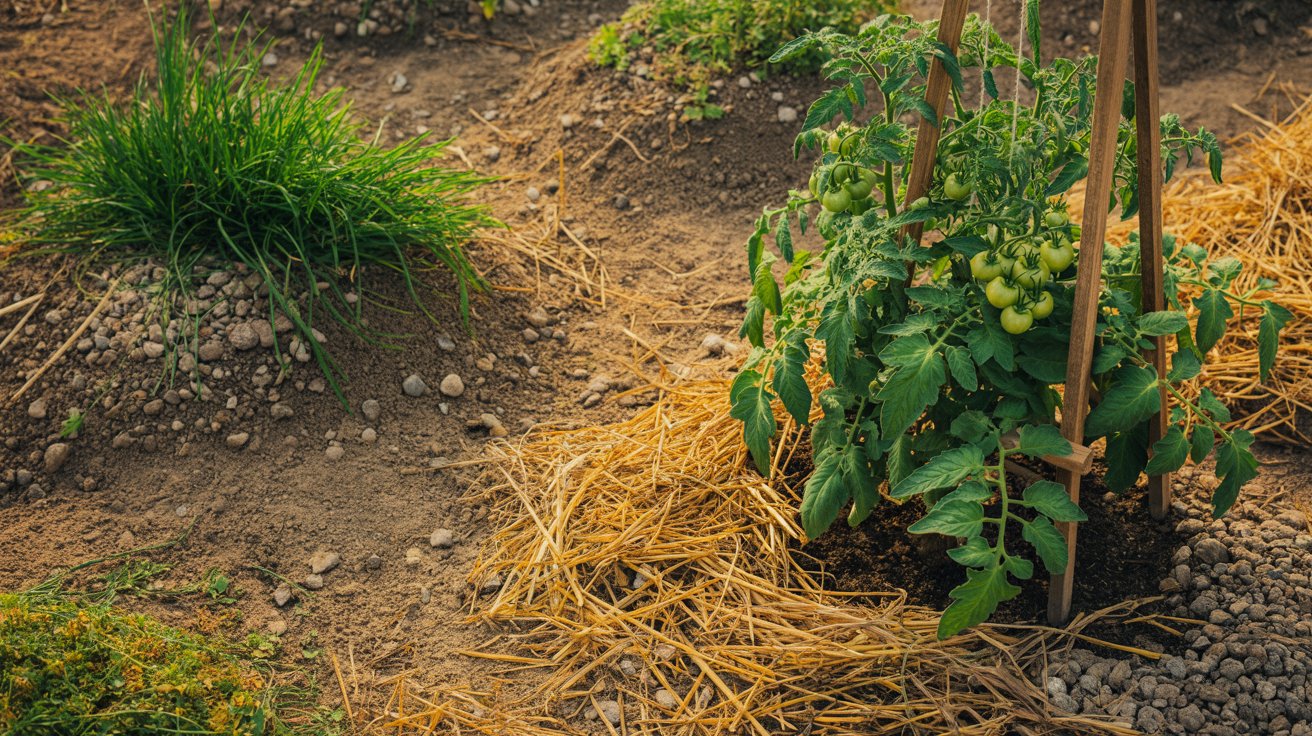
Plant-based landscaping mulch includes straw, grass clippings, and dried shredded leaves.
Straw comes from wheat, rice, or oat crops left after harvest. Grass clippings come from mowed lawns.
When I switched my tomato beds from bare soil to straw mulch during peak summer heat, the soil held moisture almost twice as long between waterings.
These types break down quickly, so you may need to reapply them each season.
Compost and Soil-Based Mulch
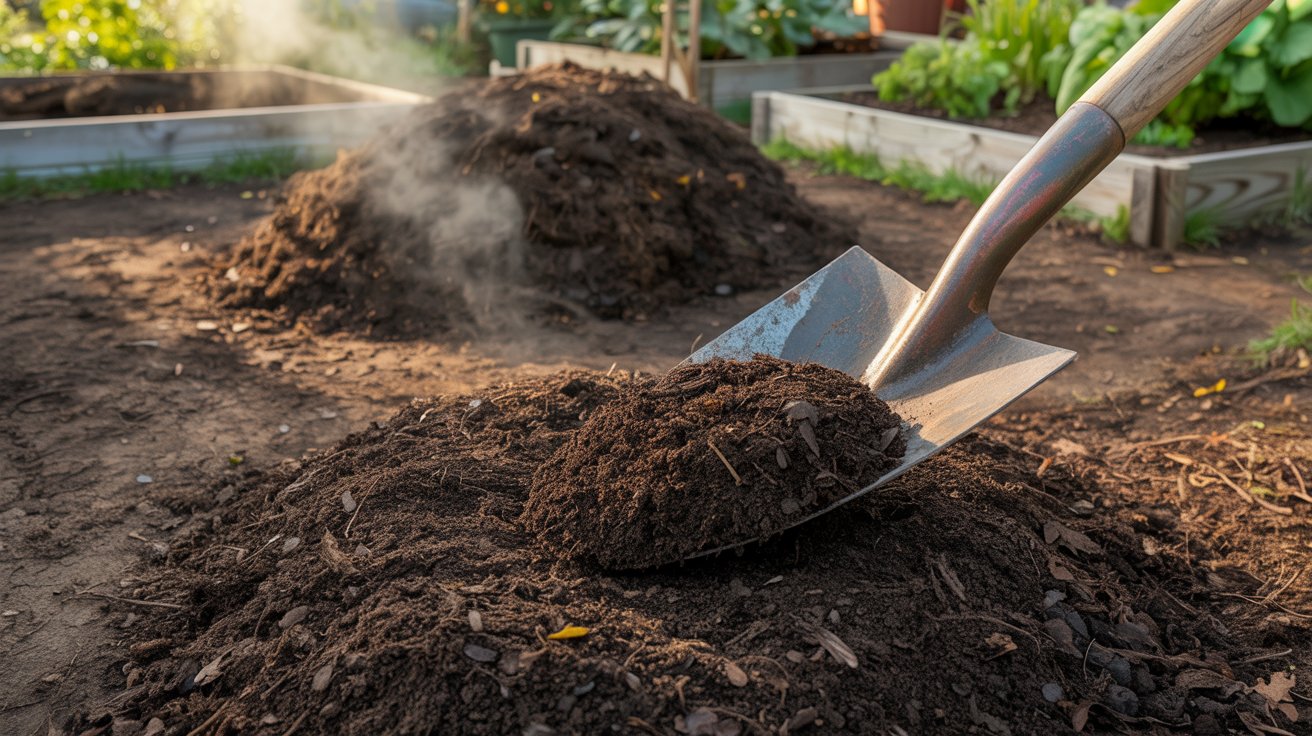
Compost mulch is made from decomposed organic matter including food scraps and yard waste broken down by bacteria and heat.
A one to two inch layer feeds the soil while improving moisture retention. Many university extension programs recommend compost as one of the most productive mulch options for long-term soil health.
Specialty Organic Mulch
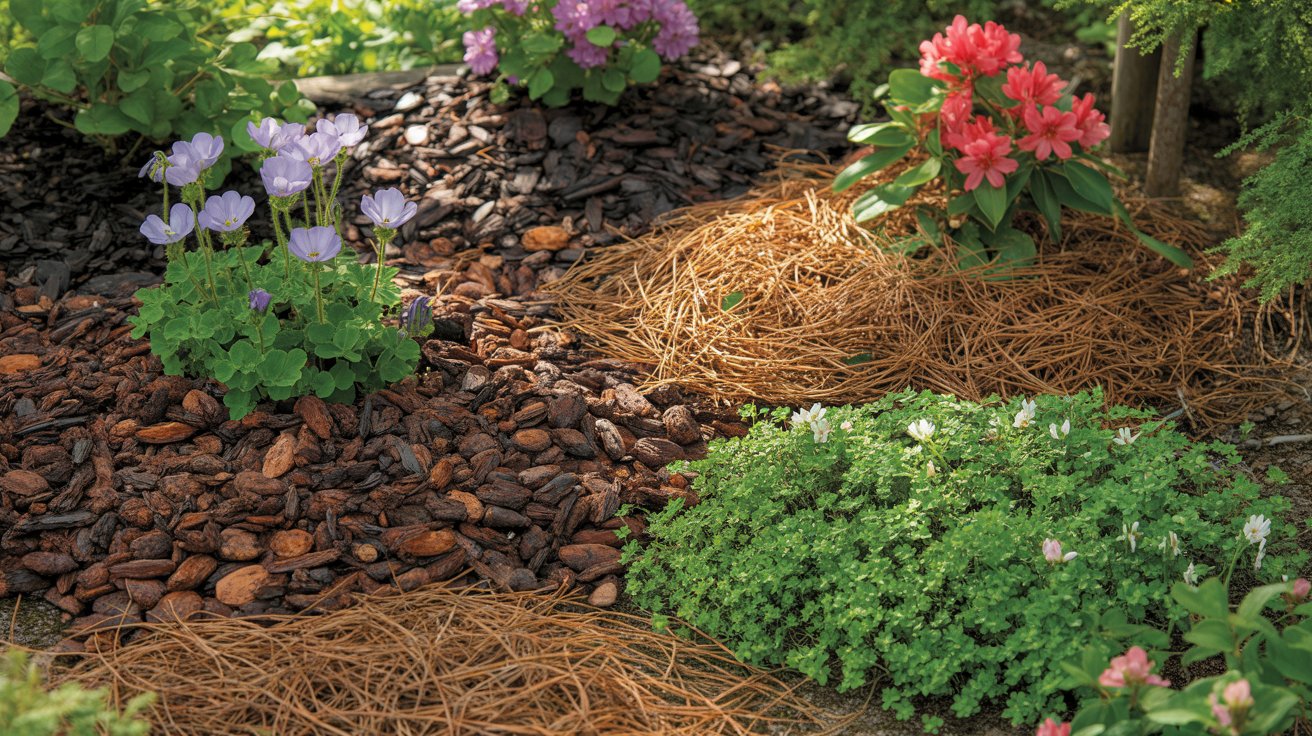
Cocoa shell mulch is made from the outer shells of cocoa beans. It works well in flower beds.
Pine needle mulch comes from fallen pine needles and suits plants that prefer acidic soil like blueberries and azaleas.
Living mulch refers to low-growing cover plants like clover that act as a natural ground layer.
Inorganic Mulch Materials (Long-Lasting Options)
Inorganic mulch does not decompose. Low maintenance, but adds nothing to your soil.
Rubber Mulch
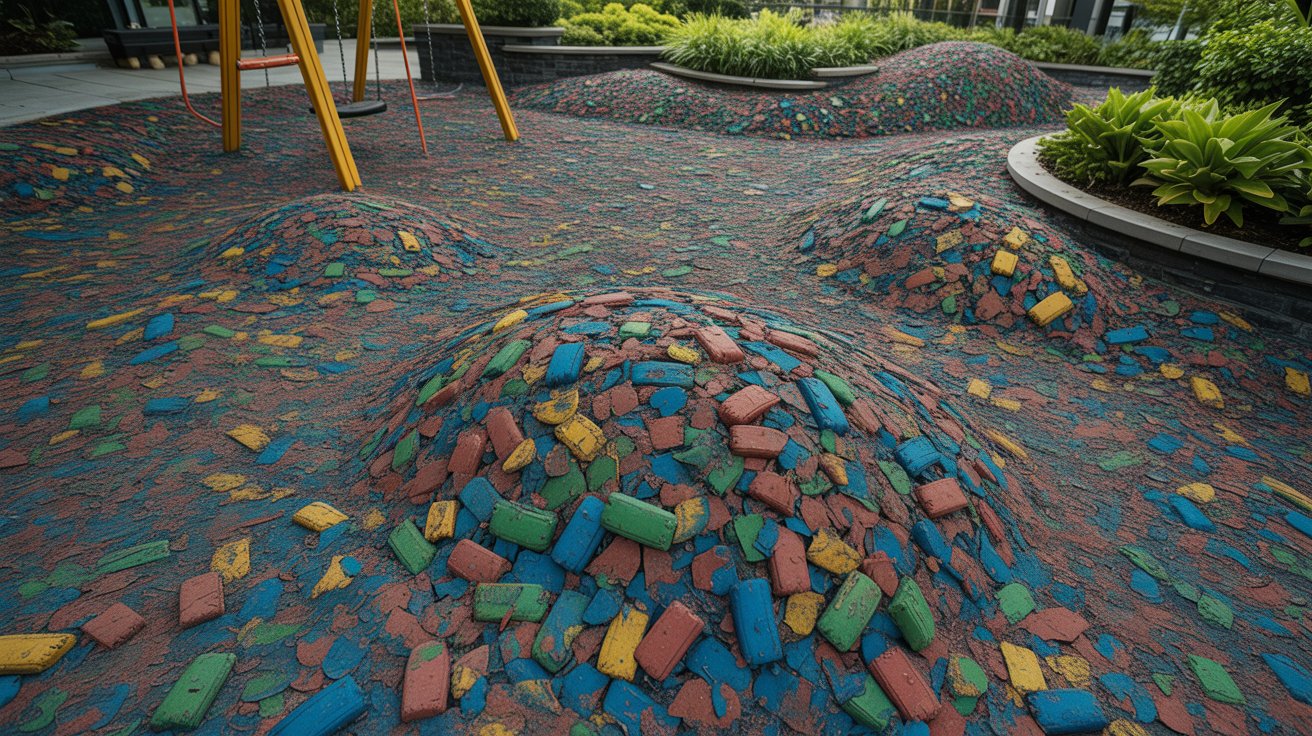
Understanding what rubber mulch is made out of starts with recycled tires. Old tires go through industrial mulch processing where they are shredded, stripped of steel wire, and dyed with mulch dye.
It lasts up to ten years and does not rot or attract insects. But it does not improve soil either.
Plastic and Landscape Fabric
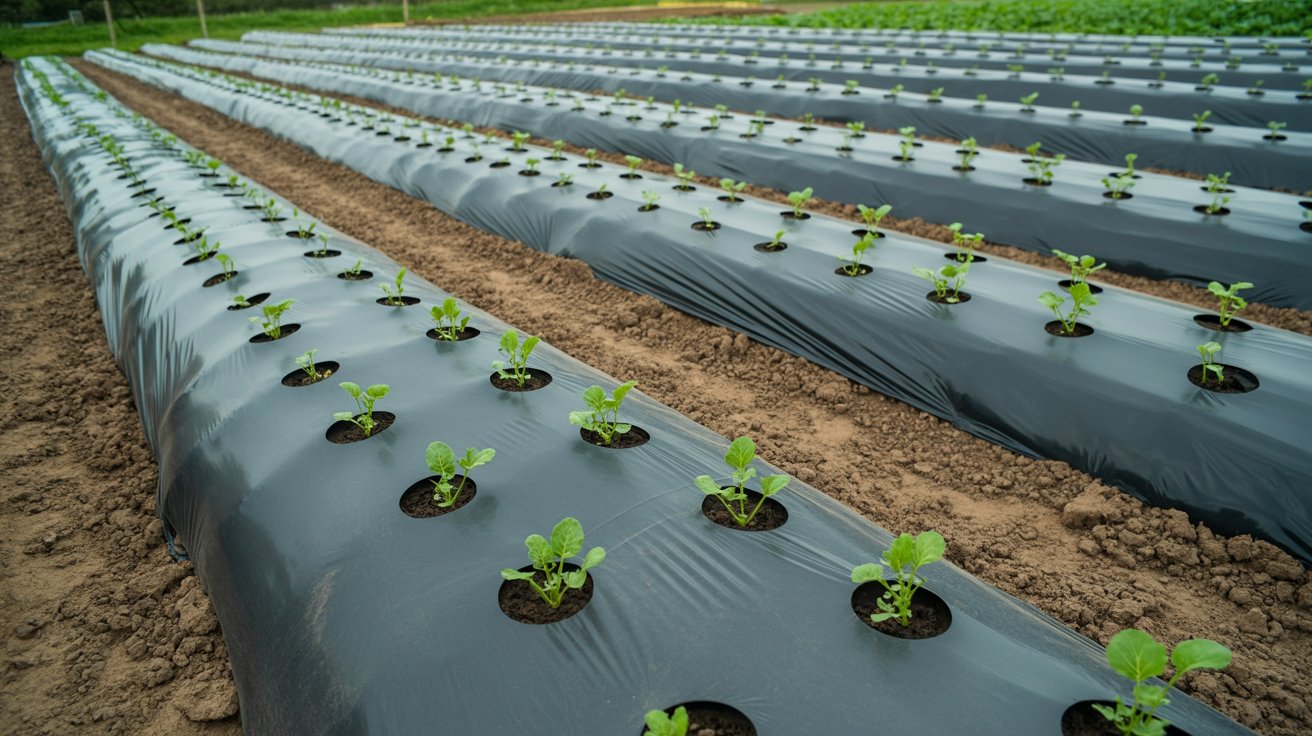
Plastic mulch is a flat sheet used mainly in vegetable gardens to warm the soil and block weeds.
Landscape fabric is a breathable version that lets water pass through. Both suppress weeds short-term but can become harder to manage over time as debris builds up on top.
Stone, Gravel, and Pebbles
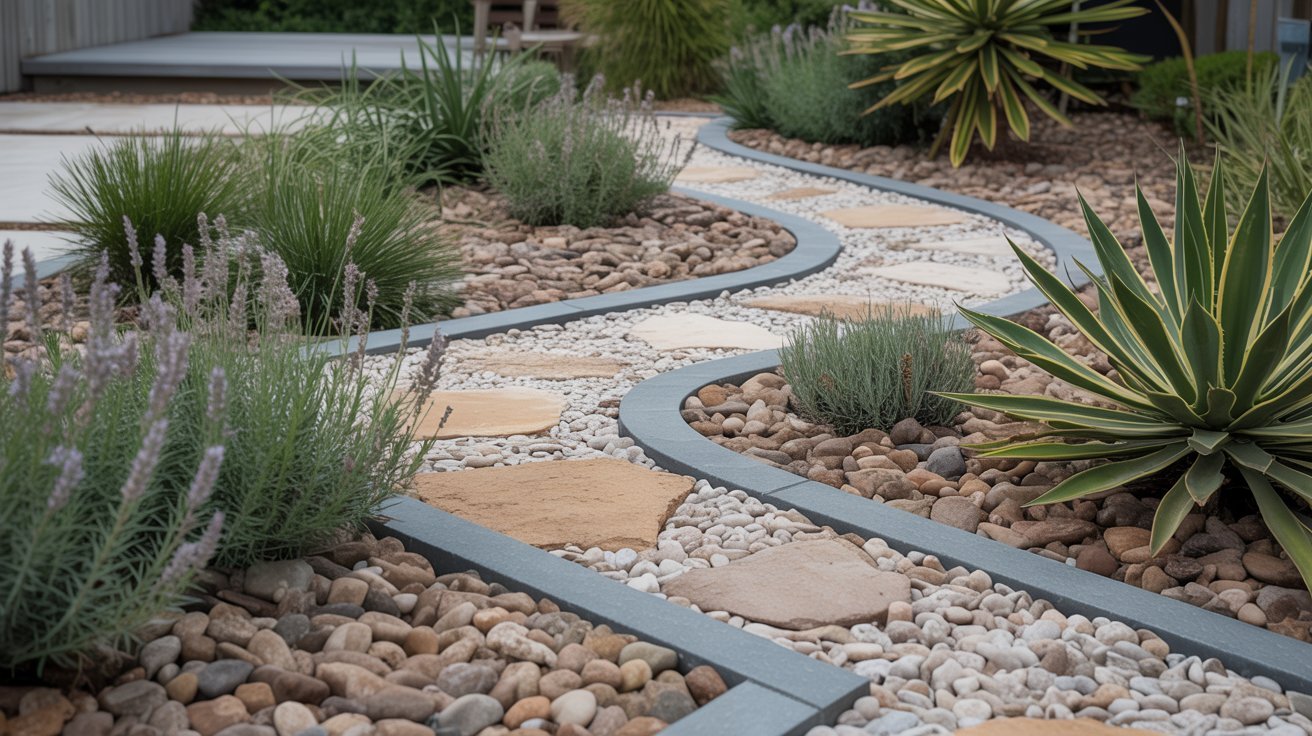
Stone mulch includes pea gravel, river rocks, and crushed stone. These are permanent options.
They work well for paths and drainage areas. The downside is weight, cost, and difficulty rearranging them later.
How Mulch Materials Are Made
Wood chips are made by running tree trimmings and chipped branches through a mechanical chipper.
Pine bark mulch and shredded bark are forestry by-products from lumber processing. Dyed hardwood mulch is made from recycled wood waste that goes through mulch processing before colorant is added.
Rubber mulch follows an industrial process. Tires are shredded, steel is removed, and mulch dye is applied.
Compost is made through controlled decomposition. Organic waste is piled, turned regularly, and broken down by heat and bacteria over months.
Pros and Cons of Different Mulch Materials
Knowing the trade-offs before you buy saves you time and money in the long run.
| Mulch Type | Pros | Cons |
| Hardwood Mulch | Improves soil, affordable, widely available | Needs replenishing, can attract termites in humid climates |
| Cedar Mulch | Repels insects, long-lasting scent | Costs more than basic wood chips |
| Rubber Mulch | Lasts up to 10 years, low maintenance | No soil nutrition, concerns near food crops |
| Straw Mulch | Cheap, great moisture retention | Breaks down fast, may carry weed seeds |
| Compost Mulch | Feeds soil, improves structure | Needs frequent refreshing, may smell initially |
| Stone or Gravel | Permanent, very low upkeep | Heavy, expensive, raises soil temperature |
| Pine Needles | Good for acid-loving plants, slow to decompose | Limited availability, not ideal for all plants |
Every mulch type has a trade-off, so match your choice to your actual garden needs.
Which Mulch Materials Are Most Eco-Friendly?
If sustainability matters to you, organic options are the better pick.
Compost, shredded leaves, and arborist wood chips are made from natural forestry by-products and yard waste. They return to the soil without leaving any trace behind.
Dyed hardwood mulch made from recycled wood waste is a reasonable middle-ground option. The water-based colorants used in most mulch processing today are generally considered safe for ornamental use.
Rubber mulch raises concerns. It is made from tires and can release compounds over time. Most horticulture guidance and USDA composting recommendations advise keeping it away from food-growing areas.
Plastic mulch creates long-term waste since it does not break down. Biodegradable plastic mulch alternatives designed to decompose within one season are a better choice if you want weed suppression without the environmental cost.
How to Choose the Right Mulch Material
The right mulch depends on what you are growing, where you live, and how much upkeep you want.
Here is a quick guide based on garden type.
| Garden Type | Best Mulch |
| Vegetable Garden | Compost or straw |
| Flower Beds | Hardwood mulch or cedar mulch |
| Acid-Loving Plants | Pine needles |
| Trees and Shrubs | Arborist wood chips or pine bark mulch |
| Pathways | Gravel or crushed stone |
| Playgrounds | Rubber mulch |
| Pet-Friendly Spaces | Avoid cocoa shell mulch, use straw or bark |
| Low Budget | Grass clippings or shredded leaves |
Use this table as your starting point, then adjust based on your local climate and soil type.
Organic vs Inorganic Mulch: Key Differences
Organic mulch breaks down and feeds your soil. It needs refreshing every one to two years.
Inorganic mulch lasts longer and requires less work. But it adds nothing nutritionally.
If healthy plants and better soil are your goal, go organic. If low maintenance and lasting weed control matter more, inorganic gets the job done.
Common Mistakes When Choosing Mulch Materials
Piling mulch too deep is the most common mistake. Many university extension programs warn against going over three inches. Too much can suffocate roots and cause rot.
Choosing the wrong type for your plant is another one. Acid-loving plants like azaleas do better with pine needle mulch, not neutral hardwood mulch.
Picking mulch only for looks leads to problems. Dyed hardwood mulch looks sharp but may not suit vegetable gardens.
Skipping replenishment is the last big one. Organic mulch breaks down. Without refreshing it, the moisture retention and weed-blocking benefits disappear.
Conclusion
Understanding what mulch is made out of helps you make better decisions for soil health, weed control, moisture retention, and long-term garden maintenance.
Organic options like compost, hardwood mulch, and straw improve your soil naturally over time. Inorganic choices like rubber mulch and gravel offer lasting coverage with minimal upkeep.
I started with basic wood chips years ago and slowly tested other types season by season. Some worked better than I expected. Some did not suit my setup at all.
The best approach is to pick one type and try it for a full season. Whether you choose compost, bark, straw, rubber, or gravel, knowing what mulch is made of puts you in control of your garden.
Which mulch material are you thinking of trying this season?
Frequently Asked Questions
What is organic mulch made out of?
Organic mulch is made from natural materials like wood chips, shredded bark, straw, dried leaves, pine needles, and compost. These break down over time and return nutrients to the soil beneath them.
What is rubber mulch made out of?
Rubber mulch is made from recycled tires shredded into small pieces, stripped of steel wire, and dyed with mulch dye. It is used mainly in playgrounds and ornamental landscapes where durability matters more than soil health.
What is colored mulch made from?
Colored mulch is typically made from recycled wood waste or dyed hardwood mulch processed with water-based colorants. Most mulch dyes used today are considered safe for general landscaping but should stay out of food gardens.
How often should mulch be replaced?
Organic mulch generally needs refreshing every one to two years as it breaks down. Inorganic options like stone or rubber mulch can last five to ten years without replacement.
Can mulch attract pests or insects?
Wood-based mulch can attract termites in humid climates, especially when piled near your home's foundation. Cedar mulch is a better choice in those cases because it naturally repels many common insects.