
I have stood in my yard mid-winter, staring at brown, lifeless-looking grass, wondering if I had killed my whole lawn. Turns out, I had not. It was just dormant.
So what does dormant grass look like? It looks brown, dry, and completely still. No growth. No color. But it is alive.
In this blog, I will walk you through the visual signs, the key differences between dormant and dead grass, and simple tests you can do right now.
I have dealt with this for years, so I know what to look for.
What Is Dormant Grass?
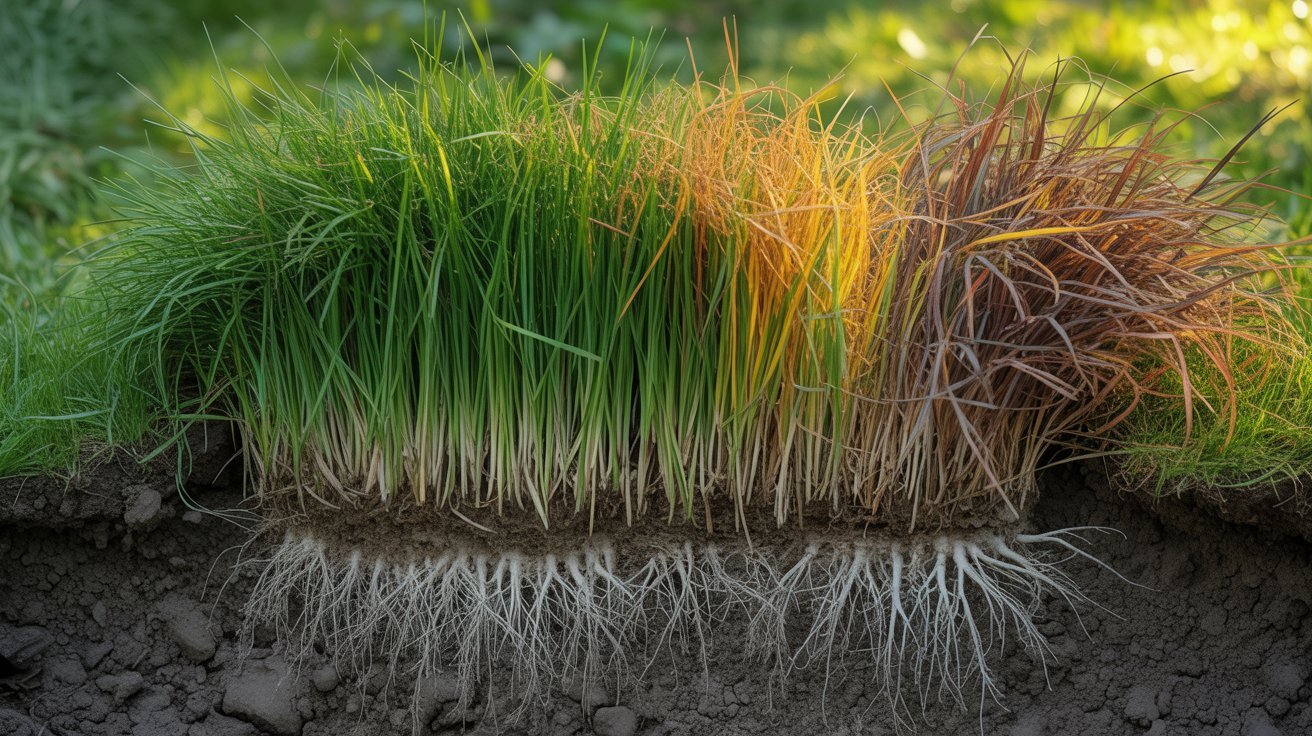
Dormant grass is alive but not actively growing. Think of it like a deep sleep mode.
When temperatures drop too low or a drought hits, grass pulls all its energy into the roots. It stops producing chlorophyll. That is why it turns brown. It is a survival response, not a death sentence.
Most lawns experience dormancy at least once a year depending on climate and grass type.
Cool-season grasses go dormant in summer heat. Warm-season grasses go dormant in winter cold. Both types do it naturally.
If your lawn turned brown suddenly, you are likely dealing with dormancy, not death. Here is how to tell.
Dormant vs Dead Grass: Key Differences You Must Know
Knowing the difference between a dormant lawn vs dead lawn saves you from ripping out a perfectly healthy yard.
| Feature | Dormant Grass | Dead Grass |
| Color | Uniform brown | Patchy, gray, or uneven |
| Texture | Dry but flexible | Brittle, breaks easily |
| Roots | Alive (white) | Dead (brown, mushy) |
| Recovery | Yes | No |
Why People Confuse the Two
Both look brown. Both have stopped growing. That is basically where the similarity ends, but it is enough to cause real confusion.
Dead grass tends to look more uneven. You might see gray patches or spots that look almost bleached out.
Dormant lawn grass keeps a more consistent color across the whole yard. Also, dead grass usually has a traceable cause like disease, pest damage, or a chemical burn.
Understanding the brown grass meaning comes down to one thing:when did it happen and why?
Brown grass in summer is often heat dormancy. Brown grass in winter usually means cold dormancy. Neither one automatically means dead.
What Does Dormant Grass Look Like? (Visual Signs to Identify It)
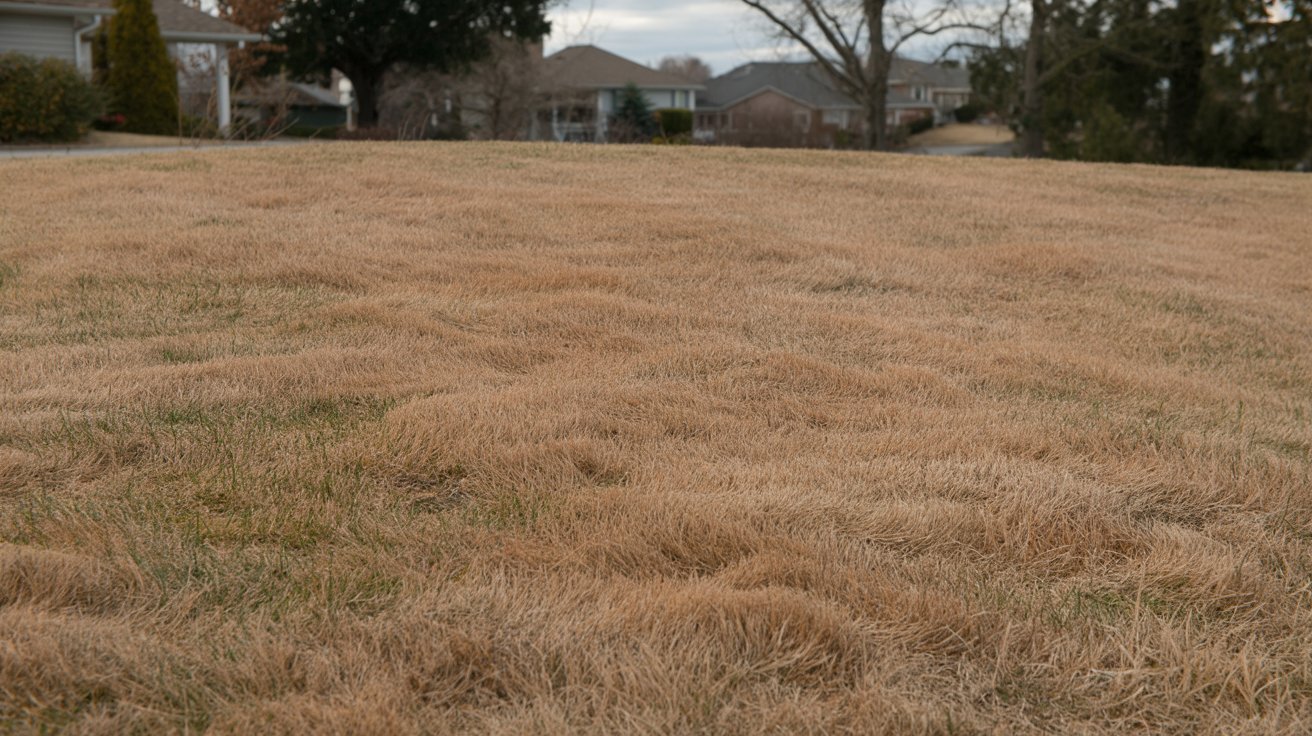
If you are asking what does dormant grass look like in your specific yard, here is exactly what to check.
Color Changes (Green to Brown or Straw-Like)
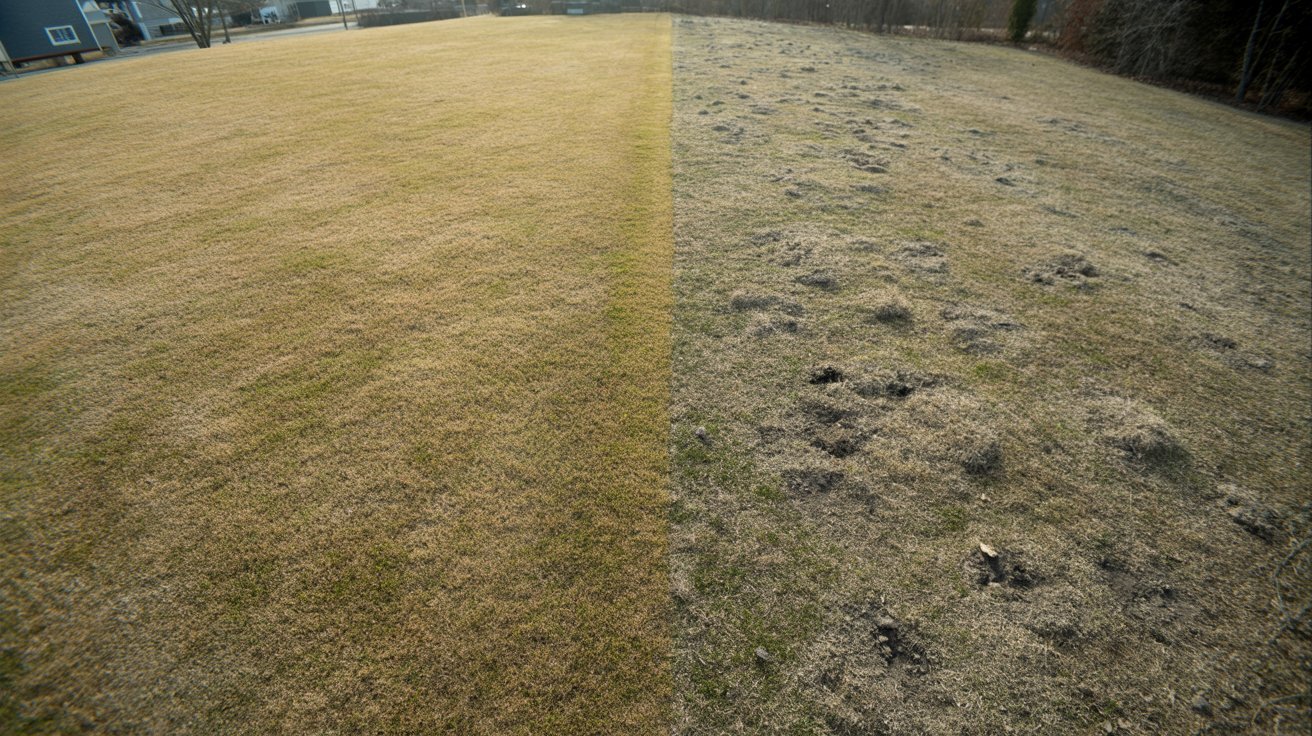
Dormant grass turns a uniform brown or tan color. It looks dry, like straw. The color change is usually even across the whole lawn, not patchy.
If some spots are brown and others look normal, that could mean something else is going on. True dormancy gives you a consistent, dull brown shade from edge to edge.
Grass turning brown in summer is almost always the first visible sign of heat dormancy. In winter, the same thing happens with cold.
Texture and Feel
When you run your hand over dormant grass, it feels dry but not crumbly. The blades bend. They do not snap. There is still some flexibility in the plant.
Dead grass feels completely different. It breaks apart when touched. Dormant grass gives a little.
Growth Stops Completely
You will notice your mowing schedule suddenly becomes pointless. The grass just stops growing. No new blades, no need to cut.
This pause in growth is one of the clearest signs of dormancy. If your grass was growing fine last month and suddenly stopped with a seasonal change, dormancy is most likely what you are dealing with.
Root System Is Still Alive
Pull up a small section and look at the roots. Dormant grass has white or light-colored roots. They look healthy.
This is the biggest difference between a dormant lawn and a dead one. The roots always tell the real story.
Simple Tests to Tell If Your Grass Is Dormant or Dead

These three tests will give you a clear answer in a matter of days.
The Tug Test (Most Reliable)
Grab a handful of grass and pull. Dormant grass resists. It holds on because the roots are intact. Dead grass comes right out with almost no effort. The root system has already broken down.
Do this in a few spots around your yard. If the grass stays put most of the time, it is likely dormant.
The Scratch Test
Find a brown blade and scratch the base near the soil. If you see any green underneath the outer layer, the plant is still alive. That green tint means there is life in there.
If it is brown all the way through and dry, it may be dead.
Water Test (Wait and Observe)
Water a small section consistently for about two weeks. If the grass slowly starts showing green, it was dormant. If nothing changes after regular watering, you likely have dead patches.
This test takes patience, but it gives you a clear answer.
What Causes Grass to Go Dormant?
A few things trigger dormancy:
- Cold temperatures below a certain threshold for your grass type
- Prolonged drought or lack of water
- Extreme heat during summer months
- Shortened daylight hours in fall and winter
Is my grass dead or dormant? Start with these causes.
If a season just changed or a dry spell just hit, dormancy is almost always the answer. Grass turning brown in summer after a stretch of heat and no rain is a textbook case of dormancy.
How Long Does Dormant Grass Last?
Cool-season grasses can stay dormant for four to six weeks during summer heat before they start dying. Warm-season grasses may stay dormant for several months through winter.
Once conditions improve, most grasses come back on their own.
If your grass has been brown for a very long time with no improvement after watering, it may have crossed into dead territory.
How to Care for Dormant Grass (Without Killing It)
A lot of people accidentally hurt dormant grass by doing too much.
Watering Guidelines
Do not stop watering completely. Dormant grass still needs occasional moisture to keep the roots alive. About half an inch of water every two to three weeks during winter dormancy is enough.
In summer dormancy, water once a week if there is no rain. The goal is to keep roots from drying out completely.
Avoid Over-Fertilizing
Do not fertilize dormant grass. It cannot use the nutrients right now. Fertilizing during dormancy can burn the roots and cause real damage.
Wait until the grass starts actively growing again before you add any fertilizer.
Limit Foot Traffic
Dormant grass is more fragile than growing grass. Heavy foot traffic can damage the crowns of the grass plants, the parts that generate new growth.
Keep kids, pets, and heavy equipment off the lawn during full dormancy if you can.
When to Be Concerned: Signs Your Grass Is Actually Dead
Watch for these signs that something worse may be happening:
- Large, irregular patches with no pattern
- Grass that pulls out with zero resistance
- Roots that are brown, slimy, or completely gone
- No recovery after consistent watering over two weeks
- Signs of pest damage like tunneling or grub activity under the surface
If you are seeing these alongside the brown color, you are no longer looking at a dormant lawn vs dead lawn situation. You are most likely dealing with dead grass.
How to Revive Dormant Grass Quickly
Dormant grass usually comes back on its own when conditions improve.
But here is how you can help it along:
- Start watering consistently as seasons shift
- Aerate the soil in spring to let water and air reach the roots
- Apply a balanced fertilizer once new growth appears
- Overseed any thin areas in early spring or fall
- Mow at the right height once growth resumes, typically higher than you think
Do not rush the process. Give the grass time to wake up before you start making big decisions about replanting.
Conclusion
I know how stressful it is to look at a brown lawn and wonder if you have lost it completely. But in most cases, what you are seeing is dormant grass doing exactly what it is supposed to do.
The color, the texture, the stopped growth, all of it makes sense once you understand the process.
Do the tug test. Check the roots. Water lightly and give it time. Most lawns come back fine once conditions shift.
The biggest mistake is panicking and doing too much too soon. Trust the process. Your grass has survived seasons before this one.
With a little patience and the right care, it will come back strong.
Have you done the tug test on your lawn yet?
Frequently Asked Questions
Can dormant grass come back after months of being brown?
Yes, in most cases it can. As long as the roots are still white and intact, dormant grass will recover once temperatures and water levels return to normal.
Should I water dormant grass in winter?
Light watering every two to three weeks is enough. Too much water can cause root rot, but cutting water out completely can dry the roots and kill the grass.
How do I know if my lawn is dormant or just dry?
Water it consistently for one to two weeks and watch for any green growth. If green starts to appear, it was dormant. No change after regular watering usually points to dead grass.
Does dormant grass need fertilizer?
No. Dormant grass cannot absorb or use fertilizer. Wait until you see new growth in spring before adding any nutrients to the soil.
Is it normal for grass to go dormant every year?
Yes, it is completely normal. Both cool-season and warm-season grasses go dormant seasonally as a natural response to temperature or drought stress.