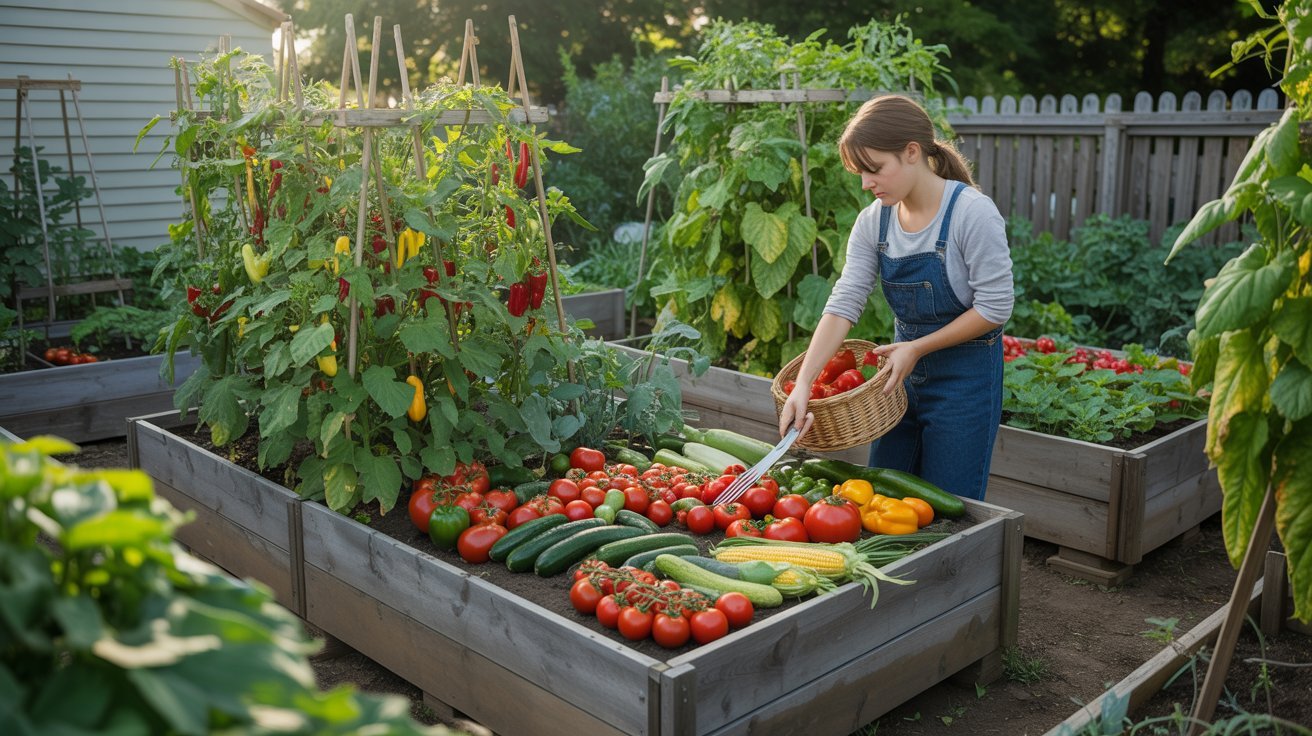


Most small backyards feel cramped, muddy, or completely ignored. You walk past yours every day thinking you’ll sort it out eventually.
I was in the same spot until I started seriously looking at small backyard turf ideas, and I was surprised by how much a well-laid turf setup can do for a tiny space.
In this blog, I cover 17 ideas that work in real yards.
You’ll also find the best artificial grass options, a full comparison of turf vs real grass, a step-by-step install guide, and low maintenance backyard ideas that hold up for years.
I’ve personally worked through dozens of small garden turf design setups, and I know what actually lasts.
By the end, you’ll have a clear plan, not just ideas.
What Makes Turf Perfect for Small Backyards?

Turf is one of the smartest choices for tiny backyard landscaping, and I’ve seen it work in yards that seemed too small to do anything with.
It stays green all year with no watering schedule, no dead patches, and no mud after rain. That matters a lot when your outdoor space is small and every inch is visible from inside the house.
It also makes compact yards feel cleaner and more open. A well-laid strip of artificial grass gives the whole area a consistent, finished look without any ongoing effort.
And it pairs easily with other materials. Gravel, decking, concrete, raised beds, turf works alongside all of them. That kind of flexibility is hard to find in any other ground cover option.
17 Small Backyard Turf Ideas That Actually Work
These are real, tested small backyard turf ideas from actual yards, not design concepts pulled from a magazine. Each one can work in almost any small or awkward space.
1. Turf + Stepping Stone Grid Layout

What it is: Flat stepping stones laid in a grid with turf filling the gaps between them.
Why it works: It breaks up the surface and adds structure that makes a small yard feel planned. The contrast between stone and green turf looks clean and intentional. In most small garden turf design projects I’ve seen, this layout is one of the first recommendations because it works in yards under 15×15 feet where an unbroken lawn looks plain.
Best for: Small yards that feel shapeless and need a defined visual anchor.
2. Mini Turf Lounge Corner

What it is: A 6×6 patch of turf in one corner with two outdoor chairs and a small side table.
Why it works: That corner stops feeling wasted and starts feeling like the spot you actually want to sit in. Add a solar stake light nearby and in the evenings it feels warm, quiet, and intentional. This is one of those low maintenance backyard ideas that costs very little but gets used every single day once it’s in.
Best for: Yards where you want a defined sitting area without a big furniture investment.
Quick tip: A small outdoor rug placed on the turf defines the lounge zone even more clearly.
3. Turf Pathway Design

What it is: A narrow strip of turf running through the yard, bordered by pebbles or low plants on each side.
Why it works: It gives your yard direction and makes it feel longer than it actually is. A slightly curved strip reads as more natural than a perfectly straight one. This is one of the most practical tiny backyard landscaping ideas for long, narrow yards that feel undefined.
Best for: Narrow or oddly-shaped yards that lack a clear visual flow.
4. Vertical Garden + Turf Combo

What it is: A wall-mounted planter or trellis at fence height with turf laid directly below it.
Why it works: You get greenery going up and out without losing any floor space to pots on the ground. In urban yards where a blank fence is the biggest missed opportunity, this setup changes the whole feel of the space.
Best for: City backyards with limited ground space and an empty fence wall to use.
5. Turf Play Zone for Kids

What it is: A defined rectangular turf patch set aside as a kids’ play area.
Why it works: Soft turf cushions falls much better than concrete or bare soil. It also cleans up faster than a soil surface after rainy days. A small sandpit on one side extends the zone without a big extra cost. Across every family yard I’ve helped with, this is the layout that gets used the most and regretted the least.
Best for: Families with young children who need a safe, low-mess outdoor surface.
6. Pet-Friendly Turf Area

What it is: A high-drainage turf section with a gravel border to catch debris.
Why it works: Pet use stays clean and manageable. A quick rinse a couple of times a week keeps odor under control. A common issue I’ve personally fixed is turf laid without proper drainage in a pet area. Within a season it starts to smell and the backing breaks down.
Best for: Dog owners who are tired of muddy paw prints and difficult-to-clean outdoor spaces.
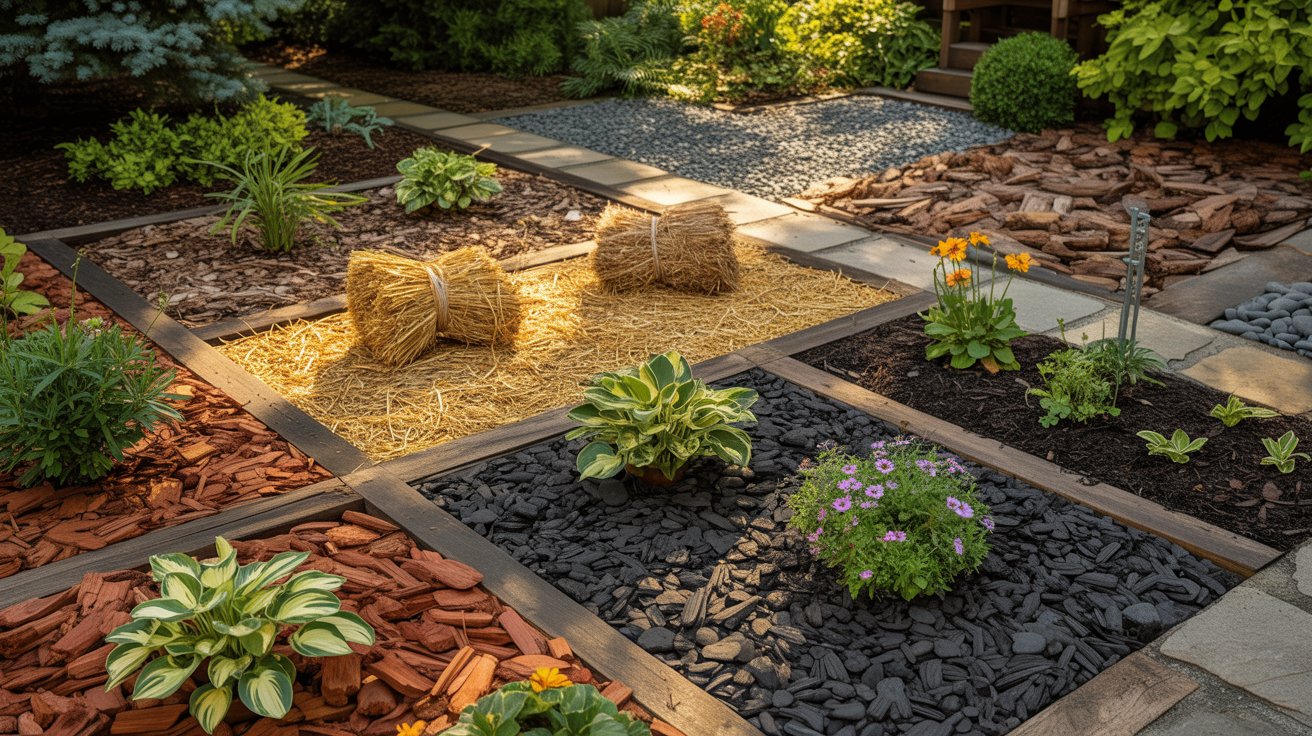
7. Turf + Gravel Contrast Design

What it is: Half turf, half gravel, split across your small yard with potted plants along the dividing line.
Why it works: The contrast is visually sharp and gives your yard two clearly different zones. You get a soft green area and a low-key decorative section in the same compact space. This small garden turf design approach is one of the most popular for yards that feel like they need more going on without getting cluttered.
Best for: Yards where you want a sitting zone and a decorative zone side by side.
8. Rooftop-Style Backyard Turf Setup

What it is: Turf rolled over a concrete backyard with potted plants of varying heights around the edges.
Why it works: It turns a hard, flat concrete slab into something that feels layered and considered. Add outdoor furniture and string lights and it starts to feel like a rooftop terrace at ground level. This is one of the best artificial grass small backyard ideas for urban homes with no soil to work with.
Best for: Concrete backyards in cities where in-ground planting isn’t an option.
9. Zen Garden Turf Layout

What it is: A turf patch combined with raked gravel, one stone or water feature, and a single tall plant like bamboo.
Why it works: It’s calm, restful, and requires almost no upkeep. This layout suits people who want their small yard to feel like a quiet escape rather than an entertaining hub.
Best for: Anyone who wants a low-effort, visually restful outdoor area.
10. Turf Dining Nook
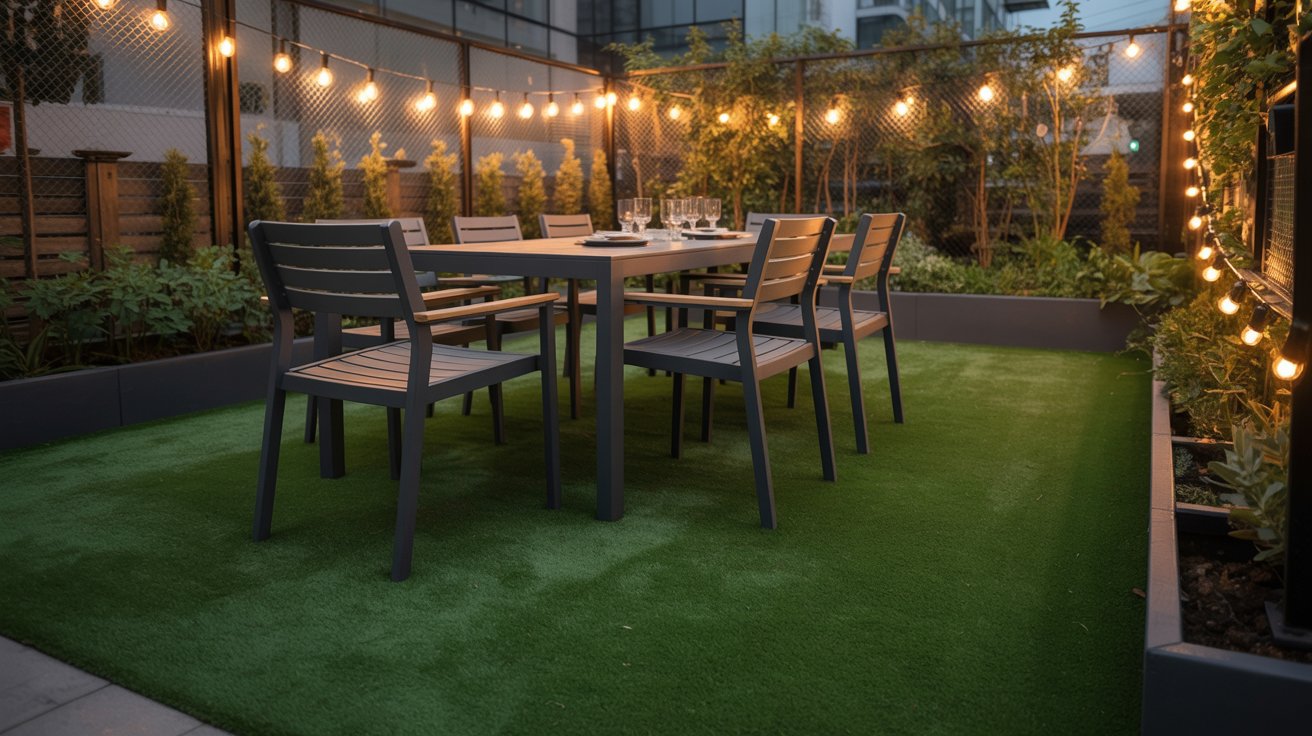
What it is: Turf laid under your outdoor dining table and chairs.
Why it works: The whole space feels softer, quieter, and more inviting, especially in the evenings when you’re eating outside and the light is low. It grounds the dining set and gives the area a sense of intention that a hard concrete base never quite manages.
Best for: Yards where outdoor dining is the main function.
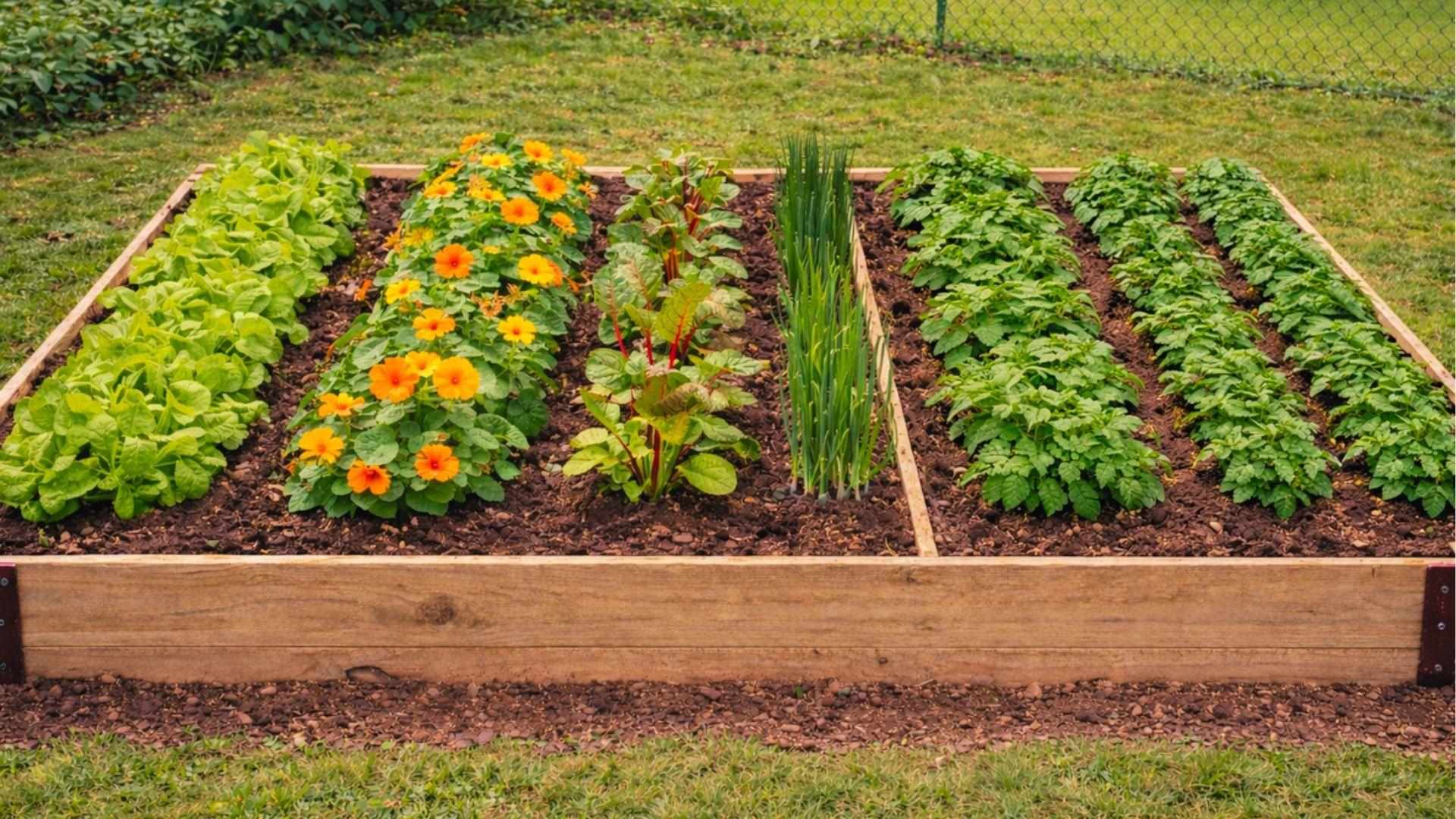
11. Turf Around Raised Garden Beds
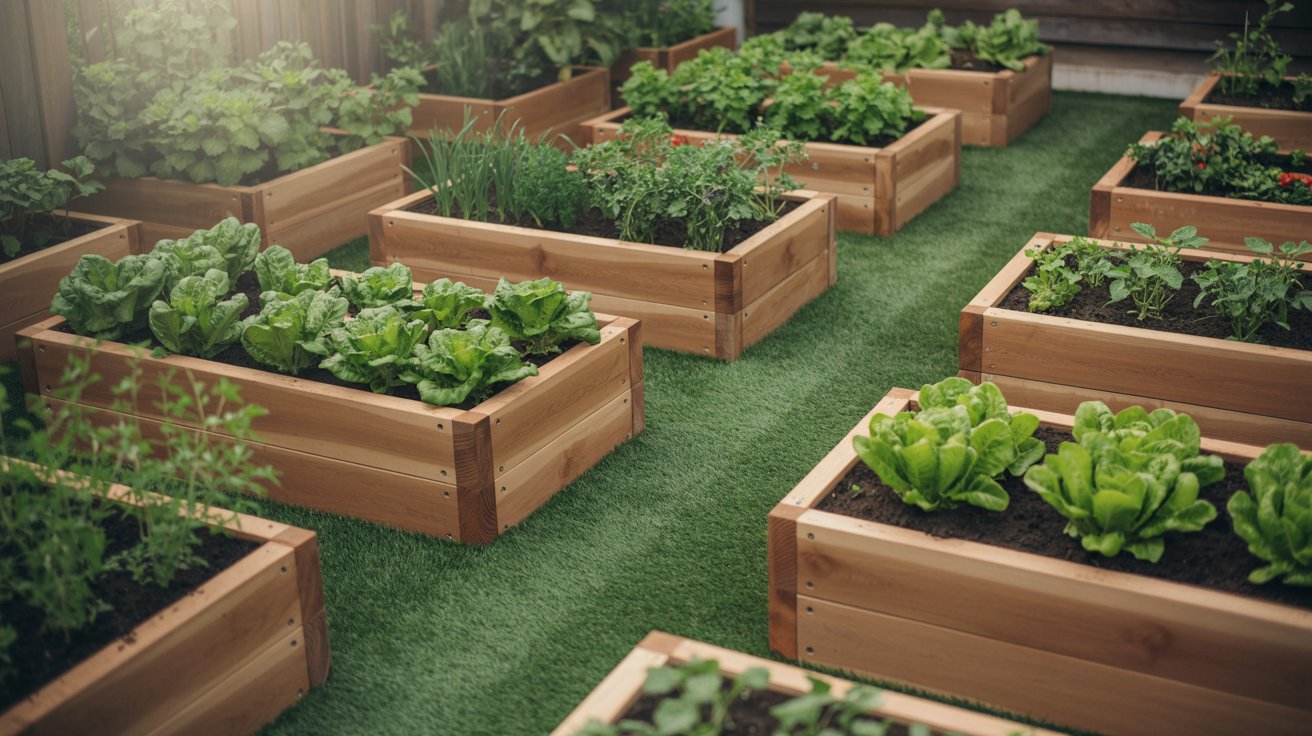
What it is: Turf used as ground cover between raised garden beds instead of bark or gravel.
Why it works: It looks much neater and holds its shape better season to season. Walking between beds without tracking soil everywhere is a smaller benefit that turns out to matter more than expected.
Best for: Garden lovers who want a tidy, low-mess layout around their growing beds.
12. Narrow Side Yard Turf Transformation

What it is: A full-length turf strip in a 3 to 5-foot-wide side yard, with a bench at one end and wall planters above.
Why it works: A space that currently collects bikes, bins, and forgotten clutter becomes a walkway you actually want to pass through. In almost every narrow side yard I’ve seen done this way, it becomes the most-used quiet spot in the home.
Best for: Side yards that currently serve no purpose and waste usable space.
13. Turf + Deck Hybrid Design
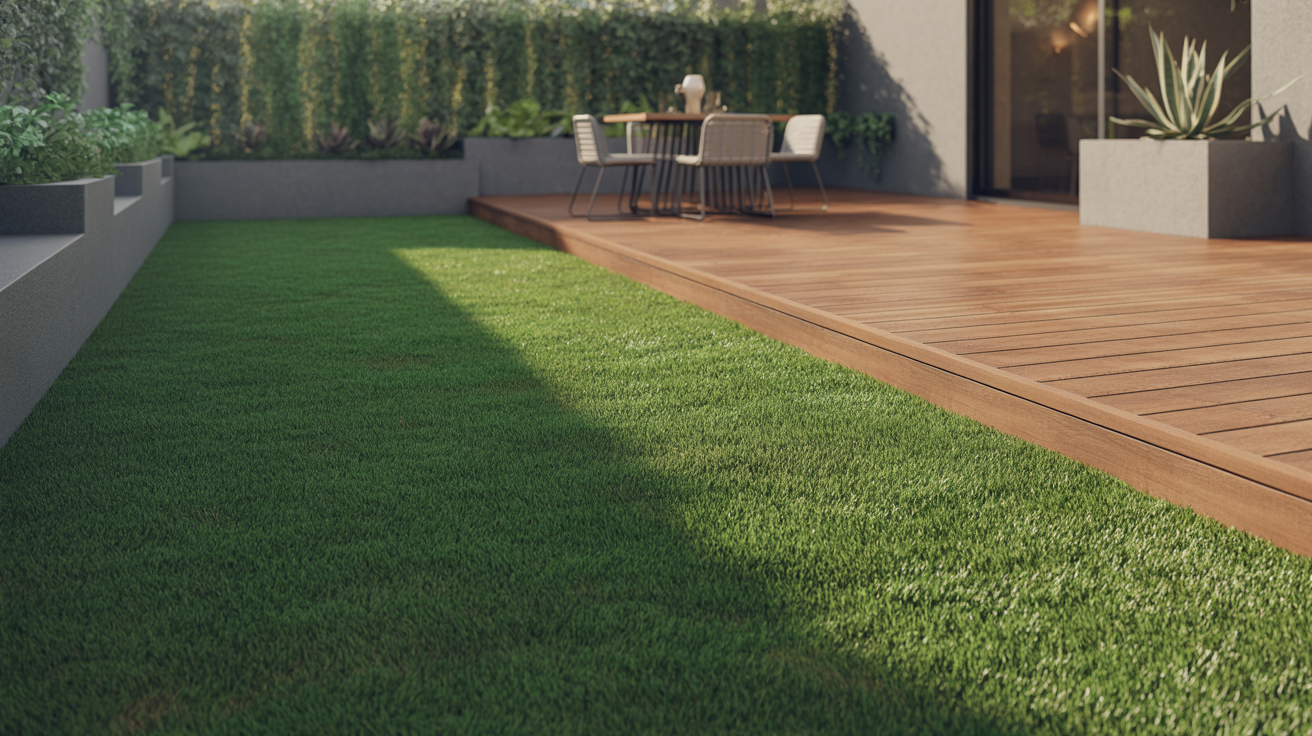
What it is: A small wooden deck on one side of the yard with turf on the other.
Why it works: The deck gives you a firm surface for furniture. The turf gives you open, soft ground beside it. Together they make your yard feel like two distinct areas, which is exactly what good small backyard turf design tries to do. The contrast between timber and green is also one of the cleanest-looking material combinations in compact yard work.
Best for: Yards where you want both a hard entertaining surface and an open green area.
14. Minimalist All-Turf Backyard

What it is: Full turf from fence to fence with sharp timber or steel edging borders.
Why it works: No gravel, no decking, no decision fatigue. Just a clean, consistent green surface that stays fresh and tidy with almost no ongoing effort. Sometimes the right answer really is simpler than you think.
Best for: People who want the cleanest, most hassle-free small backyard setup possible.
15. Turf with Built-In Seating Edges

What it is: Low timber, concrete, or composite boards framing the edge of your turf, doubling as seating.
Why it works: It gives you a clean border and informal seating without extra furniture taking up the turf itself. In small backyards where every square foot matters, this two-in-one solution is genuinely useful.
Best for: Compact yards that need built-in seating without sacrificing open space.
16. Turf Lighting Setup for Night Ambience

What it is: Solar path lights or low-voltage LED strips running along the turf border.
Why it works: The yard looks and feels completely different after dark. Warm light along a green edge is a combination that costs very little but makes the space feel finished and intentional in a way that daylight alone doesn’t show.
Best for: Anyone who uses their backyard after the sun goes down.
17. Multi-Zone Turf Layout

What it is: Three defined zones across your yard using turf, decking, and gravel, each with a clear job.
Why it works: Every square foot does something. You get a sitting zone, a dining or open space, and a decorative section, all in a yard that most people would say is too small for any of it. Across the small backyard layouts I’ve worked with, this is the one most people wish they had started with from day one.
Best for: Anyone who wants maximum function from a small or awkward backyard space.
Artificial Turf vs Real Grass for Small Backyards
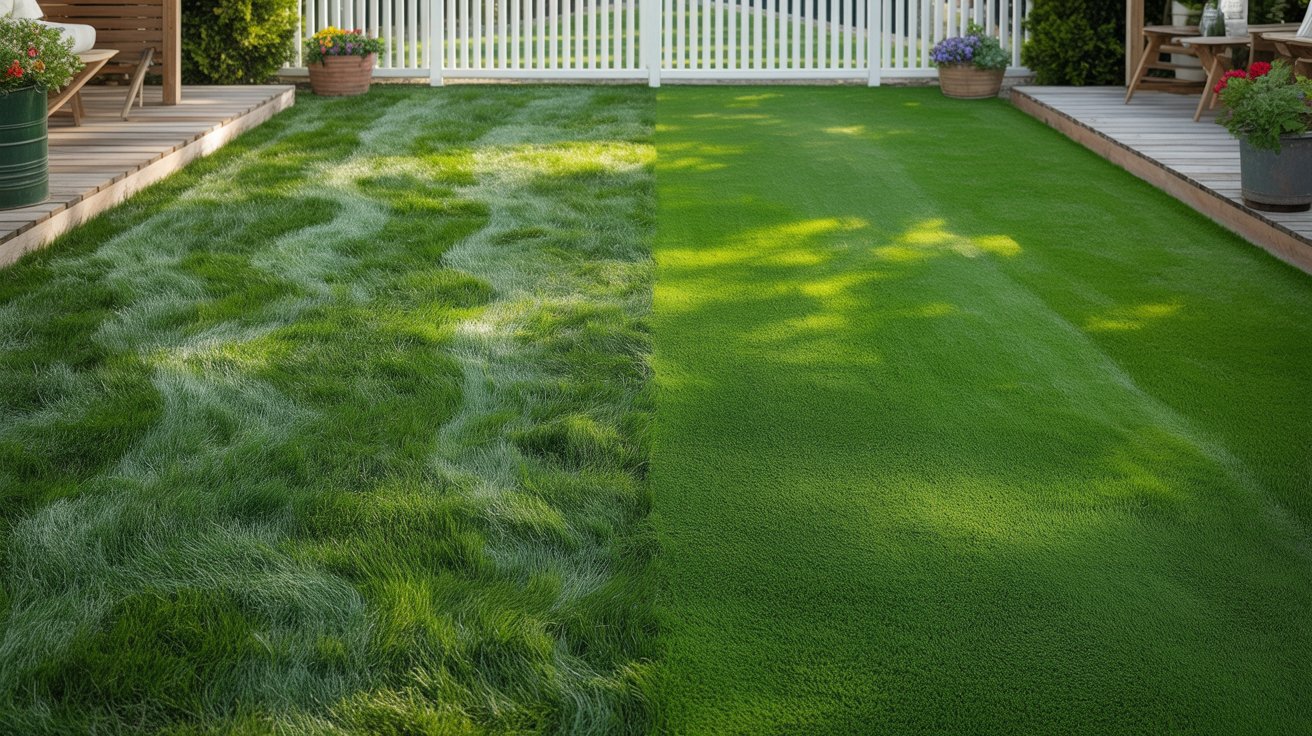
This is one of the most common questions I get. And the honest answer is that for small yards specifically, artificial turf wins in most situations. Here’s why.
Real grass in a small yard is harder to maintain than people expect. Foot traffic on a small patch causes it to thin out fast. Mowing a tiny strip is more of a chore than it sounds. Watering, reseeding, fertilizing, it adds up in both time and cost over the year.
Artificial grass small backyard setups cost more upfront, but the running cost drops to nearly zero after installation. No water bills, no lawn care products, no seasonal repairs.
Real grass does have advantages though. It feels genuinely natural underfoot. It stays cooler on very hot days. And if you have a budget of under $300, real turf seed is a cheaper starting point.
The deciding factor for most small yards is maintenance. If you want a yard that looks good without much effort, artificial turf is the stronger choice. If you enjoy gardening and want a natural feel, real grass can work, just know it needs consistent care.
How to Choose the Right Turf Idea for Your Space
Spend two minutes thinking about how your yard actually gets used before you pick any of the 17 ideas below.
- Very small yard under 10×10 feet: Go minimalist. A full-turf layout or a single clean corner works best. Over-designing small spaces makes them feel busier, not better.
- Yard with kids or pets: A dedicated play zone or pet-friendly turf section makes sense. Drainage and blade softness matter most here.
- Yard for entertaining: Pair turf with a lounge corner and lighting. That combination works particularly well for evenings.
- Mixed-use yard: Go with a multi-zone layout using turf, gravel, and decking together. Each material gives a section of your yard a clear, defined job.
This step alone stops you from installing something that looks great in photos but doesn’t actually match how you use your space.
Small Backyard Turf Design Mistakes to Avoid
Skipping a weed membrane is the most common mistake I see. Without one, weeds push through within months and your turf edges start lifting.
Choosing the wrong pile height is another issue that’s easy to avoid. Lush, tall turf in a tiny yard feels heavy and overdone.
Ignoring drainage causes real problems over time. Water sitting under the turf breaks the backing down and creates persistent odor.
Not finishing the edges properly makes even high-quality turf look rushed. Steel or timber borders take an extra hour but make a significant visual difference.
Budget Breakdown for Small Backyard Turf Projects
Here’s what small backyard turf typically costs. These figures are US-based estimates. Prices vary by region, so always get at least two local quotes before committing to anything.
|
Project Type |
Estimated Cost (US) |
What’s Included |
|
Basic DIY install |
$150 – $400 |
Materials only, no labor cost |
|
Basic professional install |
$300 – $700 |
Turf supply and fitting, up to 20 sqm |
|
Mid-range setup |
$700 – $1,500 |
Turf + edging + drainage, up to 30 sqm |
|
Premium layout |
$1,500 – $3,000+ |
Turf + lighting + seating + custom design |
The gap between DIY and professional installation is mainly edge quality and drainage setup. If your yard has any water-pooling issue, paying for a professional is worth it.
Real-Life Small Backyard Turf Layout Examples
One homeowner I spoke to had a 12×14-foot yard. She laid turf in the center, added gravel around it, and placed two chairs on one side. Total cost came to under $800 and it looked like a properly planned setup that she clearly thought through.
A family with a 4-foot-wide side yard ran turf the full length, put a bench at one end, and hung planters along the fence above it. That forgotten strip became the spot they used most throughout the week.
Neither of those setups needed a large budget. Just a clear plan and the right materials chosen in the right order.
Maintenance Tips for Long-Lasting Turf
Turf is low-maintenance. It is not zero-maintenance though.
Brush the blades every few weeks with a stiff broom to prevent matting and keep them upright.
Rinse turf after pets use it. Twice a week keeps odor from building up.
Check the edges at the start of each season and press them back down if they’ve lifted.
Clear leaves and debris regularly. They block airflow and create damp spots underneath.
Follow these steps and your turf stays in good shape for 10 to 15 years without any major intervention.
Conclusion
Small backyard turf ideas work because they turn ignored outdoor space into somewhere you genuinely want to spend time.
I’ve covered 17 real ideas here along with honest comparisons, heat answers, a step-by-step install guide, and a full budget table. Your yard’s size does not have to limit what it can feel like.
Even a 6×6 corner of well-laid artificial grass changes how the whole space reads. Pick one idea from this list that fits how you actually use your yard.
Map it out this week, set a budget, and get it moving before another season passes. Small yards respond fast to focused, practical changes.
Which of these 17 small backyard turf ideas are you starting with?
Frequently Asked Questions
Is turf worth installing in a very small backyard?
Yes, artificial grass works especially well in tight spaces. It keeps things clean, green, and low-maintenance without demanding more room than you have.
How long does artificial turf last in a small backyard?
Good quality turf lasts 10 to 15 years with basic care. Regular brushing and rinsing keep it in good shape over time.
Does artificial turf get too hot for kids and pets in summer?
It can get warm in direct sun, but a quick hose-down before use drops the temperature fast. Cooling infill and nearby shade help manage heat on extreme days.
Can I install artificial grass myself in a small yard?
Yes, DIY installation is manageable for small spaces. The most important steps are a compacted base, a weed membrane, and clean edge finishing.
How do I stop artificial turf from smelling in a small yard?
Rinse the surface regularly, especially after pets use it. Good drainage under the turf stops moisture from sitting and creating odor over time.