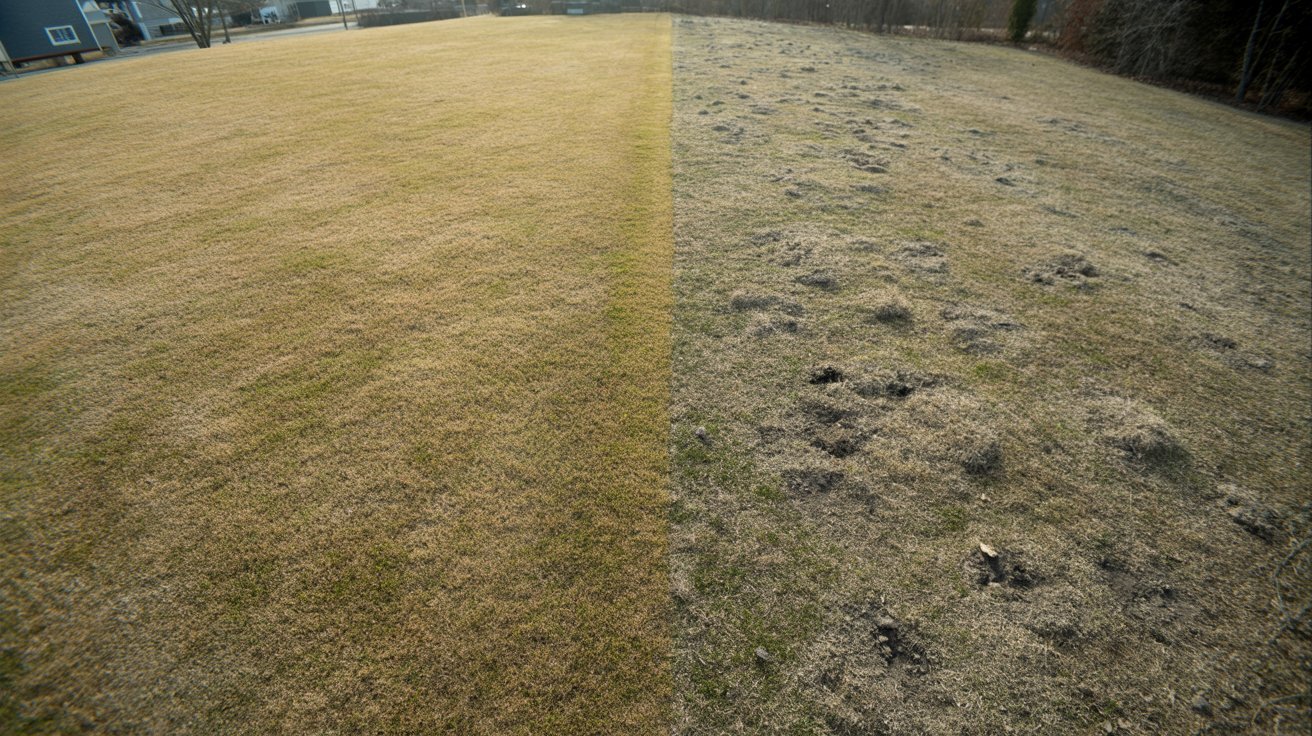

I’ve been working on lawns for years, and the one mistake I see most often? People aerate and overseed at the wrong time.
Timing is everything. Do it right, and your lawn fills in thick and green. Do it wrong, and you waste money on seed that never grows.
In this article, I’ll cover the best time to aerate and overseed lawn based on your grass type, soil conditions, and region. You’ll also learn what to avoid and how to get the best results possible.
Understanding the Best Time to Aerate and Overseed Lawn
Timing your lawn care correctly can mean the difference between a lush yard and wasted effort. Grass type and soil temperature decide everything seeds need warm soil to germinate.
Cool-season grasses like Kentucky bluegrass, fescue, and ryegrass grow best when soil temps are between 50°F and 65°F. Warm-season grasses like Bermuda, Zoysia, and St. Augustine need at least 65°F to 70°F.
Seed germination also depends on moisture levels, weed competition, and sunlight. Plant too early or too late, and germination rates drop fast. Knowing your grass type is always the first step.
Best Time to Aerate and Overseed Cool-Season Lawns

Late summer and early fall offer the ideal window for cool-season grass to grow strong.
Ideal Season: Late Summer to Early Fall
The best time is late August through mid-October. Soil is still warm from summer. Air temperatures are cooling down. Weeds are slowing their growth. This gives new grass seed the best chance to root before winter.
Why This Timing Works
Grass seedlings get several weeks of good growing weather before the first frost. The roots establish well. By spring, the lawn looks full and healthy.
Early Spring as an Alternative
Spring seeding is possible but less ideal. Weeds are also waking up and will compete with your new grass. You’ll need to water more often. Results are usually decent but not as strong as fall seeding.
Best Time to Aerate and Overseed Warm-Season Lawns
Warm-season grasses need heat to grow, making late spring the right moment to act.
Ideal Season: Late Spring to Early Summer
For warm-season grasses, aim for late May through June. Soil temperatures should be at least 65°F. This is when warm-season grass is actively growing and can absorb the new seed well.
Soil and Temperature Requirements
Avoid seeding too early when the soil is still cold. Seeds will sit dormant and may rot. Wait until nighttime temps stay above 60°F consistently.
Regional Timing Variations
In the South, late April may already be warm enough. In transitional zones like the Midwest, wait until late May or early June to be safe.
Always check your local soil temperature rather than going by calendar date alone.
How to Aerate and Overseed Lawn Step by Step
Getting the process right from start to finish makes all the difference for a healthy, full lawn.
Step 1: Prepare the Lawn
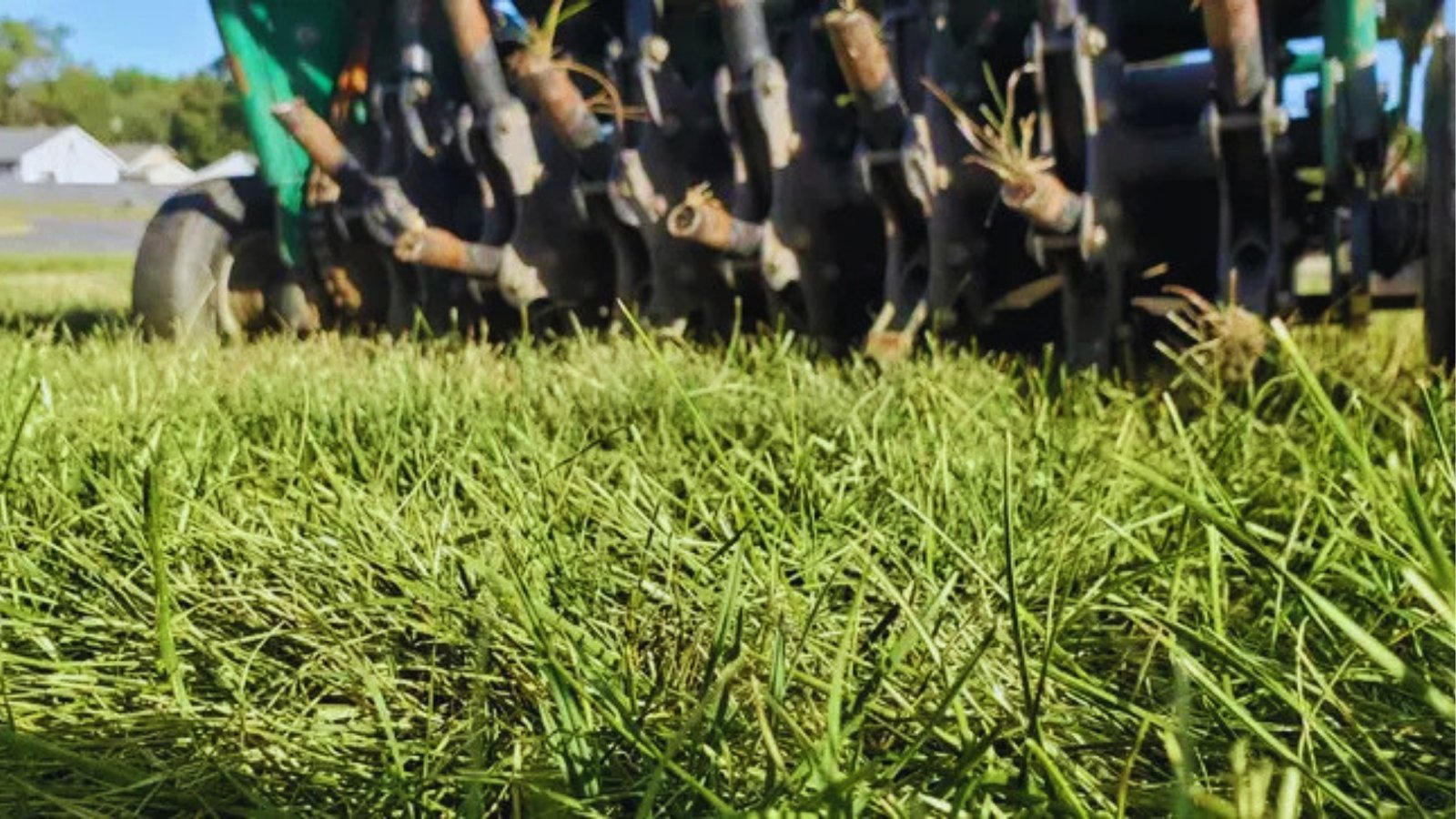
Mow your grass short, around 1.5 to 2 inches, before you do anything else. This helps the aerator reach the soil properly.
Remove any leaves, debris, and thatch buildup from the surface. A clean lawn gives new seed the best possible start.
Step 2: Perform Core Aeration

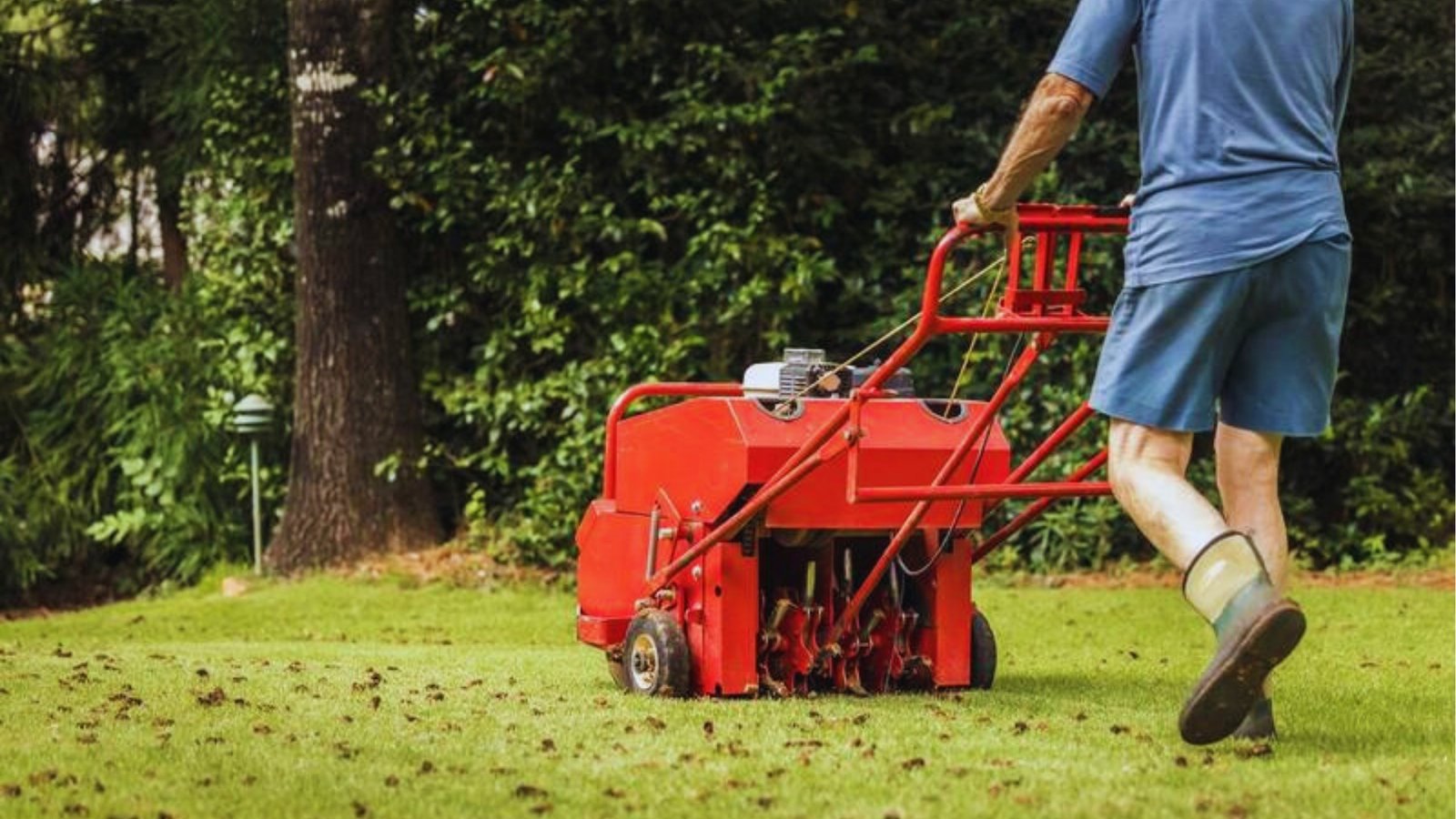
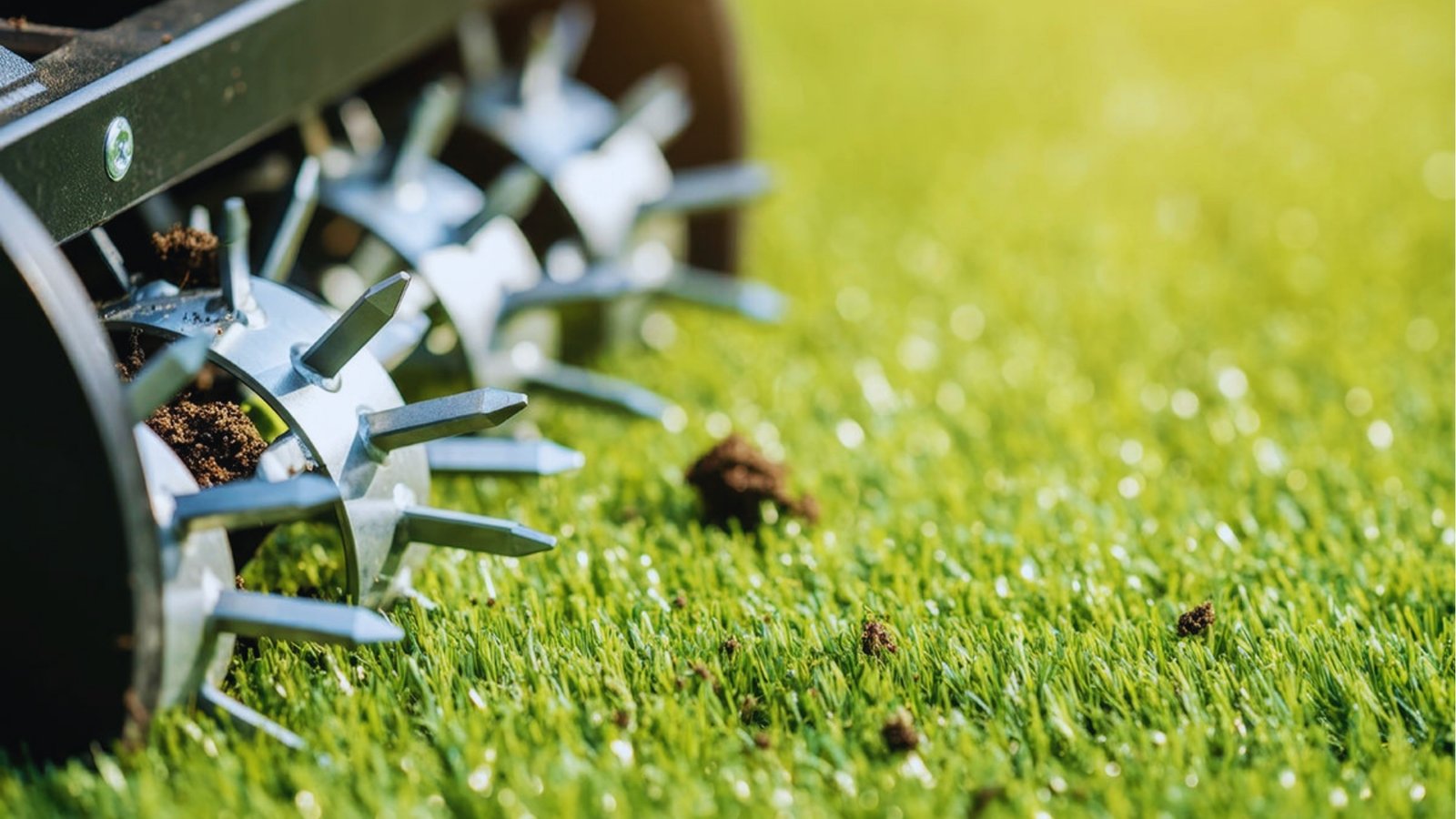
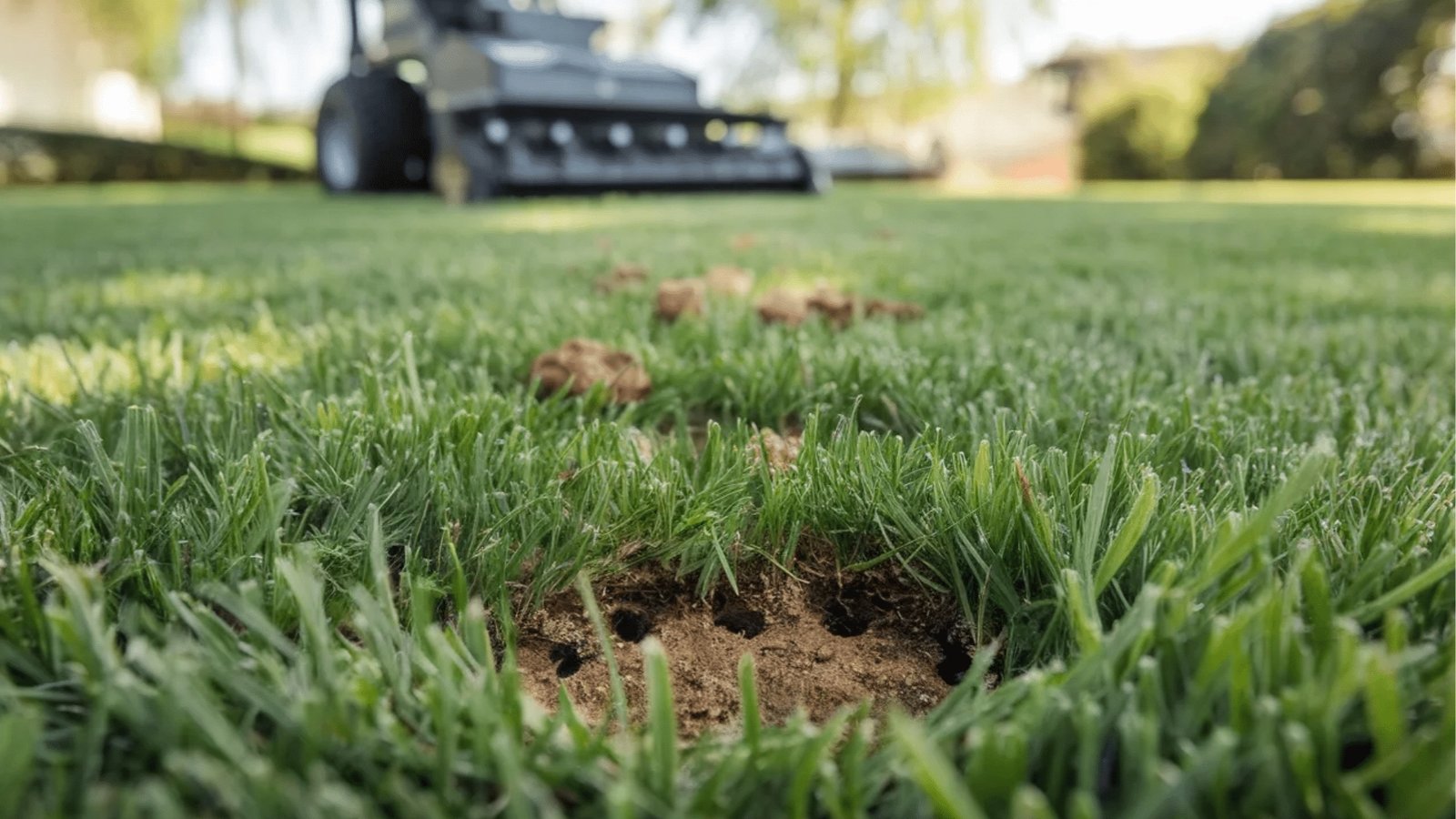
Use a core aerator to pull small plugs of soil out of the ground. This breaks up compacted soil and allows air, water, and nutrients to reach the roots.
The holes also create the perfect space for grass seed to settle in. Rent a core aerator from a local garden center if you don’t own one.
Step 3: Spread Grass Seed Evenly
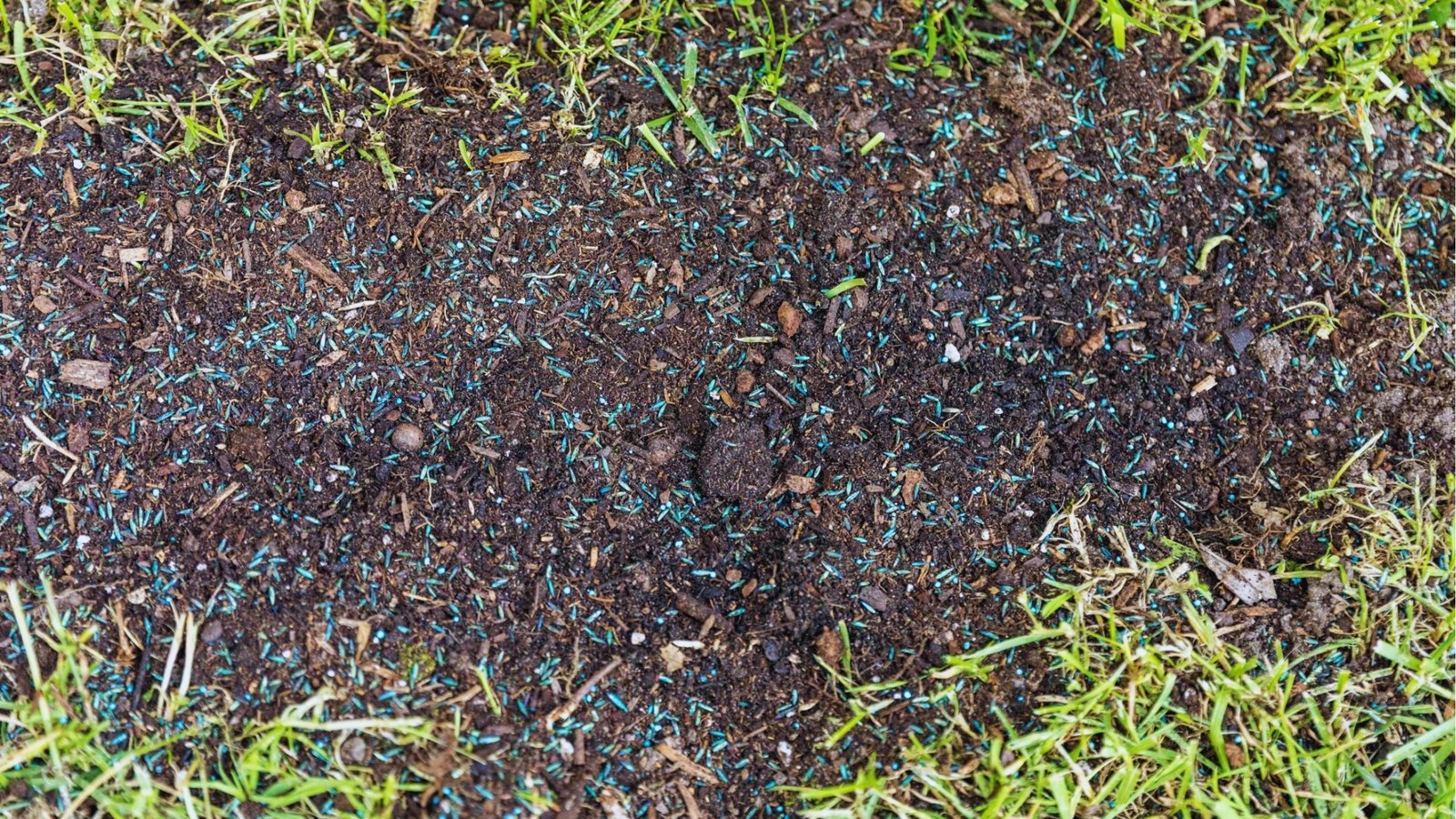
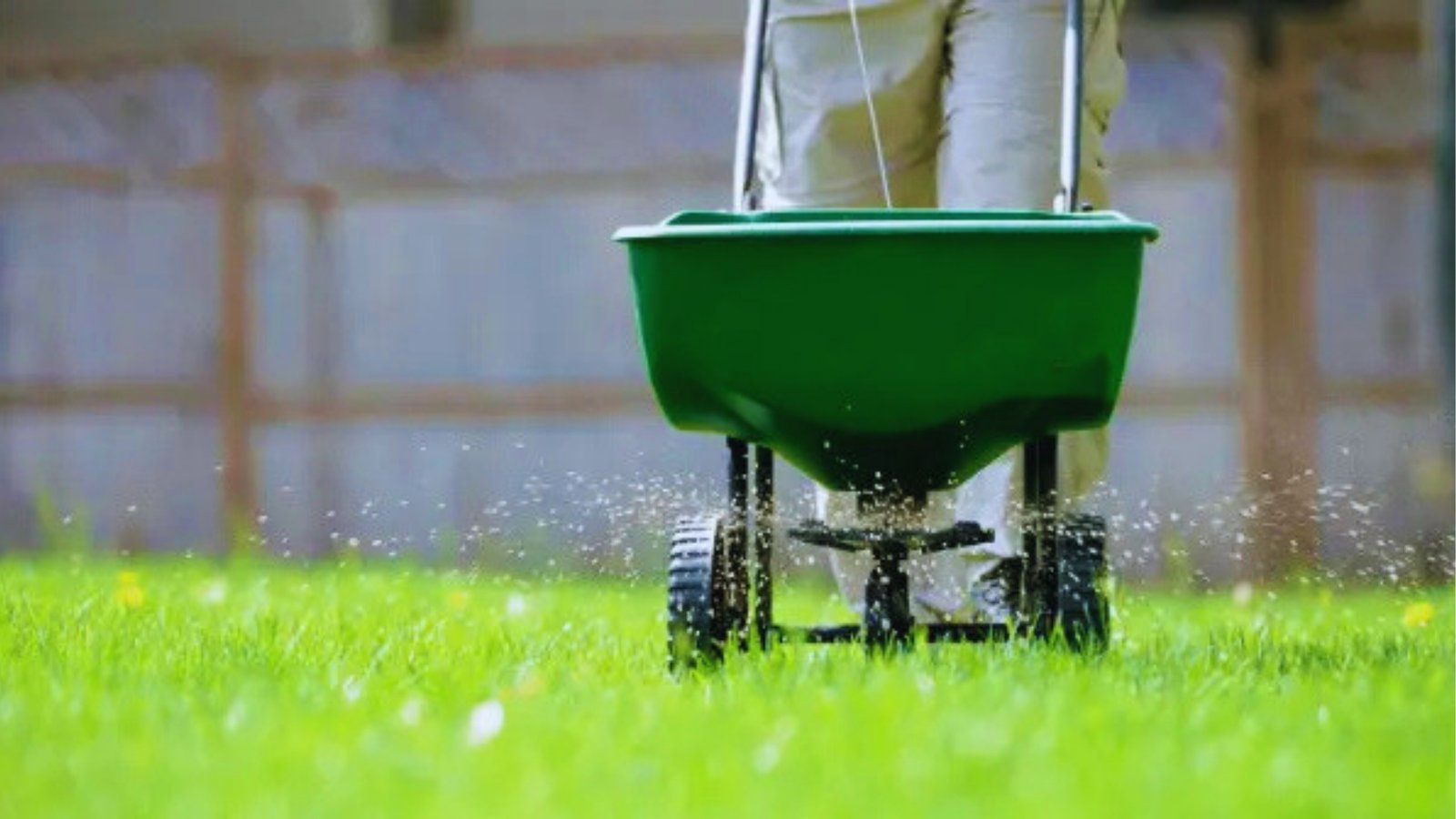
A broadcast spreader gives you the most even coverage across the lawn. Check the seeding rate printed on your seed bag and follow it closely.
Too much seed causes crowding. Too little leaves bare spots. Take your time and make sure no areas are missed.
Step 4: Apply Topsoil or Compost

Spread a thin layer of compost, about ¼ inch, over the seeded area. This helps lock in moisture and keeps seeds in contact with the soil.
Good seed-to-soil contact is what triggers germination. Don’t skip this step; it makes a noticeable difference in how well the grass fills in.
Step 5: Water and Maintain Properly
Water lightly twice a day for the first two weeks to keep the soil consistently moist. Avoid soaking the ground, as too much water can wash seeds away.
Once you see new grass coming in, gradually reduce watering frequency. Staying consistent in these early weeks is what separates a full lawn from a patchy one.
When Is the Worst Time to Aerate and Overseed Lawn?
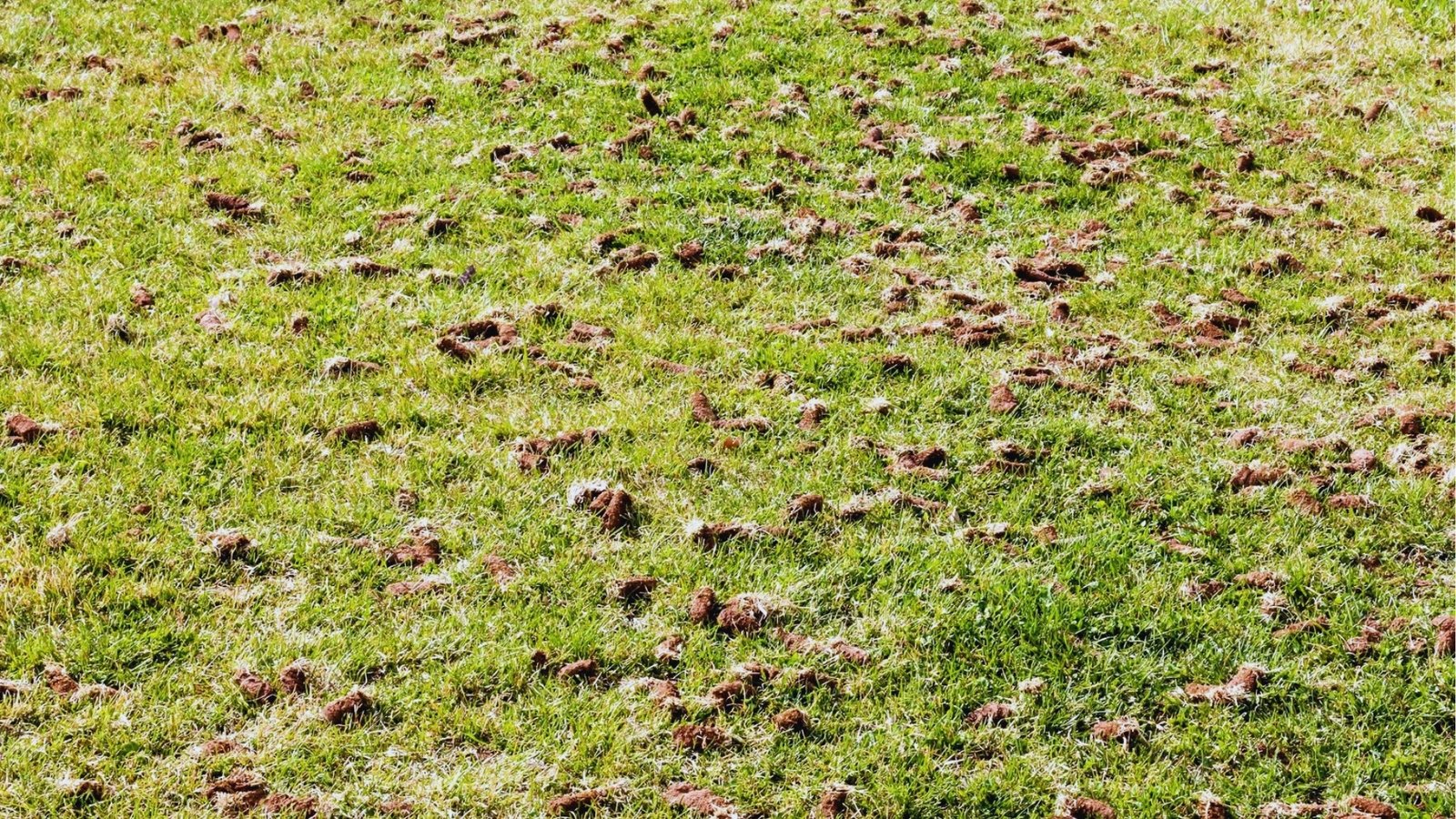
Some conditions will ruin new grass before it even starts here’s what to watch for.
Weather Conditions That Hurt New Grass Growth
Avoid aerating and overseeding during:
- Midsummer heat: high temperatures dry out seeds fast
- Hard frost: frozen soil blocks germination
- Drought: without consistent moisture, seeds won’t sprout
- Heavy rain periods: seeds wash away
Dormant Seeding Exception
Some lawn care pros do dormant seeding in late fall or early winter. The idea is that seeds sit in the soil over winter and germinate in early spring.
It can work, but results are less predictable. It’s a last resort, not a first choice.
Why Aeration Should Be Done Before Overseeding
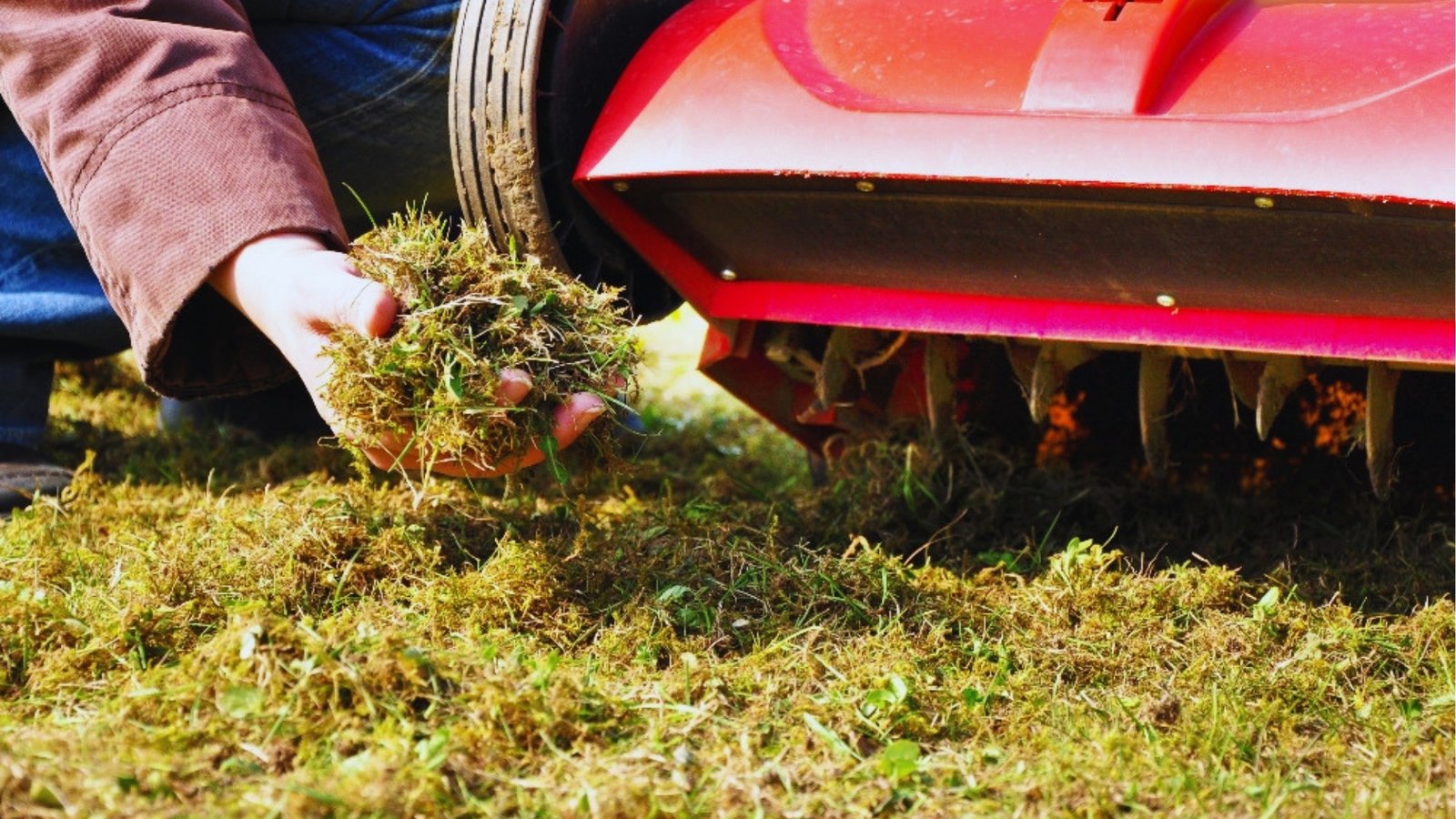
Aeration is not optional, it’s what makes overseeding actually work.
Benefits of Core Aeration
Core aeration breaks up compacted soil. It improves water absorption. It lets air and nutrients reach the roots more easily.
How It Improves Seed-to-Soil Contact
When you drop seed on hard, unbroken ground, most of it doesn’t germinate. The holes created by aeration give seeds a place to settle and make direct contact with soil. That contact is what triggers germination.
Impact on Root Growth
Roots grow deeper after aeration. Deeper roots mean stronger, more drought-resistant grass. Skipping aeration means weaker results, even with good seed.
Tips for Best Results
Small habits make a big difference when growing new grass from seed.
- Choose the Right Grass Type Match the seed to your region and existing lawn. Mixing incompatible grasses leads to patchy results.
- Monitor Soil Temperature Before Seeding Buy an inexpensive soil thermometer. Don’t rely on air temperature alone. Soil temp is what actually matters.
- Maintaining a Proper Watering Schedule Consistent moisture is critical in the first 2 to 3 weeks. Set reminders if needed. Don’t skip watering days.
- Avoid Extreme Weather Conditions Check the forecast before you start. Don’t aerate right before heavy rain or a heat wave.
- Reseed Bare Patches When Needed If some areas don’t fill in after three weeks, spot-seed those areas again. Don’t wait until next season.
Conclusion
Knowing the best time to aerate and overseed lawn changed how I care for my own yard completely. Once I matched my grass type to the right season, the results were night and day.
If you’ve struggled with patchy, thin grass, I hope this helps you finally get the lawn you want. Start with a soil thermometer, pick the right window, and be consistent with watering.
You’ve got this. Drop a comment below if you have questions or share this post with someone who needs a better lawn this season.
Frequently Asked Questions
How soon after aeration should I overseed?
Overseed within 48 hours of aerating. The holes are open and ready. Waiting too long reduces the seed-to-soil contact benefit.
Can I aerate and overseed on the same day?
Yes, and it’s actually the best approach. Aerating first and seeding right after gives seeds the best chance to settle into the soil quickly.
How often should I aerate my lawn?
Once a year is enough for most lawns. Heavily compacted or high-traffic lawns may benefit from aerating twice a year.
What grass seed works best for overseeding?
It depends on your region. Use fescue or ryegrass for cool climates. Use Bermuda or Zoysia for warm climates. Always match the seed to what’s already growing.
How long does it take for overseeded grass to grow?
Most grass types germinate within 7 to 21 days. Full coverage usually takes 4 to 8 weeks depending on watering, temperature, and seed type.