
I've been gardening for years, and strawberries taught me the hardest lesson. Planting them alone is a mistake.
The right neighbors make a real difference. They block pests, pull in pollinators, and help your strawberries produce more fruit without extra work from you.
In this blog, I'll show you exactly what to plant with strawberries in a raised bed. You'll get 30+ companion plants, layout ideas, spacing tips, and a list of plants to keep far away.
No guesswork. No wasted space. Just a practical guide built from real gardening experience.
If you want a raised bed that actually works this season, keep reading.
Why Companion Planting Matters for Strawberries in Raised Beds
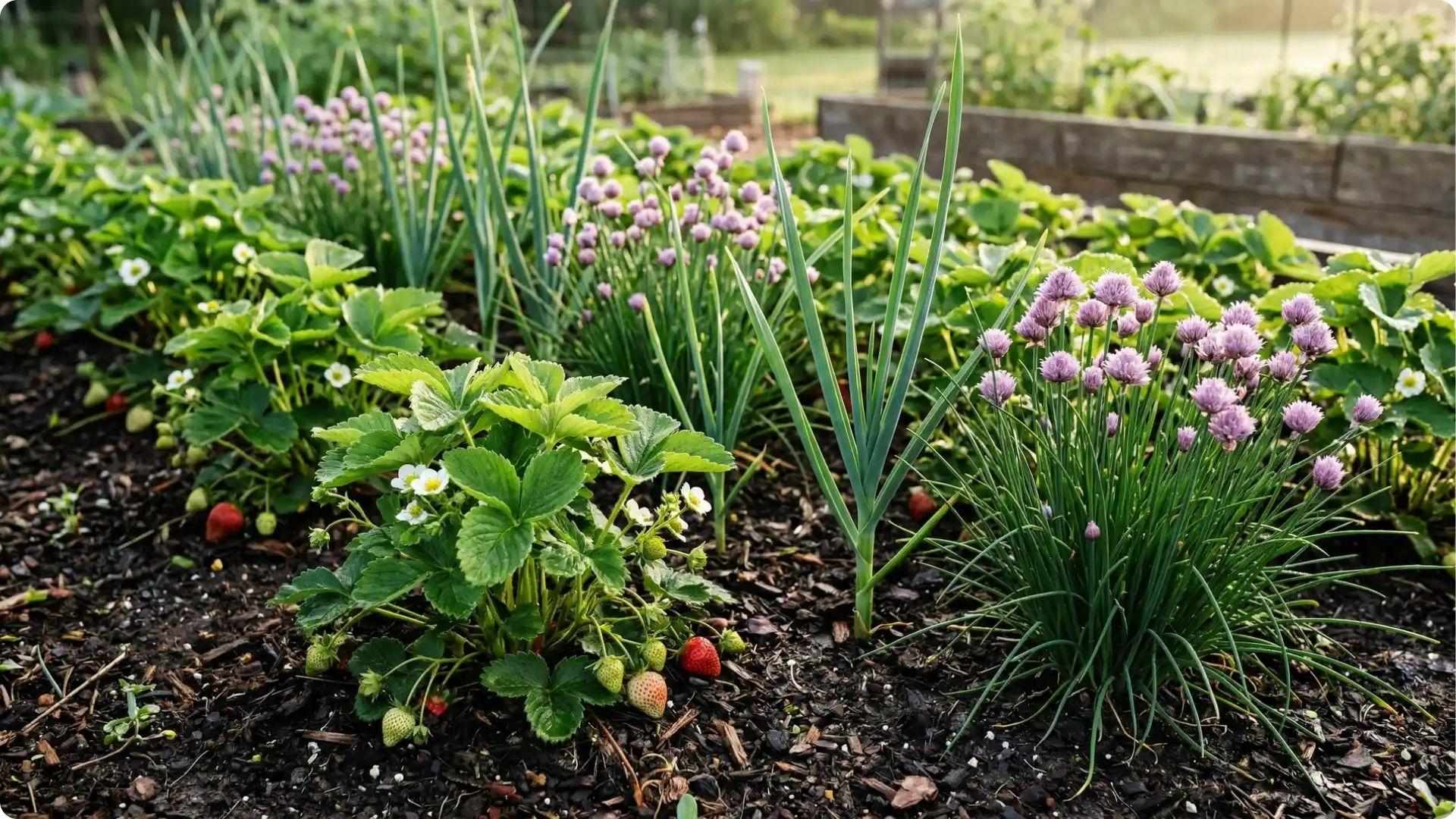
Companion planting is not just about filling space. It's a smart way to grow more food in less room while keeping your plants healthy.
The right neighbors can repel pests, bring in pollinators, fix nitrogen in the soil, and even make your strawberries taste better.
In a raised bed, space is limited, so every plant needs to pull its weight. I've seen the difference firsthand.
Once I started pairing strawberries with the right plants, I got bigger harvests, fewer pest problems, and a bed that looked full and healthy all season long.
30+ Best Companion Plants
Here are 30+ plants that grow well alongside strawberries and actually help them thrive.
1. Basil
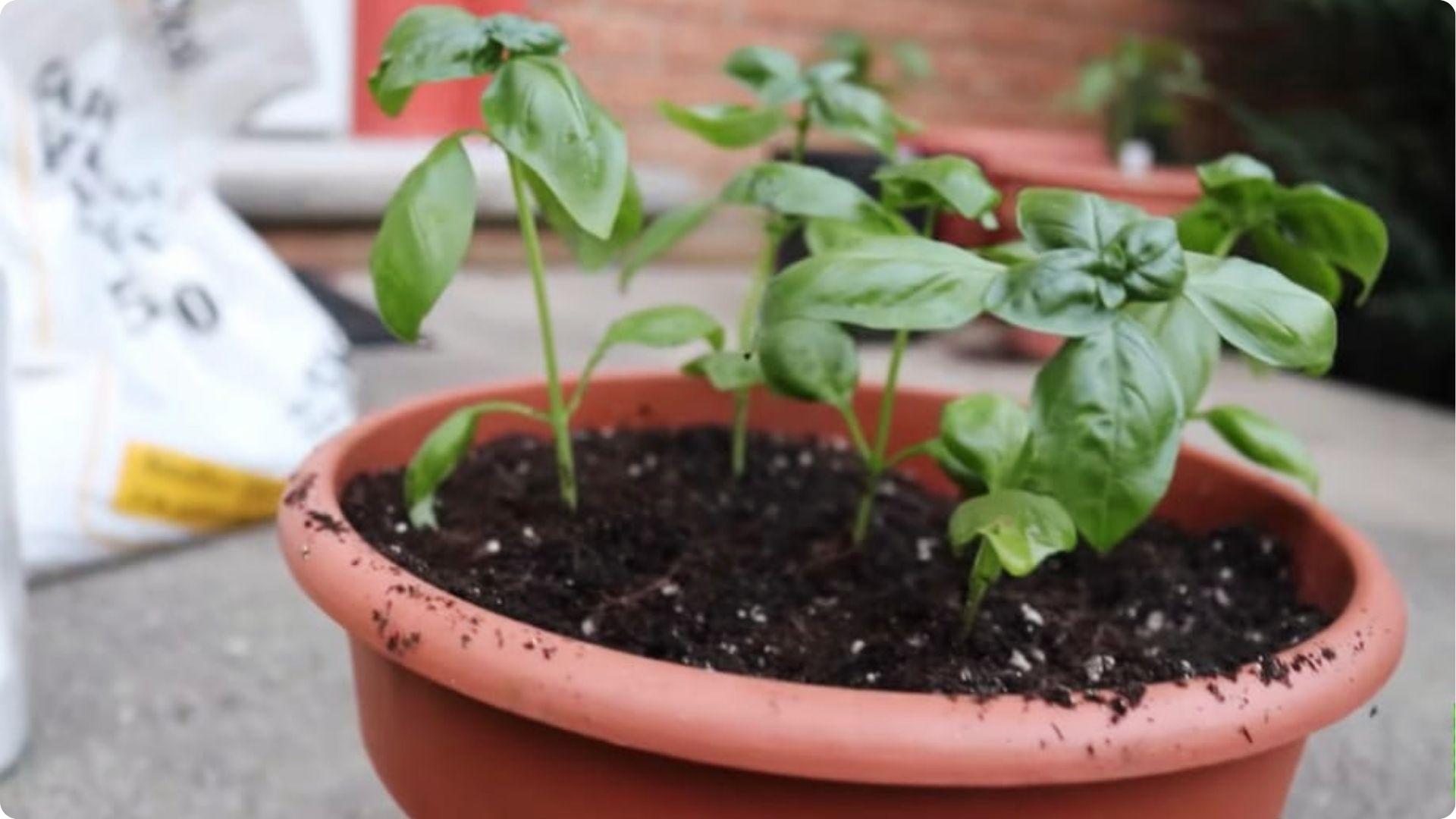
Basil repels aphids and thrips while attracting pollinators. Plant it close to strawberries for natural pest control. Some gardeners also believe it makes strawberries taste sweeter over time.
2. Thyme
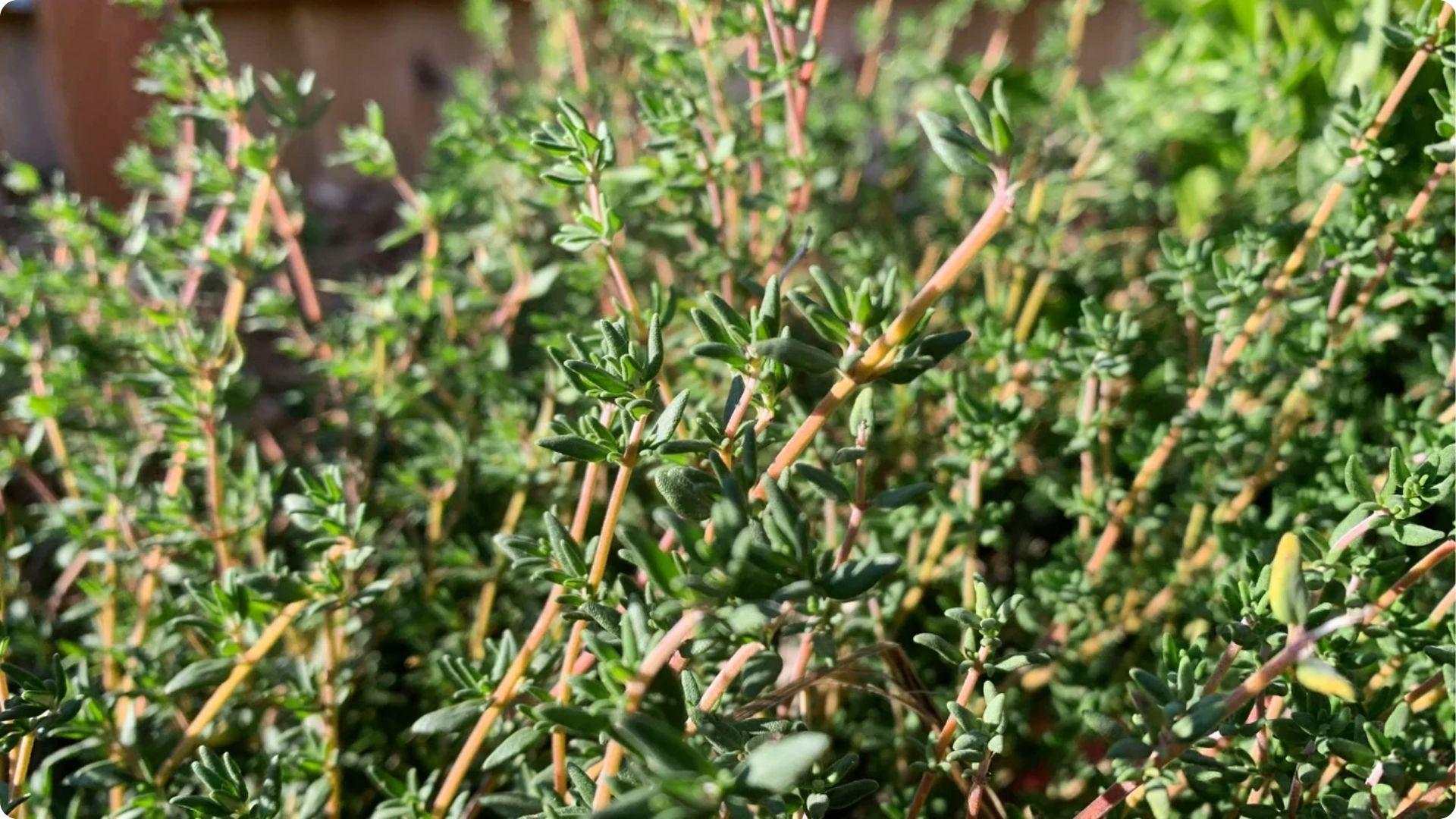
Thyme is a low-growing herb that deters worms and beetles. It spreads along the soil and acts as a ground cover between strawberry plants, helping keep weeds down too.
3. Sage
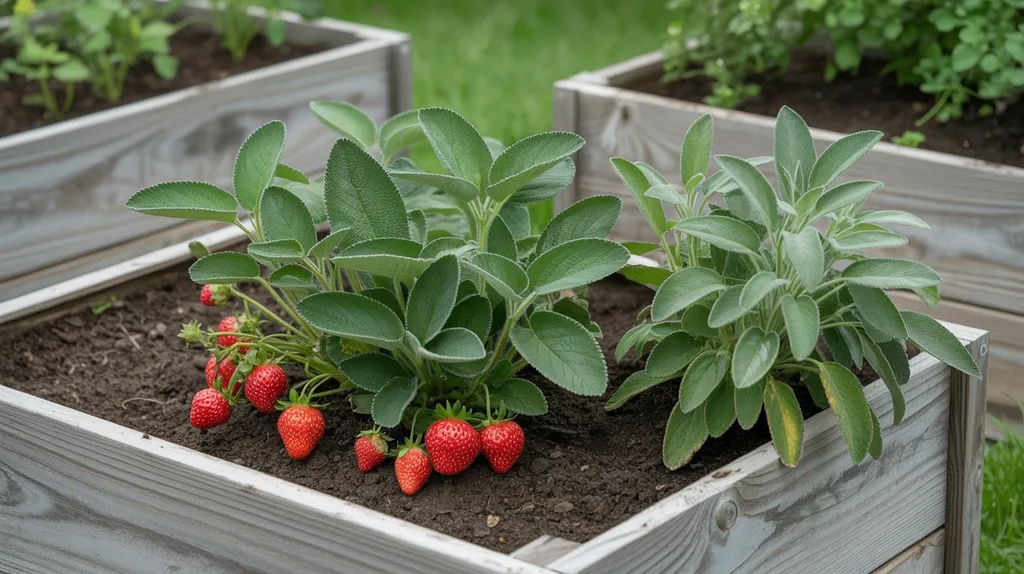
Sage keeps slugs and beetles away. It grows well in raised beds and doesn't crowd strawberries. The strong scent confuses pests and makes it harder for them to find your plants.
4. Oregano
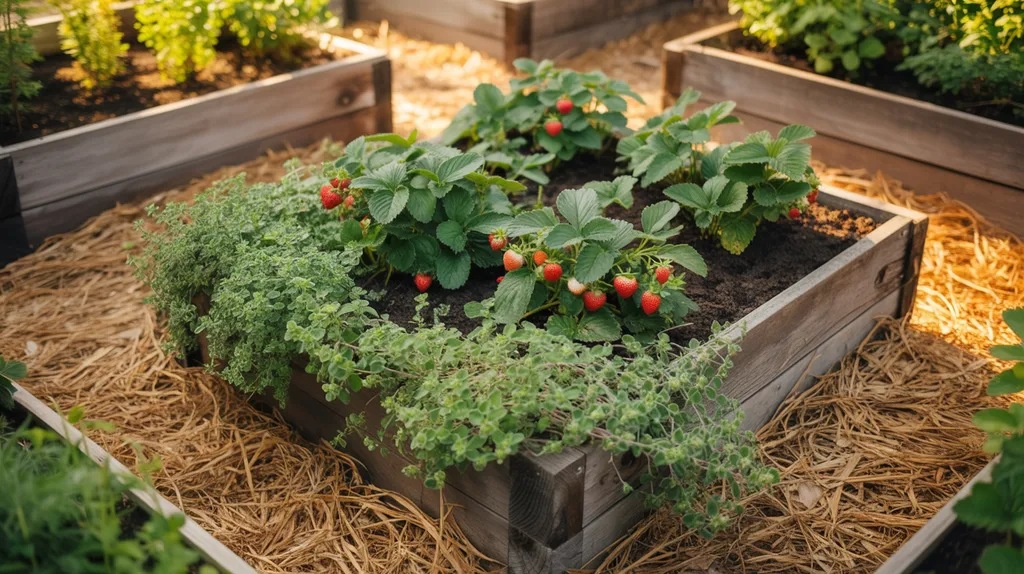
Oregano acts as a ground cover and brings in beneficial insects. It's drought-tolerant and spreads easily. Plant it along the edges of your raised bed to create a natural border around strawberries.
5. Cilantro
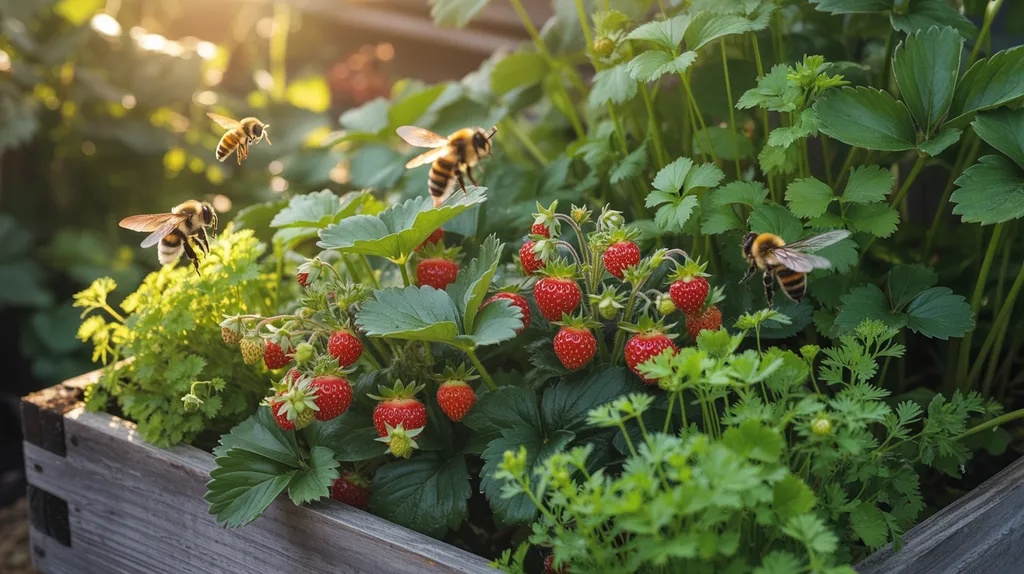
Cilantro attracts hoverflies and parasitic wasps that feed on common strawberry pests. It also grows quickly and fills empty gaps in a raised bed before weeds can take hold.
6. Dill
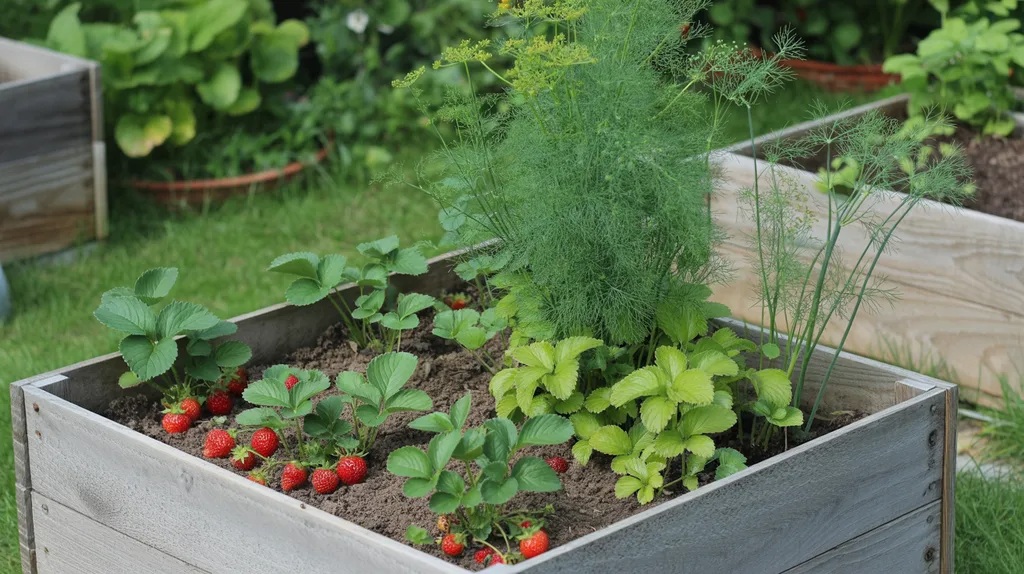
Dill draws in helpful insects like lacewings and ladybugs, which eat aphids. Keep it toward the back of the bed so it doesn't shade your strawberries as it grows taller.
7. Parsley
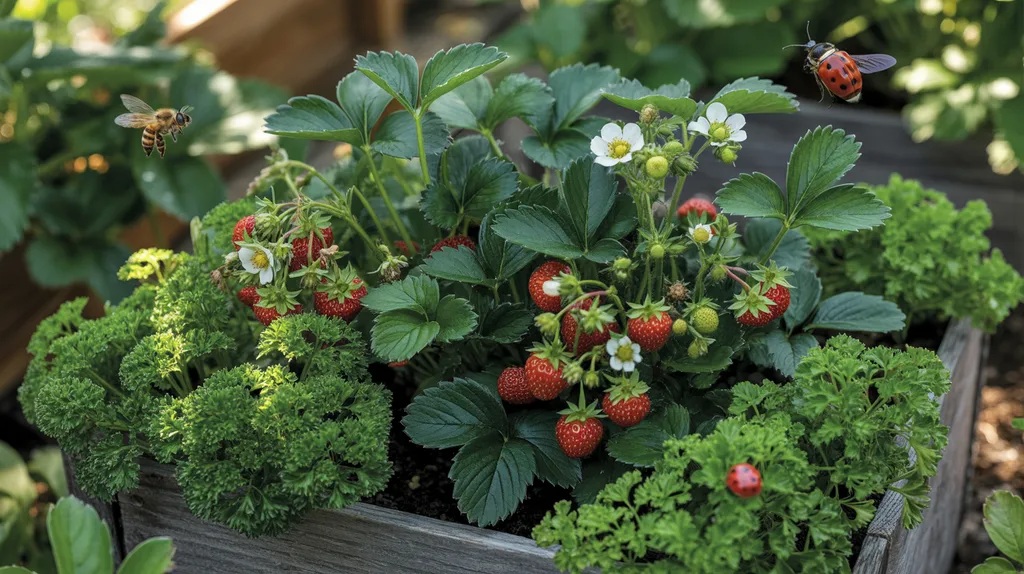
Parsley attracts predatory insects and works well planted near the edges of a raised bed. It's slow to grow but stays productive for two seasons, making it a reliable companion plant.
8. Chives
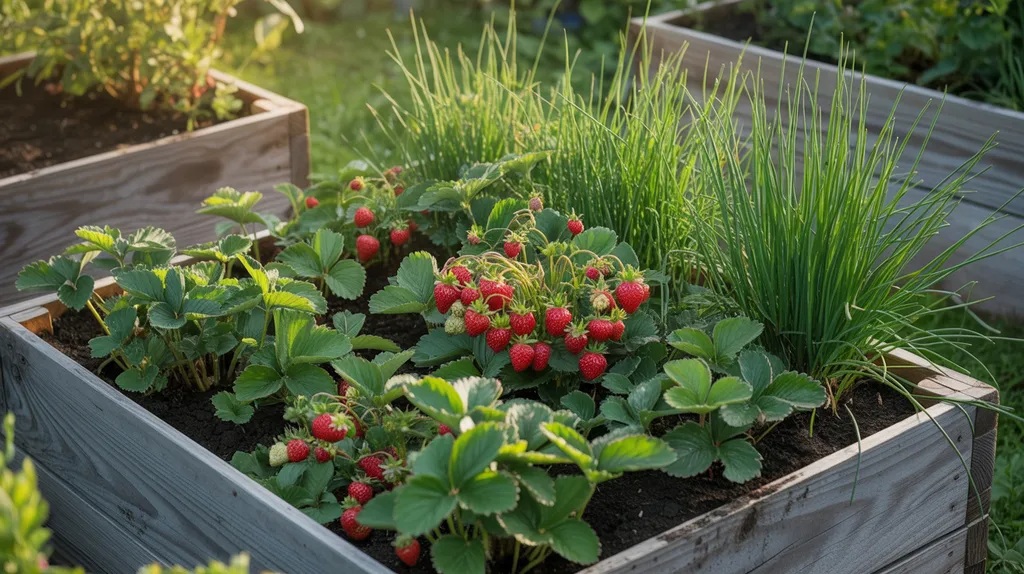
Chives repel aphids and Japanese beetles. They're compact, easy to grow, and come back every year. Plant them between strawberry rows for steady, low-effort pest protection all season long.
9. Garlic
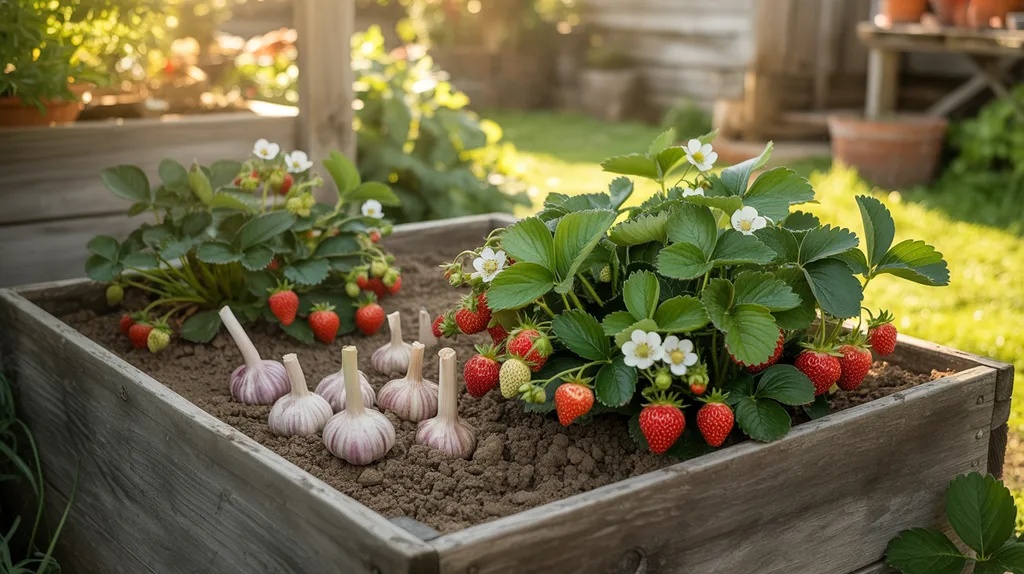
Garlic is one of the best pest deterrents you can plant near strawberries. It repels spider mites, aphids, and fungal issues. Plant individual cloves around the edges of your raised bed.
10. Onions
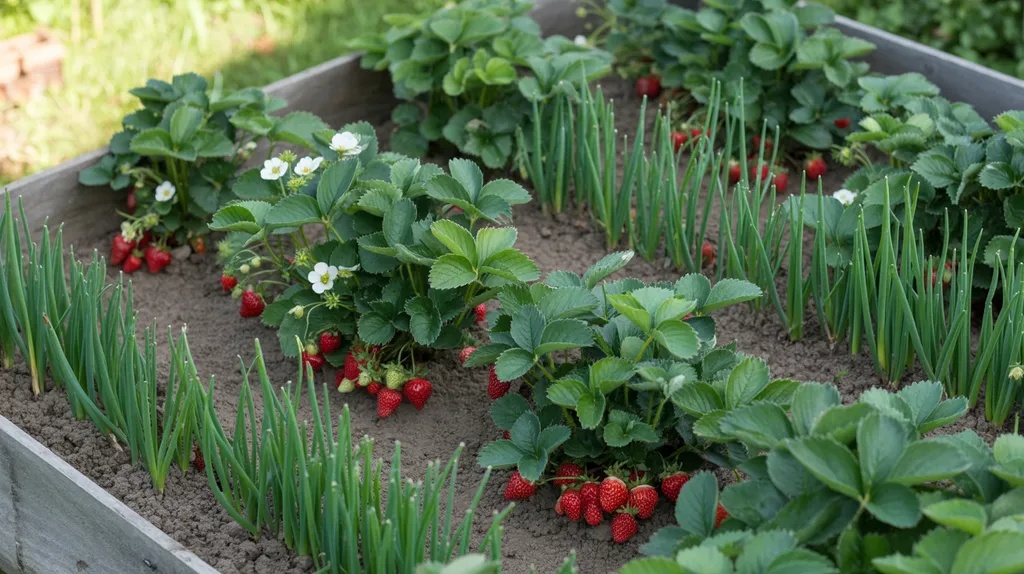
Onions help keep pests away and don't take up much space in a raised bed. Their strong scent confuses insects that target strawberry plants. They grow well planted between strawberry crowns.
11. Scallions
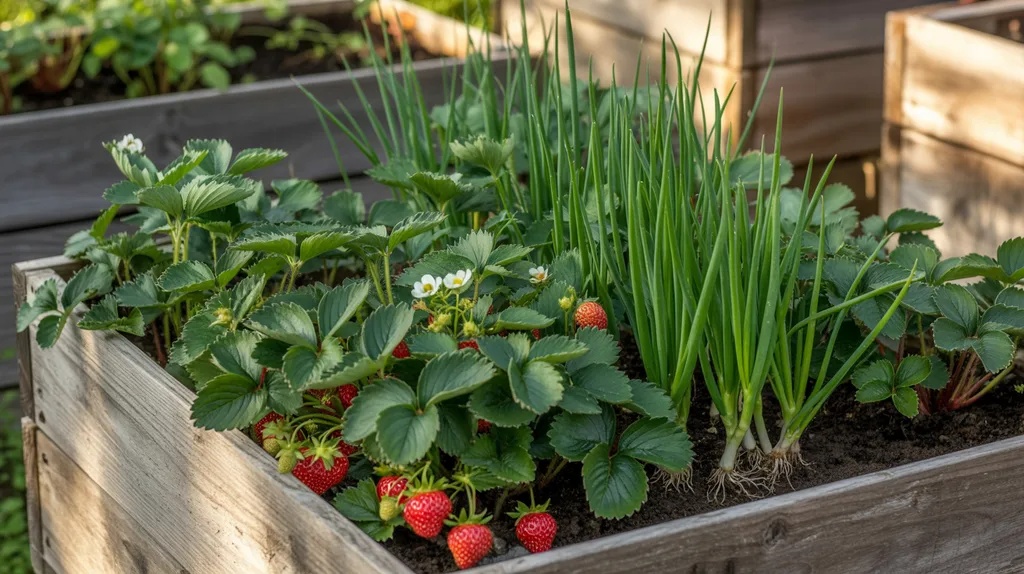
Scallions are compact and easy to tuck into small gaps in a raised bed. Like onions and garlic, they repel common pests and work well as a border plant around strawberries.
12. Lettuce
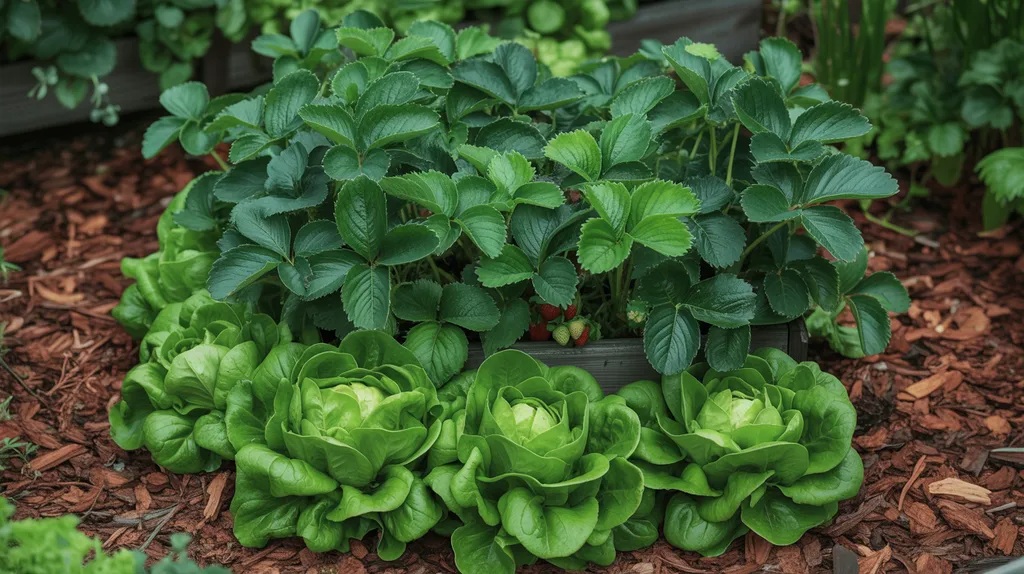
Lettuce grows fast and low, filling space without competing with strawberries for deep nutrients. It provides light ground cover and can be harvested before strawberry plants need full room.
13. Spinach
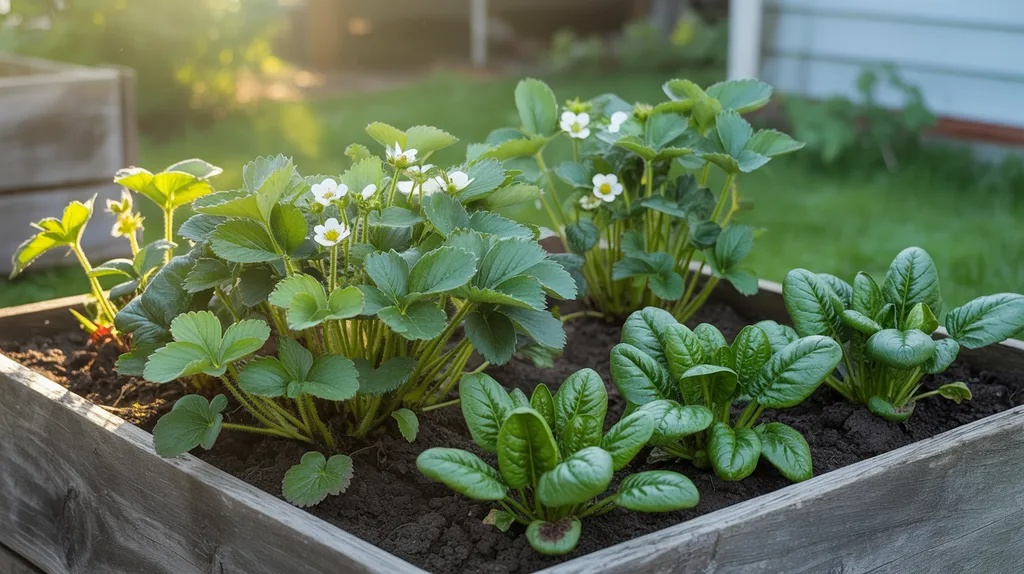
Spinach is a cool-season crop that pairs well with early strawberries. It grows quickly, takes up little space, and can be harvested before the heat of summer arrives and strawberries peak.
14. Arugula
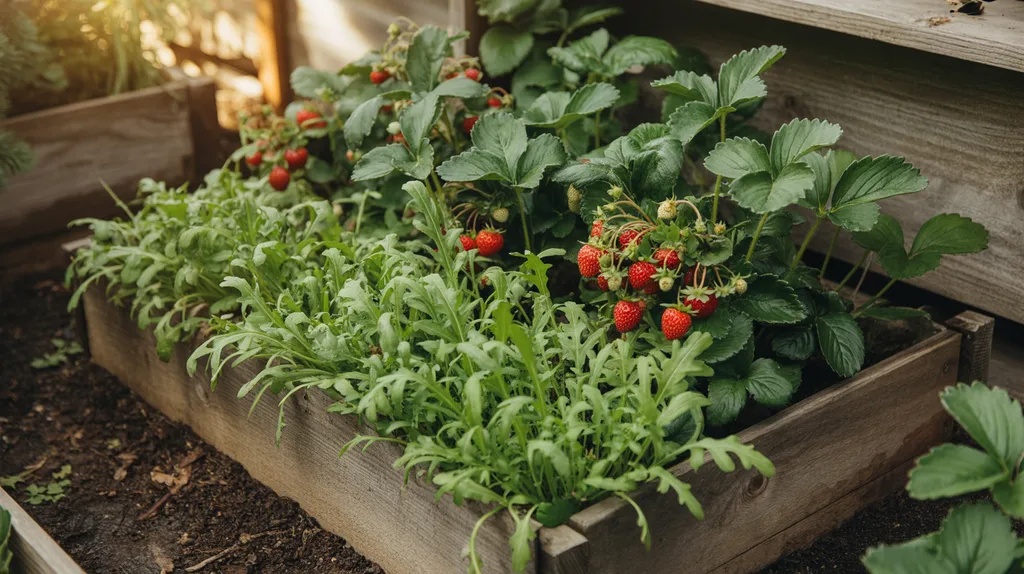
Arugula fills gaps fast and doesn't compete aggressively with strawberries. It's ready to harvest in just a few weeks and works well as a short-term space filler between young strawberry plants.
15. Swiss Chard
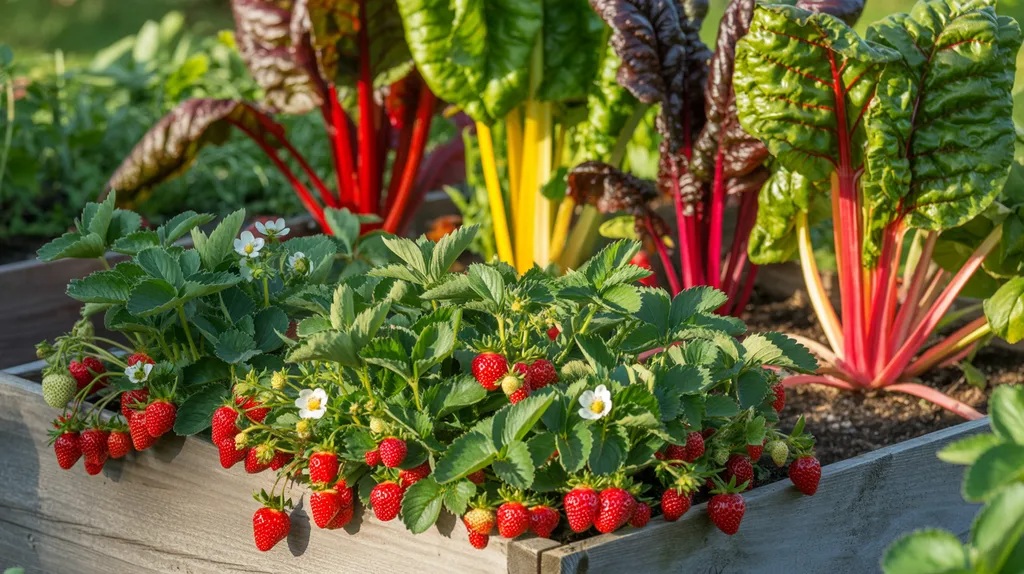
Swiss chard grows upright and doesn't crowd strawberry crowns. It adds height and color to a raised bed while sharing soil space peacefully. Plant it toward the back so it doesn't block sun.
16. Bush Beans
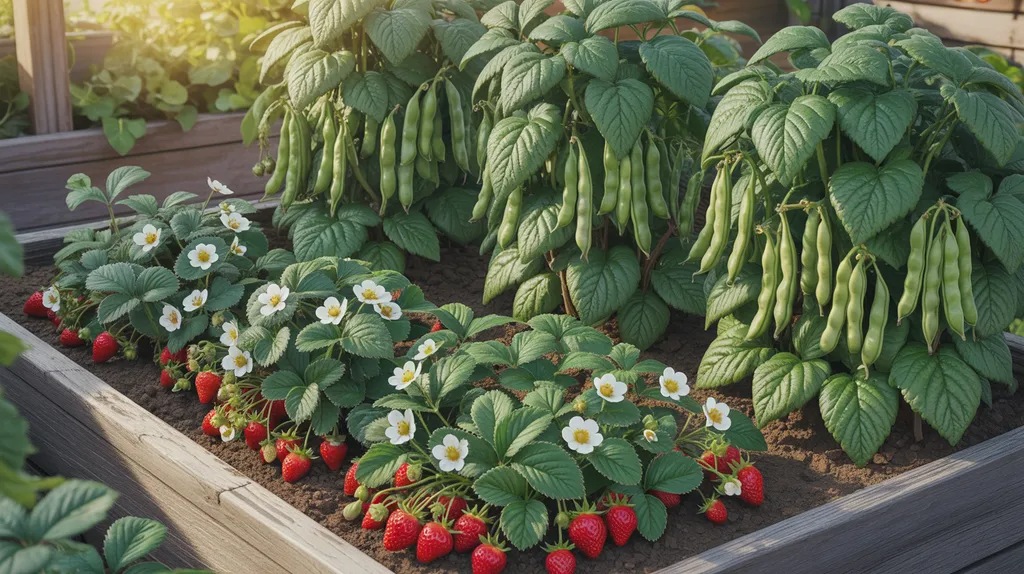
Bush beans fix nitrogen in the soil, which feeds strawberries naturally. They stay compact and don't vine out of control. Plant them in rows alongside strawberries for a productive, low-maintenance pairing.
17. Peas
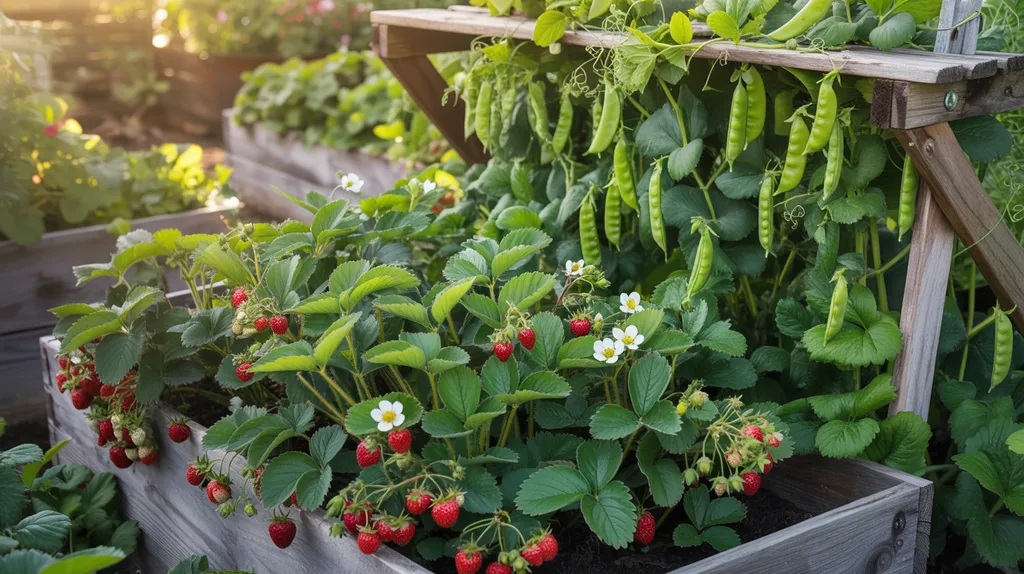
Peas also fix nitrogen and grow vertically, so they don't take up ground space. Use a small trellis at one end of the raised bed to keep them upright and away from strawberry plants.
18. Radishes
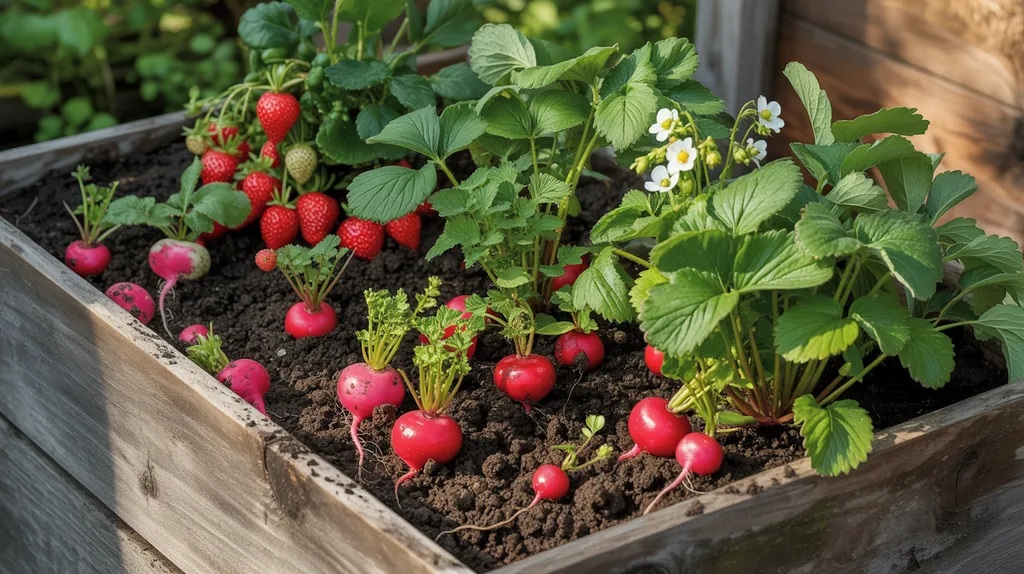
Radishes grow fast and break up compacted soil with their roots. They also deter some beetles. They're ready to harvest in as little as three weeks, freeing up space for your strawberries.
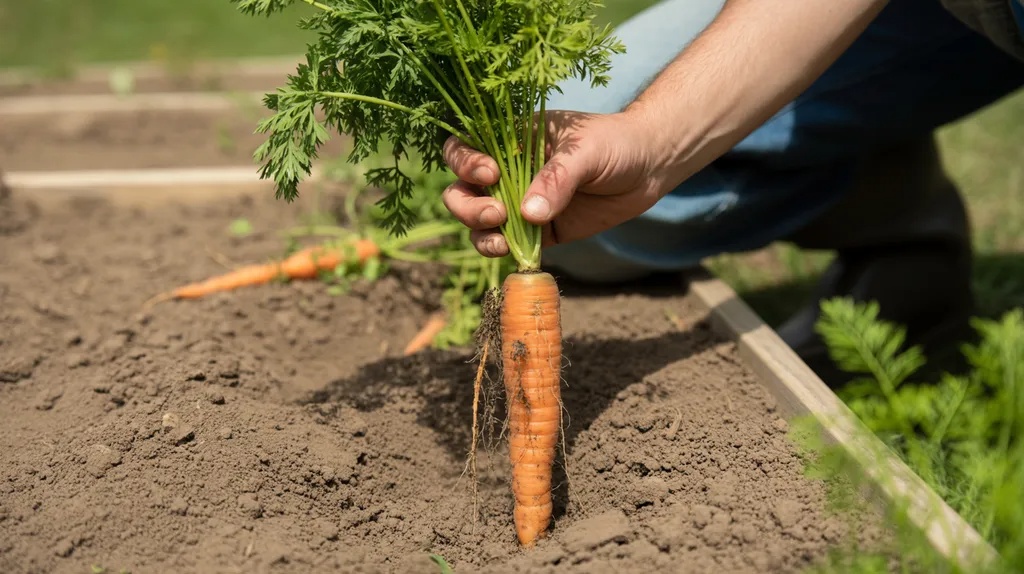
19. Carrots
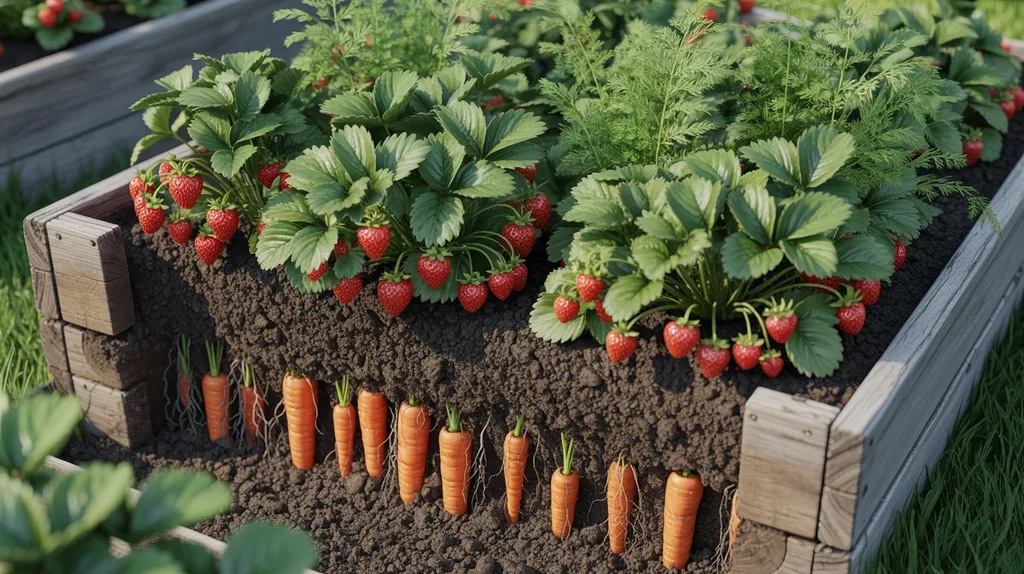
Carrots loosen the soil as they grow, which helps water reach strawberry roots more easily. They don't compete much above ground. Tuck them in between strawberry plants for a space-smart combo.
20. Beets
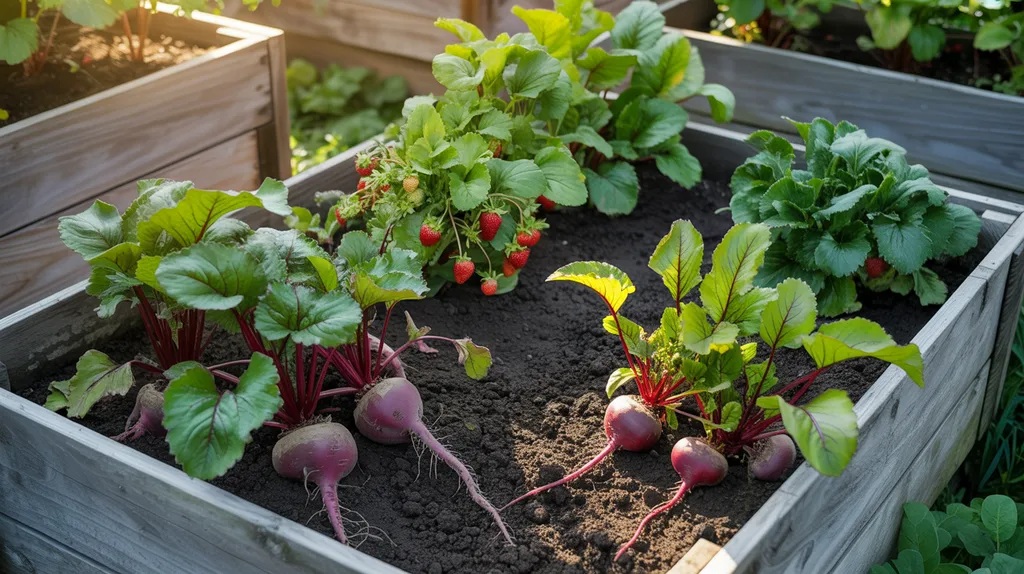
Beets are compact and grow well in raised beds alongside strawberries. They don't need much space above ground and their roots aerate the soil slightly, helping improve drainage over time.
21. Asparagus
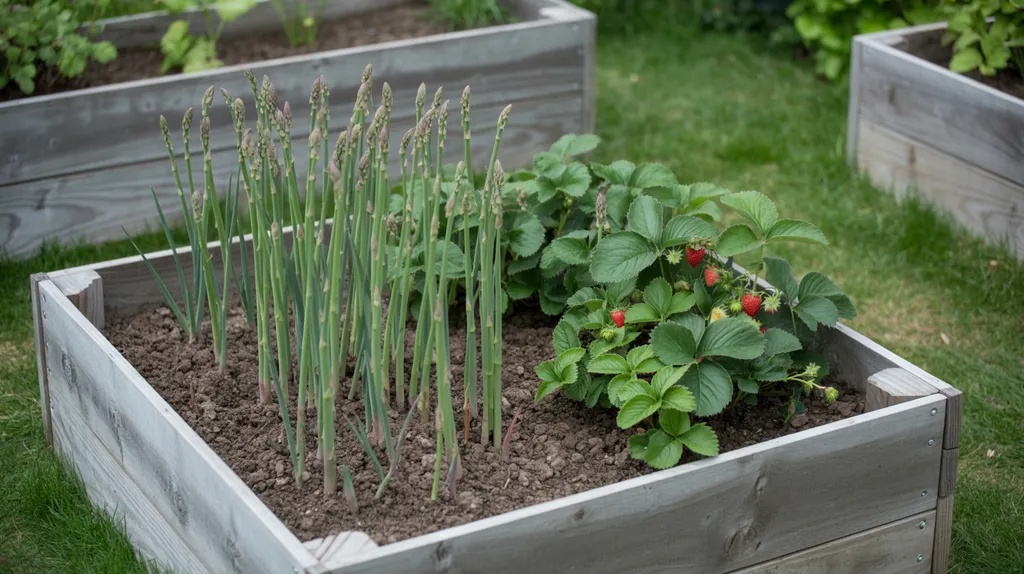
Asparagus and strawberries are a classic pairing. Asparagus repels slugs, and strawberries act as ground cover for asparagus. They thrive together long-term in a permanent raised bed setup.
22. Rhubarb
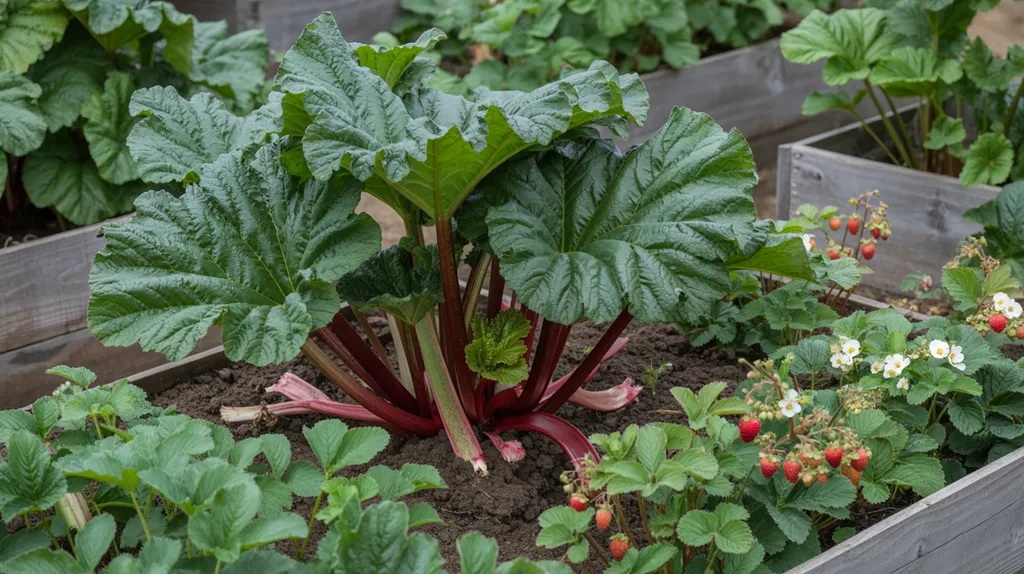
Rhubarb leaves contain oxalic acid, which can deter some pests. Plant rhubarb at one corner of a large raised bed. It grows big, so give it space away from the strawberry crowns.
23. Marigolds
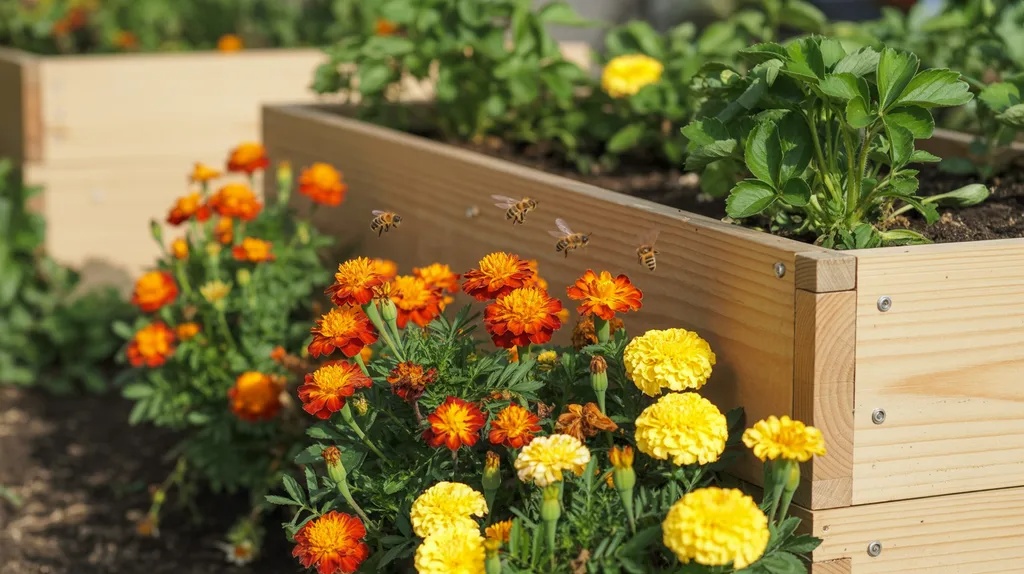
Marigolds are one of the best companion plants for almost any vegetable or fruit. They repel nematodes, aphids, and whiteflies. Plant them around the border of your strawberry raised bed.
24. Sweet Alyssum
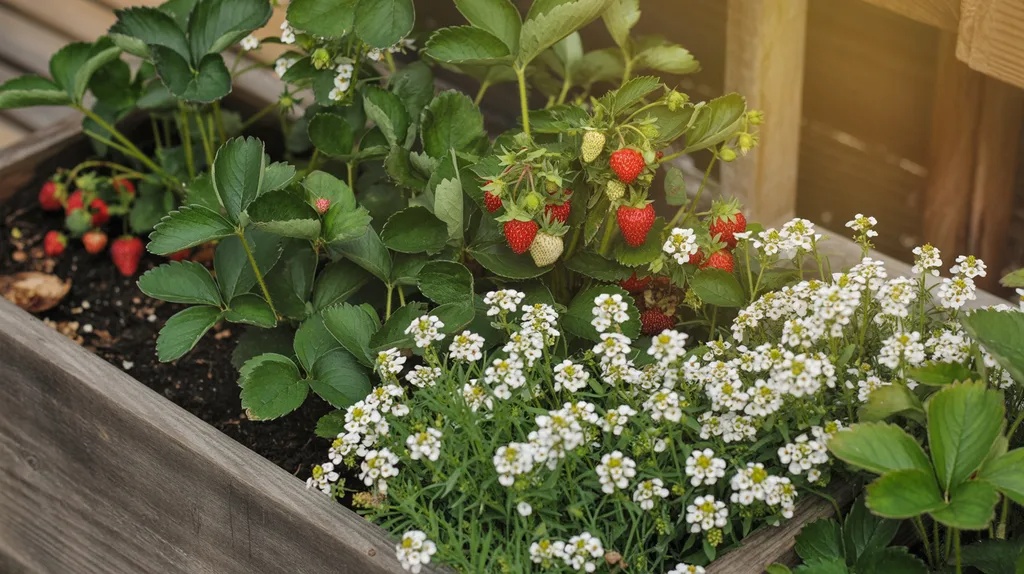
Sweet alyssum produces tiny white flowers that attract beneficial insects. It stays low to the ground and acts as a living mulch. It fills gaps between strawberry plants without competing heavily.
25. Borage
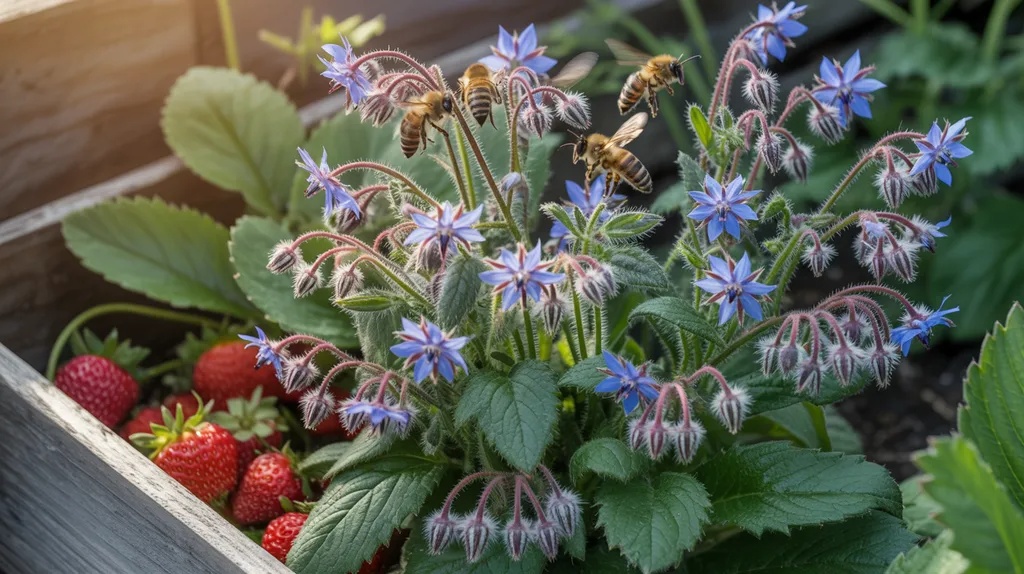
Borage attracts pollinators and repels tomato hornworms. It also improves soil quality as it breaks down. Plant it near strawberries for better pollination and a small boost to fruit production.
26. Nasturtiums
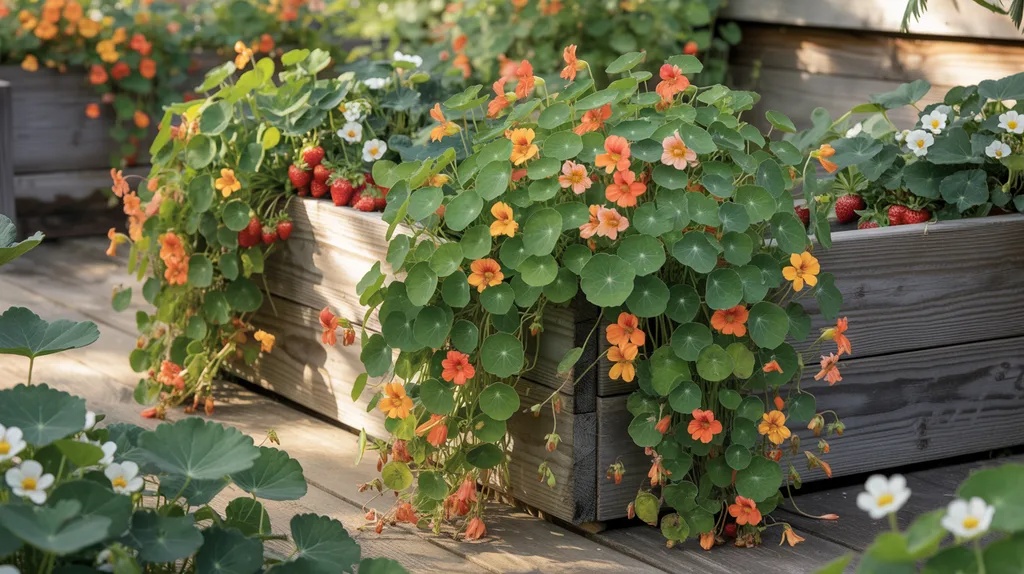
Nasturtiums act as a trap crop, drawing aphids away from strawberries. They also attract pollinators. Plant them at the edges of your raised bed so pests target them instead of your fruit.
27. Lavender
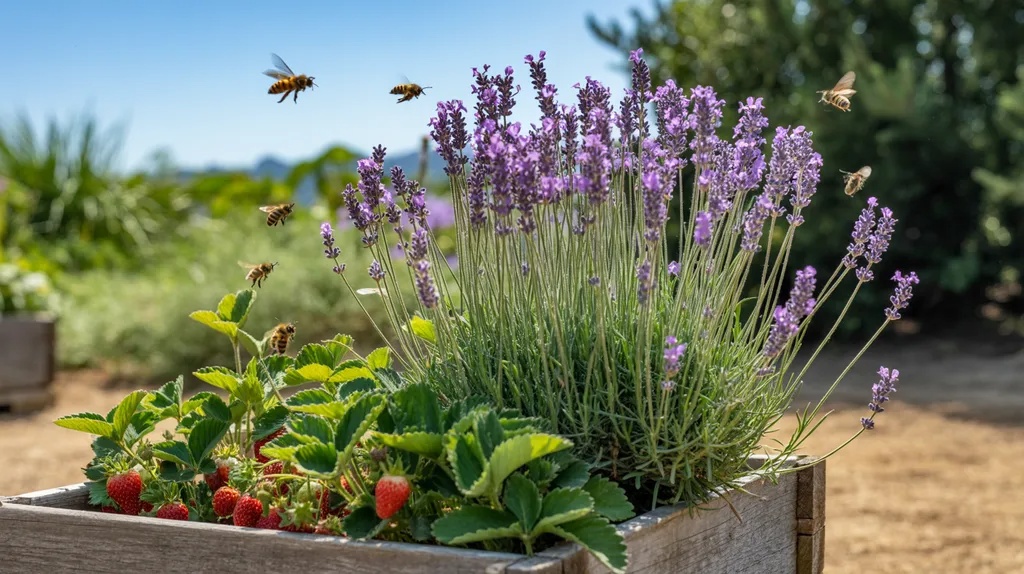
Lavender brings in bees and butterflies while repelling moths and fleas. It's drought-tolerant and doesn't need much space. Plant it at one end of the raised bed for steady pollinator support.
28. Yarrow
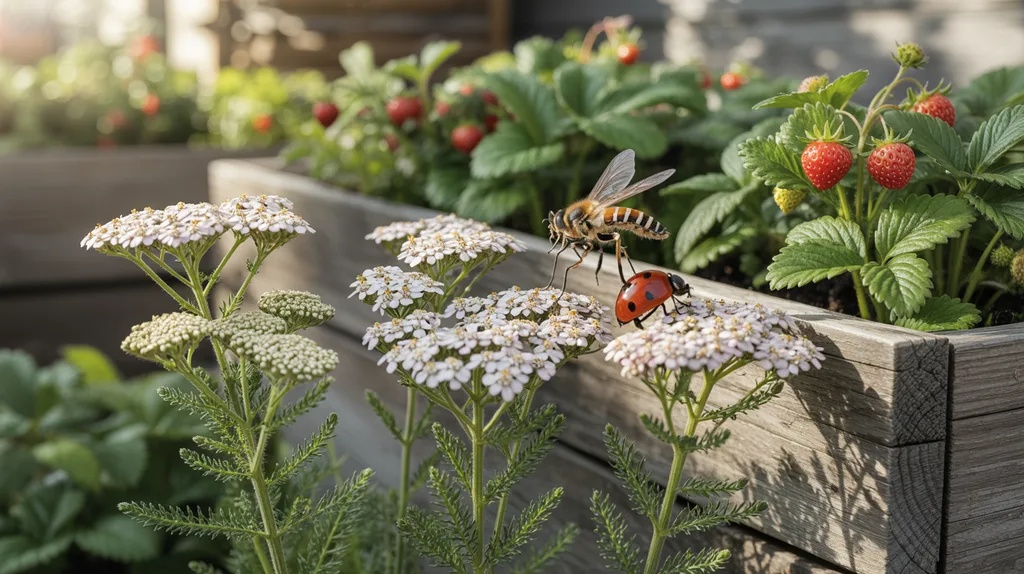
Yarrow attracts ladybugs, hoverflies, and parasitic wasps that control pests. It's a hardy perennial that comes back every year. Plant it near the edges to keep beneficial insects coming back regularly.
29. Chamomile
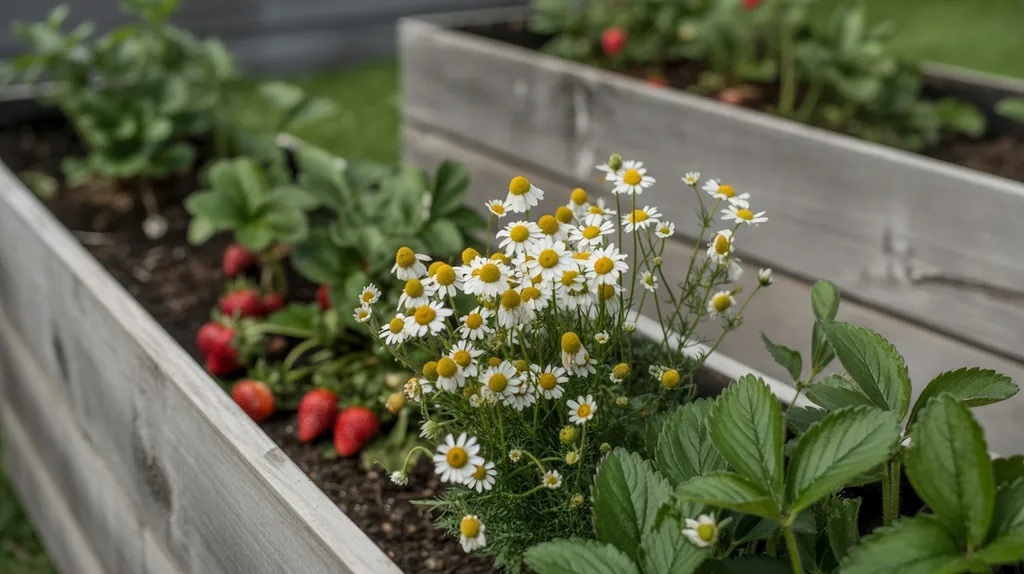
Chamomile improves the health of nearby plants and attracts pollinators. It grows well in raised beds and stays compact. It also has mild antifungal properties that can help protect strawberry plants.
30. Calendula
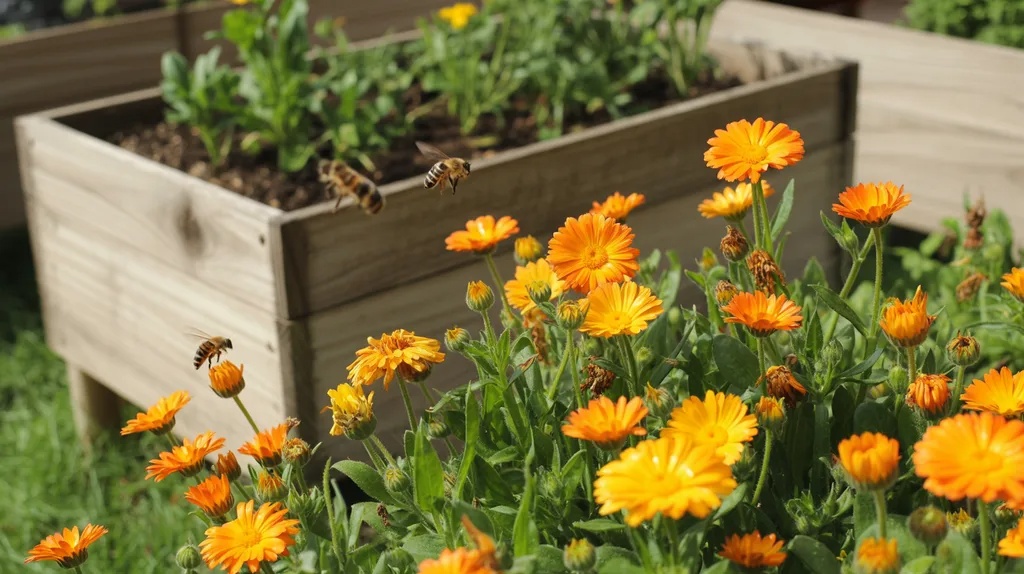
Calendula attracts aphid-eating insects and repels whiteflies. The bright orange and yellow flowers also bring in bees. It's easy to grow from seed and works well planted throughout the raised bed.
31. Lupine
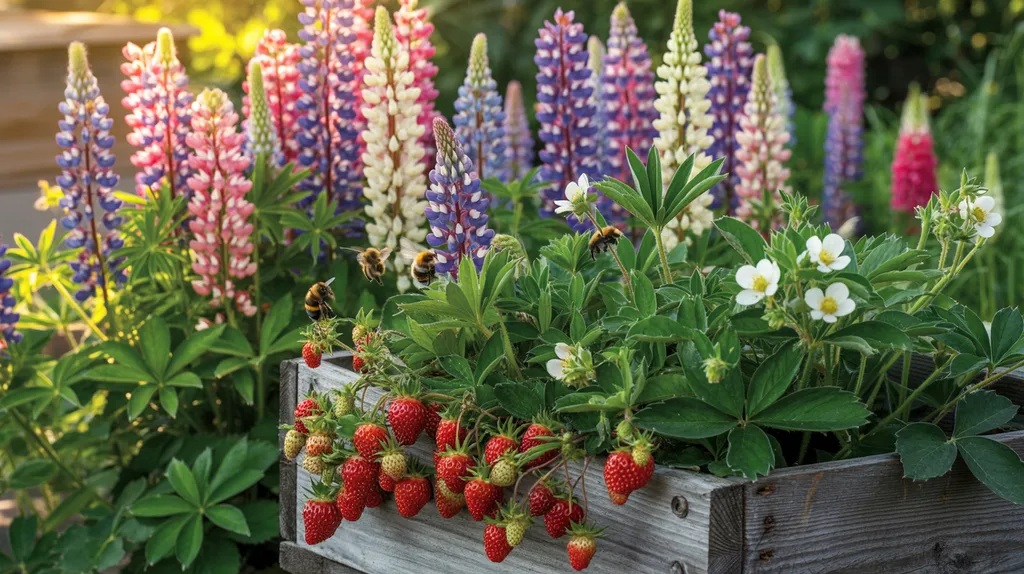
Lupine fixes nitrogen in the soil, which feeds strawberries over time. It grows tall, so plant it at the back of the bed. It also brings in bees that help pollinate your strawberry flowers.
32. White Clover
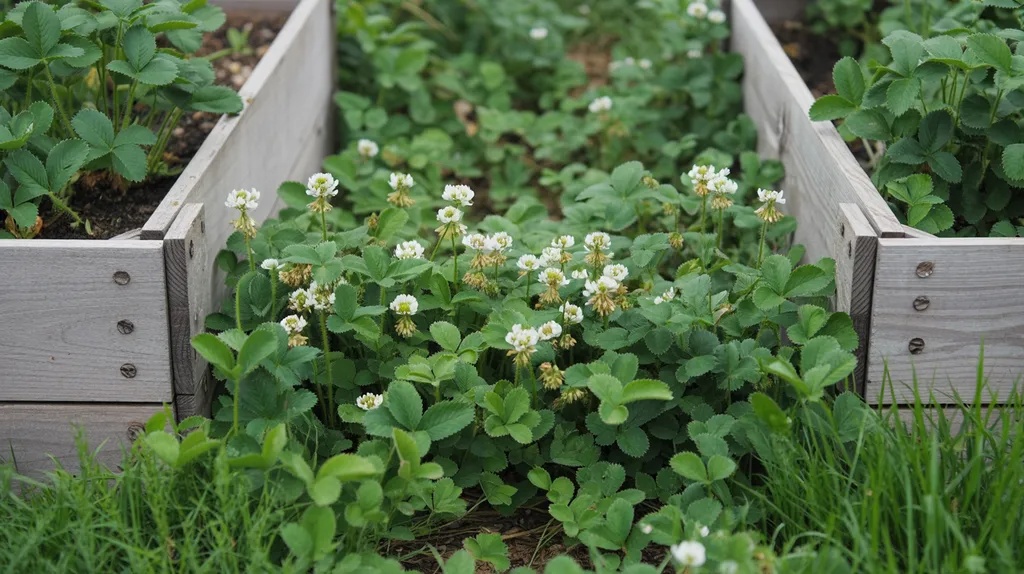
White clover fixes nitrogen naturally and acts as a living mulch between strawberry plants. It keeps the soil moist, reduces weeds, and attracts bees. It stays low and won't crowd your strawberries.
33. Poppies
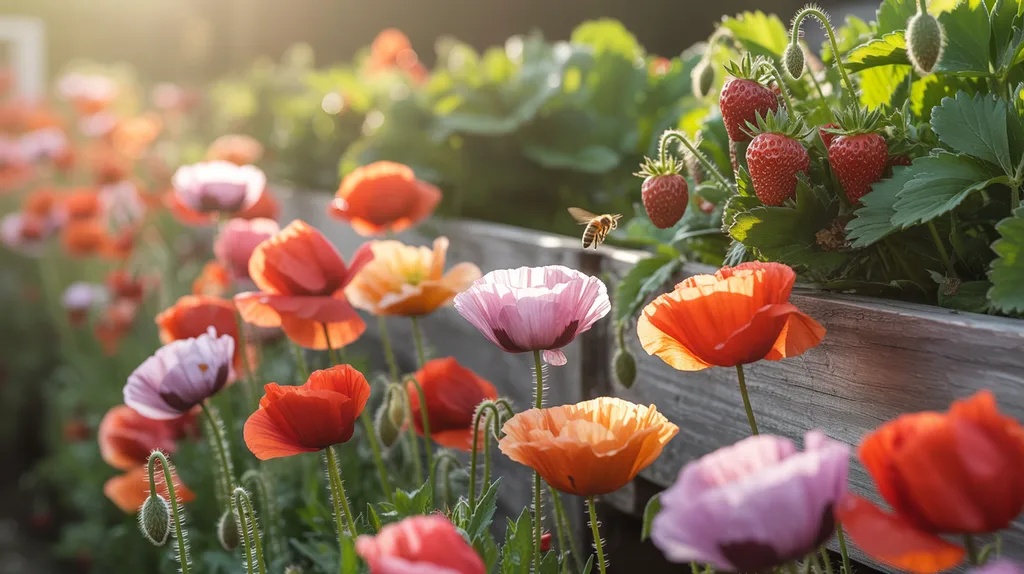
Poppies attract pollinators and add height and color to a raised bed. They're not aggressive growers and won't compete heavily with strawberries. Plant them at the edges for best results.
Strawberry Spacing Guidelines in Raised Beds
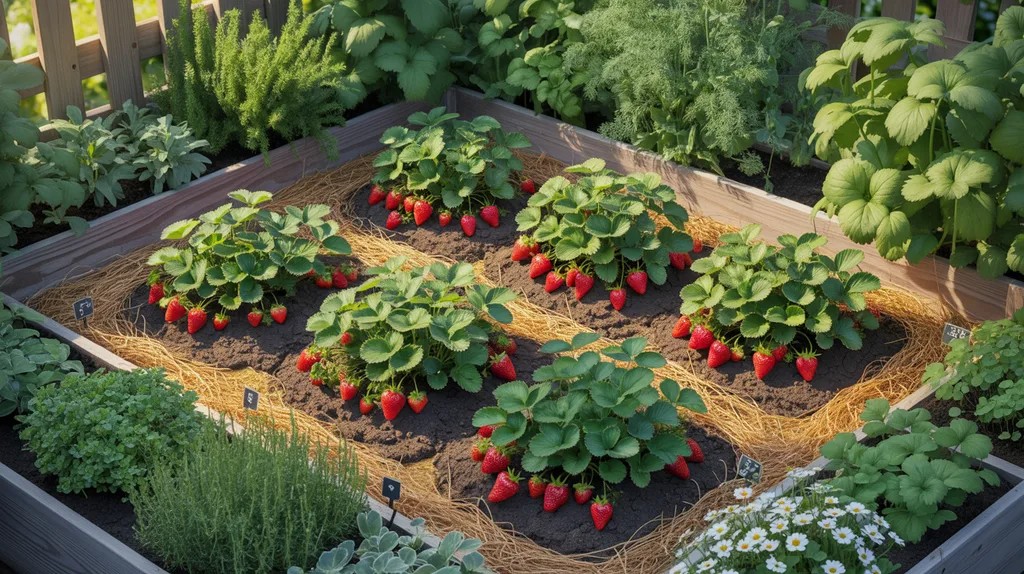
Good spacing means better airflow, fewer diseases, and more fruit. Getting this right from the start saves a lot of problems later.
Most strawberry varieties need 12 inches of space between plants and 18 inches between rows.
In a raised bed, you can go slightly closer about 10 to 12 inches apart because the soil is looser and drainage is better.
Companion plants should be placed so they don't block sun or airflow to strawberry crowns.
Low growers like thyme and clover can go between plants. Taller plants like dill or peas need to stay at the back or edges.
Plants You Should Not Grow With Strawberries
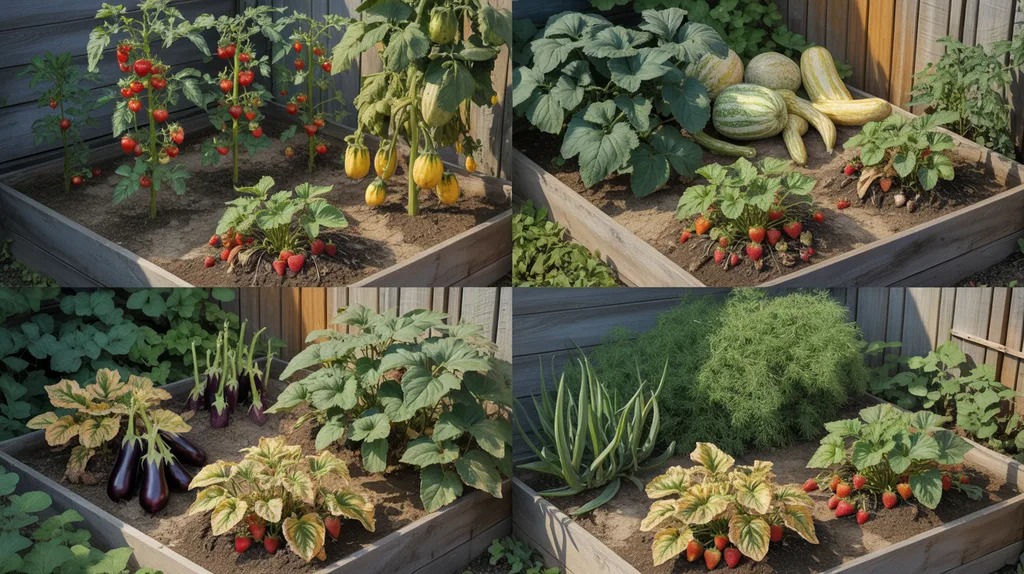
Some plants do more harm than good near strawberries. Here's what to keep out of the bed.
Tomatoes:Tomatoes and strawberries share several diseases, including verticillium wilt. Planting them together raises the risk of spreading infection between plants quickly.
Potatoes: Potatoes also carry verticillium wilt and can pass it directly through the soil to nearby strawberry plants, leading to poor harvests or plant loss.
Peppers: Peppers are in the same plant family as tomatoes and potatoes and carry the same disease risks. They're best kept in a completely separate bed.
Eggplants: Like peppers and tomatoes, eggplants are susceptible to verticillium wilt. Planting them near strawberries puts the whole bed at risk of soil-borne disease.
Fennel:Fennel releases chemicals into the soil that inhibit the growth of most nearby plants, including strawberries. It's best grown completely on its own, away from everything else.
Cucumbers:Cucumbers compete aggressively for water and nutrients in raised beds. They also spread out and can shade strawberry plants, reducing fruit production significantly.
Melons:Melons need a lot of space and water. They'll quickly take over a raised bed and crowd out strawberry plants, leaving little room or resources for fruit to develop well.
Winter Squash:Winter squash spreads wide and shades everything around it. Its large leaves can block sunlight from reaching strawberry plants entirely, stunting their growth and fruit output.
How to Set Up a Raised Bed for Strawberries
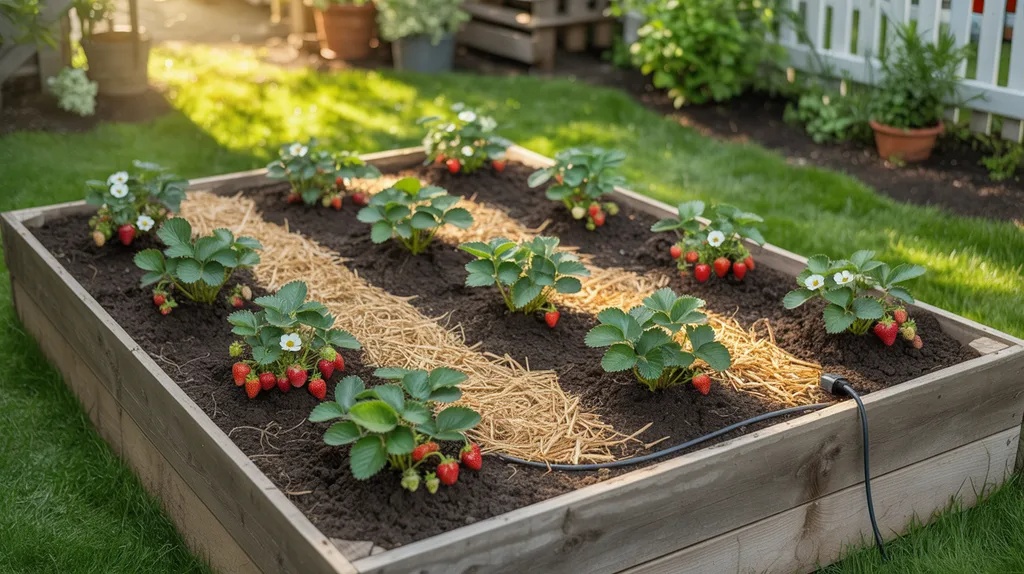
Setting up the bed correctly from the start makes everything easier down the line.
Choose a raised bed that's at least 6 inches deep, though 10 to 12 inches is better for strawberry roots.
A 4×4 or 4×8 bed works well for most home gardens. Fill it with a mix of garden soil, compost, and perlite for good drainage. Strawberries need full sun, at least 6 to 8 hours a day.
Water consistently but don't let the bed get soggy. Strawberries are prone to root rot in wet soil.
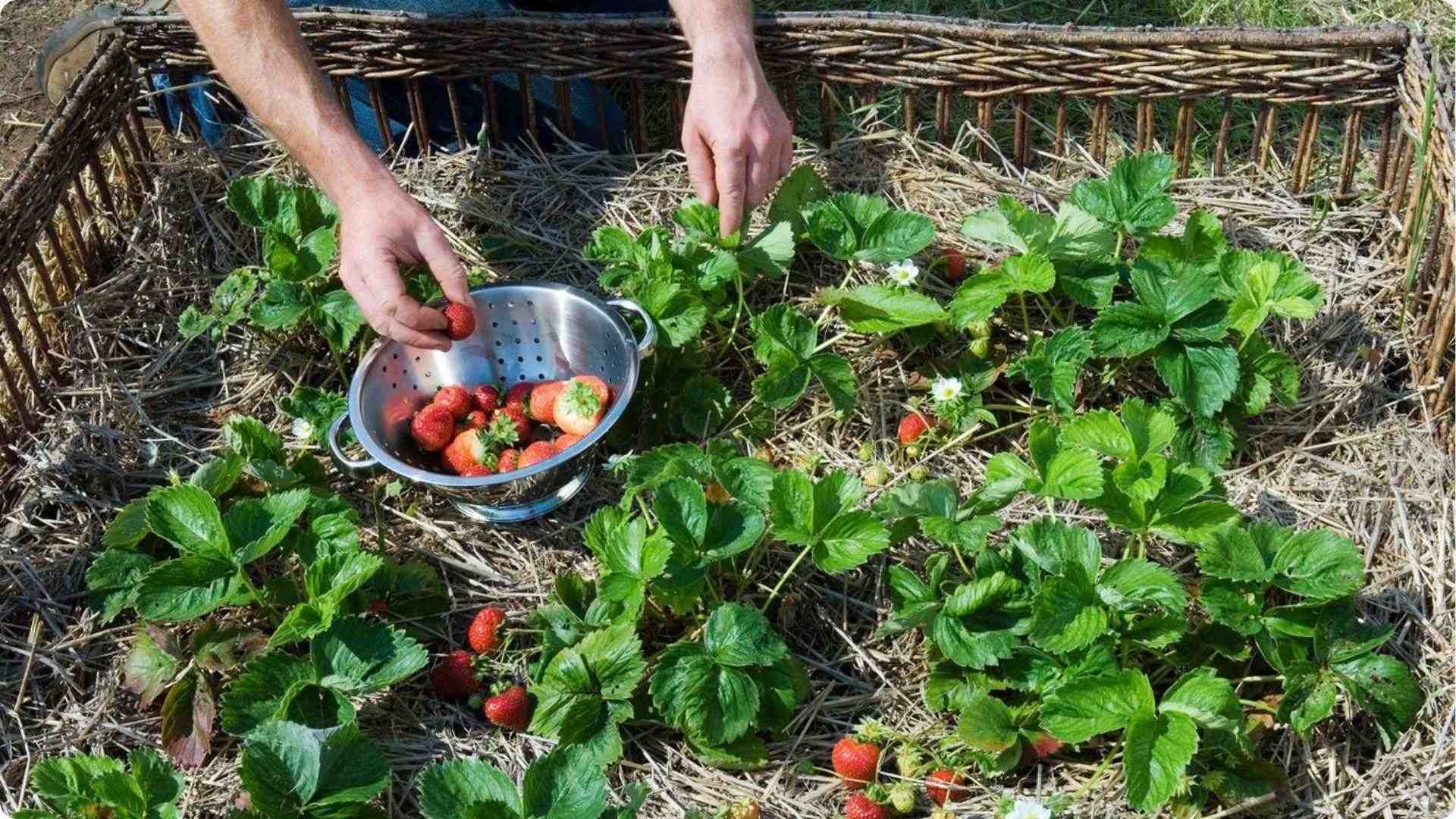
Mulch with straw around the base of each plant to hold moisture, keep soil cool, and stop weeds from competing with your crop all season long.
Seasonal Care Tips for Strawberry Raised Beds
A little care each season keeps your strawberry bed productive year after year.
- Spring:Remove old mulch, check for new growth, and add a layer of compost to feed plants heading into the growing season.
- Summer: Water deeply two to three times a week, check for pests regularly, and harvest strawberries as soon as they ripen to keep production going.
- Late Summer:Cut back runners unless you want new plants. Remove any yellowing leaves to keep airflow good and reduce the risk of disease spreading.
- Fall:Add a fresh layer of straw mulch after the first frost to protect roots and crowns through the cold months ahead.
- Winter: Leave the mulch in place. Don't water unless there's a long dry spell. Let the plants rest and get ready for the next growing season.
Conclusion
I remember the first time my strawberry raised bed actually worked the way I hoped. It was the season I started thinking about the whole bed, not just the strawberries.
Borage in the corner. Chives between the rows. Marigolds along the edges. Everything changed.
If you try even a few of the companion plants from this list, I think you'll notice a real difference too. Start small and build from there.
Drop a comment below. What to plant with strawberries in a raised bed is something I love talking about.
What are you trying this season?
Frequently Asked Questions
What is the best herb to plant with strawberries in a raised bed?
Basil is one of the top picks. It repels pests and may help improve the flavor of nearby strawberries.
Can I plant tomatoes with strawberries in a raised bed?
No. Tomatoes and strawberries share diseases like verticillium wilt, which can spread easily through shared soil.
How many strawberry plants fit in a 4×4 raised bed?
You can fit about 9 plants comfortably, spaced 12 inches apart, leaving room for a few companion plants along the edges.
Do marigolds really help strawberries grow better?
Yes. Marigolds repel nematodes, aphids, and whiteflies, which are common problems for strawberry plants in raised beds.
Should I mulch my strawberry raised bed?
Yes. Straw mulch keeps moisture in, soil temperature steady, and weeds from competing with your strawberry plants.