

I grow basil on my kitchen windowsill year-round.
Every time someone visits, they always ask the same thing: "Wait, there are different types of basil?" Yes. So many.
Most people only know sweet basil, the one sitting in the grocery store. But here's the thing there are over 60 basil varieties out there.
The differences go way beyond names. We're talking wildly different flavors, leaf shapes, colors, and even how you grow them.
In this blog, I'll walk you through 23 types of basil. I'll break down which one works best for cooking, gardening, or making tea, and help you pick the right one for your needs.
Let's get into it.
What Is Basil? Understanding the Different Types of Basil Plants

Basil comes from the mint family and has been grown for over 4,000 years. It started in India, Southeast Asia, and parts of Africa before spreading across the world.
As it traveled, it changed. Different climates and cultures shaped it into new forms. That's why today we have so many types of basil plants.
Each one has its own flavor, smell, leaf shape, color, and growth style. Some are bold and spicy. Others are light and citrusy.
A few are mostly ornamental. The variety depends on its origin, the soil it grew in, and how people used it. Basil is far more varied than most people think.
23 Types of Basil and Their Characteristics
Here's a look at the most popular basil types, from classic to unusual.
1. Sweet Basil (Ocimum basilicum)

Also called:Common basil, Garden basil
Sweet basil is the one most people know. It has a soft, sweet, mildly peppery flavor with a light clove-like scent. The leaves are large, smooth, and bright green.
It's the go-to for Italian cooking, pasta sauces, caprese salads, and fresh garnishes. I keep a pot of this on my counter almost all year. It's easy to find, easy to grow, and works in so many dishes.
2. Genovese Basil

Also called: Italian basil, Pesto basil
Genovese basil is the classic for homemade pesto. It has a rich, strong aroma and a deep, slightly sweet flavor. The leaves are larger than regular sweet basil, flatter, and more tender.
It bruises easily, so handle it gently. This is the variety used in traditional Ligurian pesto recipes, and it really does make a difference.
3. Napoletano Basil

Also called: Lettuce leaf Napoletano, Italian Napoletano
Napoletano basil has wide, crinkled, dark green leaves that look almost like lettuce. The flavor is mild, sweet, and slightly less intense than Genovese.
It's a popular pick in Southern Italian kitchens. The big leaves are great for wrapping around ingredients or layering on a sandwich.
It doesn't have the punchy aroma of Genovese, but it's softer and works well in dishes where you want a gentle basil presence.
4. Italian Large Leaf Basil

Also called:Colossal basil, Big leaf basil
As the name says, this one has very large leaves, often bigger than your palm. The flavor is sweet and mild, close to Genovese but a bit softer.
It's a great pick for stuffing, layering, or topping pizza. The oversized leaves also make it easy to use as a wrap.
Italian large leaf basil grows tall and produces a lot, so it's a solid garden choice if you use basil often in cooking.
5. Lettuce Leaf Basil

Also called: Crinkle leaf basil, Ruffle basil
Lettuce leaf basil has thick, wrinkled, cup-shaped leaves that look a lot like a head of butter lettuce. The taste is light and sweet with very little spice.
It's one of the milder basil types, which makes it good for fresh salads, wraps, and light dishes where you don't want a strong herb flavor.
The leaves hold sauces and dressings well because of their curved shape. It's a fun one to grow in your garden.
6. Thai Basil

Also called: Asian basil, Horapa basil
Thai basil smells like licorice and has a spicy, anise-forward flavor. The leaves are smaller, firmer, and darker green than sweet basil. The stems are often purple.
It holds up well to heat, which makes it perfect for stir-fries, curries, and soups. It won't wilt the moment it hits a hot pan.
I add it to Thai green curry at the last minute, and the flavor is completely different from what you'd get with sweet basil.
7. Holy Basil (Tulsi)

Also called:Tulsi, Sacred basil, Kraphao
Holy basil has a clove-like, peppery, slightly medicinal taste. It's strong and earthy. The leaves are medium-sized, often with serrated edges, and can have a purplish tint.
In India, it's considered sacred and used in Ayurvedic medicine. In Thai cooking, it's the herb used in pad krapao (Thai basil stir-fry).
Holy basil tea is also popular for calming the body. This one is more intense than other types, so use it carefully.
8. Lemon Basil

Also called: Lao basil, Thai lemon basil
Lemon basil smells and tastes like a mix of basil and fresh lemon. It's light, citrusy, and slightly sweet. The leaves are narrow, pale green, and a bit smaller than sweet basil.
It pairs well with seafood, chicken, salads, and lemon-based dressings. I love dropping a few fresh leaves into water for a quick infused drink.
It also works nicely in Southeast Asian dishes like Indonesian soups and rice dishes where citrus notes are expected.
9. Lime Basil

Also called:Citrus basil, Mrs. Burns' Lime basil
Lime basil has a strong lime scent and a bright, tangy flavor with just a hint of pepper. The leaves are small, narrow, and light green. The smell hits you before you even touch it.
It works great in fresh salsas, guacamole, fruit salads, and grilled fish. It can also be muddled into cocktails or blended into a vinaigrette.
If you like citrusy herbs, lime basil is worth adding to your garden or herb collection.
10. Cinnamon Basil

Also called: Mexican basil, Spice basil
Cinnamon basil has a warm, spiced flavor that really does remind you of cinnamon mixed with regular basil.
The leaves are medium-sized, dark green, and the stems are often purple-red. The scent is warm and sweet. It's a great add to desserts, fruit salads, herbal teas, and drinks.
It also pairs well with chocolate-based recipes. I've used it in a fruit salad with peaches and strawberries, and it gave the whole dish a gentle warmth.
11. Christmas Basil

Also called: Cardinal basil hybrid, Holiday basil
Christmas basil is a hybrid between Thai basil and Genovese basil. It has a slightly sweet, fruity flavor with a hint of spice.
The leaves are medium-sized, shiny, and dark green. The flowers are bright red-pink, which is where the Christmas name comes in. It looks festive in a garden.
The flavor is mild enough for salads and pasta, and strong enough for sauces. It also stays productive longer into the season than some other varieties.
12. Greek Basil

Also called:Spicy bush basil, Mini basil
Greek basil grows in tight, round mounds with tiny leaves. Don't let the size fool you. It has a bold, concentrated flavor that's spicier and more aromatic than sweet basil.
It's great for garnishing dishes, growing in small containers, or using in Greek-style salads and dips.
Because it grows as a compact bush, it's popular for windowsill pots and patio containers. Just pinch off the leaves as needed. It grows slowly but steadily.
13. Spicy Globe Basil

Also called:Globe basil, Dwarf basil
Spicy globe basil looks almost like Greek basil, compact, rounded, with tiny leaves. The flavor is a bit spicier and more peppery.
It's a great container plant and works well as a garnish or border in a garden bed. The small leaves are easy to use whole, which makes prep fast.
It's also slower to bolt (go to seed) than larger basil varieties, which means you get to harvest from it longer throughout the growing season.
14. Summerlong Basil

Also called: Long season basil
Summerlong basil is bred to resist bolting, meaning it keeps producing leaves far longer than most basil types.The flavor is close to sweet basil, mild, slightly peppery, and fresh.
Leaves are medium-sized and green. If you hate watching your basil plant flower and turn bitter halfway through summer, this is your answer.
I'd recommend it to anyone who wants low-maintenance fresh basil from early summer all the way through fall without constant pruning.
15. Spicy Bush Basil

Also called: Dwarf Greek basil, Fine leaf basil
Spicy bush basil is a compact variety with very small leaves and a punchy, peppery flavor. It grows in a dense bush shape and doesn't need much space.
The scent is sharp and herby. It's mostly used as a garnish or in dishes where you want a strong basil flavor in a small amount.
It's also popular for container gardening indoors. The tiny leaves look nice sprinkled over a plate without any chopping needed.
16. Dark Opal Basil
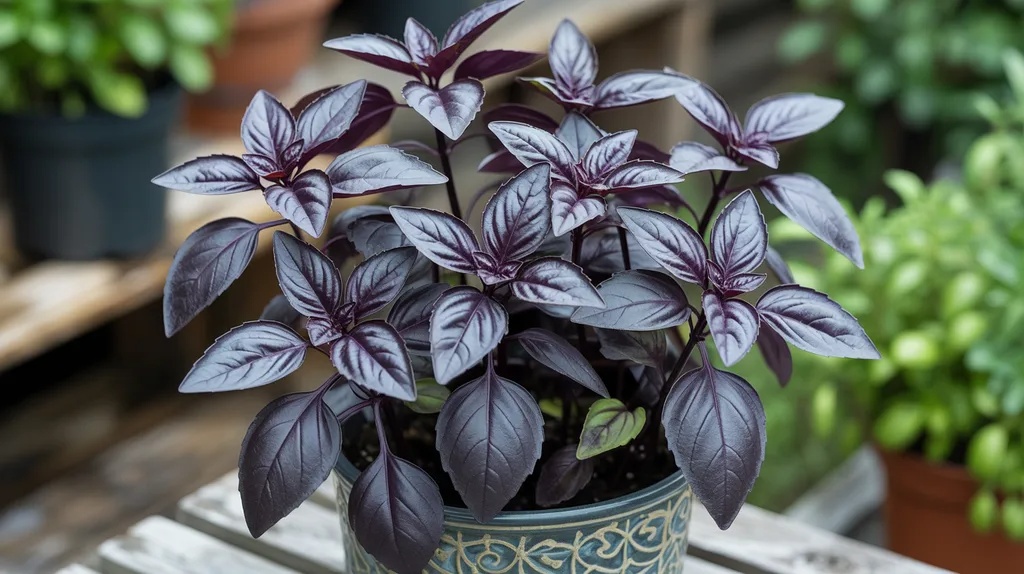
Also called:Purple basil, Opal basil
Dark opal basil has deep purple-black leaves with a slightly shiny surface. The flavor is sweet with a clove-like, spicy edge. It looks striking on any plate.
It's often used in salads for a pop of color, in herbal vinegars, or as an ornamental plant in the garden.
The purple color can fade a bit when cooked, so it's best used fresh. If you want something that looks as good as it tastes, dark opal basil is worth growing.
17. Purple Ruffles Basil

Also called: Ruffled purple basil
Purple ruffles basil is all about the look. The leaves are large, deeply ruffled, and a rich purple color. The flavor is similar to sweet basil but with a slightly stronger, spicier note.
It's a great choice for adding color to herb gardens, summer salads, and decorative herb arrangements.
It also makes a beautiful purple-tinted basil vinegar. Grow it alongside green basil and the contrast is striking. It's as much a garden plant as it is a cooking herb.
18. Red Rubin Basil

Also called: Red basil, Ruby basil
Red Rubin basil has large, smooth, deep burgundy-red leaves. The color is more consistent and vibrant than dark opal basil.
The flavor is spicy and clove-like with a mild sweetness. It's popular for making colorful basil oil, vinegar, and infused drinks. In the garden, it stands out as a bold ornamental plant.
Use it fresh in salads or as a garnish for a visual lift. The leaves hold their color better than some other purple varieties.
19. Green Ruffles Basil

Also called: Ruffled lettuce basil
Green ruffled basil has big, crinkly, ruffled green leaves that look almost like decorative lettuce. The flavor is mild, sweet, and light, less intense than Genovese.
It's mainly used in salads, as a garnish, or in fresh sauces where you want basil flavor without too much punch. It's also a great filler plant in the garden.
The big, textured leaves catch the eye and hold up well in salads without going limp quickly.
20. Cardinal Basil

Also called: Cardinal red basil
Cardinal basil is known for its bright red-violet flower spikes that bloom all season long. The leaves are green and medium-sized with a mild, sweet basil flavor.
It's a hybrid variety that leans more ornamental but is still fully edible. Gardeners grow it as much for the visual impact as for the cooking use.
The flower spikes are also edible and look great on salads. It's one of those plants that works hard in both the kitchen and the garden.
21. African Blue Basil

Also called: African basil
African blue basil is a perennial in warm climates, which makes it different from most basil types. The leaves are medium-sized with a blue-green color and purple veining.
The flavor is complex, a mix of camphor, mint, and regular basil. It's used in cooking and as an ornamental herb. Bees absolutely love it.
If you grow it outdoors in a warm area, it can come back year after year without replanting. It's a low-maintenance, high-reward garden plant.
22. Ararat Basil

Also called: Anise basil, Persian basil
Ararat basil comes from the Middle East and has a strong anise and clove flavor. The leaves are medium-sized, slightly crinkled, and can have a faint purple tinge.
It's a traditional herb in Armenian and Persian cooking, used in stews, rice dishes, and fresh herb platters. The flavor is more complex and layered than sweet basil.
If you're cooking Middle Eastern or Eastern European food, Ararat basil adds a depth you won't get from regular sweet basil.
23. Pesto Perpetuo Basil

Also called:Variegated basil, Columnar basil
Pesto Perpetuo basil is a non-flowering variety, which means it doesn't bolt. It grows tall and columnar with green-and-cream variegated leaves.
The flavor is sweet and similar to Genovese, making it excellent for pesto. Because it never flowers, it keeps producing fresh leaves all season without turning bitter.
It's also a beautiful plant. The striped leaves look great indoors on a windowsill or in a container on a porch. If you cook with pesto often, this is a smart pick.
Quick Basil Variety Comparison Table
Not sure which type to grab? Here's a fast side-by-side look at the most popular varieties to help you decide.
| Basil Variety | Flavor | Best Use |
| Sweet Basil | Sweet, peppery | Pesto, Italian dishes |
| Genovese Basil | Rich, aromatic | Traditional pesto |
| Thai Basil | Spicy, licorice-like | Thai cuisine |
| Holy Basil (Tulsi) | Peppery, earthy | Herbal tea |
| Lemon Basil | Citrusy | Seafood, salads |
| Cinnamon Basil | Sweet, cinnamon-like | Desserts, drinks |
| Greek Basil | Strong, aromatic | Containers, garnishes |
| Dark Opal Basil | Clove-like, spicy | Salads, ornamental use |
| African Blue Basil | Minty, complex | Ornamental and cooking |
Use this table as a quick reference when you're at the nursery or planning what to plant next season.
How to Choose the Right Basil Variety

Picking the right basil is easier than you think. Here's a breakdown by use to help you match the variety to your dish or space.
Best Basil for Pesto: Use Genovese basil. It has the richest aroma and most balanced flavor for traditional pesto. Pesto Perpetuo is a great backup since it won't bolt mid-season.
Best Basil for Italian Cooking: Sweet basil or Genovese. Both work well in sauces, salads, and on top of pizza. Napoletano is also good if you want a milder flavor in pasta dishes.
Best Basil for Thai and Asian Dishes:Go with Thai basil. It holds up to heat and has that spicy, anise-like kick that Asian recipes depend on. Holy basil works too for Thai stir-fries.
Best Basil for Herbal Tea: Holy basil (Tulsi) is the top pick. It has a long history of use in herbal and Ayurvedic medicine. Lemon basil and cinnamon basil also make great teas with a lighter, sweeter taste.
Best Basil for Salads and Fresh Garnishes:Lettuce leaf basil, green ruffles, or dark opal basil. They look great and taste fresh without overpowering the other ingredients.
Common Characteristics of Basil Plants

No matter which type you grow, almost all basil plants have a few things in common. They all love full sun, at least 6 hours a day.
They hate the cold. Anything below 50°F will stress the plant, and frost will kill it. Water them when the top inch of soil feels dry, but don't overwater. Root rot is a real issue with basil.
Most basil varieties are annuals, meaning they complete their life cycle in one season. A few, like African blue basil, are perennial in warm climates.
To harvest, pinch leaves from the top down and remove flower buds as soon as they appear. This keeps the plant producing fresh leaves instead of going to seed.
Conclusion
I started growing basil thinking one type was enough. Then I tried Thai basil in a stir-fry, and lemon basil in a summer salad, and I never went back.
There's a whole world of flavor sitting in those leaves, and honestly, you just have to try a few types to find your favorites.
If you're just starting out, grab sweet basil or Genovese. Then build from there.
Drop a comment below and tell me, which types of basil do you already grow, and which one are you most curious to try next?
Frequently Asked Questions
What is the most common type of basil?
Sweet basil is the most widely grown and used type across the world.
Is Thai basil the same as regular basil?
No. Thai basil has a spicier, licorice-like flavor and holds up better in high-heat cooking.
Can I substitute one basil type for another?
You can, but the flavor will change. Use the closest match based on aroma and taste profile.
What types of basil are best for growing indoors?
Greek basil, spicy globe basil, and Pesto Perpetuo are all compact varieties that grow well indoors.
Which basil type is used in Ayurvedic and herbal medicine?
Holy basil, also known as Tulsi, has the longest history of use in herbal and Ayurvedic medicine.