
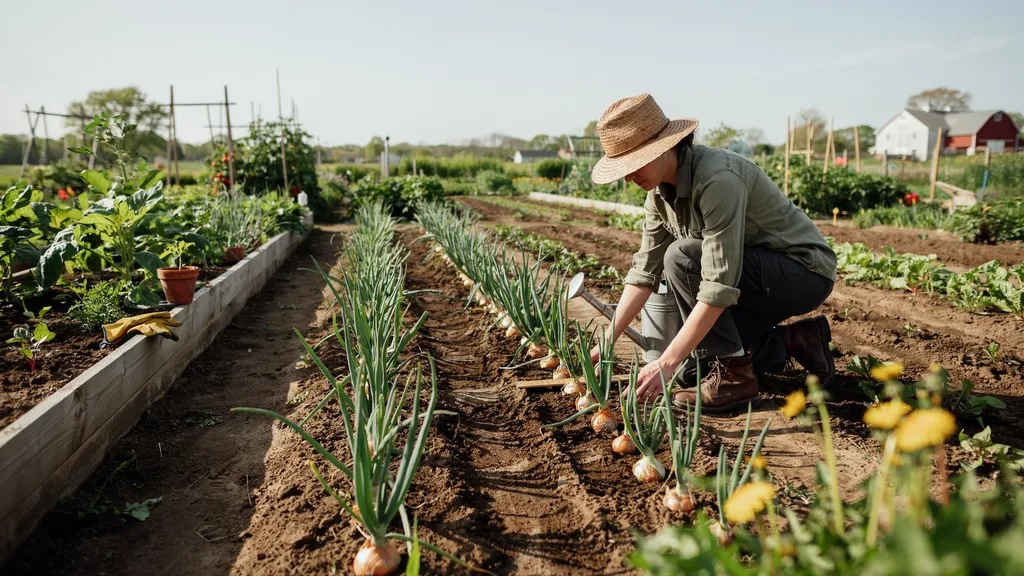
Healthy onion plants growing at proper spacing in a garden bed with large bulbs and green tops.
I made a lot of spacing mistakes when I first started growing onions. The bulbs came out small, crowded, and disappointing.
If you're trying to figure out how far apart to plant onions, you're in the right place.
In this article, I'll walk you through spacing for seeds, seedlings, and sets. I'll also cover row spacing, common mistakes, and a quick-reference chart.
I've grown onions in garden beds, raised beds, and containers. I'll share what actually worked. Spacing is simple once you know the rules.
Let's get into it.
Why Proper Onion Spacing Matters
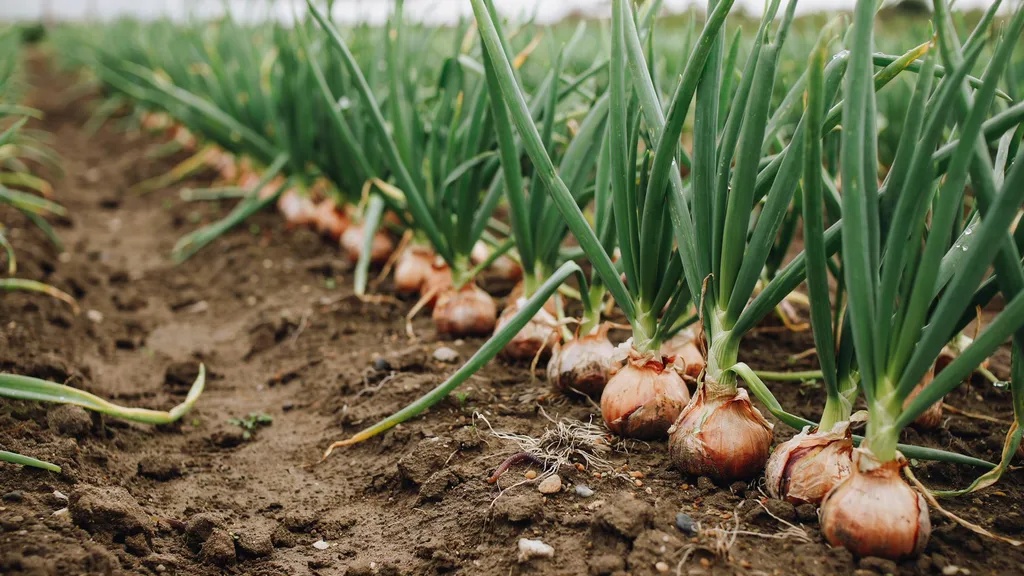
Space affects everything.
When onions are too close, they fight for nutrients. The bulbs stay small. Air doesn't move well between plants, and disease spreads faster.
Give them room, and the results change. Bulbs grow fuller. Roots spread out. The plant focuses energy on size, not survival.
I noticed a real difference when I stopped crowding my rows. The bulbs that season were almost twice the size of the previous year.
Proper spacing also makes weeding easier. You can reach between plants without damaging them.
It's one of the simplest changes you can make for a better harvest.
Factors That Determine Onion Spacing
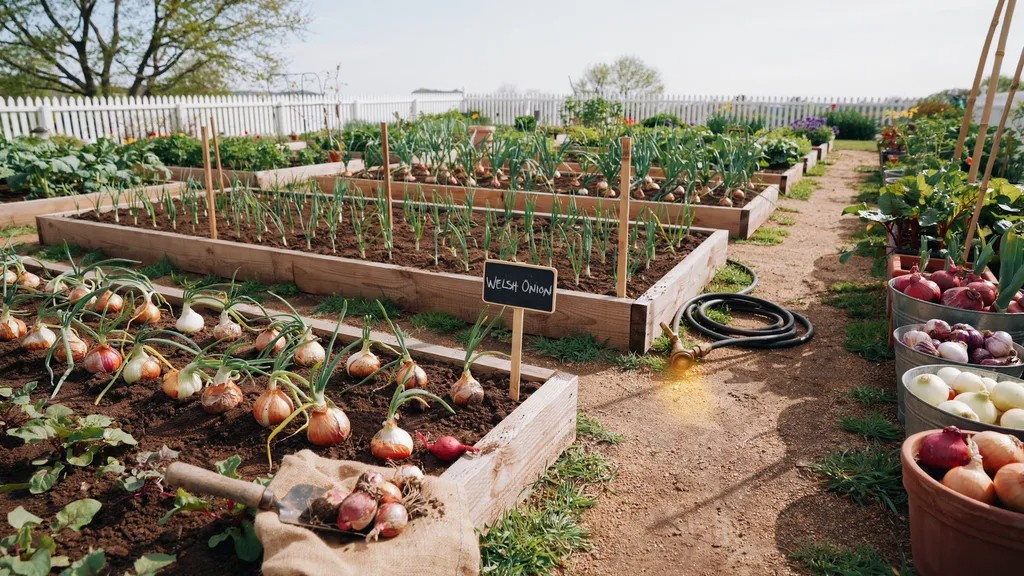
Not every onion needs the same amount of room. A few things change the spacing rules.
1. Onion Type (Green Onions vs. Bulbing Onions)
Green onions stay thin. They don't need much space. Bulbing onions need more room underground to form a full, round bulb.
If you're growing bulbs, give more space. If you want green tops to eat fresh, you can plant closer.
2. Planting Method (Seeds, Seedlings, or Sets)
Seeds, seedlings, and sets are all planted differently.
Each one has its own spacing guide. I'll cover each one in detail below.
3. Garden Beds, Raised Beds, and Container Growing
In raised beds, soil is usually looser. You can plant slightly closer. In containers, space is limited, so stick to smaller varieties and follow spacing rules closely.
In traditional garden rows, spacing stays more standard.
4. Desired Harvest Size and Purpose
Growing onions to store? Give them more space. Growing for fresh use or pickling? You can plant a little tighter.
Your end goal matters when planning spacing.
How Far Apart to Plant Onion Seeds
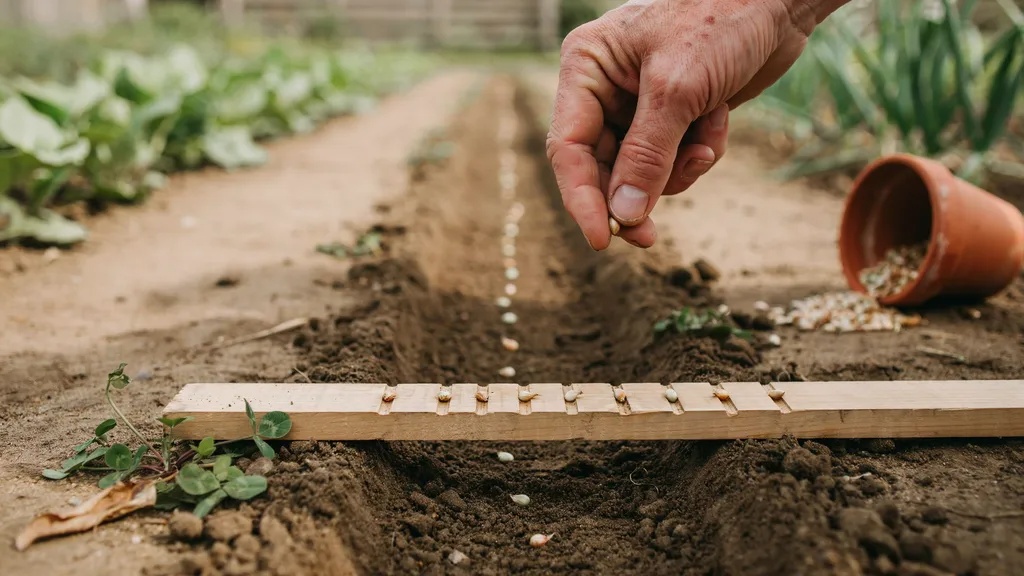
Direct-sown seeds need a little more work to thin out later.
Start seeds about half an inch apart in rows. Once they sprout and reach a few inches tall, thin them to about 4 to 6 inches apart for bulbing types.
For green onions grown from seed, 1 to 2 inches apart is fine.
Thinning feels wasteful, but it's worth it. Crowded seedlings pull each other down. I used to skip thinning. My bulbs suffered from it.
Rows should be 12 to 18 inches apart when planting seeds directly in the ground.
How Far Apart to Plant Onion Seedlings
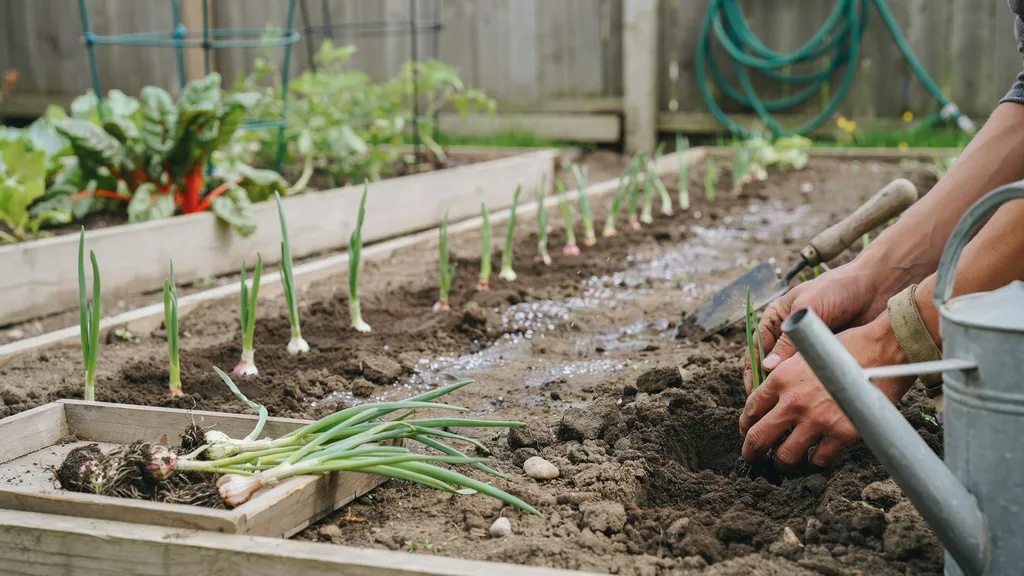
Transplanted seedlings give you a head start.
Space them 4 to 6 inches apart for medium bulbs. For large bulbs, go up to 6 inches minimum. For green onions, 2 to 3 inches works well.
Plant them just deep enough so the roots are covered and the base is at soil level. Too deep and the bulb won't form right.
I usually transplant on a cloudy day. It reduces shock. Water them in right away and check spacing before the soil settles.
Rows should stay 12 to 18 inches apart here too.
How Far Apart to Plant Onion Sets
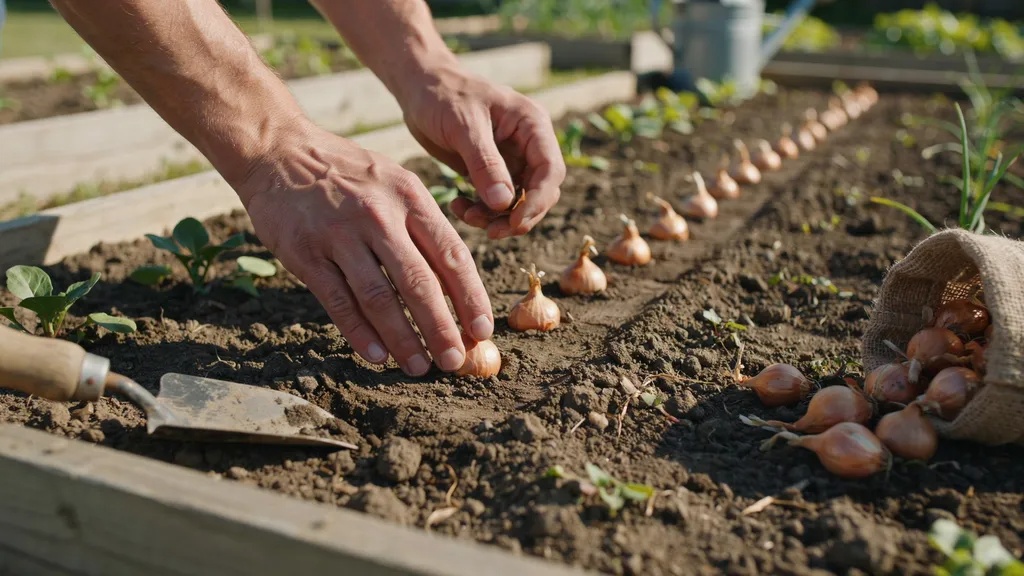
Sets are small bulbs you buy and plant directly. They're the easiest method.
For large onions, the plant sets 4 to 6 inches apart. For smaller or pickling onions, 2 to 3 inches works fine.
Push each set into the soil so just the tip shows above ground. Don't bury them too deep.
I like sets because the spacing is easy to control. You're placing individual bulbs, not tiny seeds. You can see exactly what you're doing.
Row spacing stays the same. Keep rows 12 to 18 inches apart.
Onion Row Spacing Guide
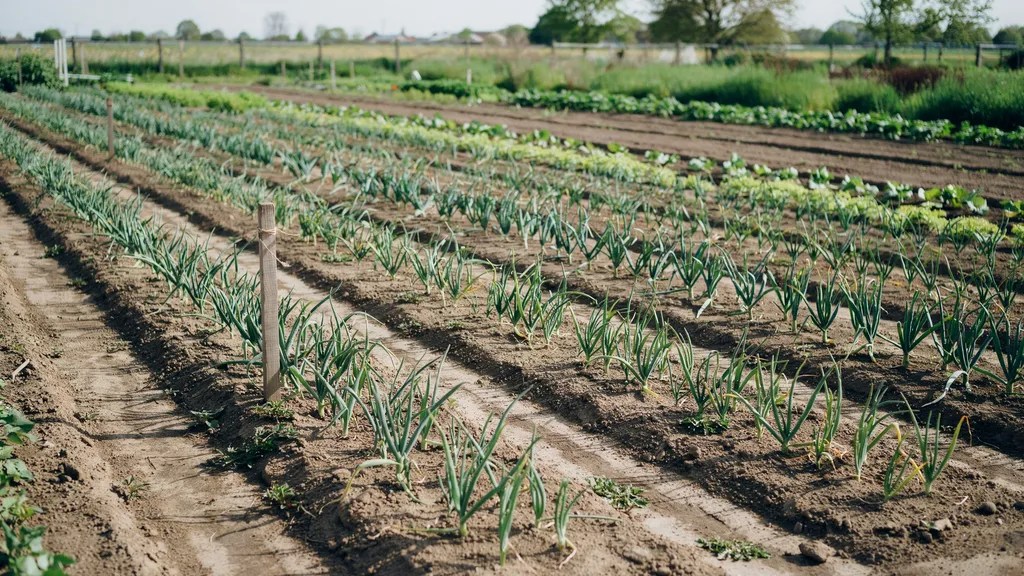
Row spacing is just as important as plant spacing.
If rows are too close, you can't move between them. Air circulation drops. Weeding becomes hard.
Here's what works for most situations:
For garden beds: 12 to 18 inches between rows.
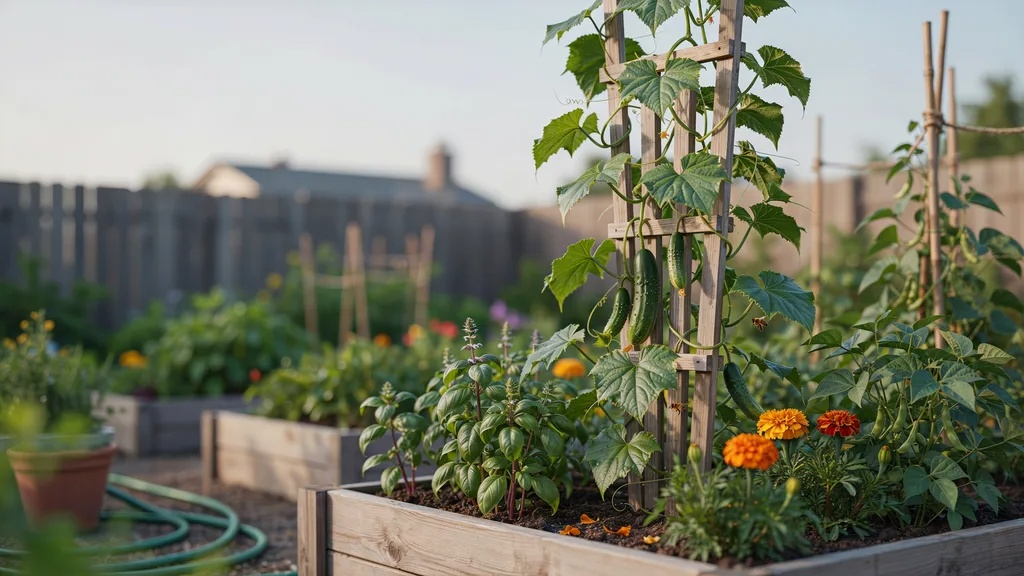
For raised beds: 9 to 12 inches works if your soil is loose and fertile.
For containers: One row per container is usually best, depending on size.
Give yourself enough room to water, weed, and harvest without stepping on plants.
Onion Spacing Chart for Quick Reference
All the numbers in one place so you don't have to guess.
| Planting Method | Plant Spacing | Row Spacing | Notes |
| Seeds (bulbing) | 4 to 6 inches | 12 to 18 inches | Thin after sprouting |
| Seeds (green onions) | 1 to 2 inches | 12 inches | No thinning needed |
| Seedlings (large bulbs) | 6 inches | 12 to 18 inches | Water in after planting |
| Seedlings (green onions) | 2 to 3 inches | 12 inches | Light watering works |
| Sets (large bulbs) | 4 to 6 inches | 12 to 18 inches | Tip just above soil |
| Sets (pickling/small) | 2 to 3 inches | 12 inches | Can plant closer |
Spacing Onions Based on Harvest Goals

What you want at harvest changes how you plant.
If you want large storage onions, go with 6 inches between plants. The extra space means each bulb has room to grow wide and heavy. These store well through winter.
If you want medium onions for everyday cooking, 4 inches is enough.
For green onions or scallions, tight spacing is fine. You'll pull them before they need much room.
For pickling onions, the plant sets 2 inches apart. Small bulbs are the goal.
I plan my spacing based on what I'm going to use. It keeps the garden organized and the harvest useful.
Common Onion Spacing Mistakes to Avoid
Most spacing problems are easy to prevent once you know what to watch for.
- Planting too close and skipping thinning. This is the most common mistake. I made it myself early on. The bulbs came out the size of golf balls.
- Ignoring row spacing. People focus on plant spacing and forget rows. Tight rows block airflow and make weeding a pain.
- Planting sets too deep. The tip should be just at or above soil level. Too deep and bulb formation slows down.
- Not adjusting for onion type. Green onions and bulbing onions need different spacing. Using the same distance for both leads to problems.
- Skipping thinning because it feels like a waste. Those pulled seedlings can be eaten as green onions. Nothing goes to waste.
Additional Tips for Growing Healthy Onions
Good spacing is a great start, but a few extra steps make a real difference.
- Water consistently. Onions like steady moisture. Dry spells slow bulb growth. Overwatering causes rot.
- Feed with a nitrogen fertilizer early. Onions need nitrogen in the first half of their growth. Back off once the bulbs start forming.
- Keep weeds out. Onions don't compete well. Weeds steal moisture and nutrients fast.
- Stop watering when tops start falling over. That's a sign bulbs are ready to cure. Too much water at this stage causes rot.
- Loosen soil before planting. Compacted soil limits bulb expansion. Loose soil lets roots and bulbs grow freely.
- Choose the right variety for your region. Day length affects bulb formation. Short-day varieties work in southern climates. Long-day types do better in the north.
Conclusion
Getting onion spacing right made a real difference in my garden. The bulbs grew bigger. The rows were easier to manage. Harvest felt worth the effort.
How far apart to plant onions depends on what you're growing and why. Seeds, seedlings, and sets each follow slightly different rules. Your harvest goal matters too.
Start with the basics. Use the chart. Adjust as you learn what works in your space.
Gardening is always a little trial and error. But spacing is one thing you can get right from day one.
What onion variety are you planning to grow this season?
Frequently Asked Questions
How far apart should I plant onions in a raised bed?
In a raised bed, space bulbing onions 4 to 6 inches apart. Rows can be 9 to 12 inches apart since raised bed soil is usually loose and fertile.
Can I plant onions closer together and thin them later?
Yes. Start seeds half an inch apart and thin to 4 to 6 inches once they sprout. Use the thinned seedlings as fresh green onions.
Do green onions need the same spacing as bulbing onions?
No. Green onions only need 1 to 2 inches between plants. They're harvested young and don't need room to form a large bulb underground.
How deep should I plant onion sets?
Push sets into the soil so just the tip is showing above ground. Planting too deep slows bulb formation and can cause issues with moisture around the neck.
What happens if I plant onions too close together?
The bulbs compete for space and nutrients. They come out small and misshapen. Airflow drops, which increases the chance of fungal problems.