
Growing apples from seed sounds hard, but it's not.
I tried it myself a few years ago with seeds saved from a grocery store apple, and I still remember the day that tiny sprout pushed through the soil.
This guide will walk you through the full process, from picking the right seeds to caring for a young tree.
You'll learn how stratification works, what mistakes to avoid, and what to expect along the way.
Many people think seed-grown apples are useless, but that's not true. Each seed carries its own mix of traits, so you get a tree that's truly yours.
I'll share what worked for me and what didn't, so you can skip the guesswork and start growing with confidence.
Can You Grow Apples From Seed?
Apple trees don't grow true from seed because the fruit you eat came from a tree pollinated by a different variety nearby.
This means each seed carries genes from two parent trees, so planting a seed from a Gala won't give you a Gala tree.
It will grow into something new, with its own flavor, size, and growth habit.
Most seed-grown apples won't taste like the one you ate, some are tart, some bland, a few genuinely good, and fruit size varies too. Still, these trees have value.
They make strong rootstock, cost nothing to grow, and teach you how apples actually develop, which matters most for anyone learning to grow their own food at home.
How to Choose and Prepare Apple Seeds for Planting
Not all seeds are equal. Here's how to pick ones that actually have a chance to grow.
Best Apples for Seed Collection (Store-Bought vs Orchard)
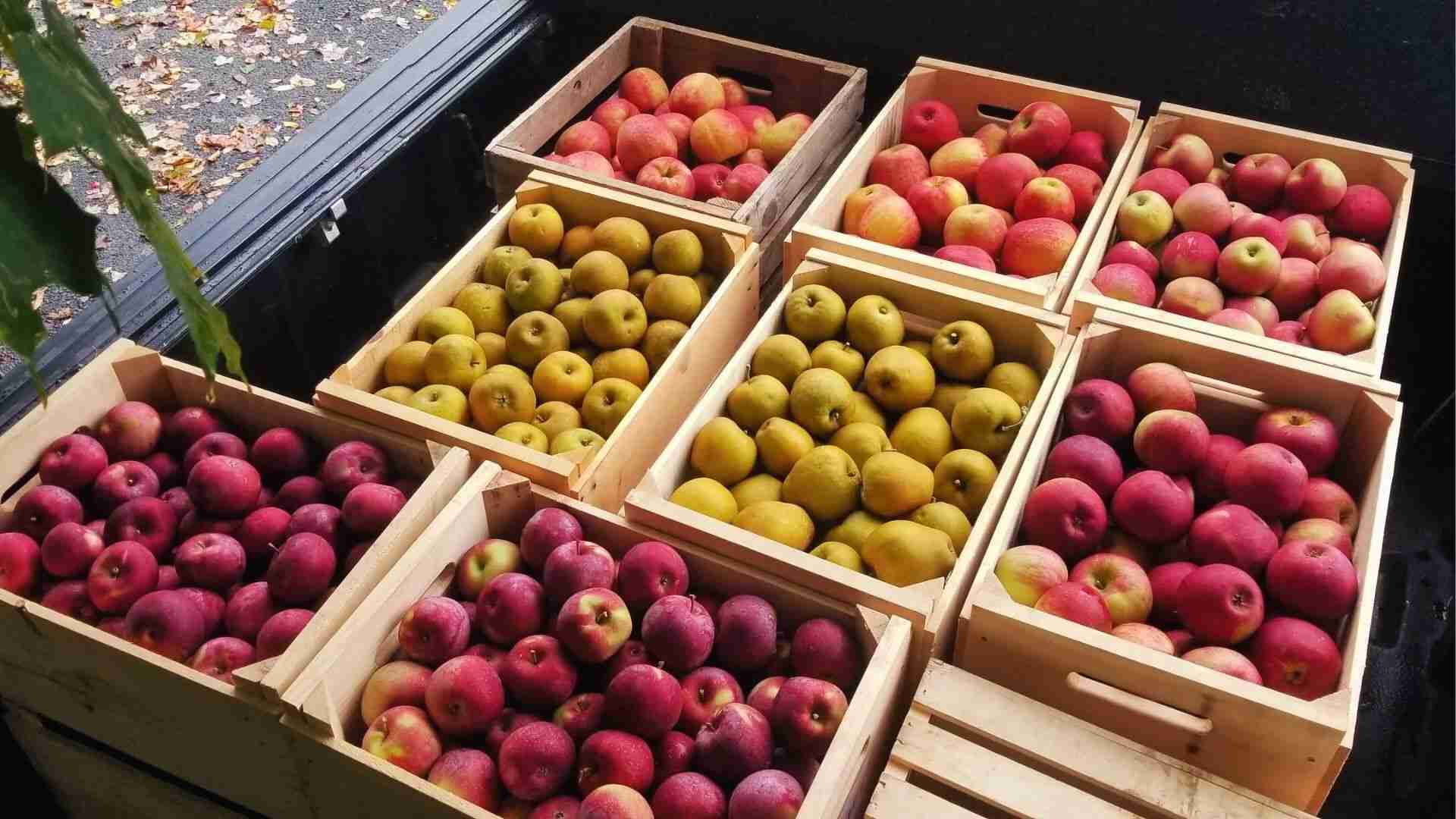
Store-bought apples can work, but orchard or farmers market apples often give better results.
Store apples are sometimes picked early or kept in cold storage, which can affect seed quality.
If you have access to a local orchard, grab seeds from a few different apples for better odds.
How to Identify Viable Seeds (Color, Size, and Maturity)
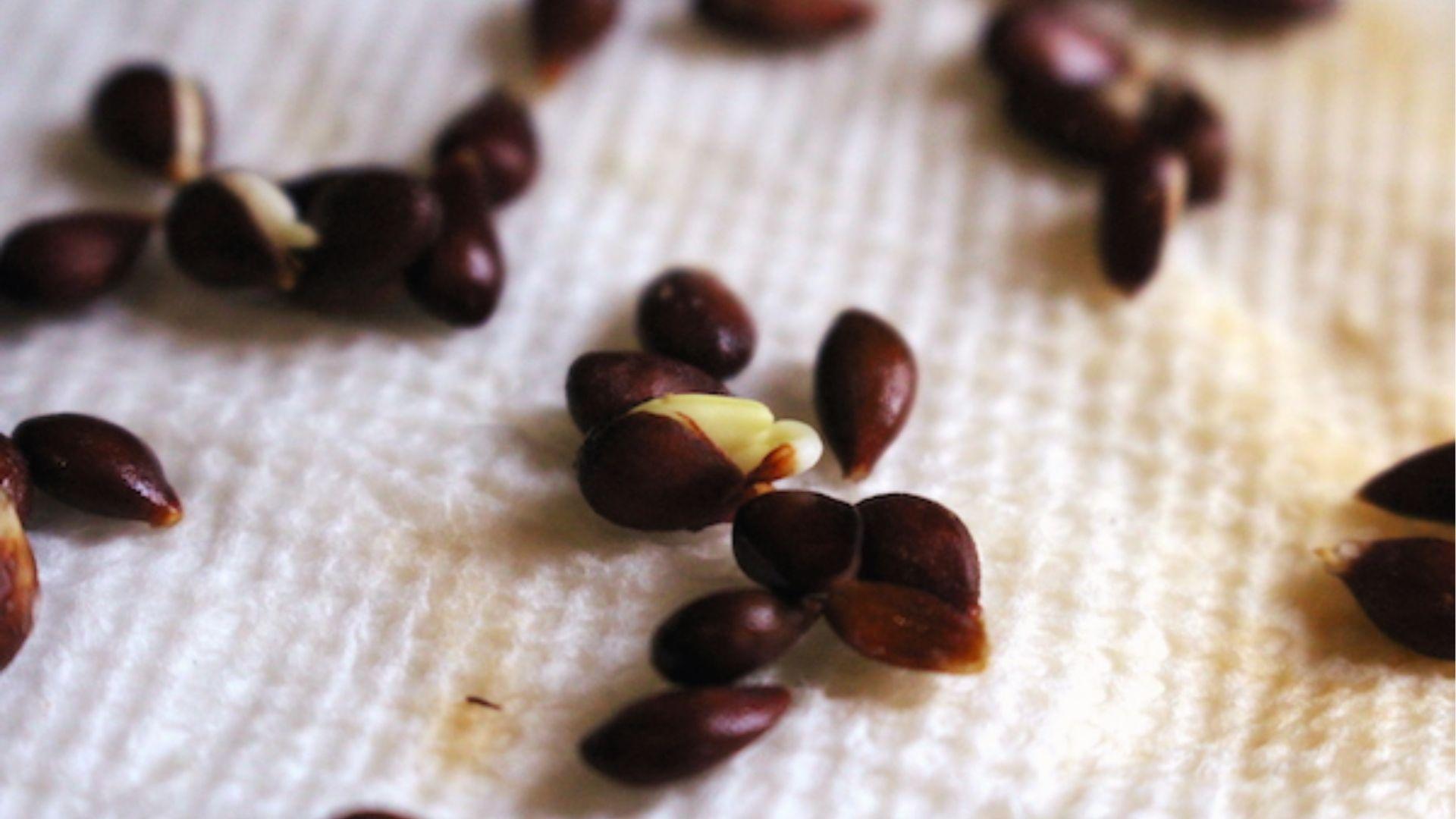
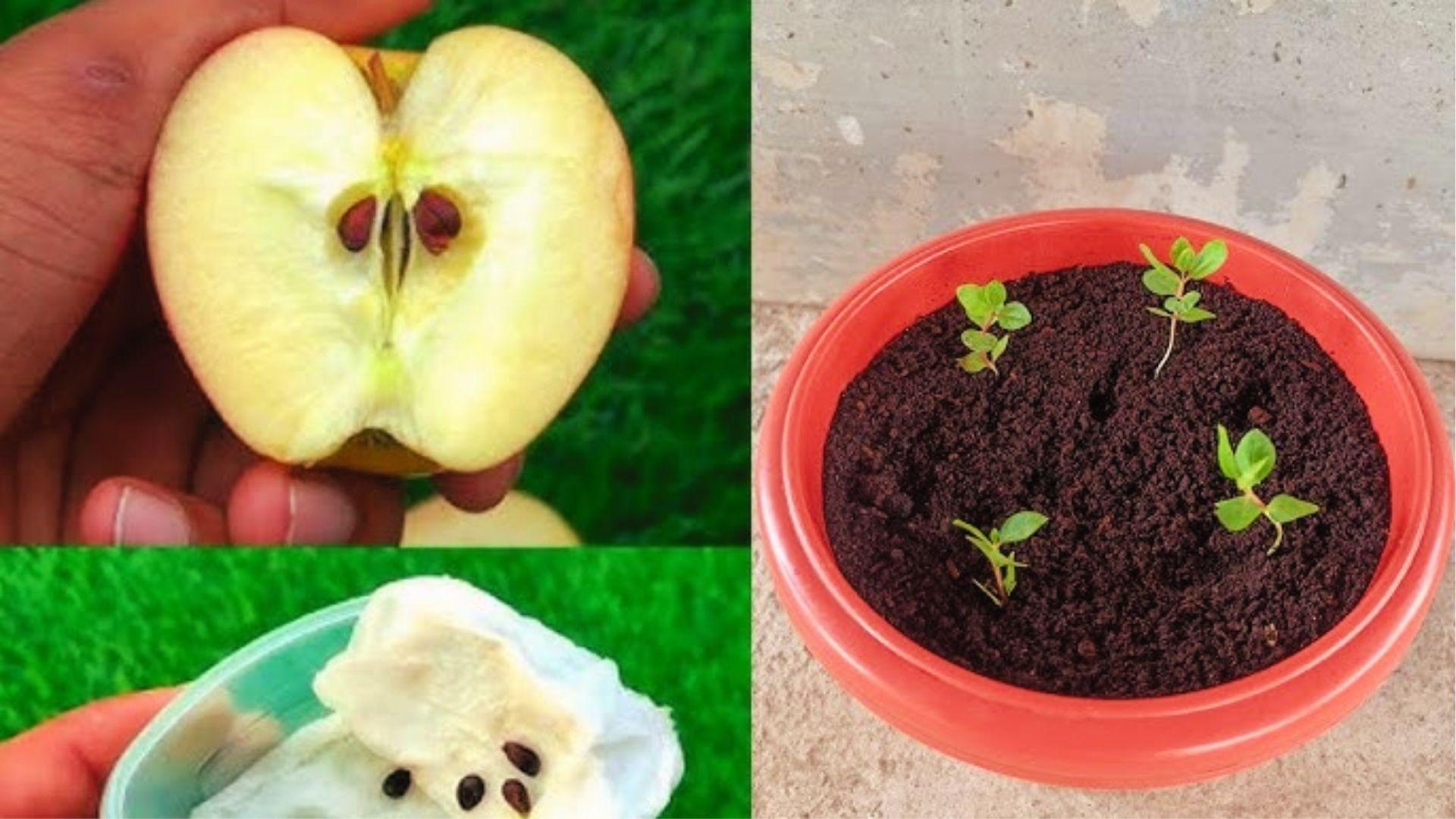
Good seeds are dark brown and plump, not pale or shriveled. Pale seeds are usually immature and won't sprout well.
Pick the largest, darkest seeds from each apple. Avoid any that look cracked, soft, or moldy.
Cleaning and Drying Seeds Properly Before Storage
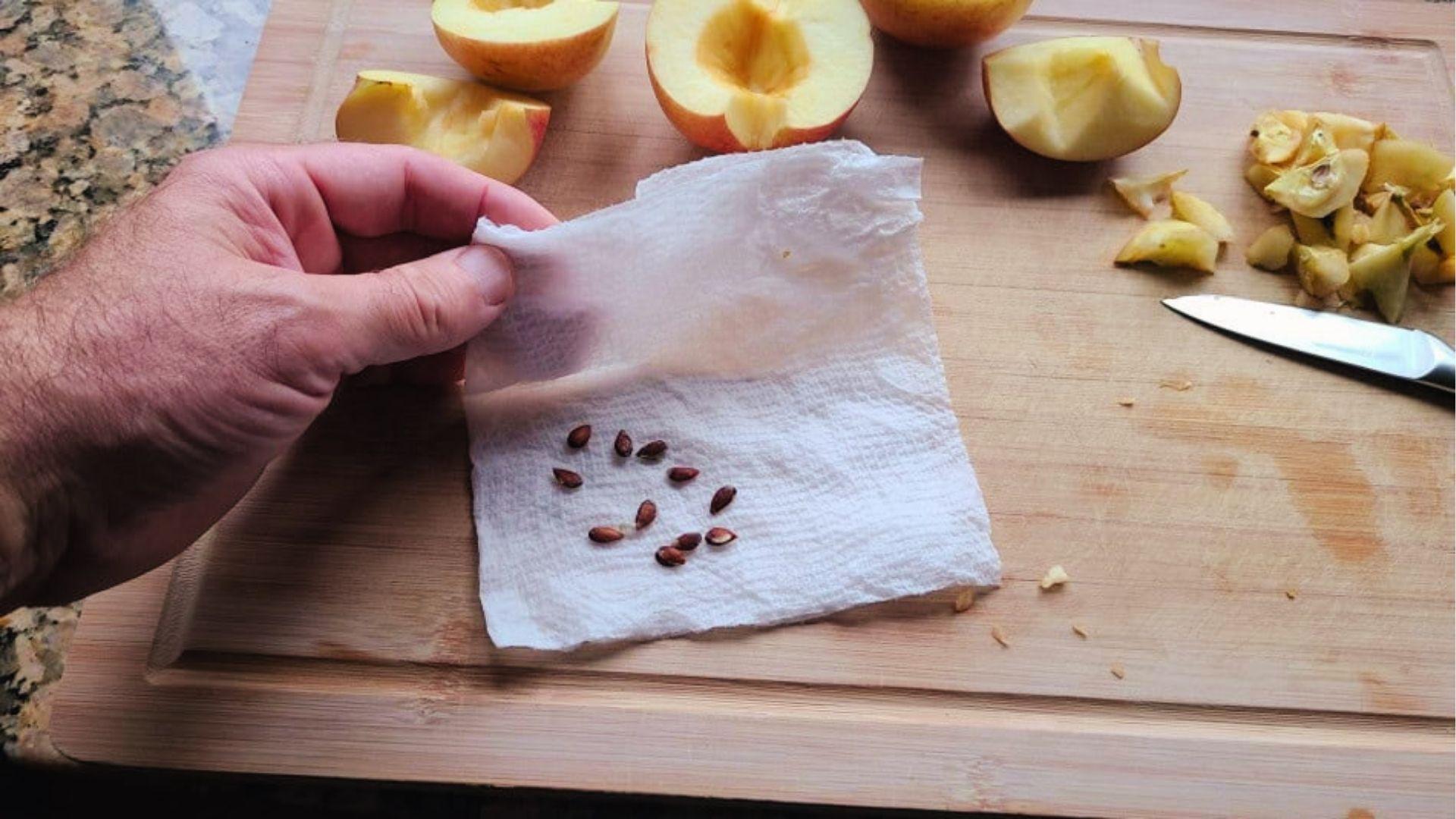
Rinse the seeds under cool water to remove any fruit residue. Pat them dry with a paper towel.
Don't let them sit out too long, since they can dry out completely and lose viability. A light surface dry for a day is enough before moving to stratification.
Cold Stratification for Apple Seeds
This single step decides whether your seeds sprout at all, so don't skip it.
What Is Stratification and Why Apples Need It
In the wild, apple seeds sit through winter cold before sprouting in spring. This cold period breaks their natural dormancy.
Without it, most seeds simply won't germinate, no matter how good the conditions are afterward.
Easy Fridge Method (Paper Towel + Ziplock Bag)
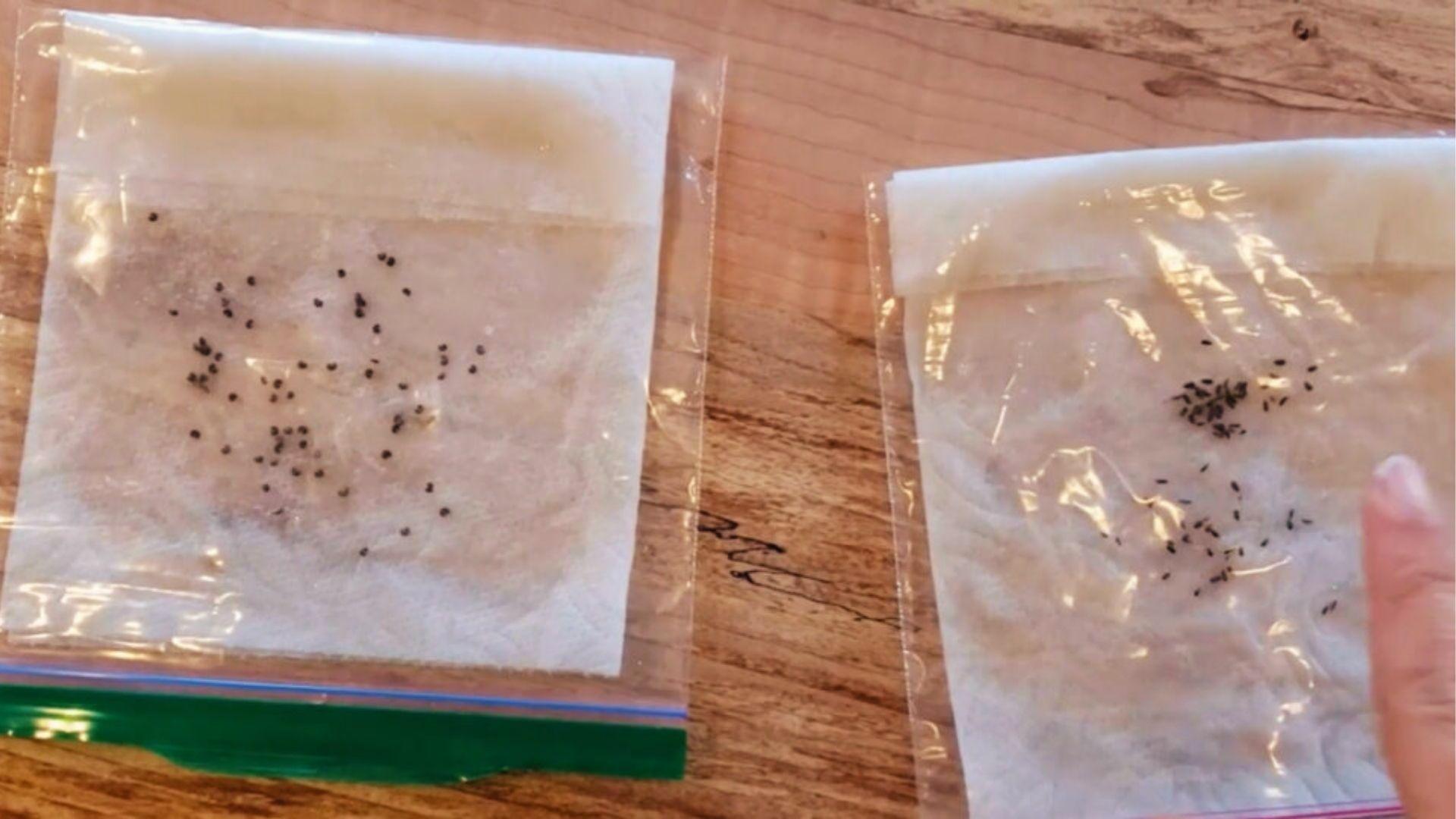
Wrap your seeds in a damp paper towel and place it inside a sealed ziplock bag. Pop the bag in the fridge, not the freezer.
This recreates the cold, slightly moist conditions seeds need over winter.
Ideal Temperature and Duration (4 to 8 Weeks or More)
Keep the bag at a steady fridge temperature, around 34 to 41 degrees Fahrenheit.
Most seeds need 4 to 8 weeks of this cold treatment, though some take longer. Check on them every couple of weeks.
Signs Your Apple Seeds Are Ready to Plant
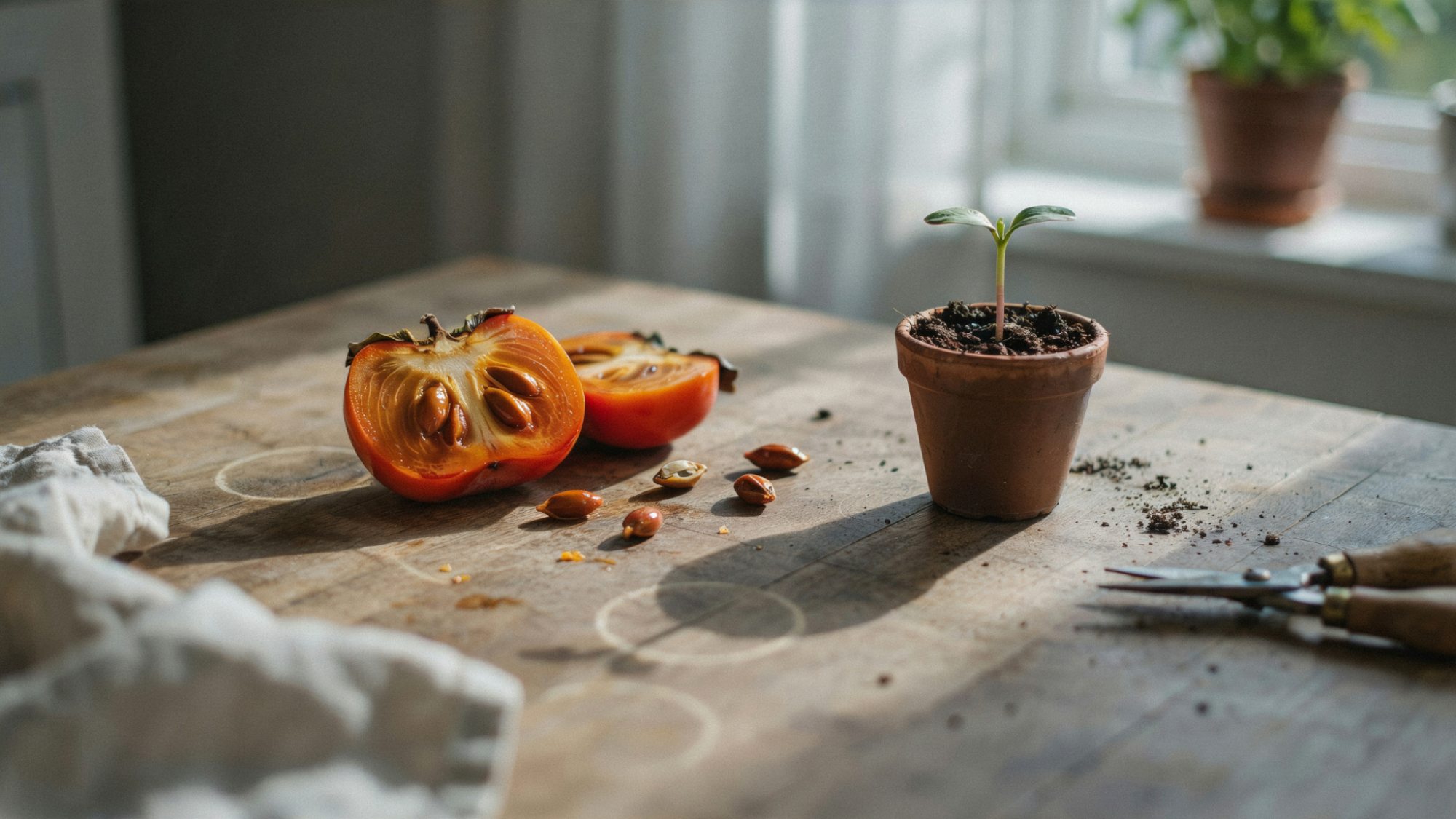
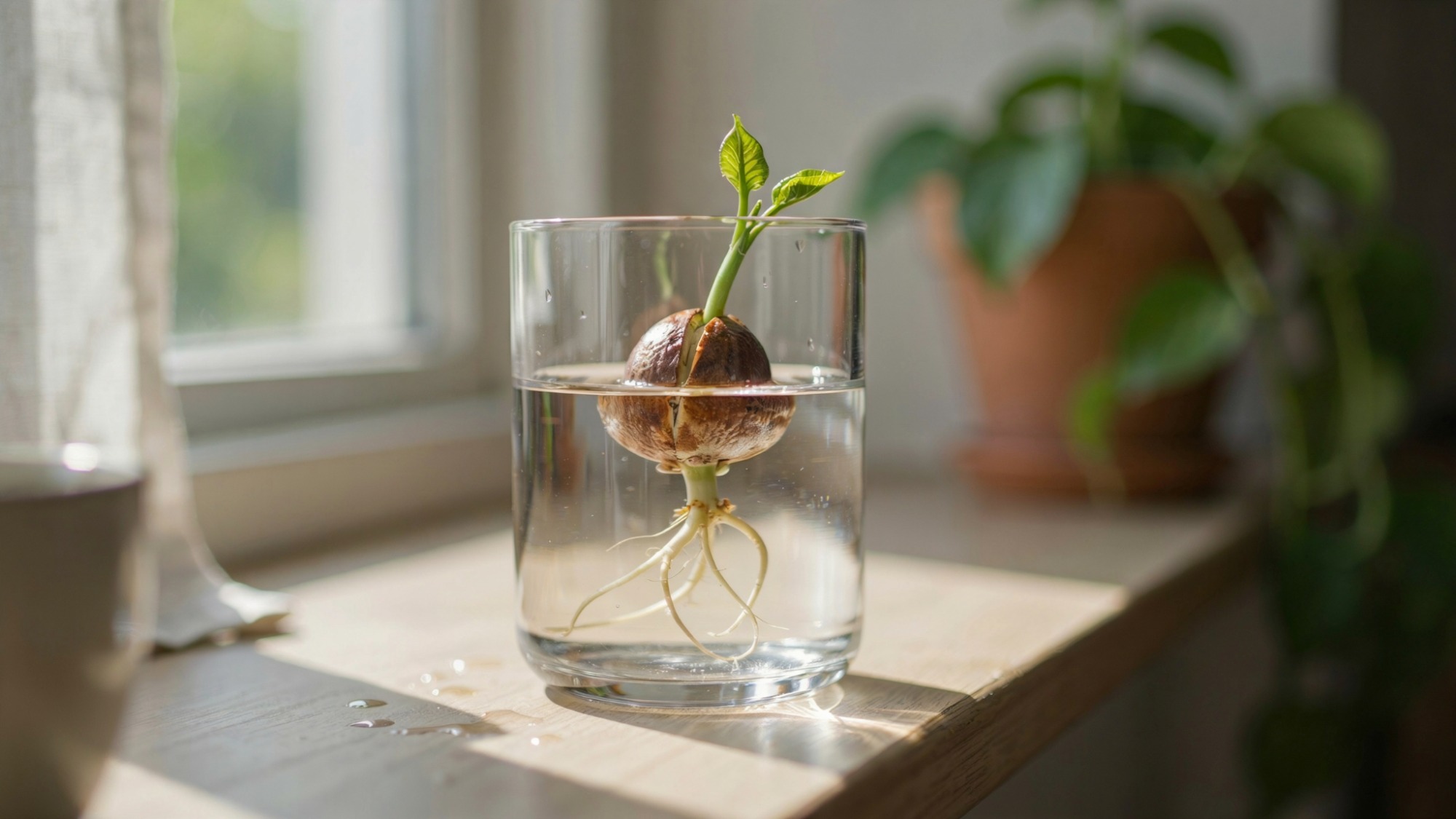
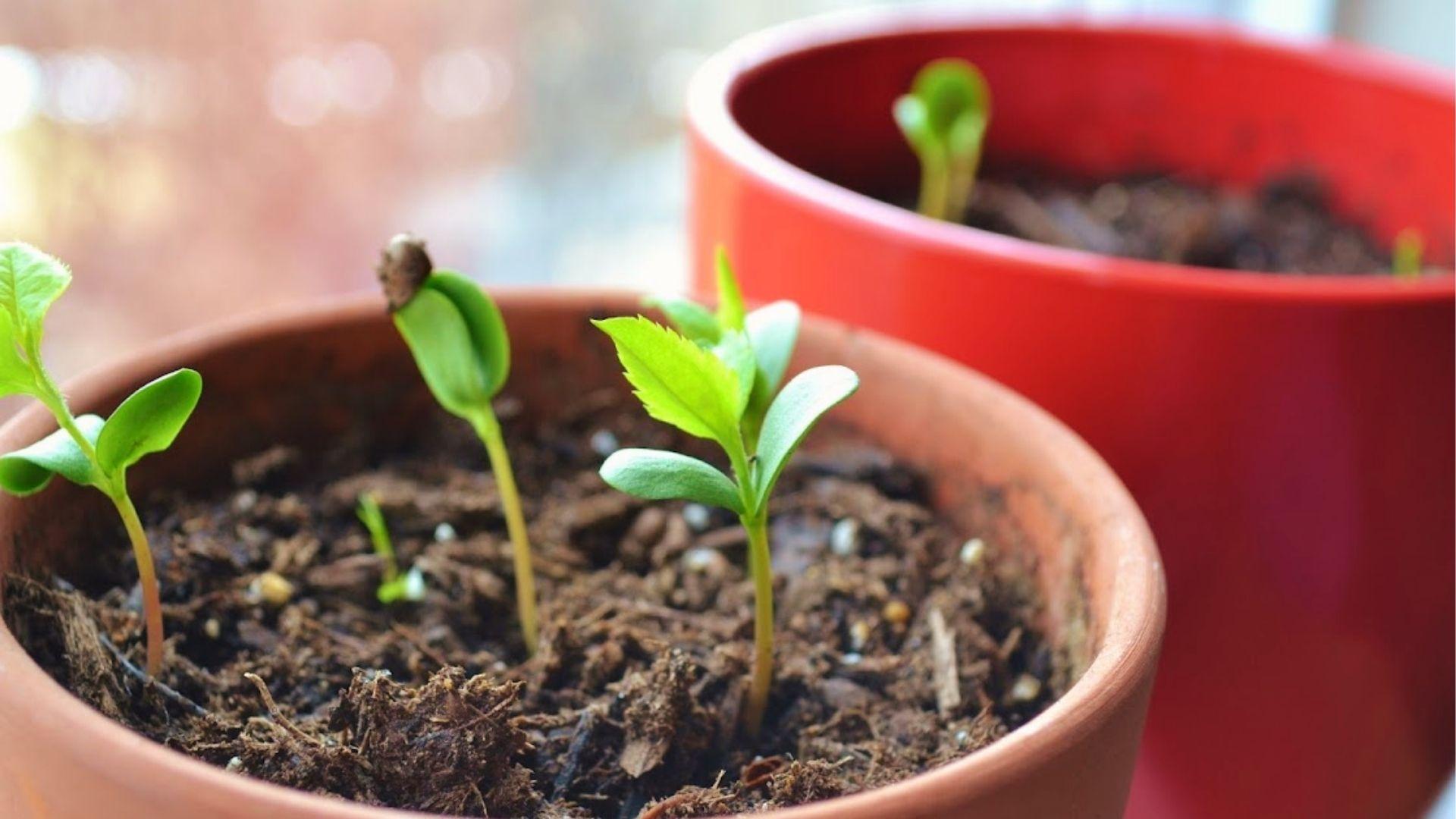
You'll notice the seed coat starting to split or a tiny white root tip poking out. That's your cue. Once you see this, it's time to move the seed into soil.
How to Plant Apple Seeds at Home (Indoor and Outdoor Methods)
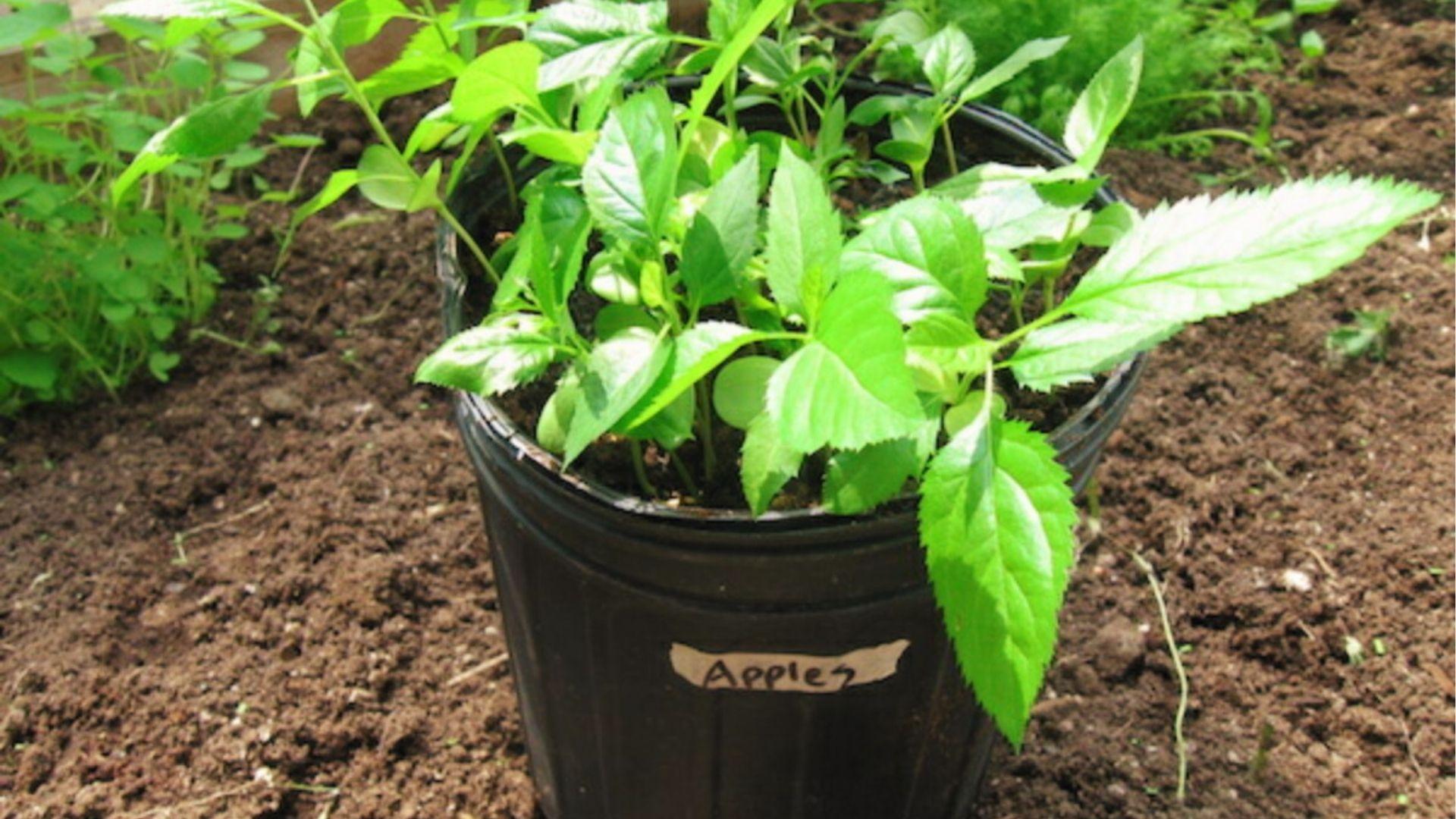
Once stratified, your seeds are ready for soil. Here's how to give them the best start.
Best Time to Plant Apple Seeds for High Germination
Late winter to early spring works well, right after stratification ends. This timing lines up with when seeds would naturally sprout outdoors, giving seedlings a full growing season ahead.
Indoor Pot Method vs Direct Garden Sowing
Indoor pots give you more control over temperature and moisture, which means better germination rates.
Direct garden sowing skips the transplant step but exposes seeds to pests and weather swings. For beginners, starting indoors is usually the safer bet.
Best Soil Mix and Planting Depth for Apple Seeds
Use a light, well-draining potting mix. Plant seeds about half an inch to one inch deep. Soil that's too heavy or compact can stop sprouts from pushing through.
Watering Tips for Healthy Germination
Keep the soil moist but never soggy. Water lightly every couple of days, checking that the top inch of soil doesn't dry out completely.
How Long Do Apples From Seed Take to Grow and Fruit?
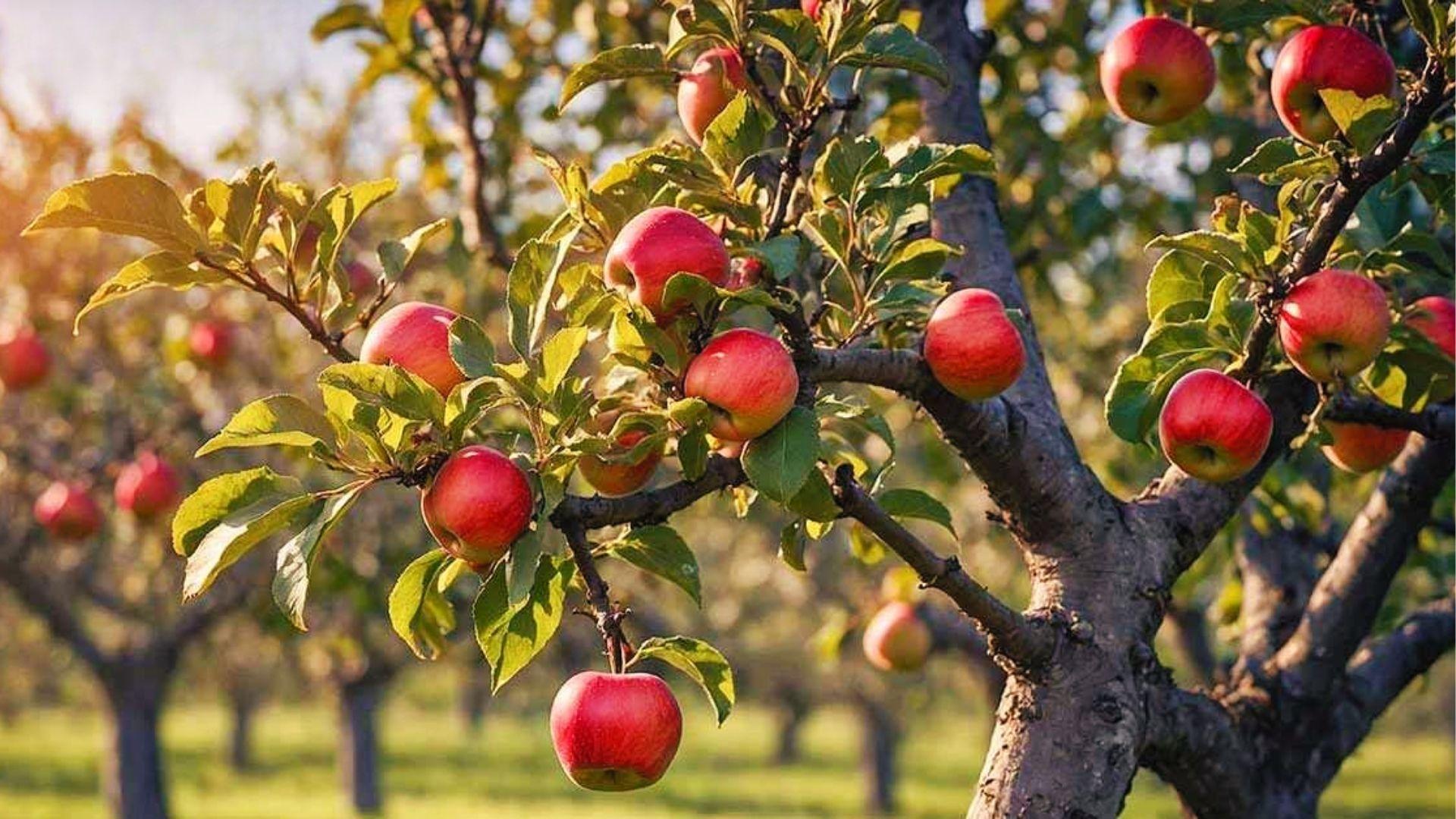
Patience matters here. Seed-grown trees take their time before producing fruit.
Timeline From Seed to Fruit (6 to 10 Years)
Apple trees grown from seed typically take 6 to 10 years to produce their first fruit. This is much longer than grafted nursery trees, which can fruit in 2 to 4 years.
Factors That Affect Growth Speed and Tree Size
Sunlight, soil quality, water, and climate all affect how fast a tree grows. Genetics also play a role, since some seedlings naturally grow faster than others.
Why Seed-Grown Trees Can Become Stronger Than Nursery Trees
Seed-grown trees develop deep, strong root systems since they're not grafted onto separate rootstock. This often makes them hardier and more resistant to disease over time.
Managing Expectations for First Harvest
The long wait can feel discouraging, but it's part of the process. Use these early years to learn about pruning, soil care, and tree health while you wait for that first apple.
What to Do If Seed-Grown Apples Are Not Good (Smart Solutions)
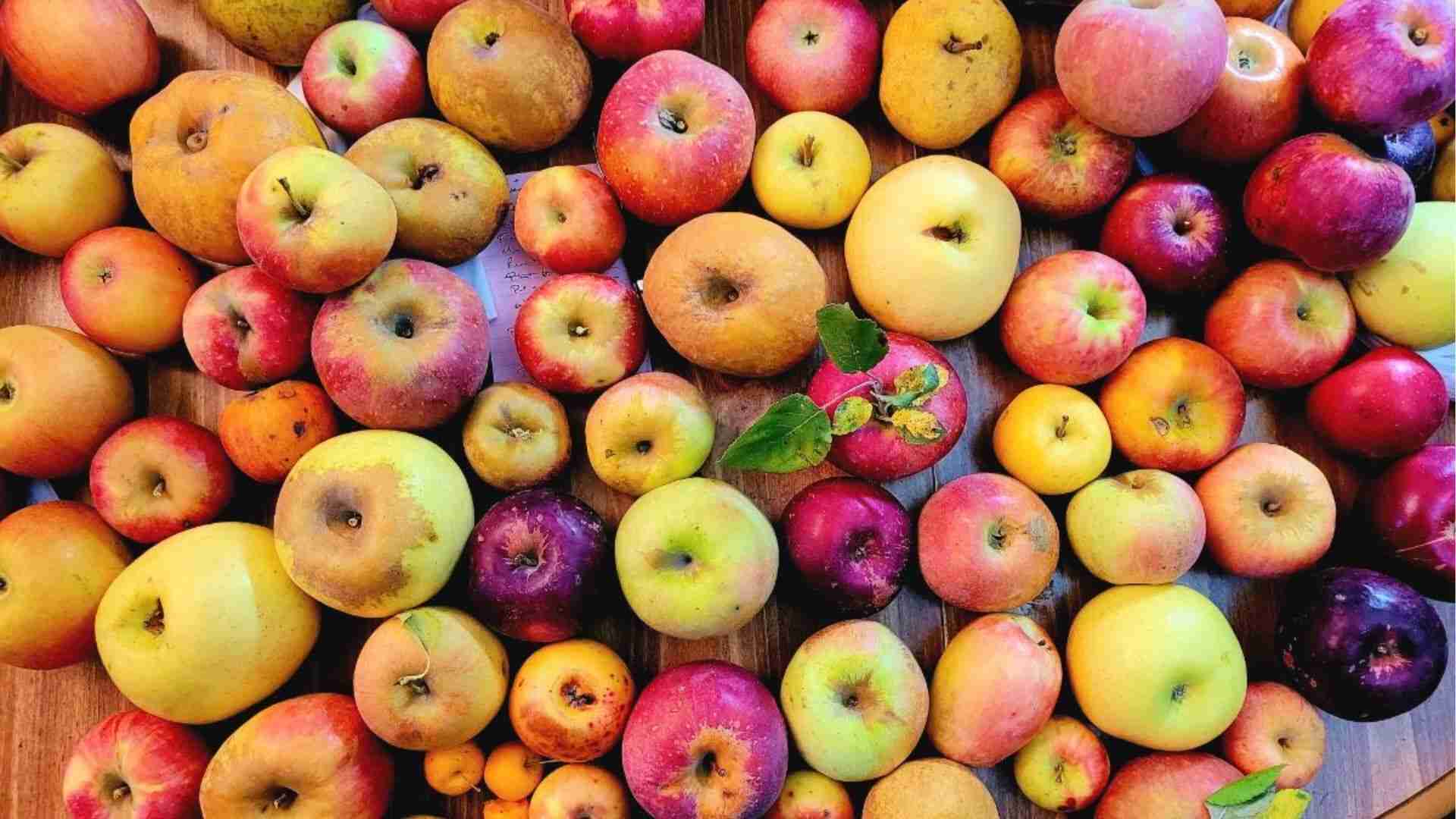
If the fruit disappoints, your tree still has plenty of value. Here's how to make use of it.
Using Seedlings as Rootstock for Grafting
A seed-grown tree makes excellent rootstock. You can graft a branch, called a scion, from a variety you actually enjoy onto your seedling's root system.
How Grafting Improves Fruit Quality and Consistency
Grafting lets you combine the strong roots of your seedling with the known, reliable fruit of another variety.
This gives you the best of both:hardy roots and good apples.
Turning Unpredictable Trees Into Productive Orchard Trees
Even a tree with average fruit can become productive once grafted.
It's a practical way to turn a seed-grown experiment into a tree that actually earns its place in your yard.
Quick Tips for Growing Apples From Seed Successfully
A few simple habits that make the difference between a seed that sprouts and one that doesn't.
- Label every pot with the apple variety and planting date so you don't lose track later
- Use a clear plastic bag or dome over pots to hold in moisture during germination
- Keep seedlings away from direct heat sources like radiators or sunny window sills in winter
- Rotate pots every few days so seedlings grow straight instead of leaning toward light
- Be patient with slow starters, some seeds sprout weeks after others from the same batch
Conclusion
Growing apples from seed takes patience, but it's worth it. I still check on my own seedling tree every spring, just to see how much it's grown.
Every seed holds the chance to become something different, and that's part of what makes this so rewarding.
If you're ready to try it yourself, save a few seeds from your next apple and start the process today.
Got questions or your own growing story? Drop a comment below, share this post with a fellow grower, or check out our other gardening guides.
Frequently Asked Questions
Can you really grow an apple tree from a store-bought apple seed?
Yes, store-bought apple seeds can grow into trees. The fruit won't match the parent apple exactly, but the tree can still grow and even produce fruit.
Do apple seeds need to be refrigerated before planting?
Yes, apple seeds need cold stratification before planting. This mimics winter conditions and tells the seed it's time to break dormancy.
How long does it take for an apple seed to sprout?
After stratification, most seeds sprout within 1 to 4 weeks. Some take a little longer depending on conditions.
Will an apple tree grown from seed produce the same fruit as the parent?
No, the fruit will likely be different. Apple trees don't grow true from seed, so each tree produces its own kind of apple.
How many years does it take for a seed-grown apple tree to bear fruit?
It typically takes 6 to 10 years for a seed-grown apple tree to produce its first fruit, much longer than a grafted tree.