
Winter brings a blanket of white across your yard, and you might wonder: is snow on grass good or bad? I’ll break down exactly what happens when snow covers your lawn and how it affects your grass health.
You’ll learn the benefits snow provides, the risks to watch for, and practical care tips to keep your lawn healthy all winter long.
Trust me, understanding this now will save you from spring lawn problems later.
In this article, I’ll cover how snow acts as natural insulation, why it sometimes causes mold, and what you can do to protect your grass before, during, and after snowfall.
Let’s get your lawn ready for winter.
Understanding Winter’s Impact on Your Lawn
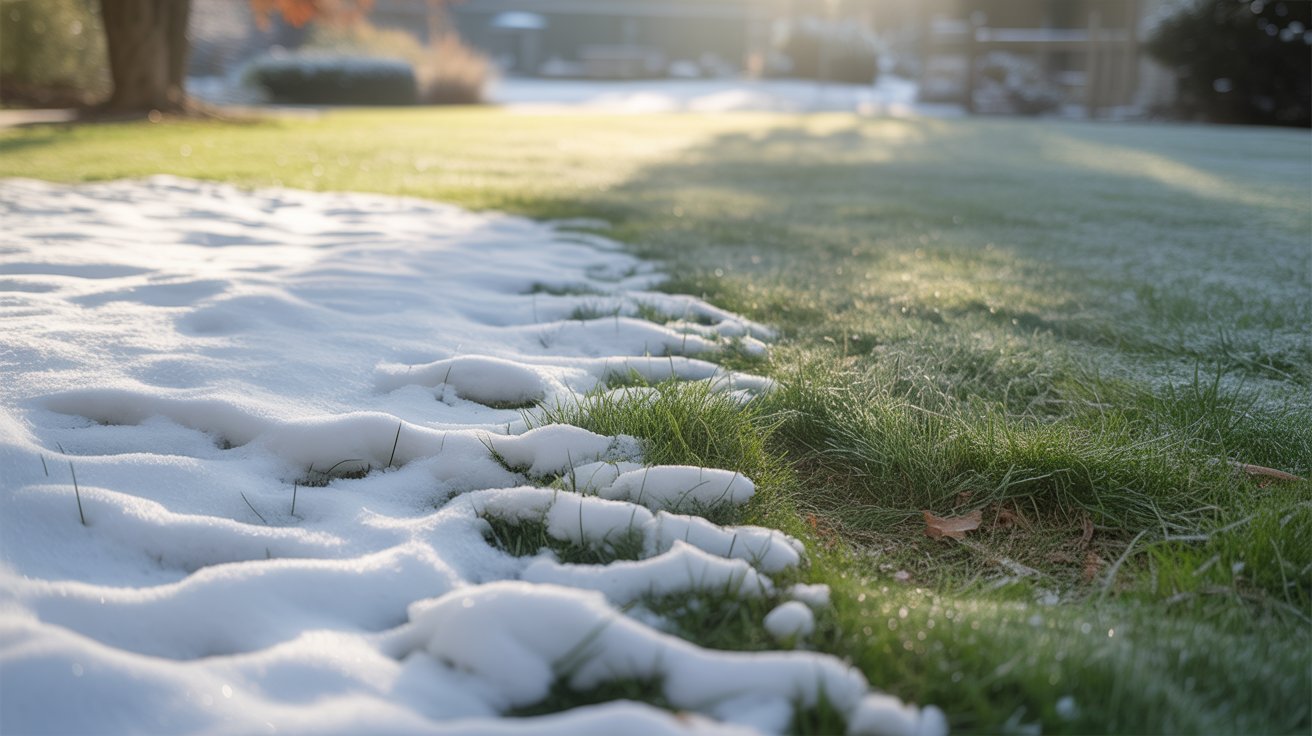
Snow affects grass in multiple ways throughout the cold season. Some effects help your lawn stay healthy while others create problems that show up in spring. The temperature under snow stays more stable than exposed ground.
Moisture levels change as snow accumulates and eventually melts. Your grass remains dormant but still responds to what happens above and below the snow layer. Knowing these basic interactions helps you make better decisions about winter lawn care.
The condition of your grass in spring depends largely on how you manage your lawn before and during snowy weather.
The Science Behind Snow on Grass
Snow acts as a natural blanket that changes conditions beneath its surface in ways that directly affect grass health.
How Snow Interacts with Your Lawn
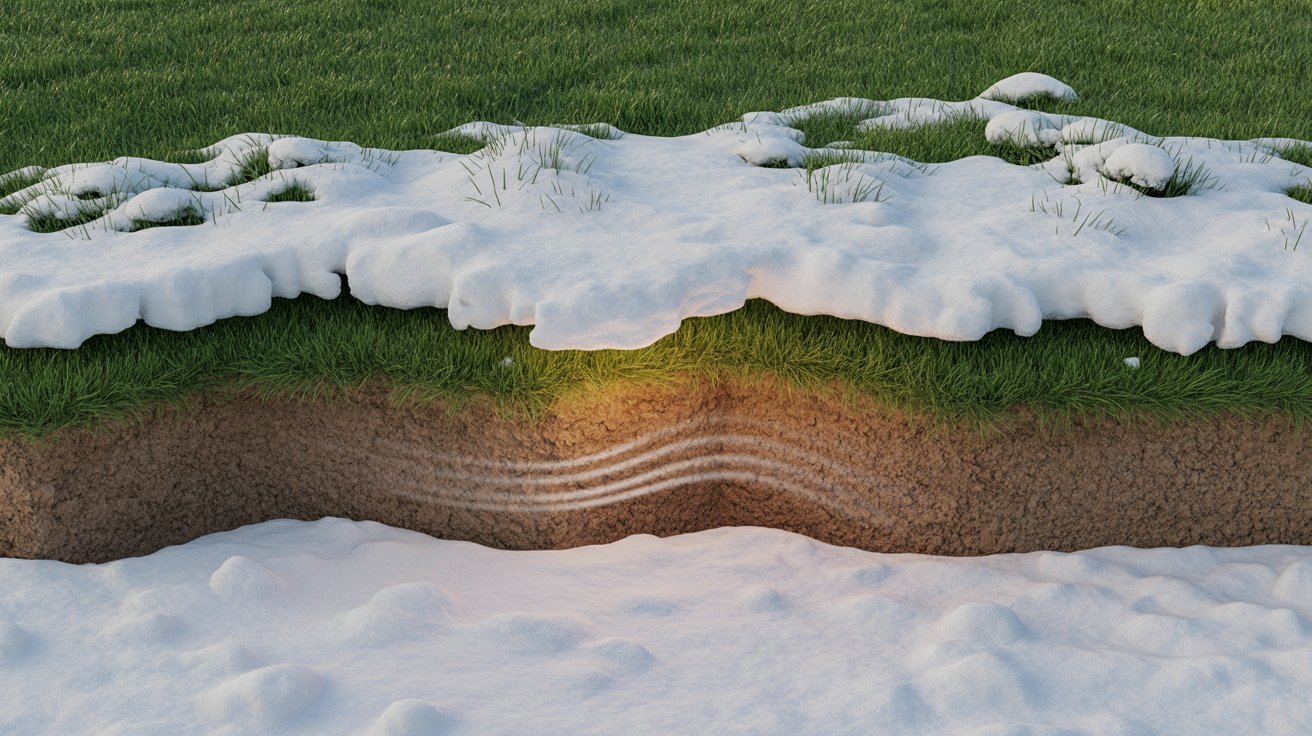
When snow covers your lawn, it creates an insulating layer that traps heat rising from the ground. This keeps temperatures more stable underneath and helps grass maintain dormancy by preventing rapid temperature swings.
The snow holds water that gradually seeps into the soil. Air pockets in fresh snow provide the best insulation, while wet, heavy snow or ice layers reduce this protective effect.
Does Snow Fertilize a Lawn?
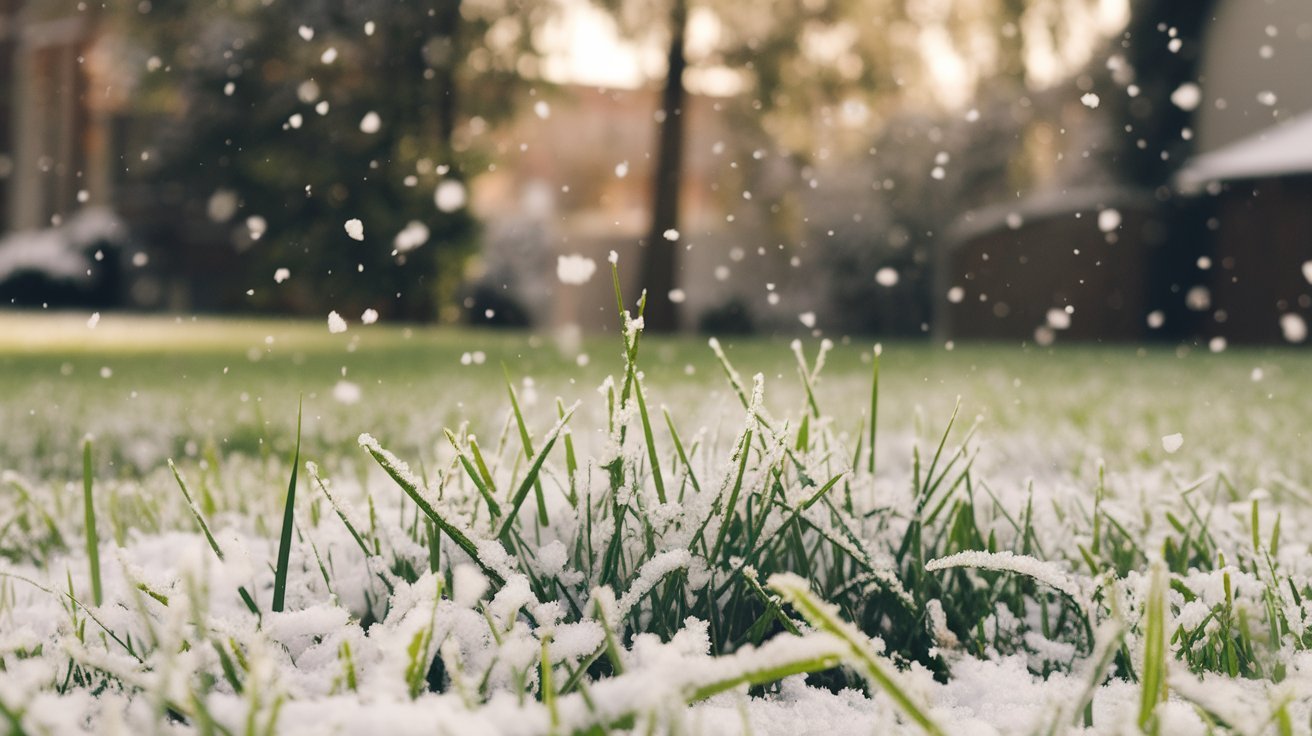
Snow is sometimes called “poor man’s fertilizer” because it captures small amounts of nitrogen from the atmosphere as it falls. When snow melts, it releases this nitrogen into the soil along with other trace minerals.
The fertilization effect is modest but real. Think of it as a small bonus rather than a replacement for actual lawn feeding.
Benefits of Snow on Grass
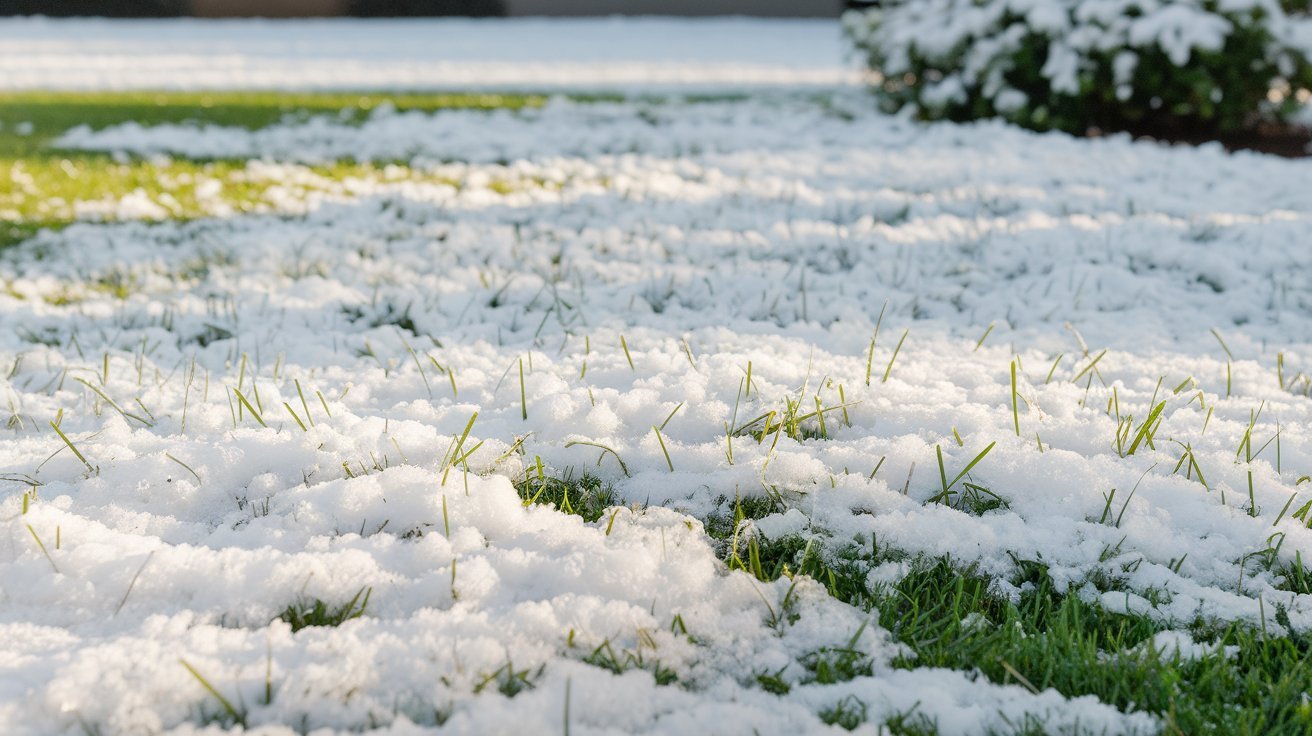
Snow provides several advantages that can improve lawn health and make spring recovery easier for your grass.
- Natural Insulation for Grass Roots: Snow works like a thermal blanket for your soil. It keeps the ground from reaching extreme cold temperatures and prevents repeated freeze-thaw cycles that stress roots.
- Moisture Retention and Spring Irrigation: Snow cover acts as a moisture seal that prevents soil water from evaporating. When it melts in spring, that water soaks directly into the ground and gives your grass an early drink.
- Nitrogen Enrichment: Snow brings down small amounts of atmospheric nitrogen. When it melts, this nitrogen enters the soil and gives grass a light nutritional boost.
- Protection from Winter Wind Damage: Snow cover shields grass from direct wind exposure. This prevents grass blades from drying out and means healthier recovery when spring arrives.
- Dormant Seeding Opportunities: Melting snow helps settle grass seeds into soil contact if you’ve done dormant seeding. Snow cover also protects seeds from being blown away or eaten by birds.
Risks and Drawbacks of Snow on Grass
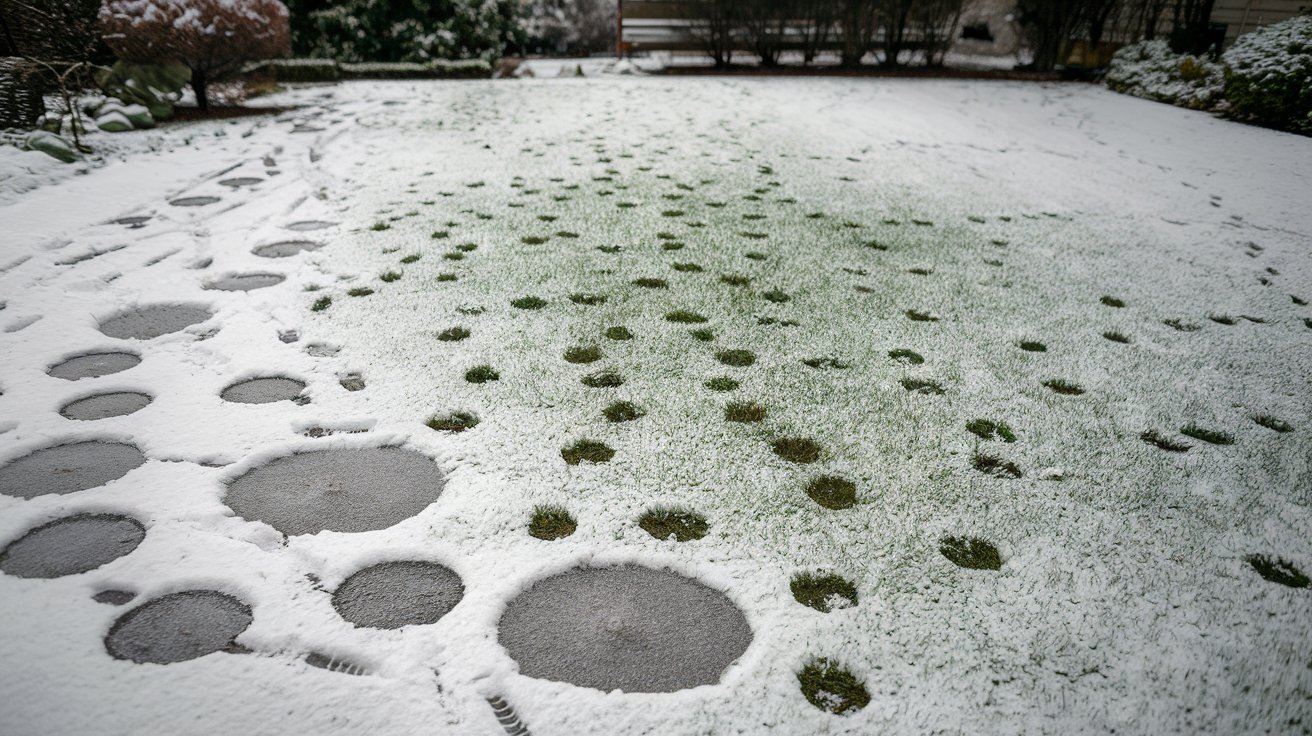
While snow can help your lawn, it also creates conditions that may harm grass if you’re not careful.
- Snow Mold Formation: Snow mold is a fungal disease that appears when snow melts. You’ll notice circular patches of matted, discolored grass. This happens when moisture gets trapped under snow for extended periods, especially in poorly drained areas.
- Ice Damage: Ice forms when temperatures fluctuate or rain falls on snow. It blocks air and traps moisture even more than packed snow. Walking on icy grass can tear blades since frozen grass is brittle and breaks easily under pressure.
- Soil Compaction: Wet snow is heavy and presses down on the soil. Walking or shoveling on snow-covered grass makes compaction worse. Compacted soil has less air space, which makes it harder for grass roots to grow and absorb water come spring.
- Hidden Lawn Pests: Snow cover keeps the ground warmer, which protects pests like voles. These small rodents stay active under the snow and eat grass roots and crowns. You won’t see the damage until spring when snow melts.
Prevention tips: Aerate your lawn in fall, rake leaves thoroughly before winter, keep grass slightly shorter going into winter, and avoid piling snow in the same spots repeatedly.
How to Protect Your Lawn During Snowy Weather
Taking the right steps before, during, and after the snow season will keep your grass healthy and ready for spring growth.
Before Winter Arrives
- Aerate your lawn in late fall to improve drainage and reduce snow mold risk
- Remove thatch if you have a thick layer since it traps moisture and creates conditions for mold
- Apply winterizer fertilizer to strengthen grass roots before dormancy
- Mow your lawn one final time before the first snowfall, cutting it slightly shorter than summer height
During Winter
- Avoid walking on frozen or snow-covered grass since every step causes damage
- Don’t pile snow all in one spot on your lawn when shoveling driveways or paths
- Spread snow piles out evenly across different areas to prevent smothering grass
- If you must cross your lawn, use the same path each time to limit damage
After the Snow Melts
- Inspect your lawn carefully for matted areas, discolored patches, or bare spots
- Rake gently over matted grass to lift blades and allow air circulation
- Don’t rake too aggressively since grass is vulnerable right after winter
- Repair bare spots or damage early with light raking followed by overseeding
- Check for pest damage like vole trails that appear as winding paths of destroyed grass
Conclusion
Through several winters tending to my own lawn, I’ve come to know that snow on grass is not a full friend or fully foe. The most important factor is preparation.
When you aerate in the fall, leave the grass at the right height, and refrain from walking on your snow-covered areas, winter snow can help more than hurt.
Your grass will reward your efforts in the spring by greening up fast and growing healthier. I’ll never forget that one year I failed to prepare in the fall and managed patchy mold in April.
Trust me, the little bit of extra effort pays off with a big difference in the spring. What winter lawn issues have you experienced? Leave a comment below and let me know!
Frequently Asked Questions
Is it bad to walk on snow-covered grass?
Yes, walking on snow-covered grass compacts the soil and can damage grass blades underneath. Stick to paths whenever possible during winter months.
Can snow mold kill my entire lawn?
Snow mold rarely kills an entire lawn, but it can damage patches severely. Good fall preparation reduces risk significantly.
How much nitrogen does snow actually provide to grass?
Snow provides only trace amounts of nitrogen, typically less than 1 pound per acre per snowfall. Consider snow nitrogen a small bonus, not a substitute for regular fertilization.
Should I remove snow from my lawn?
No, leave snow on your lawn naturally. The only exception is if someone deliberately piles excessive snow all in one spot.
When should I start caring for my lawn after winter?
Begin lawn care when grass starts actively growing, typically when soil temperatures reach 50-55°F consistently. Rake gently to remove debris, check for damage, and apply light fertilizer.