
Pruning pepper plants is one of those topics that gets gardeners talking. Some swear by it, while others say it’s not worth the effort.
So, should you prune pepper plants? The answer isn’t always straightforward.
It depends on your pepper variety, your climate, and what you want from your harvest.
In this guide, I’ll walk you through when pruning makes sense, why it can help your plants, and exactly how to do it right.
By the end, you’ll know if pruning is the right move for your garden.
Why Prune Pepper Plants?
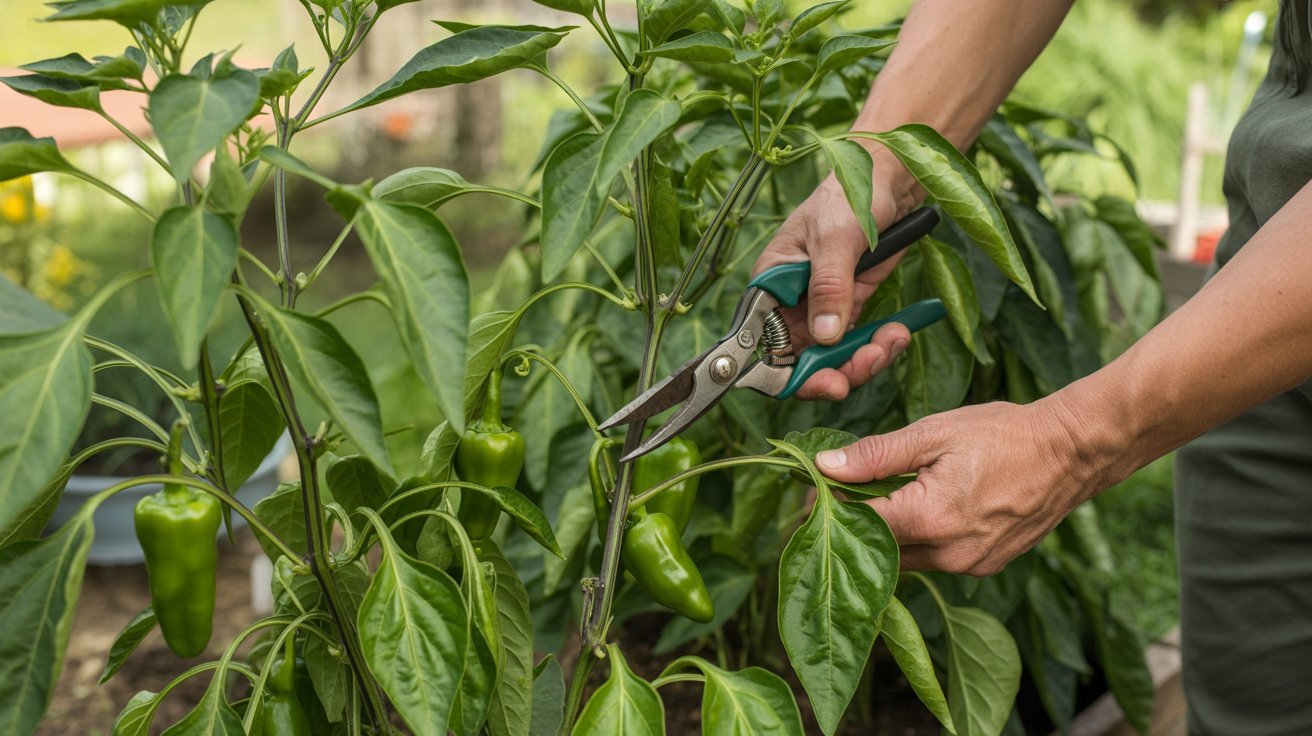
Pruning can make your pepper plants healthier and more productive, but it’s not always necessary for every variety you grow.
The Benefits of Pruning
Pruning creates stronger stems that support heavy fruit better. It also improves airflow, which helps prevent fungal diseases from taking hold.
When you prune, the plant sends more energy to its roots. This means faster ripening and more evenly sized peppers that are easier to pick.
When Pruning Isn’t Necessary
Some pepper varieties don’t need any pruning at all.
Bell peppers, poblanos, and cubanelles grow naturally in a strong Y-shape. They can handle their fruit weight without extra help.
Pruning these types too much can actually reduce your harvest. This is especially true if you have a long growing season in your area.
When To Prune Pepper Plants
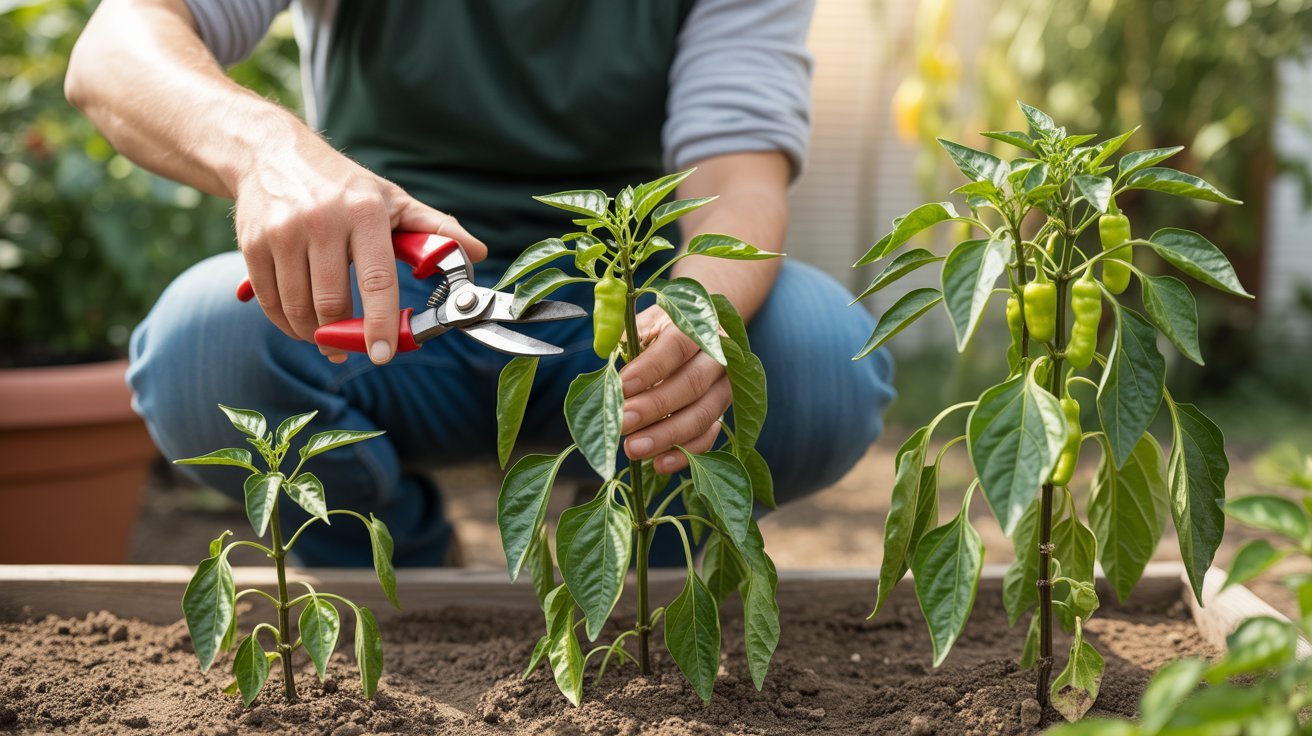
Timing matters when it comes to pruning. Each stage of growth has different needs and goals for your pepper plants.
Early-Season Pruning (Transplant Stage)
The goal here is to build strong branches and help roots get established.
For small-fruited peppers like jalapeños, Thai peppers, and shishitos, pinch off the top growth above 2 to 3 leaf nodes. This encourages the plant to branch out instead of growing tall and spindly.
Also remove any early flowers you see. I know it’s tempting to let them stay, but your plant needs to focus on roots first. Flowers can come later when the plant is stronger.
Mid-Season Maintenance
Now you’re working to keep air moving and disease away.
Trim the lower leaves that sit 6 to 12 inches from the soil. These leaves often get hit by water and soil when it rains, which spreads fungal problems.
Take off any yellowed or damaged leaves too. These attract pests and can spread disease to healthy parts of the plant.
Late-Season Pruning (Pre-Frost Period)
Your goal is to ripen what’s already growing before cold weather hits.
Cut back extra leaves that block sunlight from reaching your peppers. More light means faster ripening.
About 3 to 4 weeks before your first expected frost, top the plants by cutting the main stems. This stops new growth and pushes all the plant’s energy into ripening the peppers already there.
How To Prune Pepper Plants Step-by-Step
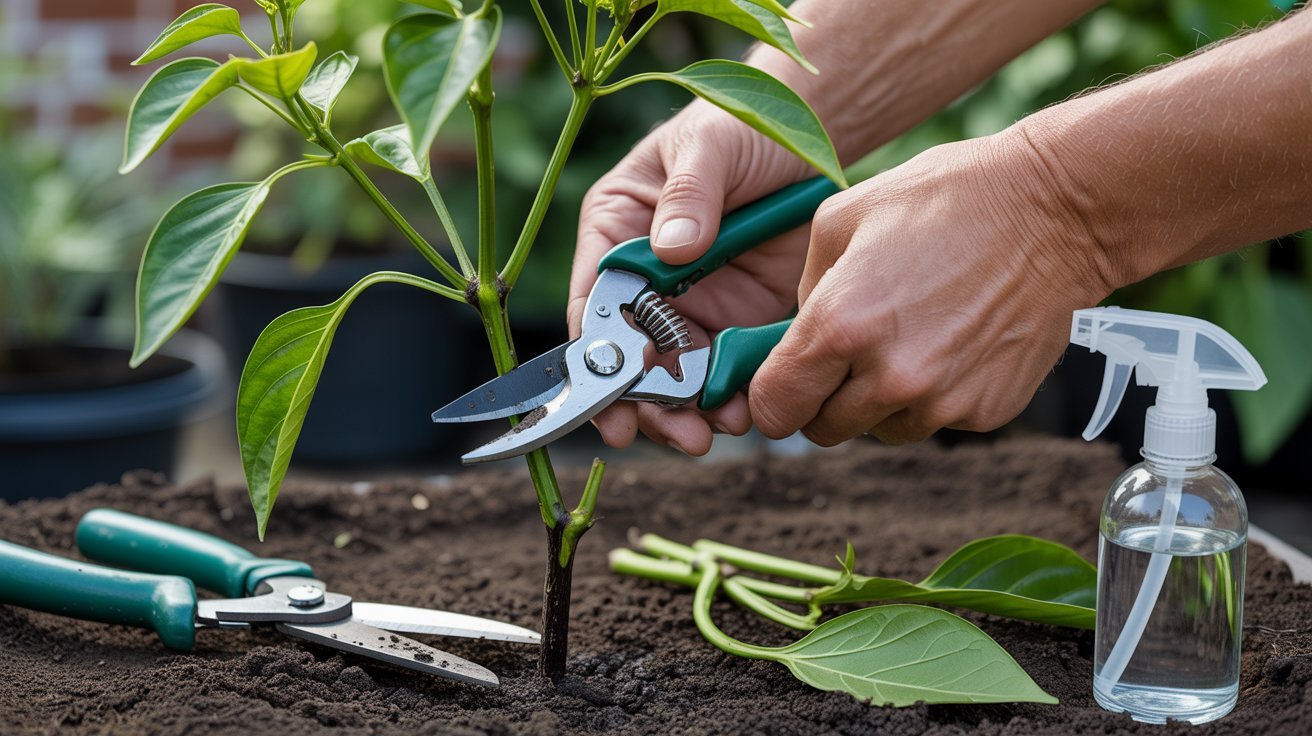
Pruning doesn’t have to be complicated. Follow these simple steps to do it right and keep your plants healthy.
Tools and Preparation
Start with clean, sharp pruning shears. Dull blades can damage your plants and slow down healing.
Sanitize your tools in a 10% bleach solution between each plant. This stops diseases from spreading through your garden.
Always prune on a dry day. Wet conditions make it easier for fungal infections to take hold on fresh cuts.
Step-by-Step Pruning Process
First, figure out what stage your plant is in. Is it early season, mid-season, or late season? This tells you what type of pruning to do.
Remove any flowers or suckers that don’t serve your current goal. Early on, flowers need to go. Later, suckers between branches should come off.
Thin out branches that crowd each other. You want air to flow through the plant easily.
When you make cuts, always cut just above a leaf node. This is where new growth will come from if the plant needs to branch out.
Throw diseased or bug-infested leaves in the trash. Don’t put them in your compost pile, or you’ll spread the problem to other plants later.
When You Should Skip Pruning
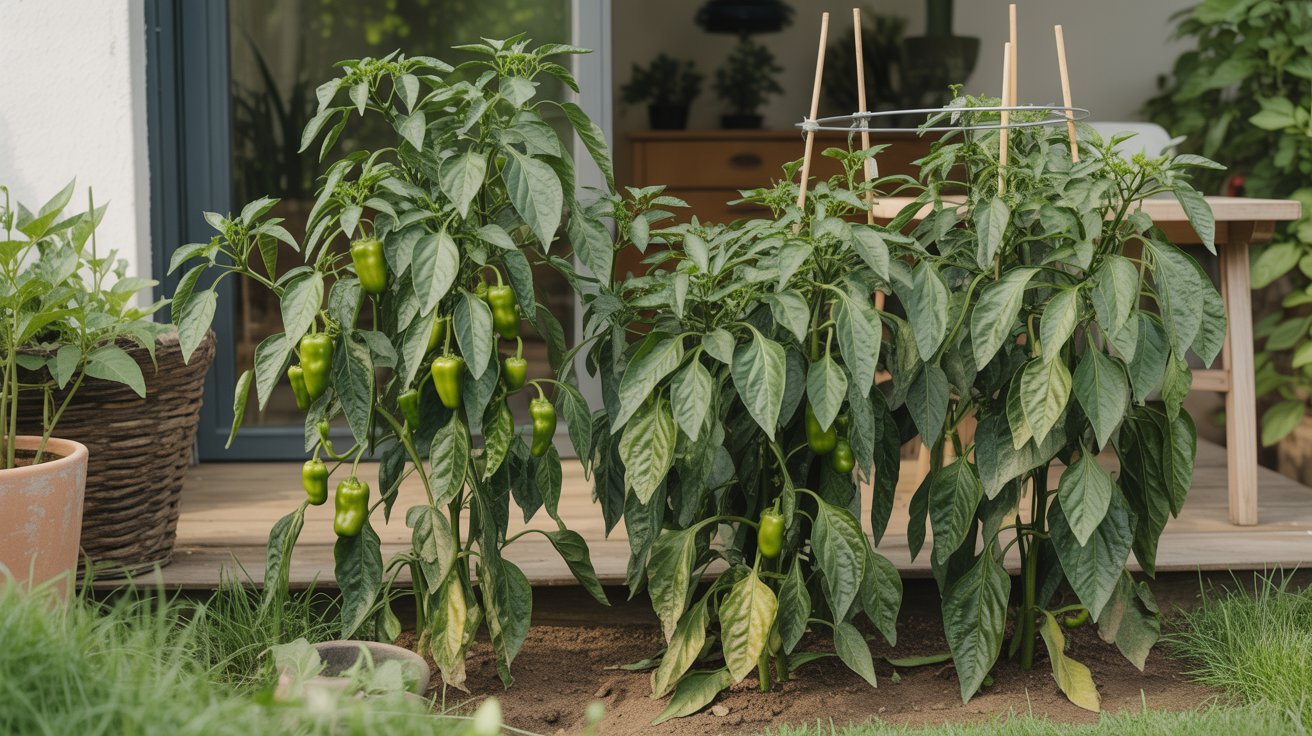
Sometimes the best thing you can do is leave your pepper plants alone. Here’s when to skip the shears.
Long-Growing or Warm-Climate Regions
If you live somewhere with a long growing season, pruning might not help you. In fact, topping your plants can actually push back when they start making fruit.
Plants in warm climates have plenty of time to grow big and produce lots of peppers. Letting them grow naturally often gives you a bigger total harvest than pruning would.
Compact or Container-Grown Peppers
Container peppers and compact varieties do better when they’re bushy. That fuller growth looks great if you’re growing peppers for decoration or in small spaces.
Instead of cutting back these plants, just give them good support. Use stakes or tomato cages to hold up the branches as they fill out with fruit.
Expert Tips for Maximum Pepper Yields
- Water your plants regularly and add mulch around the base. This keeps moisture steady after you prune and helps plants recover faster.
- Use stakes or cages to support branches once you’ve pruned. The remaining stems will carry more weight and need extra help staying upright.
- Add a light dose of fertilizer after each major pruning session. This gives plants the nutrients they need to push out new growth.
- Watch how your plants respond to pruning. Some varieties bounce back quickly while others take longer to adjust.
- Change your pruning schedule based on what you see. Hot climates and certain pepper types may need less frequent trimming than others.
Conclusion
So, should you prune pepper plants? It’s really up to you and your growing conditions.
Pruning isn’t something every gardener needs to do, but it can make a real difference when you time it right.
Focus on improving airflow, keeping your plants healthy, and helping peppers ripen faster. Don’t go overboard.
A few strategic cuts work better than heavy trimming. This season, try out these pruning techniques on a few plants and see how they perform.
You might be surprised at how much better your harvest turns out when you give your peppers a little extra attention.
Frequently Asked Questions
Do all pepper plants need pruning?
No, not all pepper varieties need pruning. Large-fruited types like bell peppers and poblanos grow well on their own without any trimming.
When is the best time to prune pepper plants?
The best time depends on your goal. Prune early for stronger roots, mid-season for airflow, and late season to speed up ripening before frost hits.
Will pruning increase my pepper harvest?
Pruning can increase yields for small-fruited varieties by improving plant health and fruit quality. However, over-pruning might reduce your total harvest in some cases.
Can I prune pepper plants grown in containers?
Container peppers usually do better without much pruning. Their bushy growth works well in small spaces, so just provide support with stakes instead.
What tools do I need to prune pepper plants?
You only need clean, sharp pruning shears. Make sure to sanitize them with a bleach solution between plants to prevent spreading diseases.