
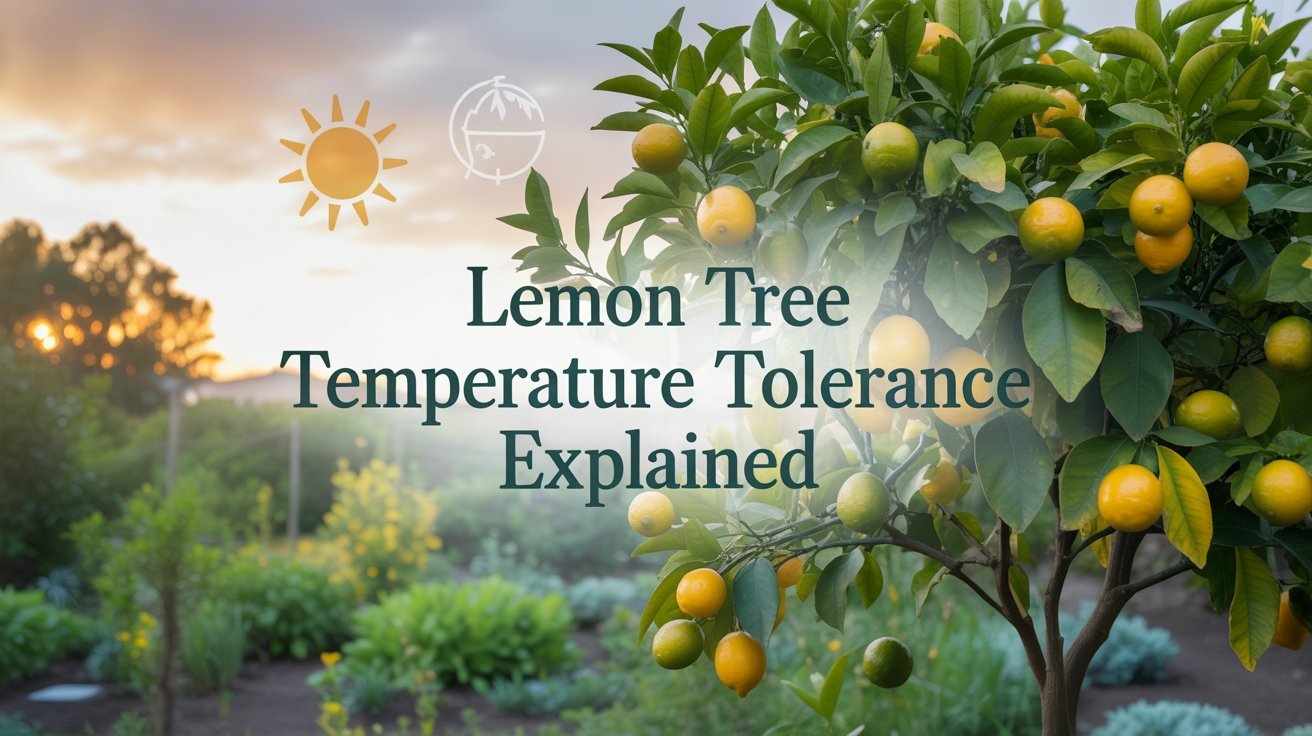
I’ll never forget the first winter with my lemon tree. I panicked every time the temperature dropped, unsure if my plant would make it through the night.
After years of trial and error, I’ve figured out exactly what these citrus plants can handle. Lemon trees are actually tougher than most people think, but you need to know their limits.
I’m sharing what I’ve learned so you don’t have to stress like I did.
By the end of this guide, you’ll know exactly how to keep your lemon tree healthy through any cold spell.
Understanding Lemon Tree Cold Tolerance
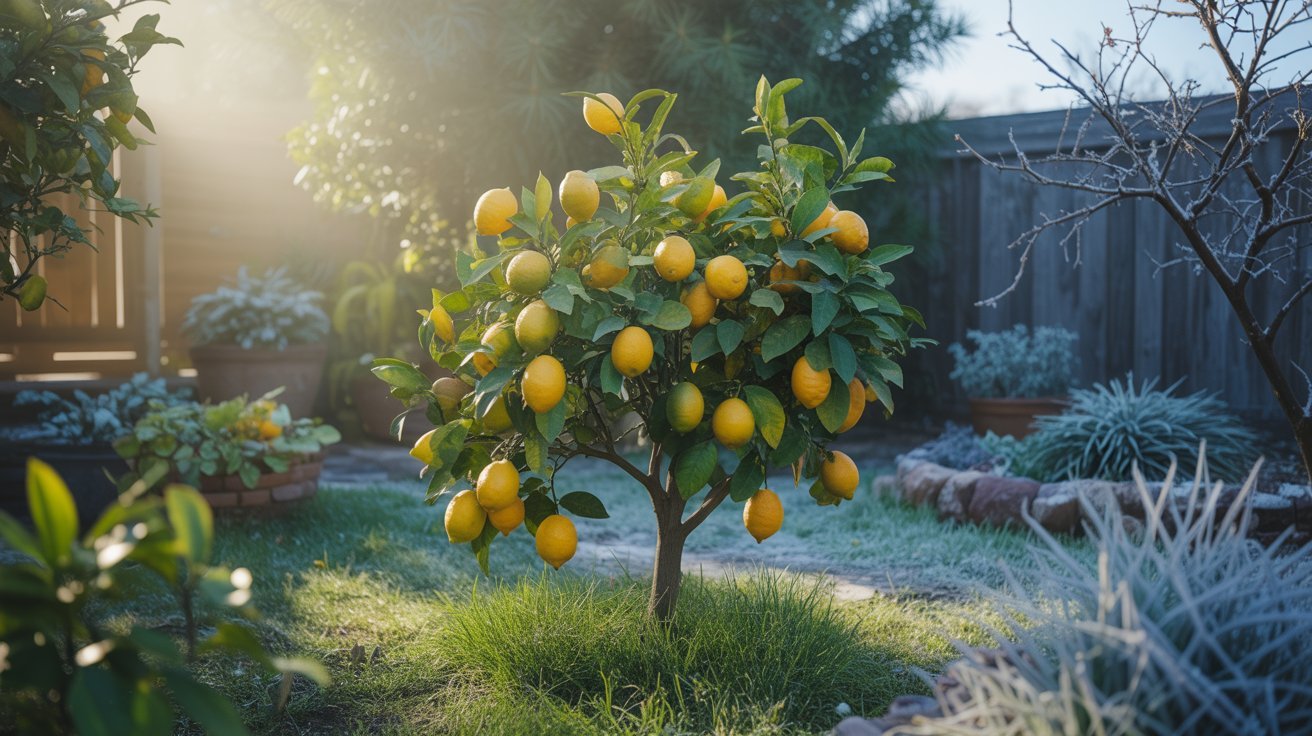
Lemon trees come from warm, tropical regions. They love heat and sunshine.
These citrus plants originally grew in Southeast Asia. The climate there is hot and humid year-round.
Why Temperature Matters
Temperature affects both indoor and outdoor lemon trees. Cold weather can damage or kill your plant.
If you grow lemons in pots, you need to know when to bring them inside. Outdoor trees need protection during winter months.
The Cold Hard Truth
Lemon trees are more sensitive to cold than other citrus types. Oranges and grapefruits can handle cooler weather better.
This makes lemons trickier to grow in areas with cold winters. You’ll need to take extra care when temperatures drop.
Ideal Growing Temperature for Lemon Trees
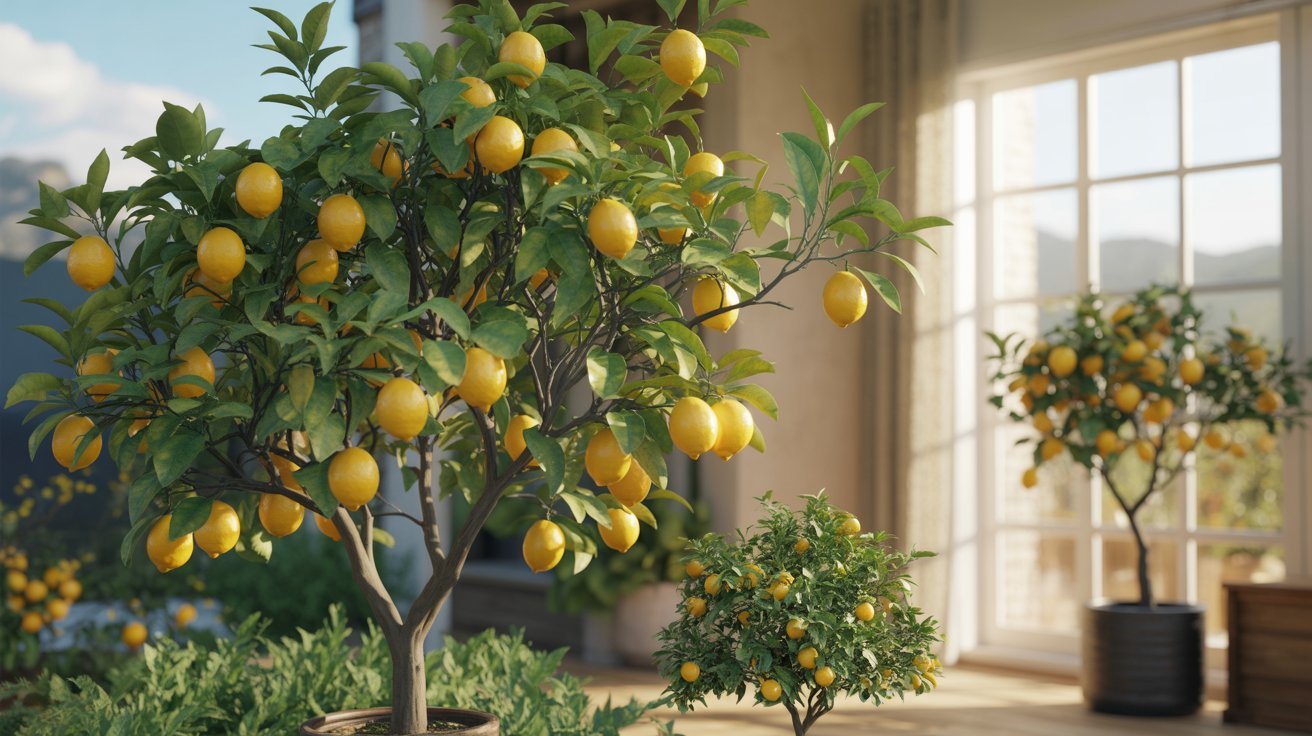
Lemon trees grow best in warm conditions. They prefer daytime temperatures between 70°F and 85°F.
At night, they do well with temperatures around 55°F to 65°F. This temperature drop helps them rest and recover.
Indoor vs. Oēutdoor Conditions
Outdoor lemon trees thrive in full sun with warm days. They need consistent warmth to produce fruit.
Indoor trees need bright light and stable temperatures. Keep them near a sunny window where it stays between 65°F and 75°F.
For fruit production, lemon trees need several months of warm weather. Temperatures above 70°F help flowers turn into lemons.
Meyer Lemons Are Different
Meyer lemons handle cold better than regular lemons. They can survive slightly cooler temperatures.
Standard lemon varieties like Eureka and Lisbon are more sensitive. They need more warmth and protection.
Meyer lemons are a better choice for cooler climates. They’re also more forgiving for beginners.
How Cold Can Lemon Trees Tolerate?
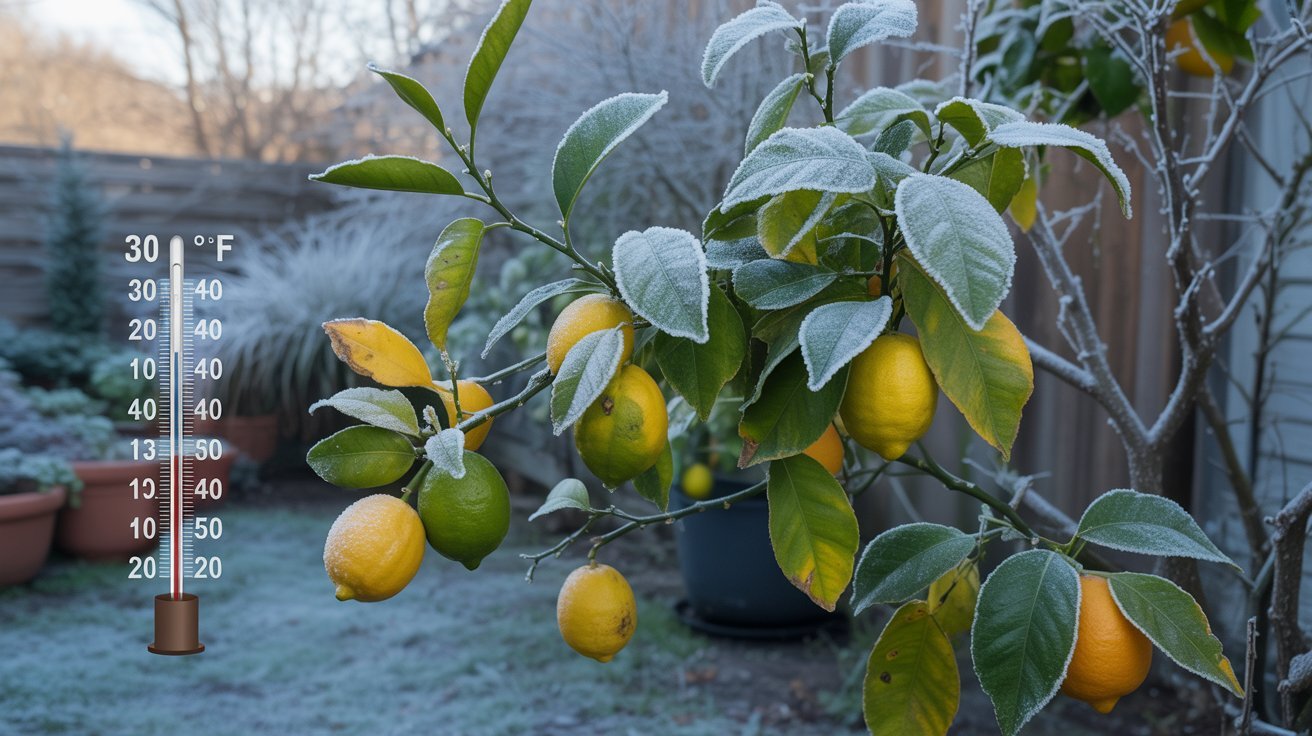
Lemon trees can survive temperatures down to 30°F to 32°F, but anything colder puts them at risk.
The fruit freezes below 27°F and becomes unusable. A quick cold snap won’t kill your tree, but several days of freezing weather can destroy branches or the whole plant.
Lemon trees are more cold-sensitive than other citrus types. Mandarins handle temperatures down to 26°F, while kumquats survive as low as 18°F to 20°F.
If you live in a cold area, kumquats or mandarins are easier to grow.
Factors That Influence Cold Hardiness
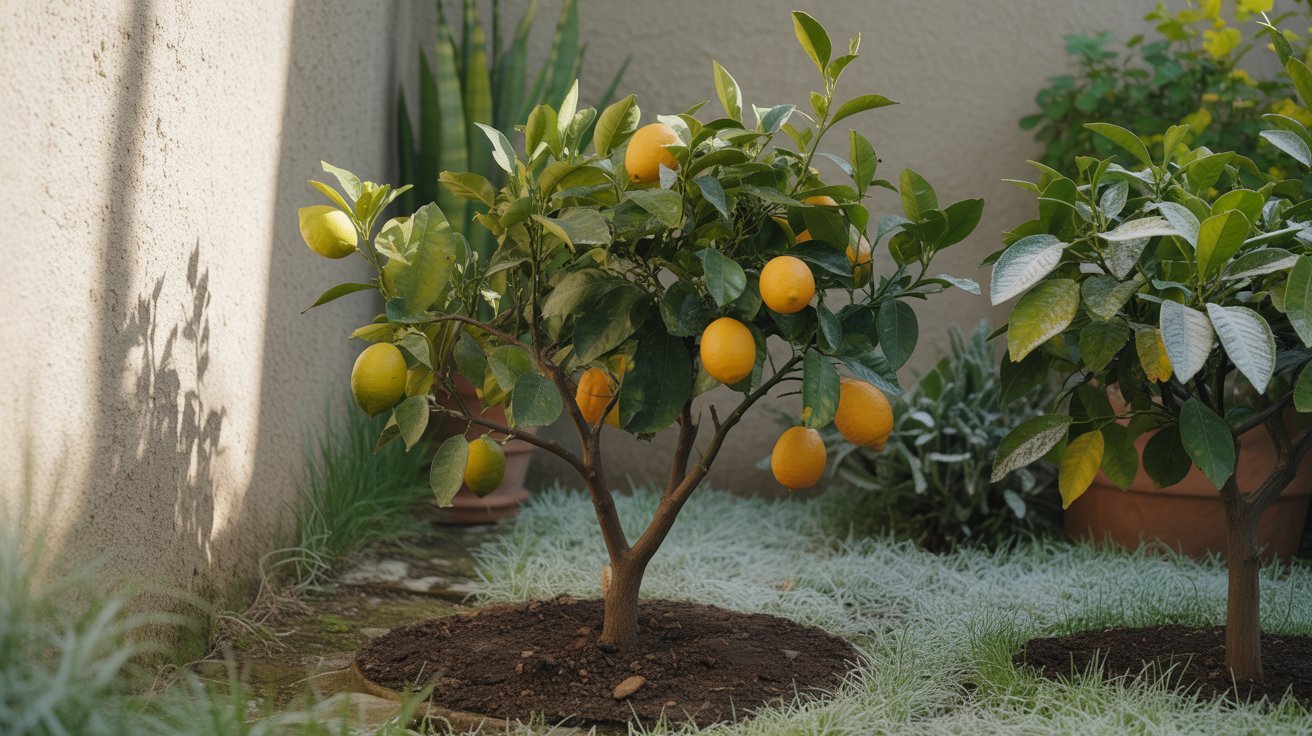
Several factors determine how well your lemon tree handles cold weather, from age and rootstock to location and soil conditions.
Tree Age Matters
Mature lemon trees handle cold better than young ones. Established trees have stronger root systems and thicker bark.
Young trees are fragile and need extra protection. Their thin bark and shallow roots make them vulnerable to frost damage.
Dormancy vs. Active Growth
Dormant trees survive cold weather more easily. When a tree isn’t actively growing, it uses less energy and can focus on survival.
Trees with new growth are at higher risk. Fresh leaves and shoots freeze faster than older, hardened wood.
Rootstock Makes a Difference
The rootstock your lemon tree is grafted onto affects cold tolerance. Some rootstocks are naturally tougher than others.
Trifoliate orange rootstock provides excellent cold protection. It can help your lemon tree survive temperatures several degrees lower.
Standard rootstocks offer less cold resistance. Ask your nursery about cold-hardy options if you live in a cooler climate.
Location and Microclimate
Where you plant your tree changes everything. A sheltered spot protects against wind and frost.
Planting near a wall or fence creates a warmer microclimate. The structure absorbs heat during the day and releases it at night.
South-facing walls work best. They get the most sun and provide maximum warmth.
Soil Moisture and Humidity
Wet soil holds heat better than dry soil. Well-watered trees handle cold snaps more successfully.
But don’t overwater before a freeze. Soggy roots can freeze and cause root rot.
Humidity in the air also helps. Moist air doesn’t cool down as fast as dry air, giving your tree some buffer against sudden temperature drops.
Signs of Cold Damage on Lemon Trees
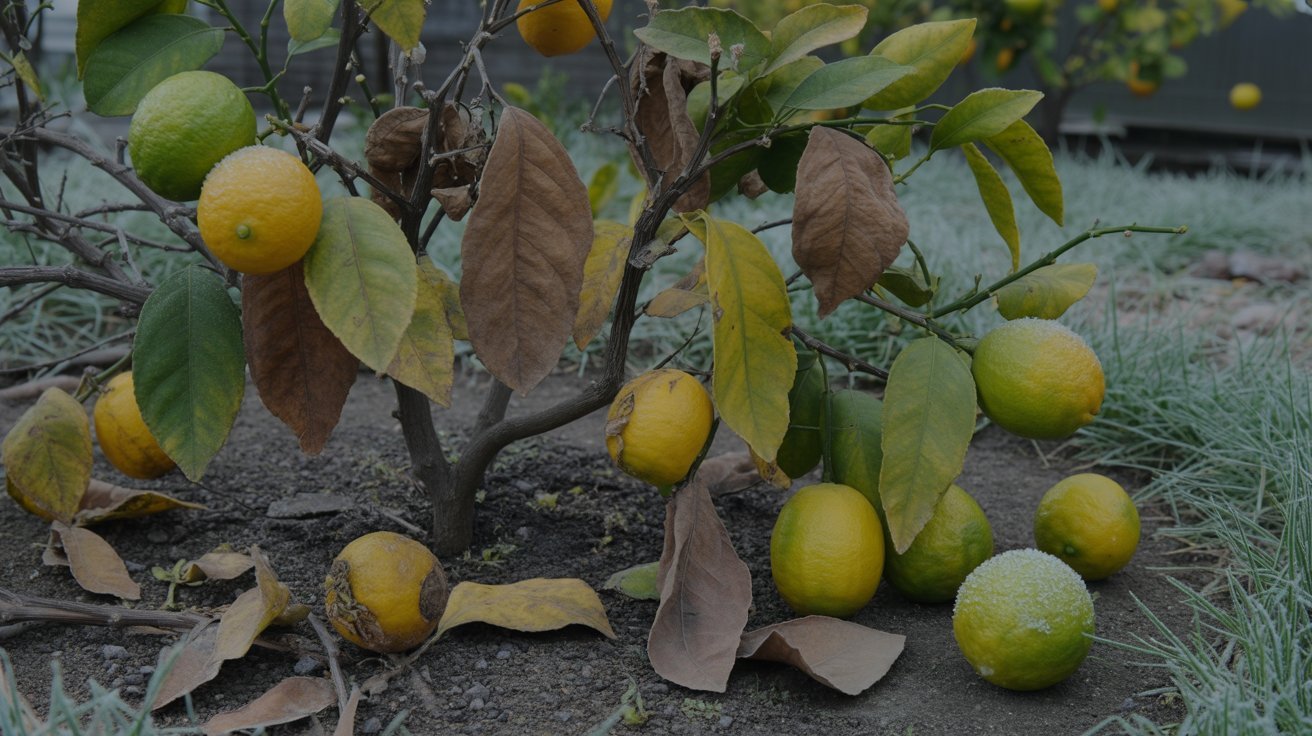
Cold damage shows up quickly on lemon trees. Leaves turn brown or black and feel crispy. Branches look shriveled and the bark may crack or peel. Fruit develops soft spots, turns mushy, and often falls off within days.
Fruit freezes first, followed by new growth and young leaves. Older leaves are tougher but still get damaged and may drop off. The trunk and main branches show damage last, which means the cold was severe.
Don’t prune right away after a freeze. Wait at least a month to see the full damage. Scratch the bark gently with your fingernail. Green underneath means the branch is alive. Remove only the clearly dead parts and leave anything that might recover.
Conclusion
I’ve learned that lemon trees can handle more cold than most people realize, but they still need our help during freezing weather.
The key is staying prepared and watching your local forecast closely. Create a simple protection plan before winter hits so you’re ready when temperatures drop.
Trust me, a little planning now saves a lot of heartbreak later. Your lemon tree will thank you with healthy growth and plenty of fruit.
Want more tips on keeping your citrus happy year-round? Check out our other guides on cold-weather care and seasonal maintenance.
Frequently Asked Questions
Can lemon trees survive a freeze?
Lemon trees can survive brief exposure to freezing temperatures around 30°F to 32°F. However, prolonged freezing or temperatures below 28°F will cause serious damage or kill the tree.
What temperature is too hot for lemon trees?
Lemon trees struggle when temperatures consistently exceed 100°F. Extended heat above 105°F can cause leaf burn, fruit drop, and stress the tree significantly.
Should I bring my potted lemon tree inside during winter?
Yes, bring potted lemon trees indoors when temperatures drop below 40°F at night. Place them in a bright, sunny spot where temperatures stay between 60°F and 70°F.
How do I know if my lemon tree is too cold?
Look for brown or black leaves, drooping branches, and soft spots on the fruit. If leaves feel crispy or fall off easily, your tree has suffered cold damage.
Can Meyer lemons handle colder weather than regular lemons?
Yes, Meyer lemons are more cold-tolerant than standard varieties like Eureka or Lisbon. They can handle temperatures a few degrees lower and recover faster from cold exposure.