
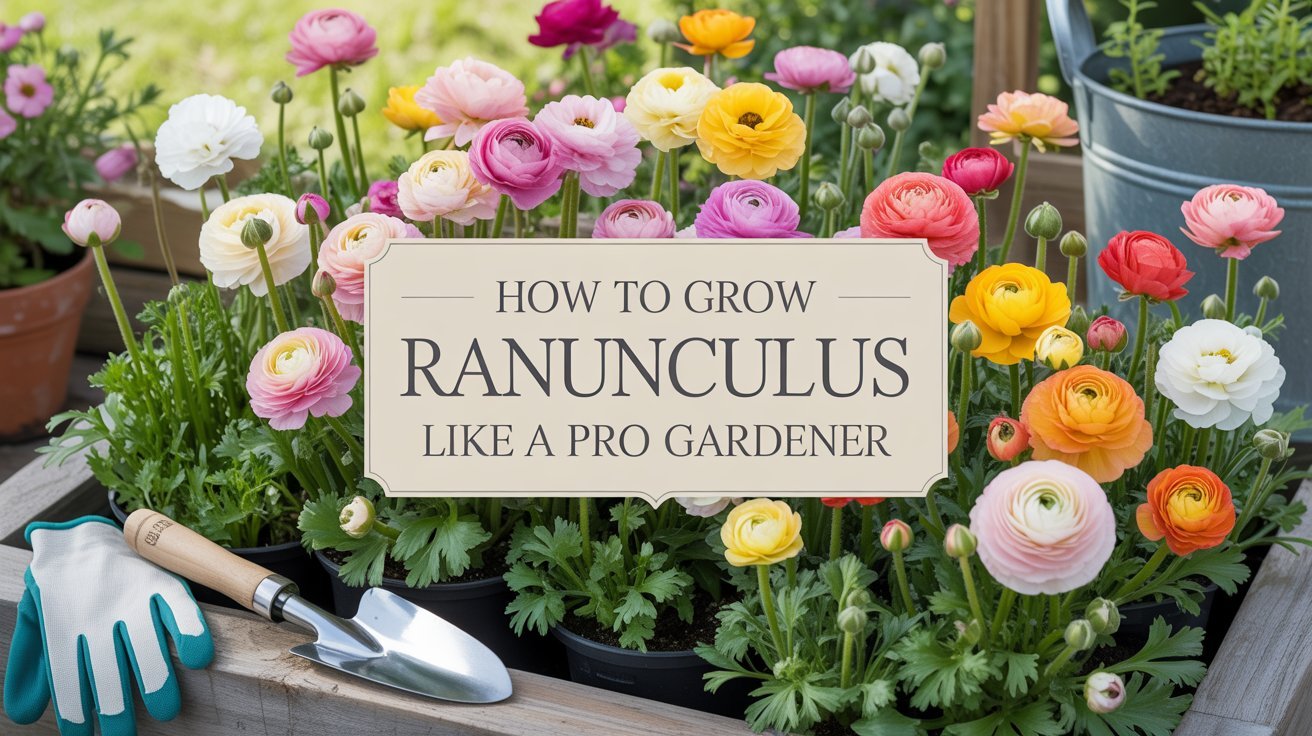
If you’ve ever seen ranunculus blooms, you know why gardeners call them “the rose of spring.” I grew my first batch a few years ago, and those ruffled petals and vibrant colors completely won me over. These flowers last up to 12 days in a vase too.
Learning how to grow ranunculus takes some planning, but it’s simpler than you think. In this guide, I’ll show you everything from choosing quality corms to harvesting at the perfect time.
You’ll learn the same tricks professional growers use to get fuller blooms and longer vase life. I’ll cover soil prep, planting techniques, watering schedules, and post-bloom care.
Let’s get your ranunculus growing.
Understanding Ranunculus
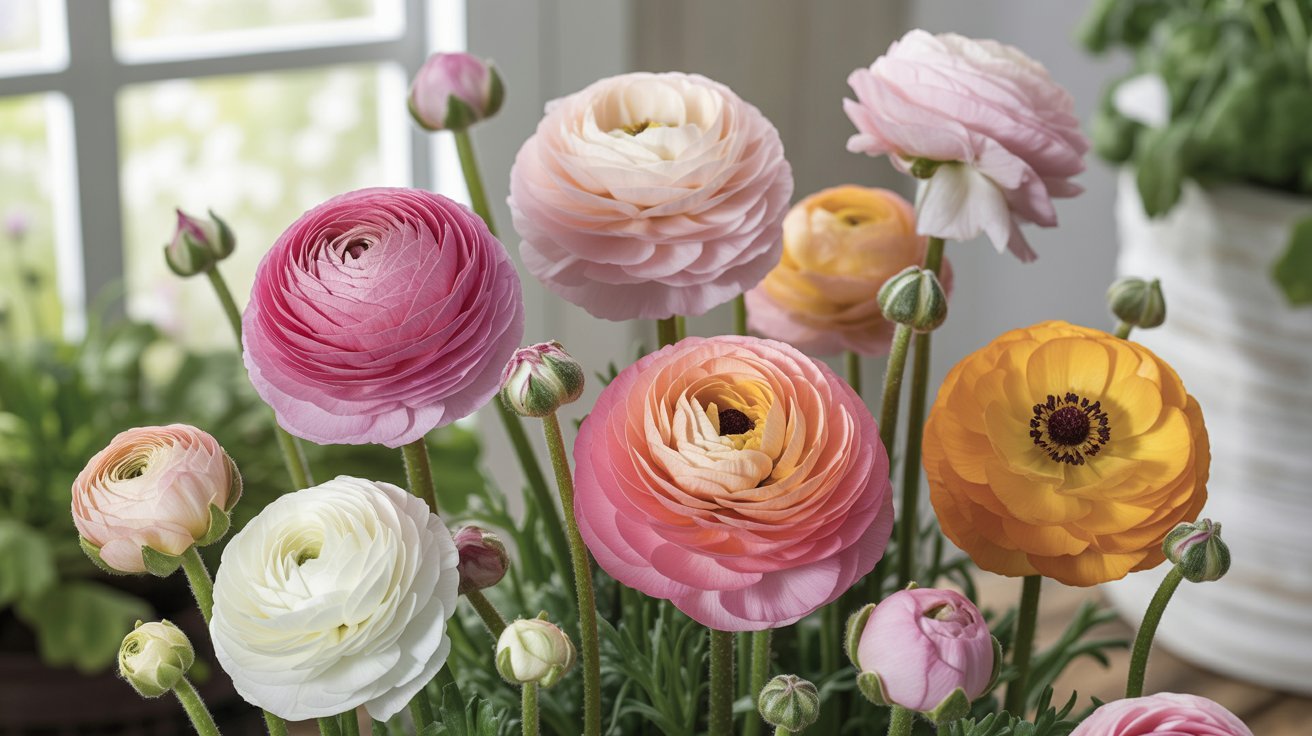
Ranunculus asiaticus are cool-season flowers from the Mediterranean region. Each bloom has dozens of paper-thin petals creating full, rose-like flowers in white, pink, red, orange, yellow, and burgundy. They grow 12 to 18 inches tall with strong stems, perfect for cutting gardens.
These plants thrive in temperatures between 40°F and 65°F and need full sun (at least 6 hours daily). In warmer zones, afternoon shade helps.
They struggle above 70°F or below 25°F. The soil must drain well, add compost if needed and aim for a pH of 6.0 to 7.0. Keep soil evenly moist but never soggy.
Step-by-Step Guide: How to Grow Ranunculus Like a Pro
Growing ranunculus successfully starts with preparation. Follow these steps to get professional results in your own garden.
1. Choose High-Quality Corms
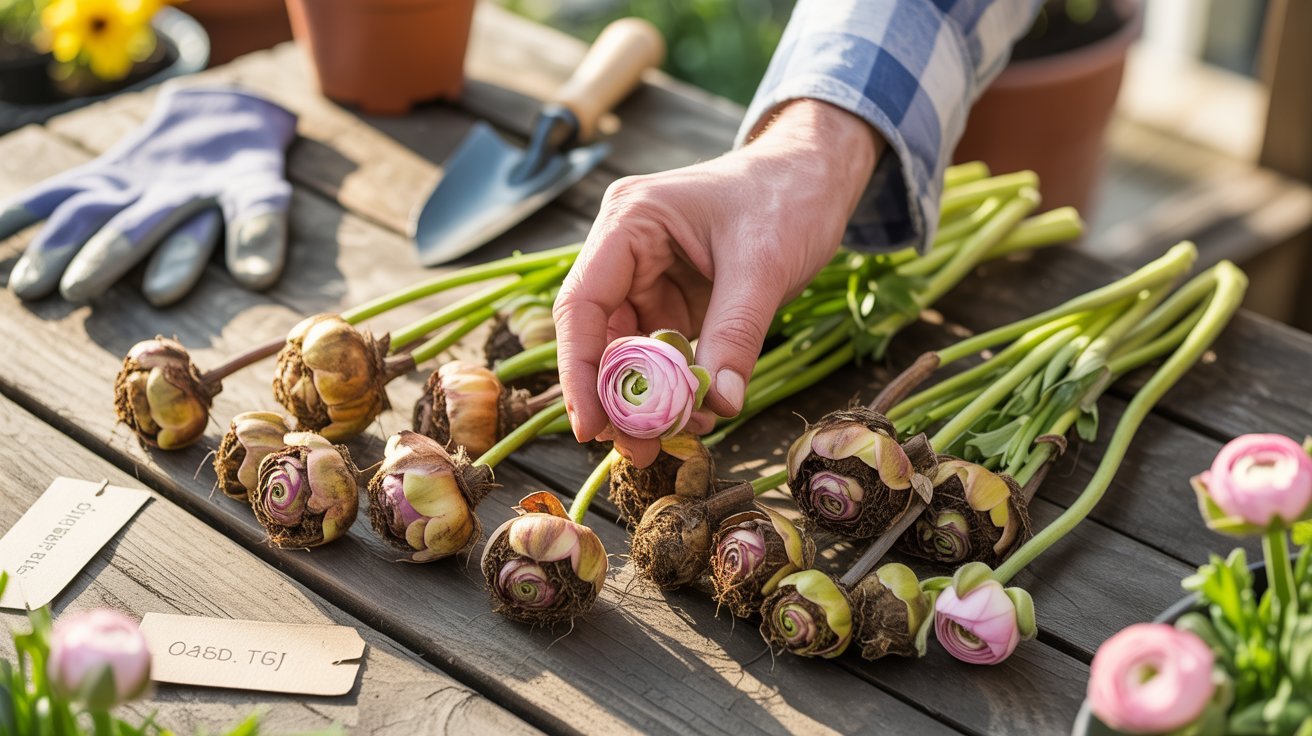
Ranunculus grows from corms, small, bulb-like structures that store energy. Healthy corms look firm and dry, like little brown claws.
Avoid corms that feel soft, moldy, or shriveled. Buy from reputable nurseries or specialty bulb farms. Larger corms usually produce more flowers.
Check the corms when they arrive. Store them in a cool, dry place until you’re ready to plant.
2. Soak the Corms Properly
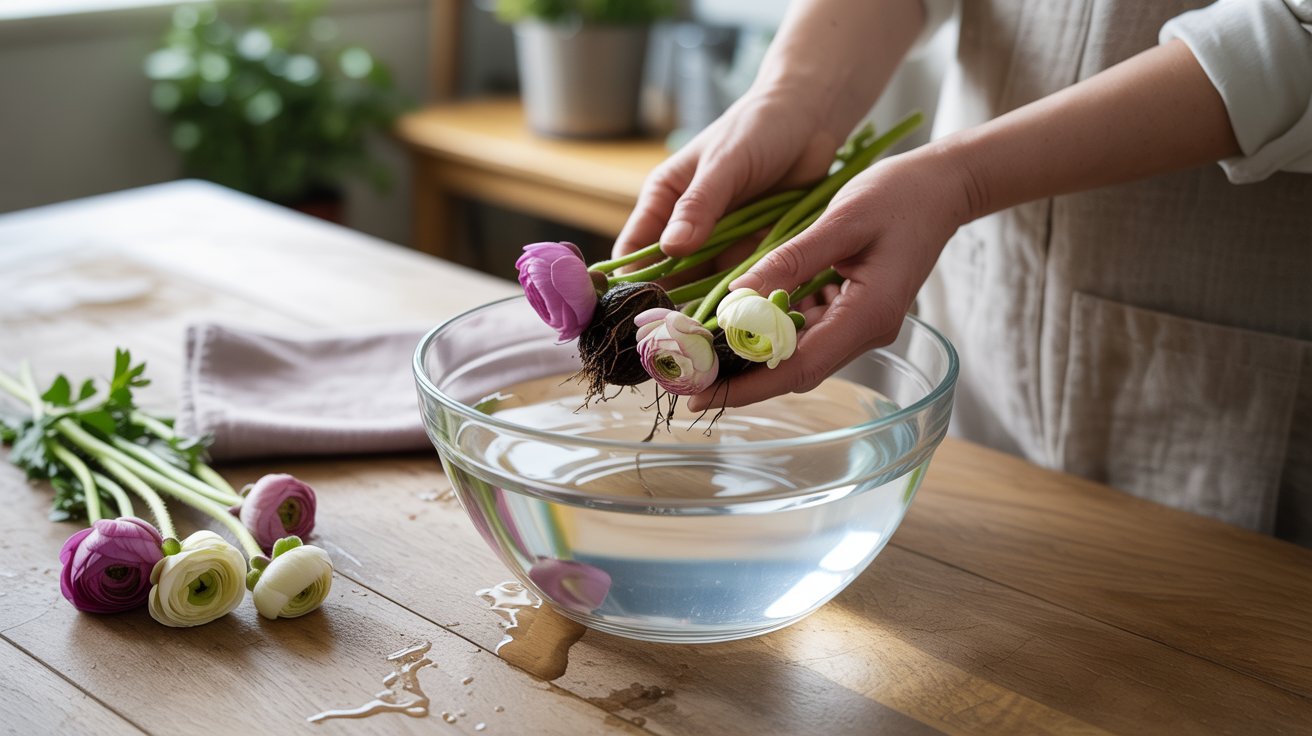
Before planting, soak the corms in room-temperature water for 3 to 4 hours. This rehydrates them and speeds up sprouting.
Don’t soak longer than 4 hours. Oversoaking can cause rot. Some growers change the water every hour to keep oxygen levels high.
After soaking, the corms will double in size. They should feel plump and firm.
3. Pre-Sprout for Early Blooms
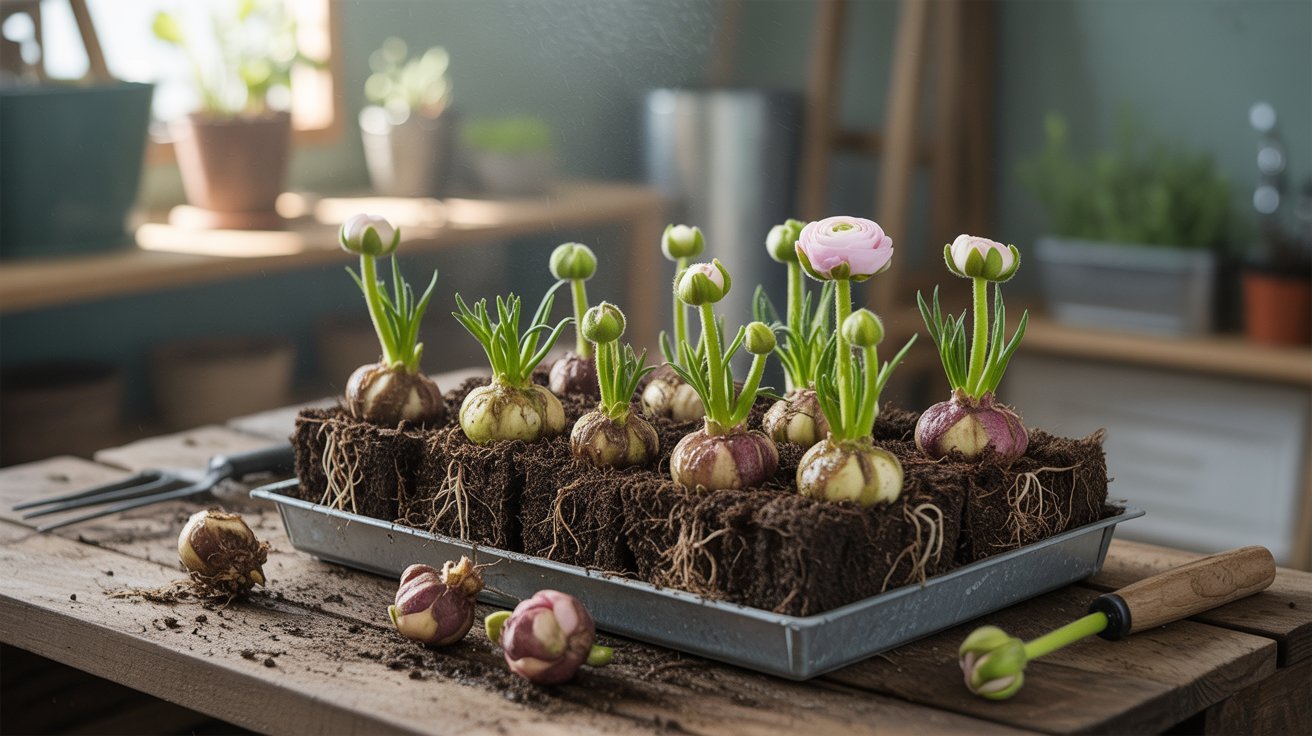
Pre-sprouting gives you stronger plants and earlier flowers. It also lets you check which corms are viable before planting them in the garden.
Fill a shallow tray with moist potting mix or peat moss. Place the soaked corms on top with the “claws” pointing down. Cover them lightly with more mix.
Keep the tray in a cool spot, 40°F to 50°F works best. A garage or unheated room is ideal. Check daily and mist if the mix feels dry.
You’ll see small white roots in 7 to 10 days. Once roots are 1 to 2 inches long, the corms are ready to plant.
4. Prepare the Garden Bed
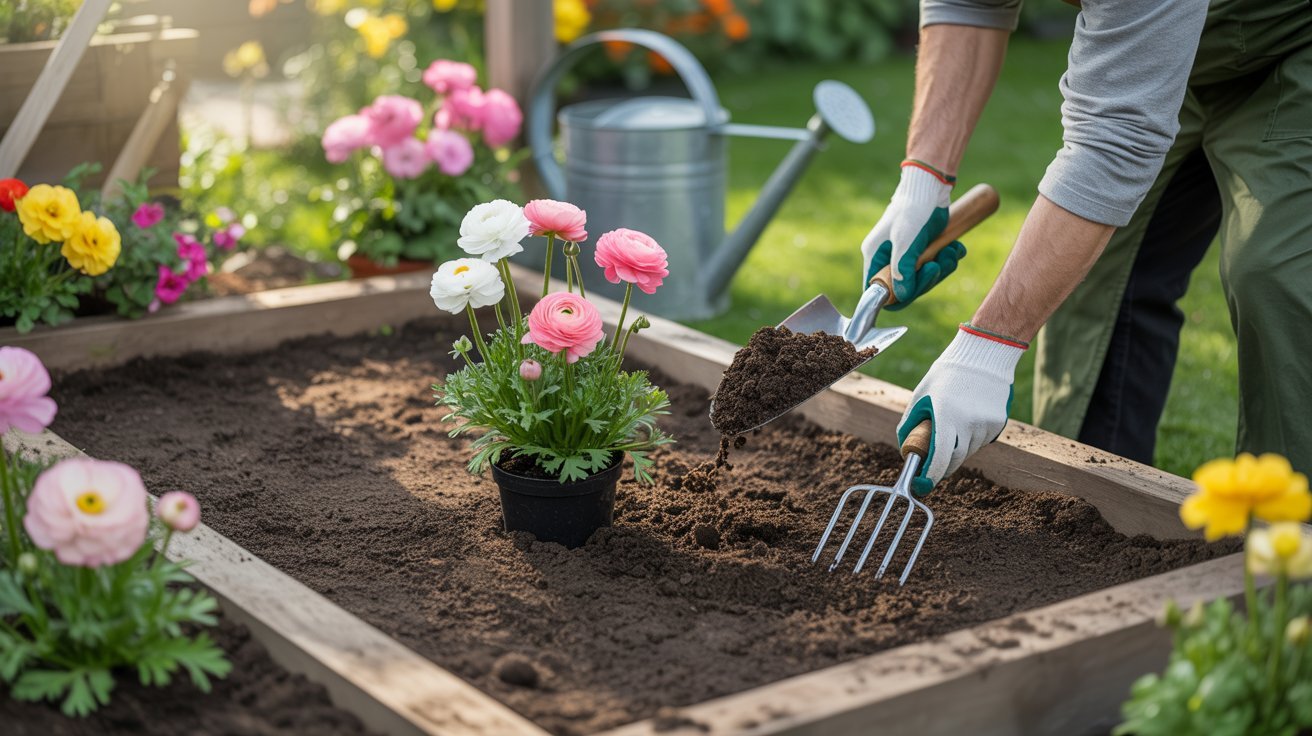
Good soil preparation makes a big difference. Mix in 2 to 3 inches of compost before planting. Add a balanced organic fertilizer if your soil is poor.
Make sure the bed drains well. If water pools after rain, build a raised bed or mound the soil.
Choose a spot with full sun and protection from strong winds. Avoid low areas where frost settles.
5. Plant Your Corms the Right Way
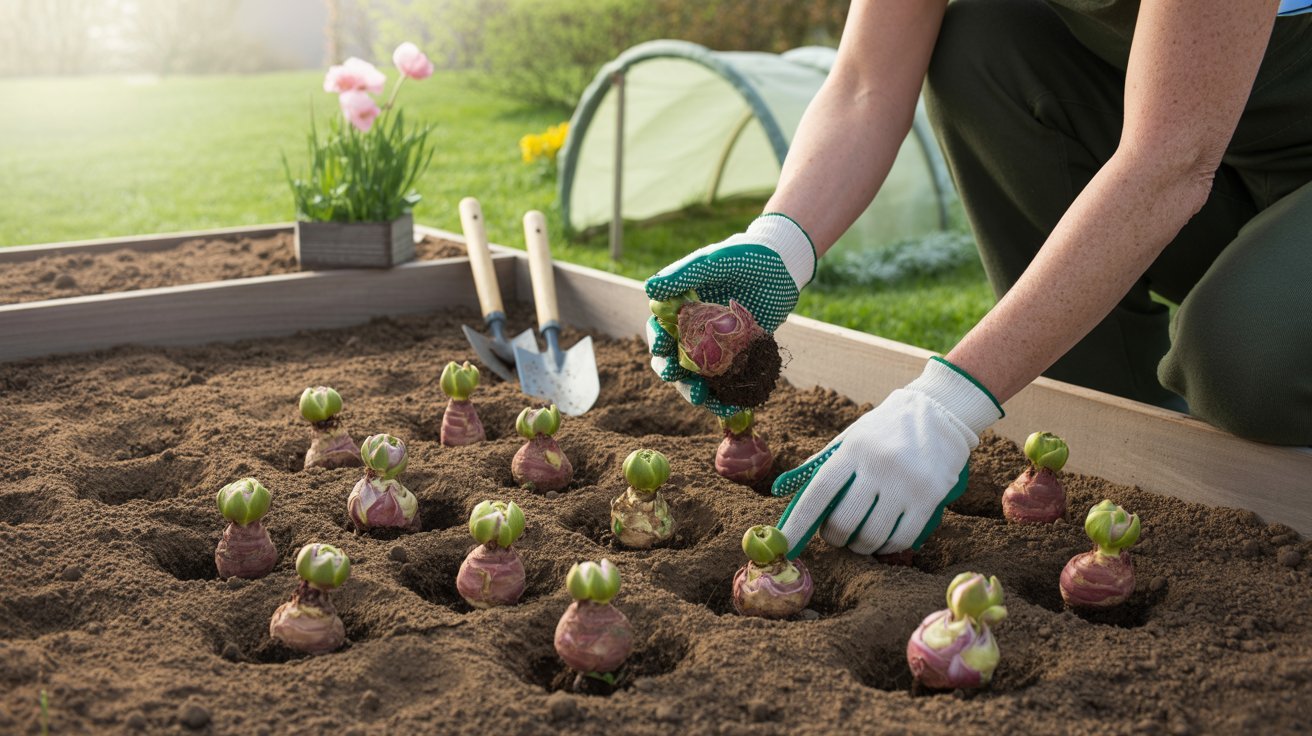
Look at the corm closely. One side has small pointy projections that look like octopus tentacles. That side goes down into the soil. The rounded side faces up.
Dig holes 2 to 3 inches deep. Space corms 8 to 9 inches apart. Place each corm in its hole with claws pointing down. Cover with soil and press gently.
If frost is expected, cover the bed with a frost cloth or low tunnel. This protects young shoots from damage.
6. Watering and Care Routine
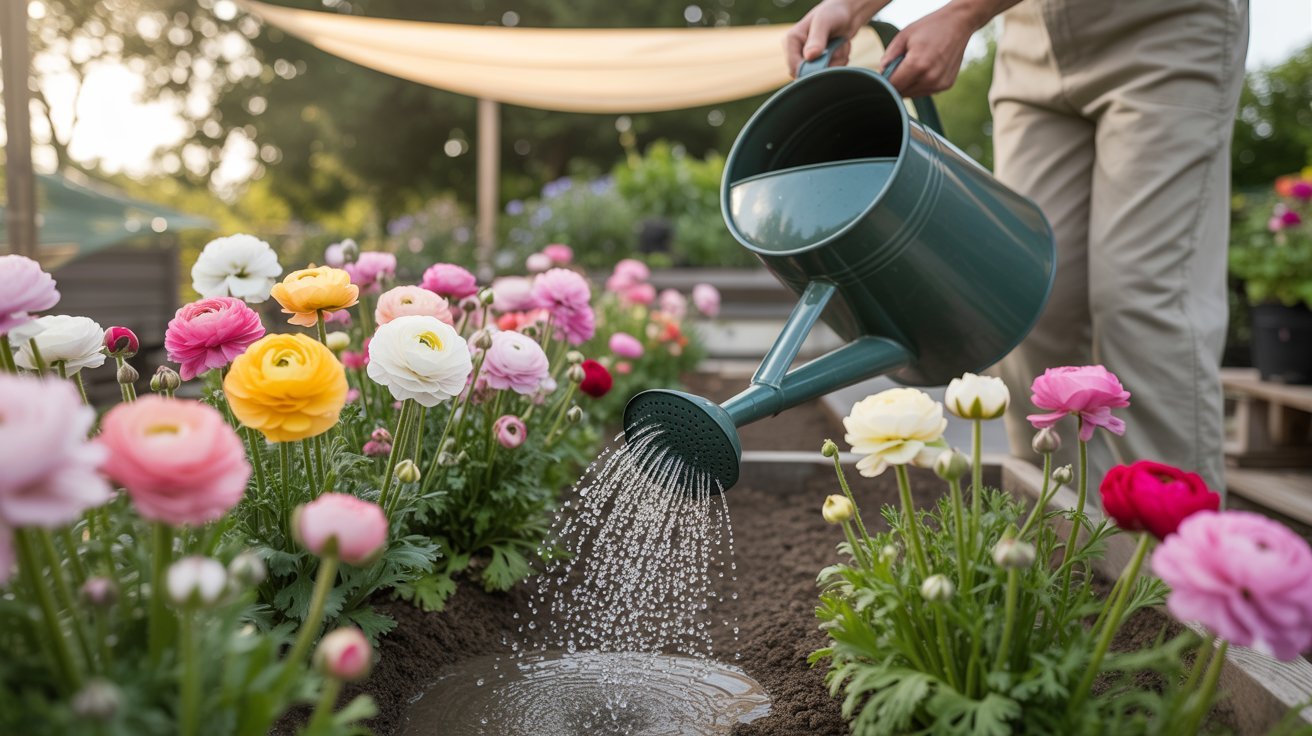
Water right after planting to settle the soil. After that, keep the soil evenly moist but not wet.
In dry or windy climates, you may need to water every 2 to 3 days. In cooler, wetter areas, once a week might be enough. Check the soil before watering.
If you’re in a warm zone like Southern California, use shade cloth when temperatures climb above 65°F. This helps blooms last longer.
7. Protect from Frost and Heat
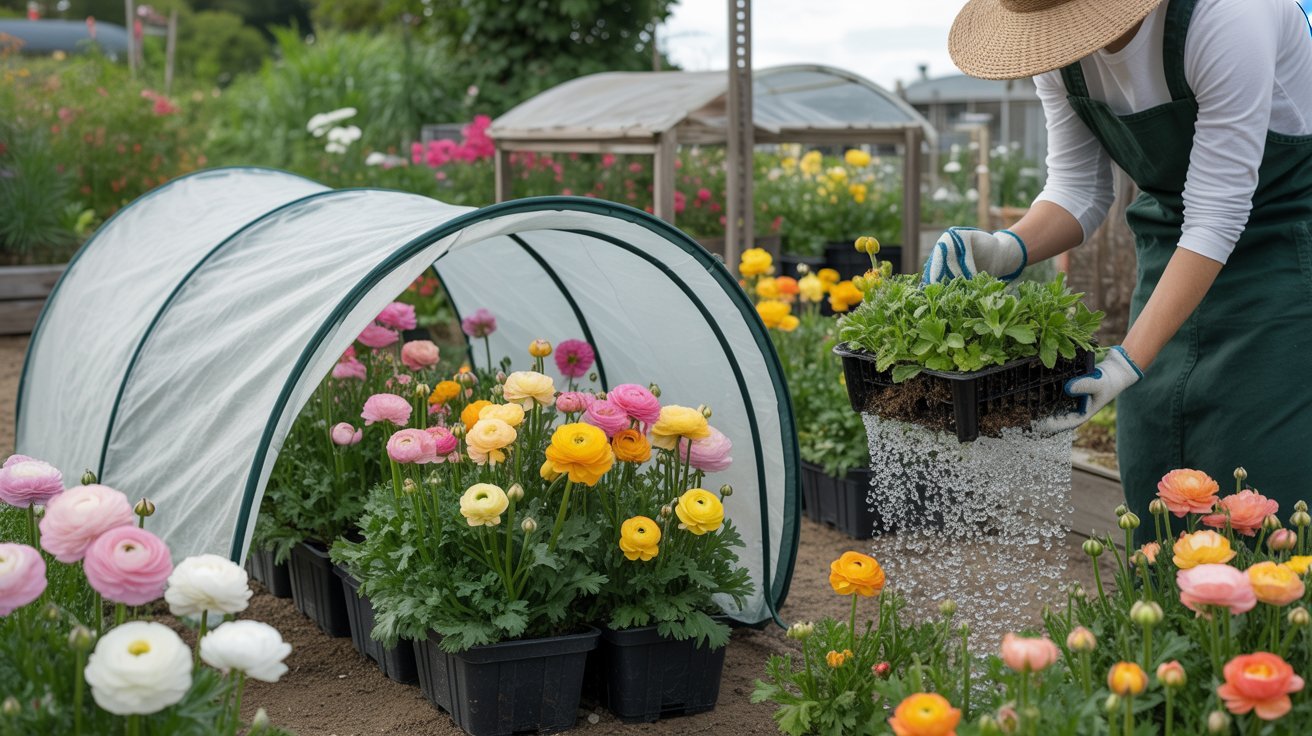
Ranunculus can handle light frost, but temperatures below 25°F will damage them. In USDA zones 4 to 7, use hoop houses or frost covers during cold snaps.
In zones 8 to 10, heat is the bigger problem. Plant in fall for winter and spring blooms. This keeps plants in their ideal temperature range.
If a heat wave comes, increase watering and add shade cloth. Remove it when temperatures drop.
Harvesting Ranunculus Like a Pro
Knowing when and how to cut your flowers makes a big difference in vase life.
Here’s what you need to know:
- Cut at the “marshmallow stage” when buds feel soft but petals are still wrapped and showing color. Don’t wait for full blooms, they won’t last as long.
- Most ranunculus bloom 3 months after planting and produce stems for 4 to 6 weeks.
- Cut stems early morning when plants are well hydrated using clean, sharp scissors.
- Cut at an angle just above the base to encourage more blooms.
- Place stems immediately in clean water and remove any leaves below the water line.
- Change vase water every 2 days and recut stems by half an inch each time.
- Ranunculus lasts 10 to 12 days in a vase with proper care.
- Keep removing spent flowers from plants to encourage more blooms.
Caring for Ranunculus During Growth
Once your plants are established, they need regular attention to produce their best blooms. Here’s how to keep them healthy and productive.
Fertilizing Tips:
Feed your ranunculus every 2 to 3 weeks once they start growing actively. Use a balanced liquid fertilizer diluted to half strength.
Stop fertilizing once buds begin to open. Too much nitrogen at this stage produces weak stems and fewer flowers.
Organic options like fish emulsion or compost tea work well. Apply early in the morning so plants can absorb nutrients throughout the day.
Pest and Disease Management:
Aphids are the most common pest. They cluster on new growth and buds. Spray them off with a strong stream of water or wipe them away by hand.
For heavy infestations, use neem oil spray in the evening. Repeat every 5 to 7 days until aphids are gone.
Root rot happens when soil stays too wet. Make sure your bed drains well and doesn’t overwater. If you see yellowing leaves or mushy stems, pull affected plants immediately.
Powdery mildew can appear in humid conditions. Space plants properly for good air circulation. Remove infected leaves right away.
Pro Gardener Tips for Success
Professional growers learn through trial and error. These tips come from years of growing ranunculus in different climates and conditions.
- Start small your first year. Plant 25 to 50 corms to learn the timing and care in your specific location. Once you get the hang of it, you can scale up.
- Keep a garden journal. Write down planting dates, weather conditions, bloom times, and any problems you face. This helps you adjust for next season.
- Plant fresh corms annually. New corms give you the best flowers. Yes, you can save and replant old corms, but they won’t perform as well as fresh ones.
- Try succession planting. In mild climates, plant corms every 2 to 3 weeks in fall. This gives you continuous blooms all spring.
- Don’t give up after one season. Your first attempt might not be perfect. Each year you’ll learn more about what works in your garden.
Conclusion
I still get excited every spring watching my ranunculus open up. That first year, I wasn’t sure I’d done it right, but when those blooms appeared, I was hooked. Now I know how to grow ranunculus successfully, and you can too.
Start small this season. Try 25 corms and see what works in your garden. Take notes on what you learn. Each year gets easier and your blooms get better.
What’s your biggest question about growing ranunculus? Drop a comment below. I’d love to help you get started.
Frequently Asked Questions
How long do ranunculus take to bloom?
Ranunculus typically bloom 3 months after planting. Pre-sprouting corms can speed this up by a week or two.
Can you grow ranunculus in pots?
Yes, use pots at least 8 to 10 inches deep with drainage holes. Space corms 4 to 6 inches apart and water regularly.
Do ranunculus come back every year?
They’re perennials in warm zones but most gardeners treat them as annuals. Fresh corms give the best blooms each season.
What’s the best time to plant ranunculus?
Plant in fall for warm climates (zones 8 to 10) and early spring for cold climates (zones 4 to 7).
Why are my ranunculus not blooming?
Common causes include too much heat, poor drainage, low sunlight, or upside-down planting. They need cool temperatures and full sun.