
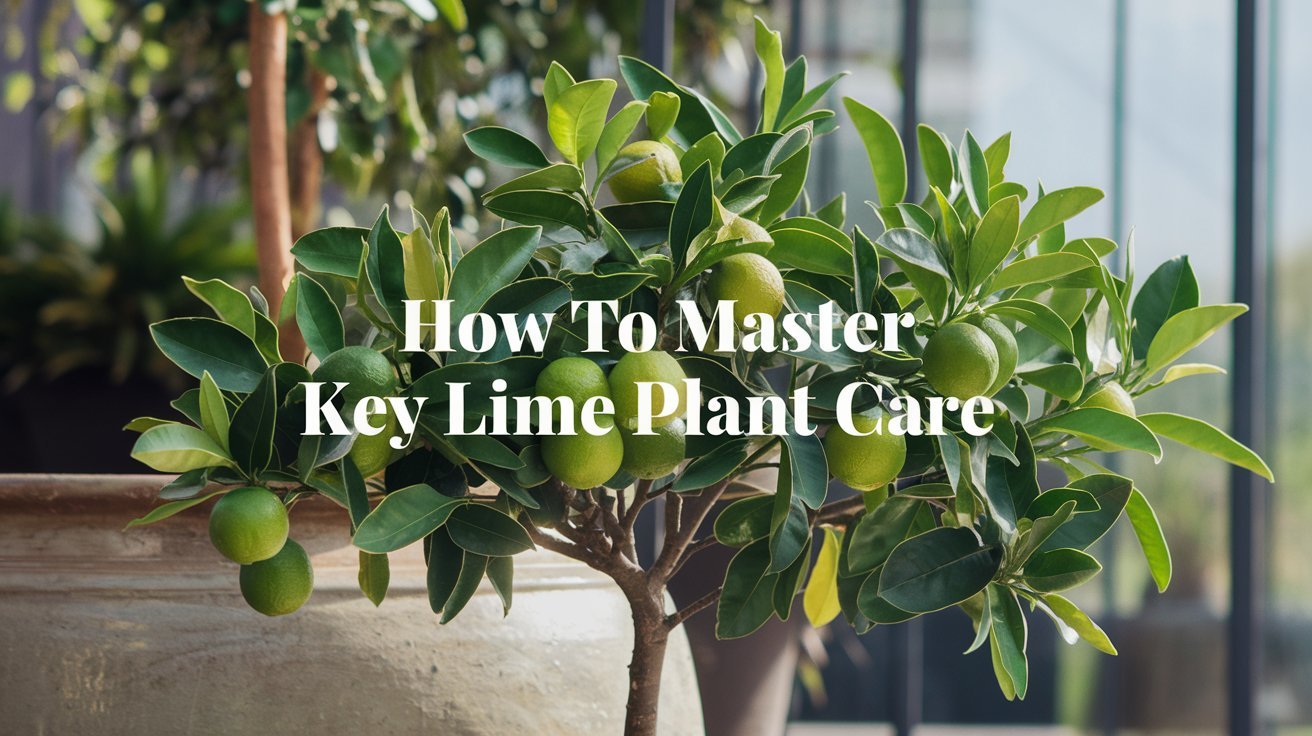
Growing key lime trees at home is easier than you think. I’ve learned that with the right care, these small citrus trees produce plenty of fresh limes for your kitchen.
You can make pies, add zest to cocktails, or squeeze juice over tacos.In this guide, I’ll show you exactly how to master key lime plant care.
We’ll cover choosing the best location, watering schedules, fertilizing tips, and pest control. I’ll also share how to protect your tree during winter and when to pick ripe fruit.
Trust me on this. I’ve made plenty of mistakes with citrus trees, so you don’t have to. Let’s grow some limes.
What Is a Key Lime Tree?
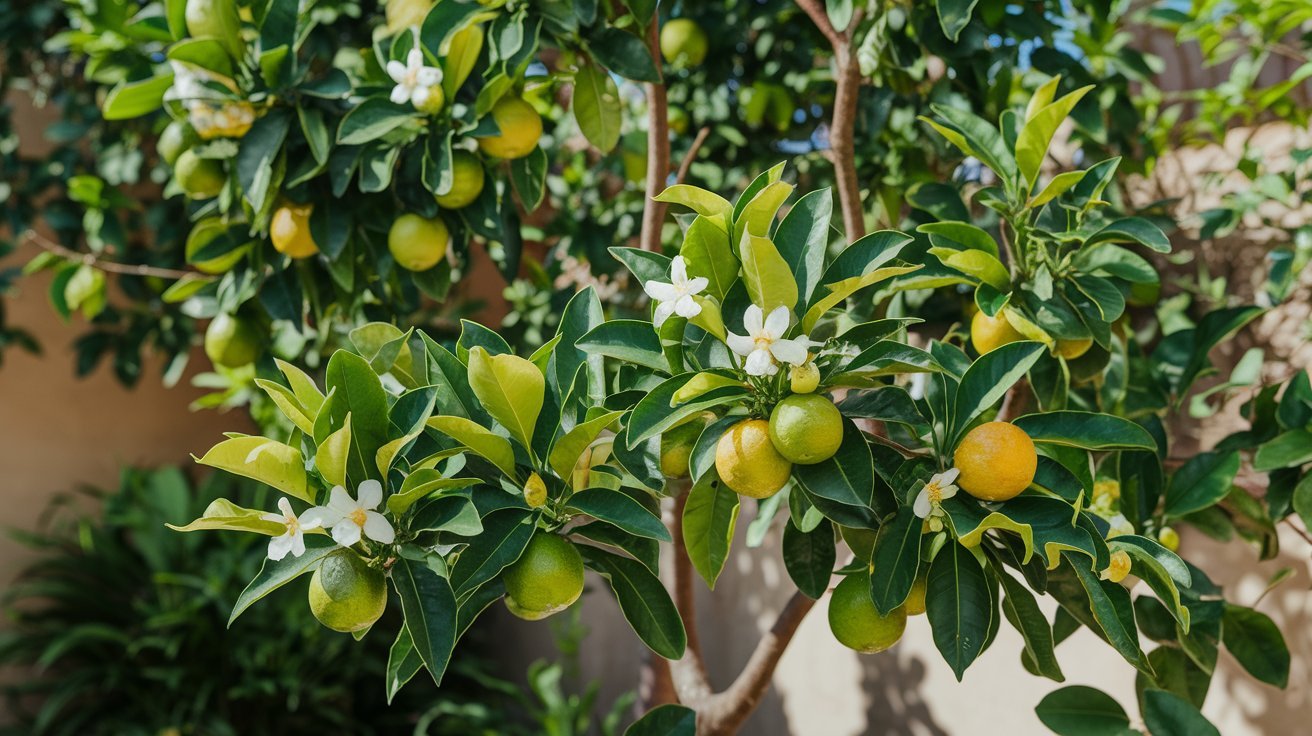
Key lime trees bring fresh citrus flavor right to your backyard or patio.
These evergreen trees grow 6 to 15 feet tall with glossy green leaves that smell citrusy when crushed. Some varieties have thorns while others don’t.
Key limes are small, round fruits about the size of a golf ball. They taste tart and acidic, much more intense than regular limes. The fruit starts green and turns pale yellow when fully ripe.
These trees originally come from Southeast Asia but became famous in the Florida Keys. People use key limes in pies, marinades, cocktails, ceviche, and salad dressings.
Key Lime Plant Basics
Understanding where and how key limes grow best helps you create the right environment.
Key lime trees thrive in USDA zones 9 through 11. They need 6 to 10 hours of direct sunlight daily. Full sun means better fruit production.
These trees like warm weather and grow best between 70°F and 100°F. They’re sensitive to cold and can’t handle frost. Temperatures below 32°F will damage leaves and branches.
Choosing the Right Location and Container
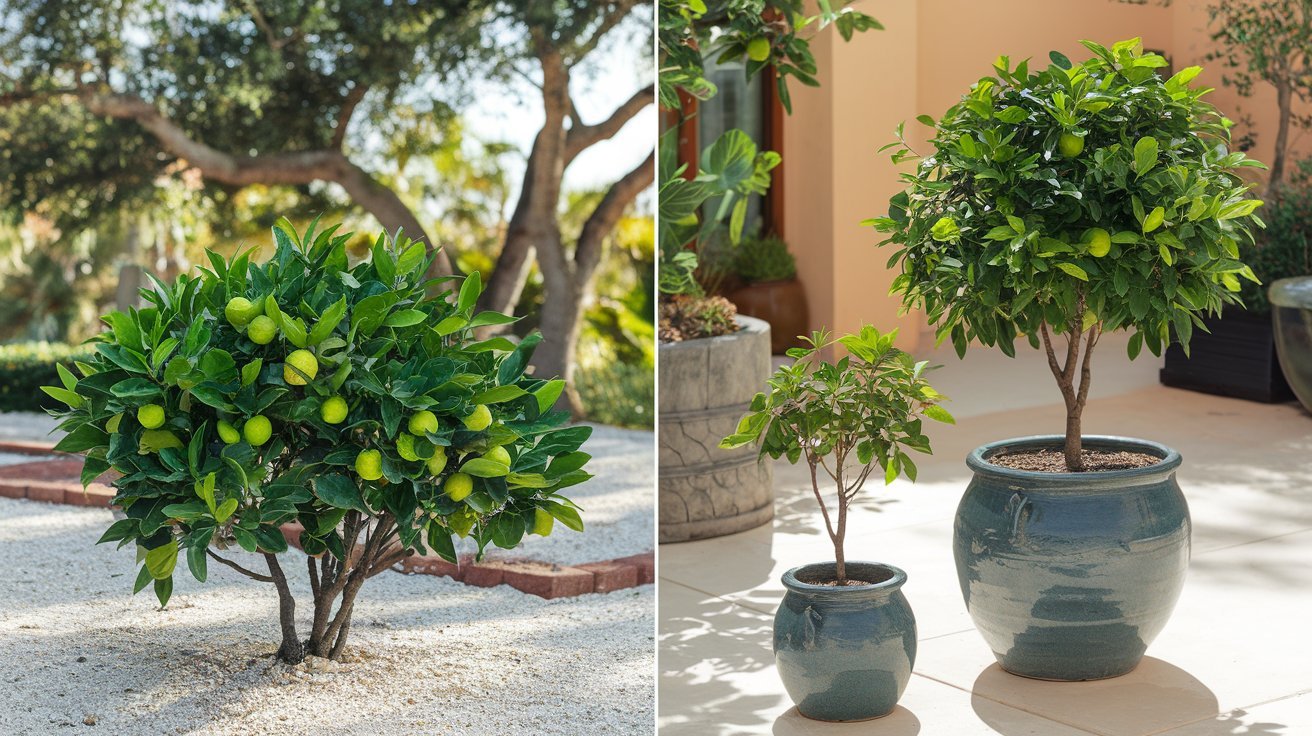
Picking the right spot and pot makes all the difference in how well your tree grows.
Planting Outdoors
Plant your key lime tree where it gets full sun all day. The soil needs to drain well. Sandy loam or loamy soil works best.
Avoid areas where water pools after rain. Space trees at least 12 feet apart if planting multiple ones. Keep them away from strong winds that can damage branches and knock off fruit.
Growing in Containers
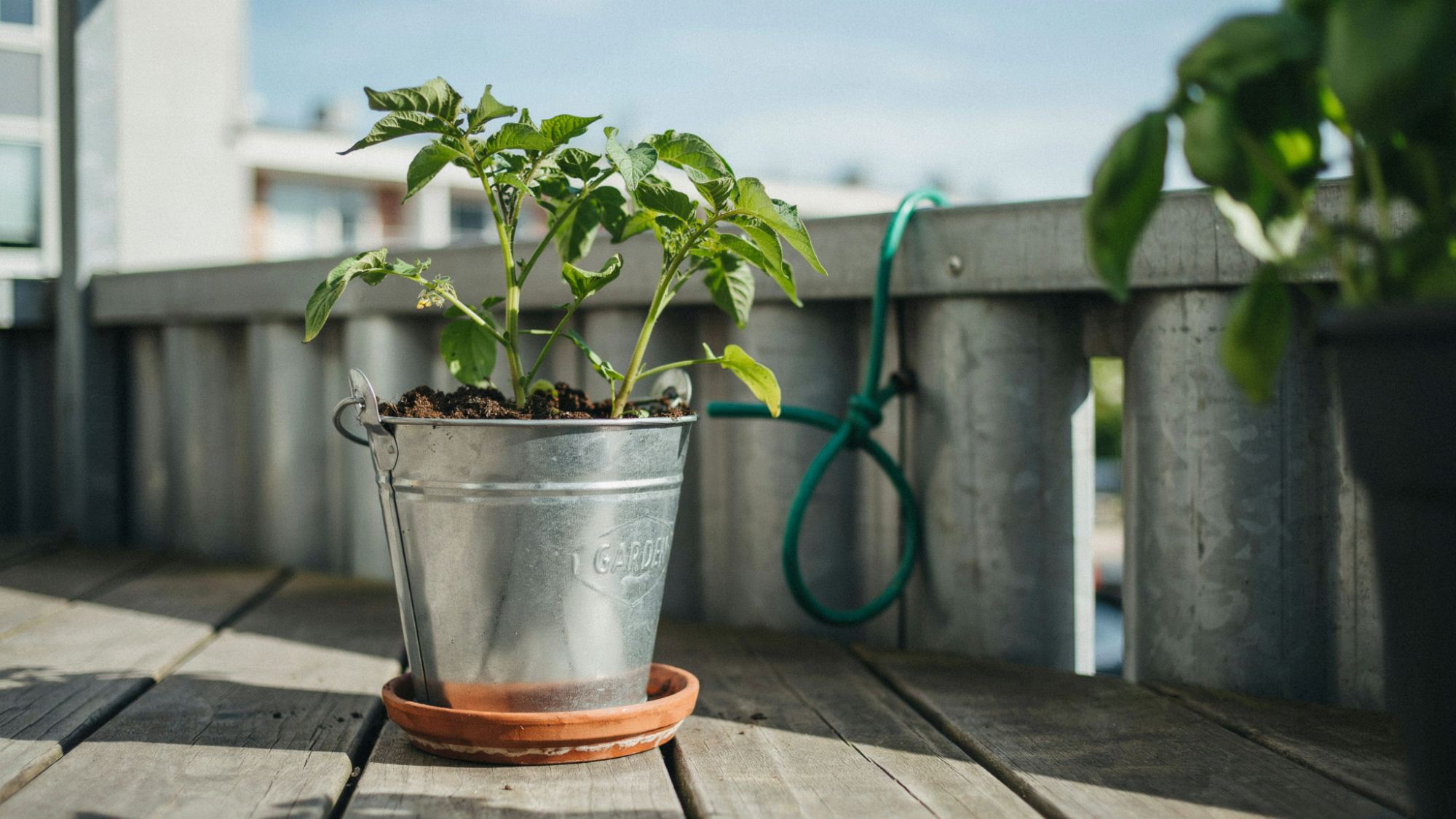
Use a pot that’s at least 20 gallons for mature trees. Start with a 5-gallon container for young trees. Make sure the pot has drainage holes at the bottom.
Mix regular potting soil with perlite or sand for better drainage. Containers let you move the tree indoors when frost threatens. You can also adjust placement to follow the sun.
Planting Your Key Lime Tree
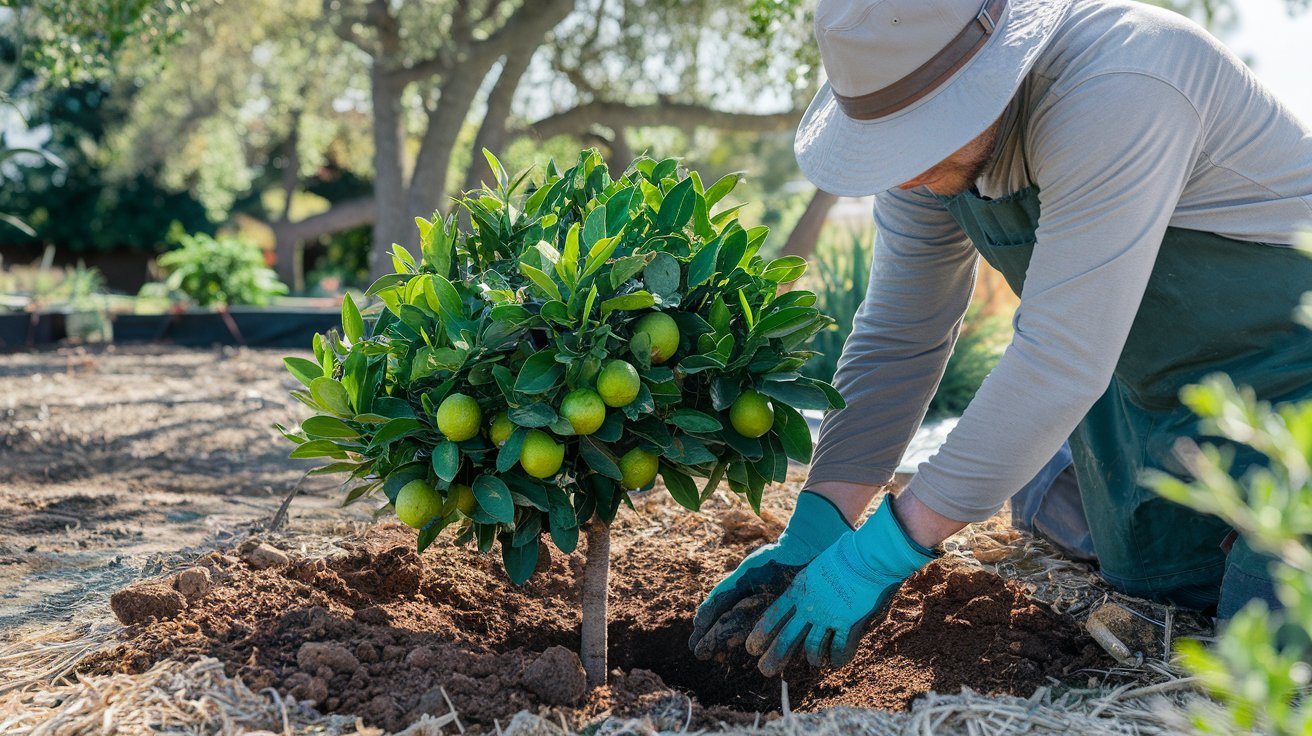
Proper planting sets up your tree for years of healthy growth and good fruit.
Soil Preparation
Test your soil pH first. Key limes prefer slightly acidic soil between 6.0 and 7.0. Add compost to improve soil texture and nutrients.
Mix in organic matter like aged manure or leaf mold. This helps with drainage and feeds beneficial microbes.
Planting Steps
Dig a hole twice as wide as the root ball but the same depth. Place the tree so the root crown sits level with the ground. Don’t plant too deep or too shallow.
Backfill with soil and press gently to remove air pockets. Water thoroughly after planting. Add 2 to 3 inches of mulch around the base, keeping it away from the trunk.
Container Planting Tips
- Handle roots carefully when moving the tree to a new pot
- Add a layer of gravel or broken pottery at the bottom for drainage
- Fill with your soil mix, leaving the root crown slightly above the soil line
- Water until it drains from the bottom
- Check that the tree stands straight before you finish
Watering Your Key Lime Tree
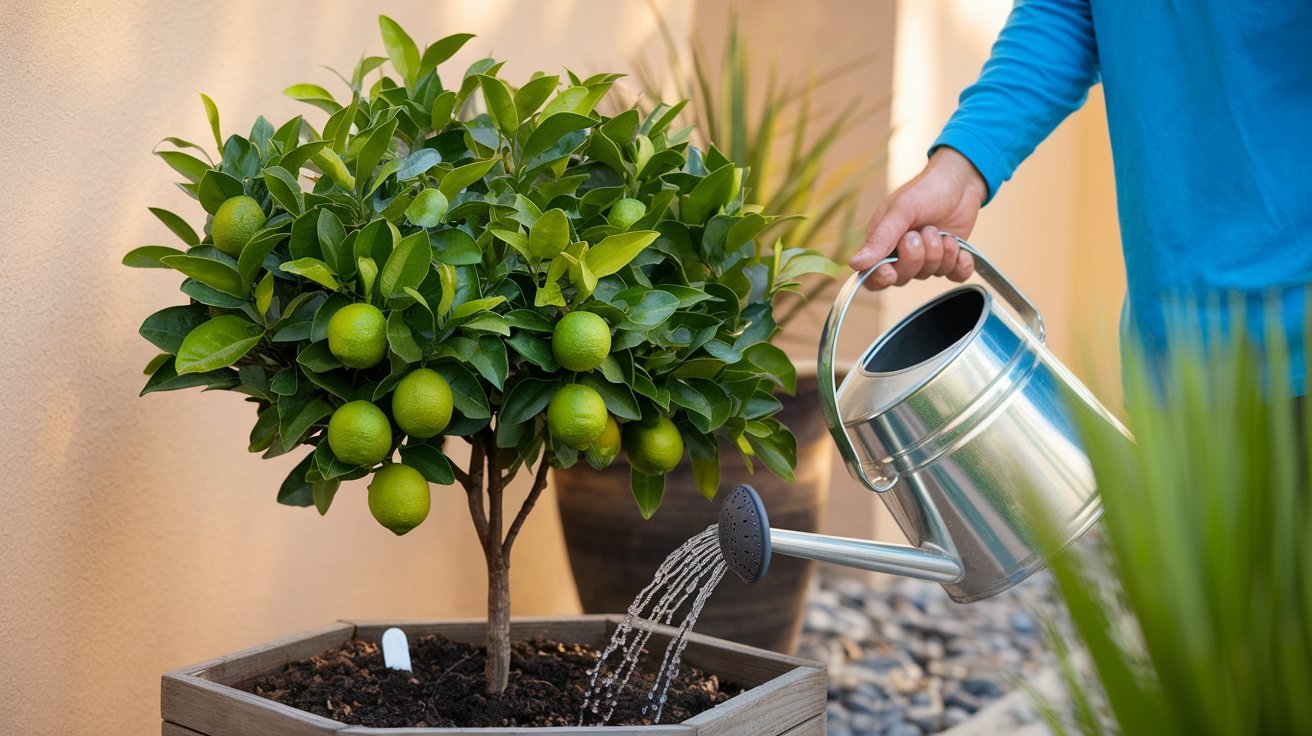
Getting water right prevents most common problems with citrus trees.
Water when the top 2 inches of soil feel dry. Container trees need water more often than ground-planted ones. In hot weather, you might water every 2 to 3 days. Ground trees usually need deep watering once or twice a week.
Yellow leaves often mean too much water. Leaves that curl and feel crispy signal not enough water. Wilting during the day usually means the tree needs water.
Water more during hot summer months and less in winter. Reduce watering when temperatures drop below 60°F. Indoor trees need less water because they’re not actively growing.
Lighting and Sun Exposure
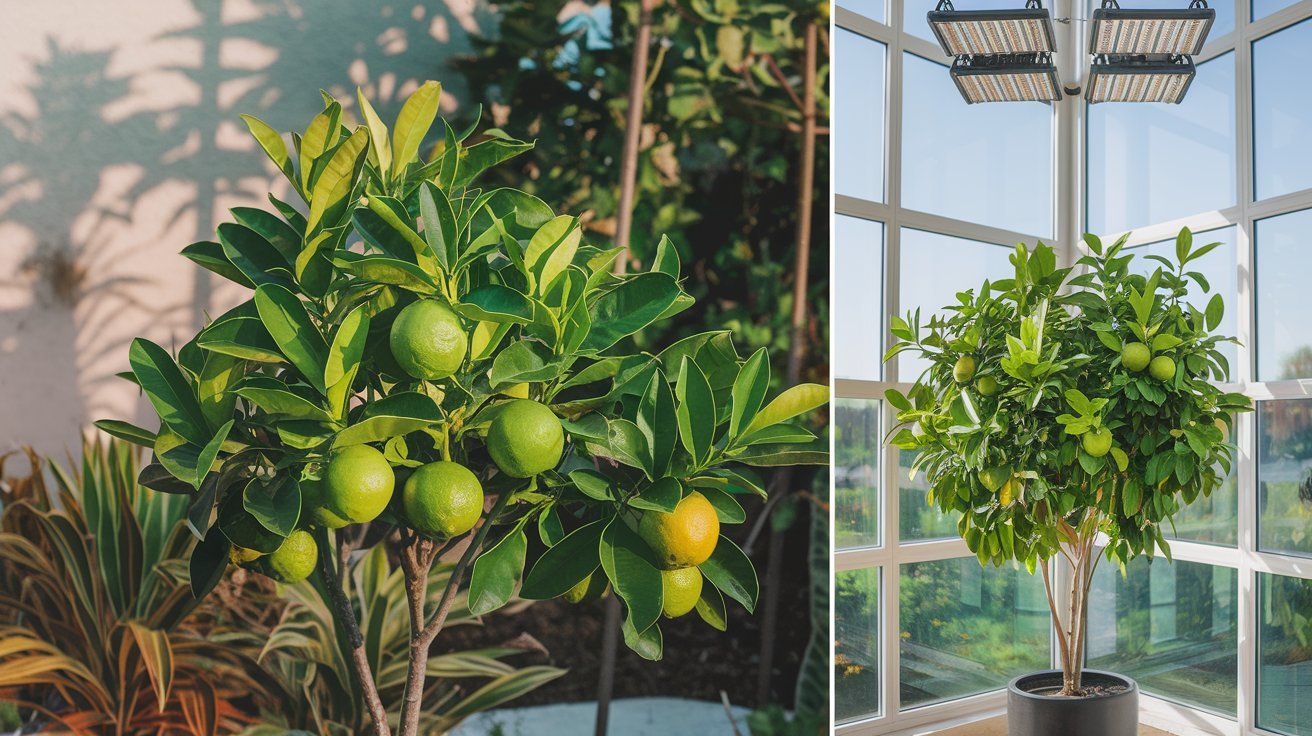
Light determines how much fruit your tree produces each season.
Optimal Sunlight
Key lime trees need 6 to 10 hours of direct sun daily. More sun means more flowers and fruit. Place outdoor trees on the south or west side of your property.
Full sun also helps prevent fungal diseases by keeping leaves dry.
Indoor Light Requirements
Put indoor trees near south-facing windows for maximum light. East or west windows work but give less sun. Use LED grow lights if natural light isn’t enough.
Keep lights on for 12 to 14 hours a day. Position them 6 to 12 inches above the tree canopy.
Managing Shade and Winter Light Shortage
Move potted trees to follow seasonal sun patterns. In winter, relocate them to the sunniest spot you have.
Outdoor trees that get shaded by deciduous trees in summer gain more sun in winter when leaves fall. Prune nearby plants if they block too much light.
Fertilizing Your Key Lime Tree
Regular feeding keeps your tree healthy and produces lots of fruit.
Use citrus fertilizer with an NPK ratio like 6-4-6 or 8-4-6. Key limes need nitrogen for leaf growth and potassium for fruit development.
Feed every 6 to 8 weeks during spring through summer. Stop fertilizing in fall and winter when growth slows.
For organic options, spray seaweed extract on leaves monthly. Add compost around the base twice a year. Fish emulsion and worm castings also work well as natural fertilizers.
Pruning and Maintenance
Smart pruning shapes your tree and boosts fruit production.
Remove dead or damaged branches any time you see them. Cut out branches that cross or rub against each other. Thin out the center to let light and air reach inner branches.
Prune lightly after harvest, usually in late winter or early spring. Don’t cut too much or you’ll remove flowering wood. Remove water sprouts that grow straight up from branches since these don’t produce fruit.
Wear thick gloves and long sleeves when pruning thorny varieties. Use long-handled pruners to keep your hands away from thorns.
Pest and Disease Management
Catching problems early keeps your tree productive and healthy.
Leaf miners create squiggly lines in leaves. Remove affected leaves and throw them away. Aphids cluster on new growth and suck plant juices.
Spray them off with water or use insecticidal soap. Scale insects look like small bumps on branches and leaves. Scrape them off or apply horticultural oil. Neem oil works against all three pests naturally.
Citrus canker causes brown spots with yellow halos on leaves and fruit. Remove infected parts immediately. Leaf spots show up as dark spots on leaves.
Improve air circulation and avoid overhead watering. Copper fungicide helps control both diseases. Keep fallen leaves cleaned up to reduce disease spread.
Overwintering Key Lime Trees
Protecting your tree from cold ensures it survives to produce fruit next year.
Move container trees indoors before the first frost. Bring them in when nights drop below 40°F. Cover outdoor trees with frost blankets or old sheets when frost threatens.
Remove covers during the day so the tree gets sun.Place trees near the brightest window you have. Water less often since growth slows in winter.
Keep humidity up by misting leaves or using a humidifier. Indoor air is dry in winter. Stop fertilizing until spring when new growth appears.
Conclusion
I’ve grown key lime trees for years now, and watching them produce fruit never gets old. Start with good soil and plenty of sun. Water when needed, feed regularly, and protect from frost.
Your tree will reward your care with fresh limes for years. Be patient during the first year as it establishes roots. The fruit is worth the wait.
Drop a comment below and tell me about your citrus growing experience. What challenges have you faced?
Frequently Asked Questions
How long does it take for a key lime tree to produce fruit?
Key lime trees typically start producing fruit in 1 to 3 years after planting. Grafted trees fruit faster than seed-grown ones. Proper care speeds up the fruiting timeline.
Can key lime trees grow indoors year-round?
Yes, key lime trees can grow indoors if they get enough light. Place them near a south-facing window or use grow lights. Indoor trees may produce less fruit than outdoor ones.
Why are my key lime tree leaves turning yellow?
Yellow leaves usually indicate overwatering, poor drainage, or nitrogen deficiency. Check soil moisture and improve drainage if needed. Apply citrus fertilizer to address nutrient problems.
Do key lime trees need two trees to produce fruit?
No, key lime trees are self-pollinating and don’t need another tree. A single tree produces fruit on its own. Hand pollination can help if you’re growing indoors.
How cold can key lime trees tolerate?
Key lime trees can’t handle frost or freezing temperatures. They suffer damage below 32°F and prefer temps above 50°F. Move container trees indoors before the first frost.