
Zinnias are some of the easiest flowers I’ve ever grown. Bright colors, low maintenance, and blooms that last all season.
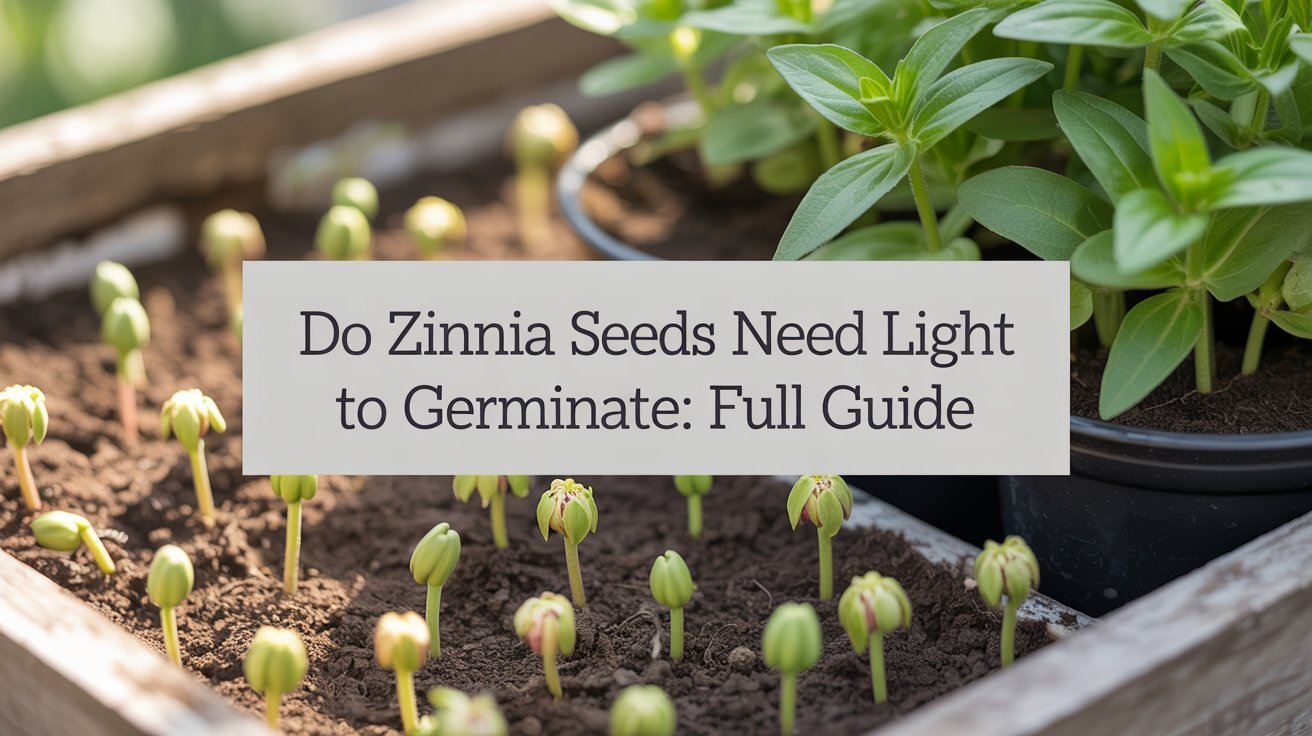
But one question keeps popping up: do zinnia seeds need light to germinate? I asked this same thing when I started. The answer changed how I plant them.
In this guide, I’ll show you exactly what zinnia seeds need to sprout. You’ll get the real germination requirements, not guesswork.
We’ll cover indoor and outdoor planting methods, when to add light, and how to troubleshoot problems. I’ve been growing zinnias for years, so I know what works.
Let’s get those seeds sprouting.
Understanding Zinnia Seed Germination
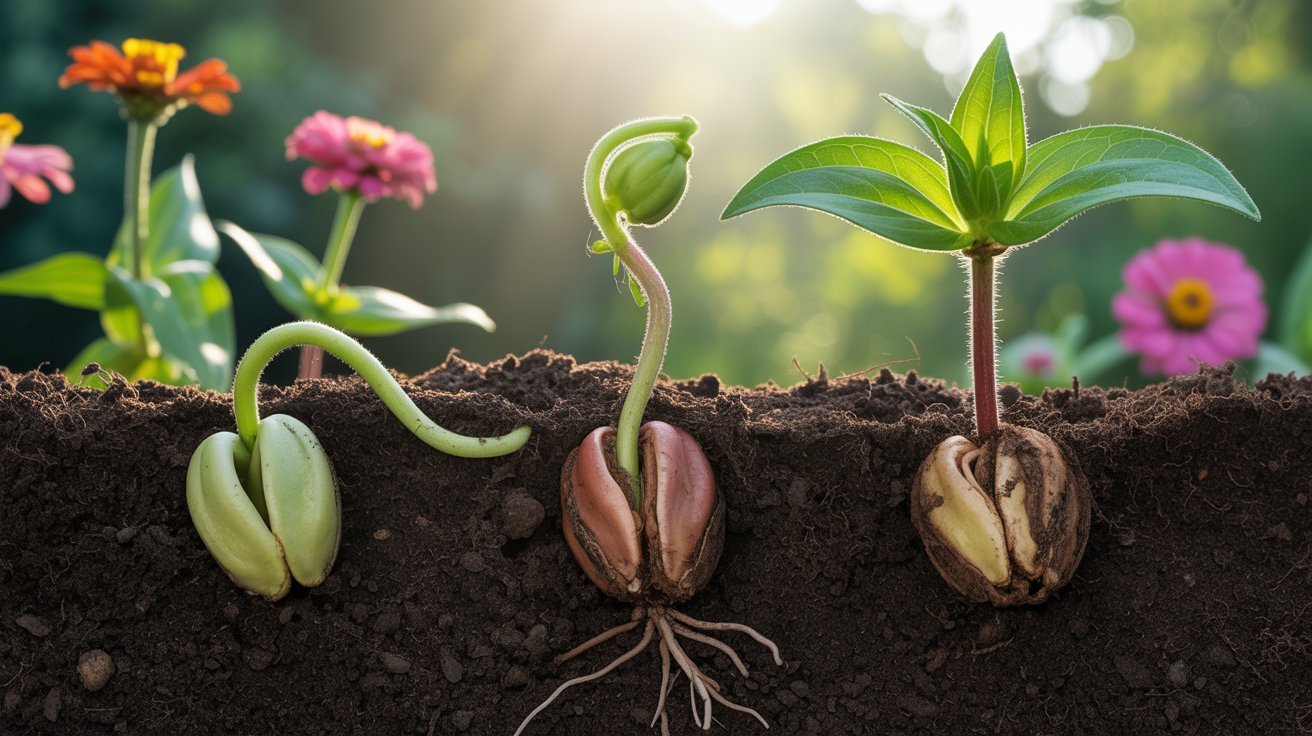
Germination is when a seed springs to life. When you plant a seed, water enters through the seed coat and triggers growth. The seed pushes out a root first, then a shoot.
Three things control this process: moisture, warmth, and oxygen. No, zinnia seeds don’t need light to germinate.
They actually sprout better in darkness. Zinnia seeds use this dark period to focus energy on root development. Once the sprout breaks through the soil surface, light becomes critical.
Without bright light immediately after emerging, you’ll get weak, stretched-out plants. Remember: darkness for germination, bright light for growth.
Step-by-Step: How to Germinate Zinnia Seeds
Let me show you how I start zinnia seeds indoors. This method works every time.
Materials You’ll Need: You don’t need much. Grab seed trays or small pots, seed-starting mix, a watering can with a gentle spray, and grow lights if you’re starting indoors. A humidity dome helps but isn’t required.
Step 1: Prepare the Soil
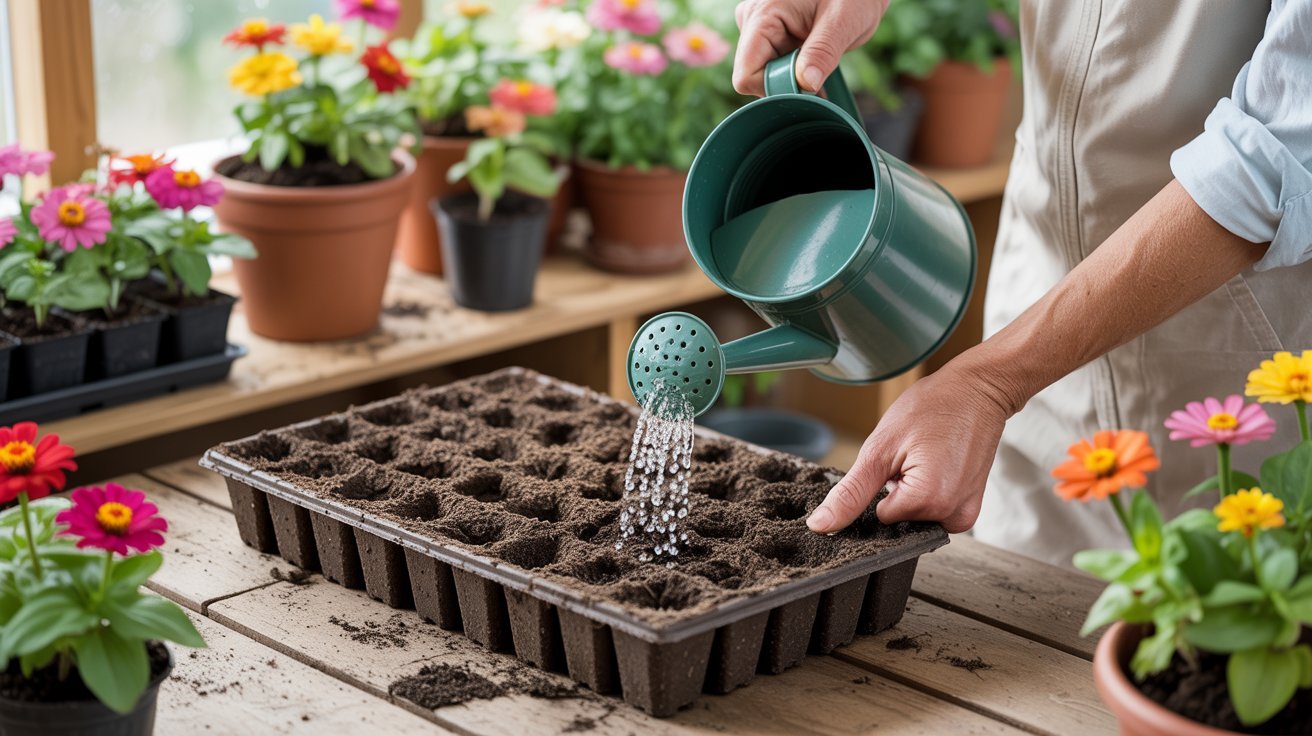
Use a sterile seed-starting mix. Regular garden soil is too heavy and may contain disease.
The mix should drain well. Fill your containers and water lightly before planting.
Warm soil is key. Aim for 70 to 85°F. Cold soil means slow or failed germination.
Step 2: Sow the Seeds
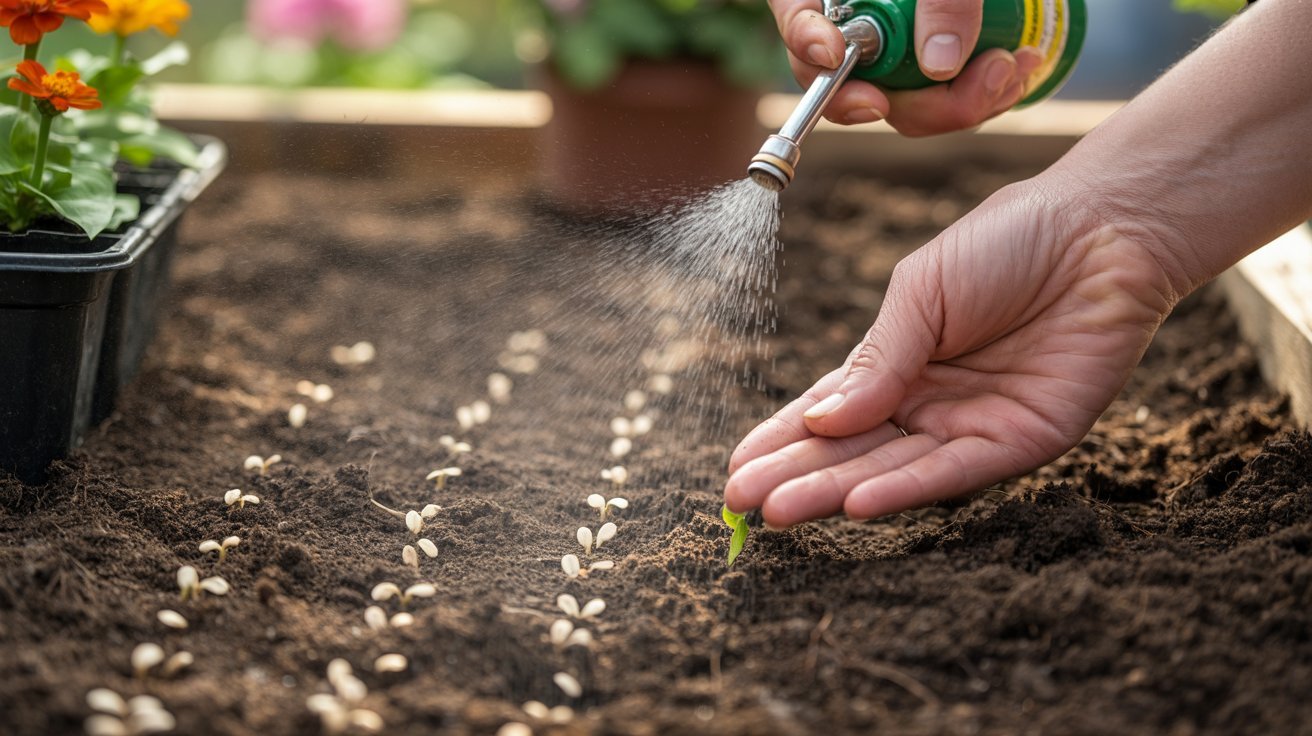
Plant each seed about ¼ inch deep. That’s roughly the length of your pinky fingernail.
Cover lightly with soil. Press gently so the seed makes good contact with the moist mix.
Mist the surface with water. You want it damp, not soaking wet.
Step 3: Maintain Temperature and Moisture
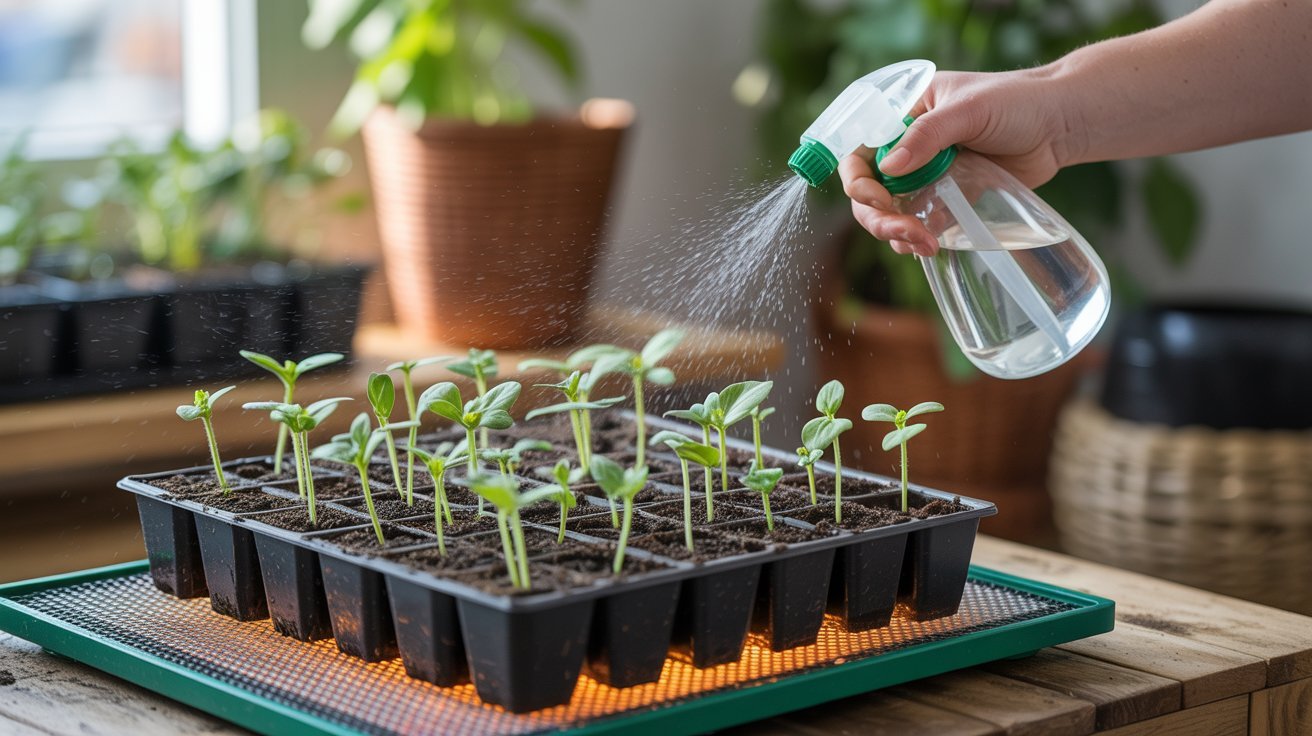
Keep the soil consistently moist. Check it daily. If the top feels dry, mist it again.
Never let it dry out completely. But don’t waterlog it either. Soggy soil kills seeds.
If your house is cool, use a seedling heat mat under the trays. This keeps the soil at the right temperature.
Step 4: Watch for Germination
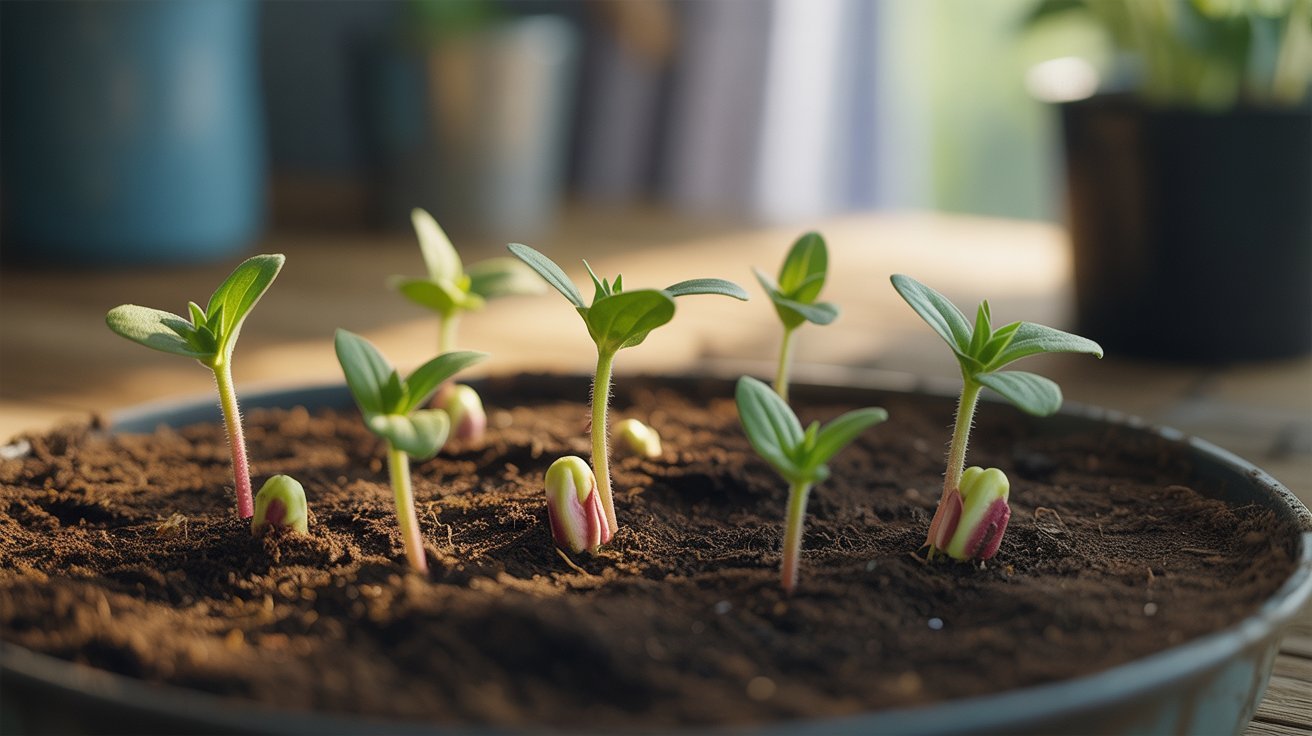
Zinnia seeds sprout fast in warm conditions. Expect to see green shoots in 4 to 9 days.
The warmer your soil, the faster they’ll come up. At 75°F, most seeds sprout within a week.
Once you see seedlings poking through, remove any humidity dome immediately. The plants need air circulation now.
Light Needs After Germination
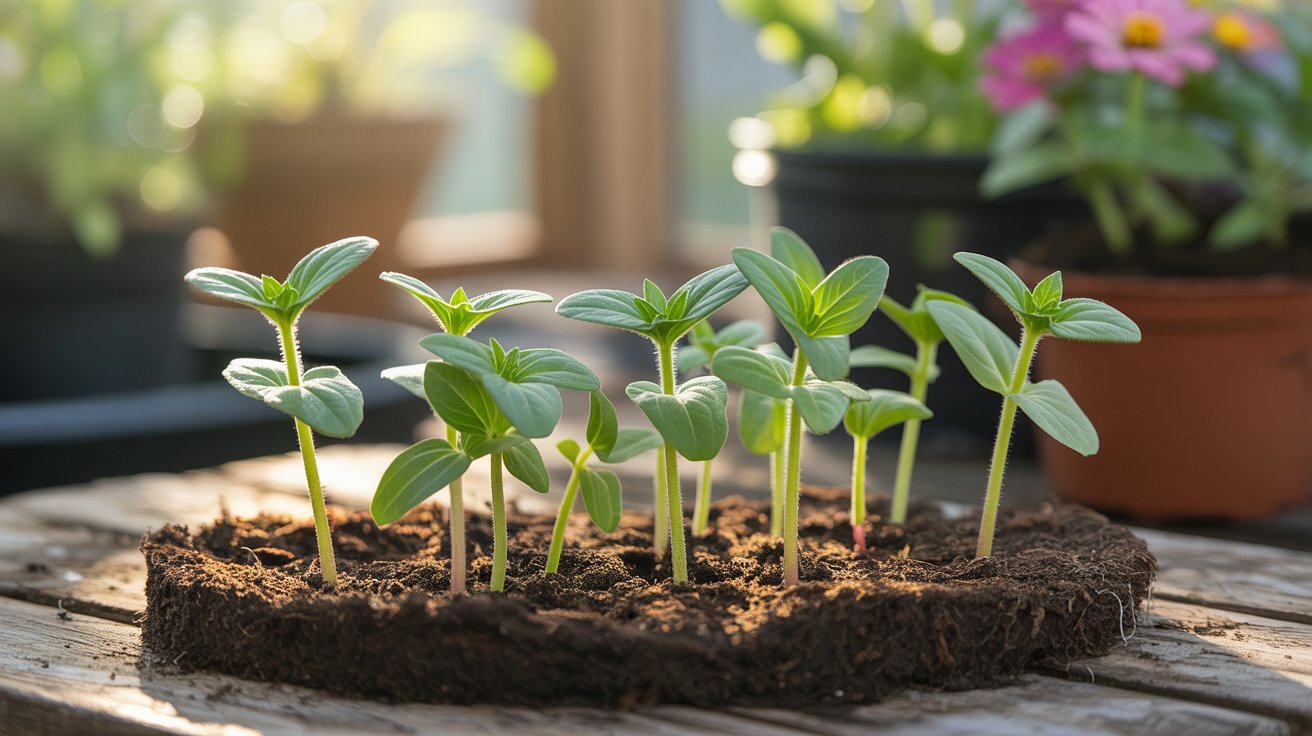
This is where many gardeners make mistakes. Seedlings need strong light right away.
When to Add Light:
As soon as that first green shoot appears, give it light. Seedlings need 12 to 14 hours of bright light each day.
A sunny south-facing window can work, but often isn’t bright enough. Indoor light is usually too weak, even near windows.
LED grow lights work better. They’re cheap to run and provide consistent light. Hang them 2 to 3 inches above the seedlings.
How to Prevent Leggy Seedlings:
Leggy seedlings are tall, thin, and weak. This happens when they don’t get enough light.
They stretch toward the light source, growing long stems instead of strong ones. These plants won’t perform well in the garden.
Keep your light source close. Two to three inches above the tops of the plants is right. Raise the lights as the seedlings grow.
Rotate your trays every day. This ensures all sides get equal light and the stems grow straight.
Outdoor Sowing and Transplanting
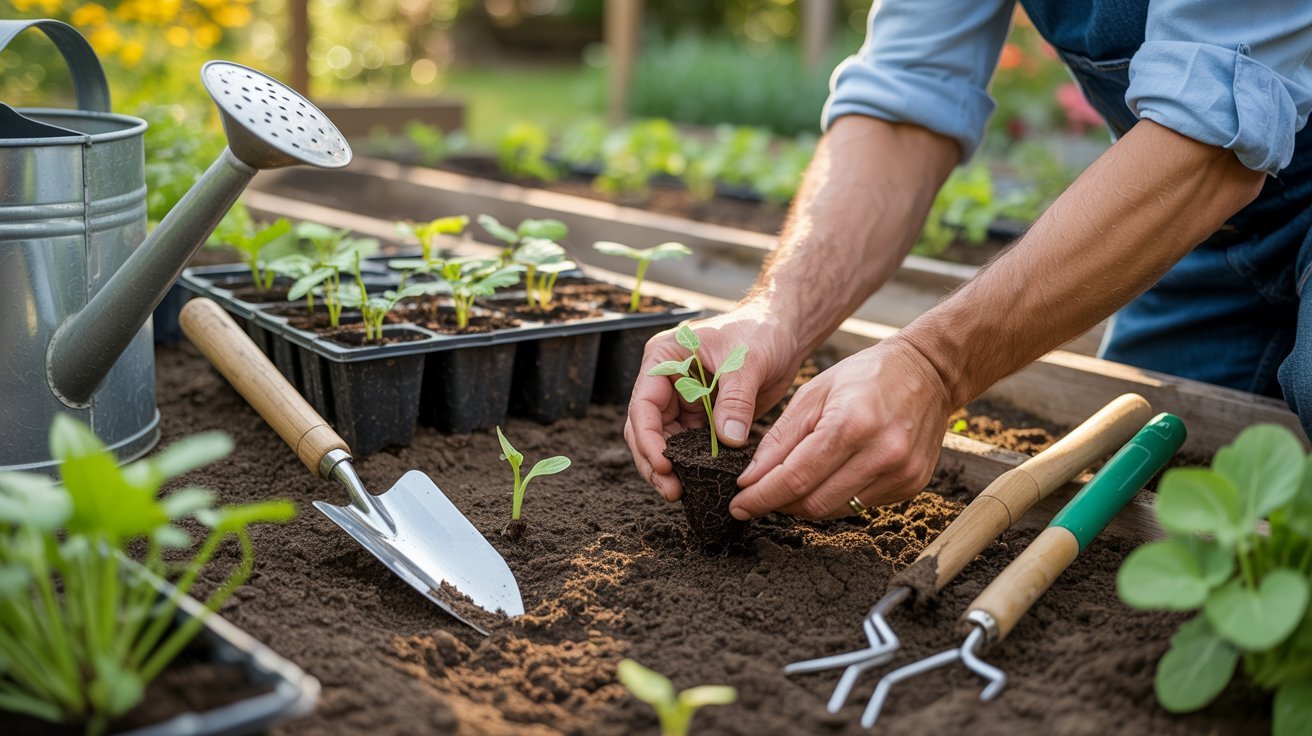
You can skip indoor starting and sow directly in the garden. Both methods work well.
Direct Sowing in the Garden:
Wait until all frost danger has passed. Zinnias are heat lovers and frost will kill them.
The soil should feel warm to your hand. Aim for at least 70°F soil temperature.
Plant seeds ¼ inch deep. Space them 9 to 12 inches apart. Thin seedlings later if they come up too thick.
Water gently after planting. Keep the soil moist until seedlings appear.
Transplanting Indoor Seedlings:
Indoor seedlings need hardening off before you plant them outside. This means gradually exposing them to outdoor conditions.
Start one week before your planned transplant date. Put seedlings outside for an hour on day one. Add an hour each day.
Bring them in at night for the first few days. By day seven, they can stay out all night if temperatures are above 50°F.
Plant in the morning or evening, not during hot midday sun. Water well after transplanting. Keep them watered daily for the first week.
Common Germination Problems and Fixes
Even experienced gardeners run into issues. Here’s how to fix the most common ones.
- Seeds not sprouting: Check your soil temperature first. Cold soil is the usual culprit. If the soil feels cool to your hand, it’s too cold for zinnias. Use a heat mat or wait for warmer weather. Also check moisture. Dry soil won’t activate seeds.
- Mold or rot on seedlings: This means too much water or poor air flow. Cut back on watering. Remove any humidity dome. Make sure air can move around your seedlings. Space containers farther apart if needed. You might need to start over with a fresh, sterile mix.
- Weak, pale, or stretched seedlings: Not enough light. These seedlings are reaching for more brightness. Move them closer to your light source immediately. Add more hours of light per day. Weak seedlings rarely become strong plants, so act fast when you spot this problem.
Conclusion
Now you know the answer: do zinnia seeds need light to germinate? No, they don’t. They just need warmth and moisture to sprout, then bright light kicks in.
I still remember my first batch of zinnias. I worried I was doing it wrong, but they popped up in less than a week.
These flowers are forgiving and rewarding. Try starting some seeds this season. You’ll love watching them grow.
Share your results in the comments below. What zinnia varieties are you most excited to plant?
Frequently Asked Questions
Can I plant zinnia seeds directly in the garden?
Yes, you can sow zinnia seeds directly outdoors once the soil warms to at least 70°F and all frost danger has passed. They’ll germinate in 4 to 7 days in warm soil.
Why are my zinnia seedlings falling over?
This usually means damping off disease caused by too much moisture and poor air circulation. Make sure soil drains well, don’t overwater, and provide good air flow around seedlings.
How deep should I plant zinnia seeds?
Plant zinnia seeds ¼ inch deep, which is about the thickness of a pencil eraser. Cover lightly with soil and keep moist until they sprout.
Do zinnia seeds need to be soaked before planting?
No, soaking isn’t necessary. Zinnia seeds have a thin seed coat and absorb water quickly from moist soil. Just plant them directly in a damp seed-starting mix.
How long do zinnia seeds stay viable?
Properly stored zinnia seeds remain viable for 2 to 4 years. Keep them in a cool, dry, dark place in an airtight container for best results.