

I still remember the first time I planted sunflowers. I was amazed at how quickly they sprouted and how little effort they needed.
Yes, sunflowers are easy to grow when you give them the right conditions. These cheerful plants are tough, shoot up fast, and don’t demand constant attention.
If you’re thinking about growing sunflowers, I’m here to help.
I’ll share everything I’ve learned about picking the right variety, planting them properly, caring for them through the season, and solving any issues that pop up.
Let’s get your sunflowers growing.
Why Sunflowers Are So Easy to Grow
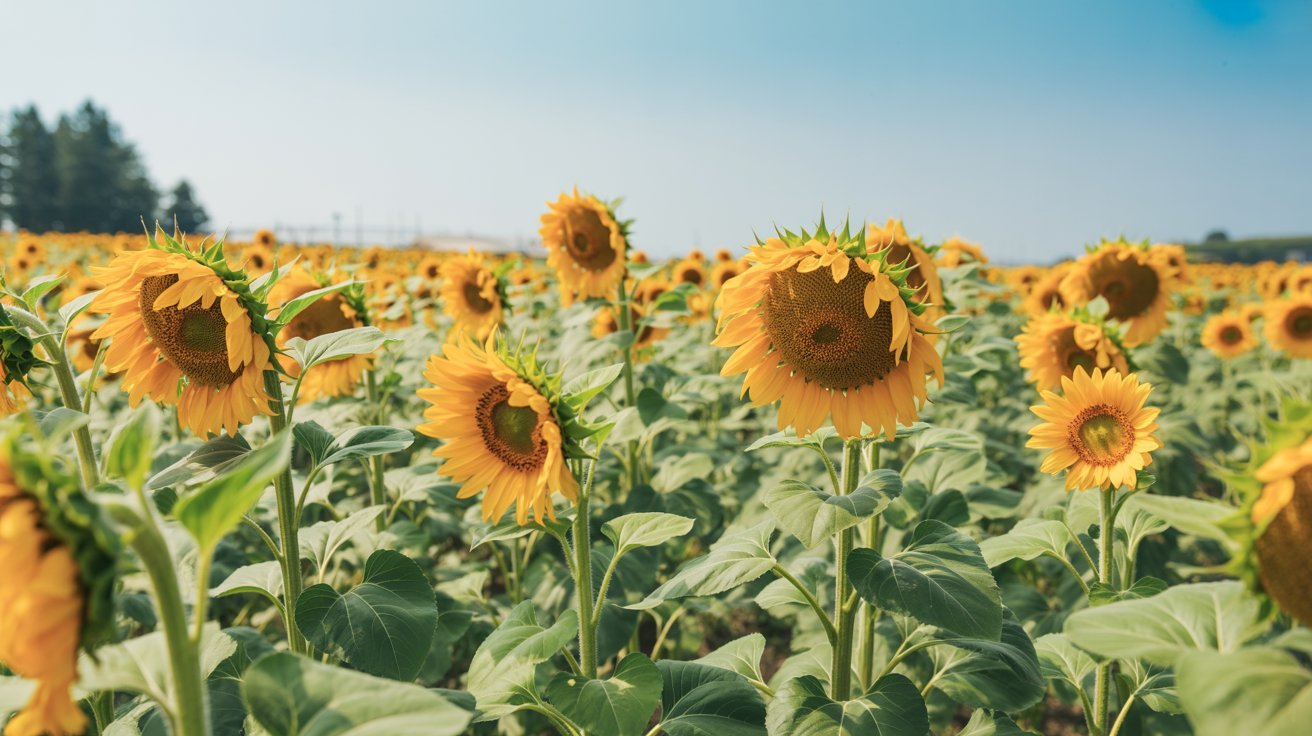
Sunflowers are beginner-friendly plants that grow quickly, need minimal care, and adapt well to various climates and soil conditions.
Low Maintenance and Hardy Nature
Sunflowers aren’t picky about where they grow. They do well in most soil types and can handle different weather conditions without much trouble.
These plants also have a natural resistance to pests and diseases. You won’t spend your time fighting off bugs or treating sick plants. They’re tough and can take care of themselves for the most part.
Fast Growth and High Success Rate
One of the best things about sunflowers is how quickly they grow. You’ll see sprouts popping up in just 7 to 10 days after planting. That quick start feels rewarding, especially if you’re new to gardening.
From seed to full bloom, sunflowers take about 70 to 100 days. That’s roughly two to three months of watching them shoot up toward the sky.
This makes them perfect for beginner gardeners who want to see results without waiting forever. Kids love growing them too because the progress is easy to track.
Adaptability to Different Climates
Sunflowers grow well in both warm and temperate regions. You don’t need to live in a specific climate zone to have success with them.
These plants love heat and full sun. In fact, they need at least 6 to 8 hours of direct sunlight each day to thrive. The hotter and sunnier your spot, the happier your sunflowers will be.
They can tolerate dry spells better than many other garden plants. This heat tolerance makes them reliable bloomers even during hot summer months.
Choosing the Right Sunflower Variety for Your Garden
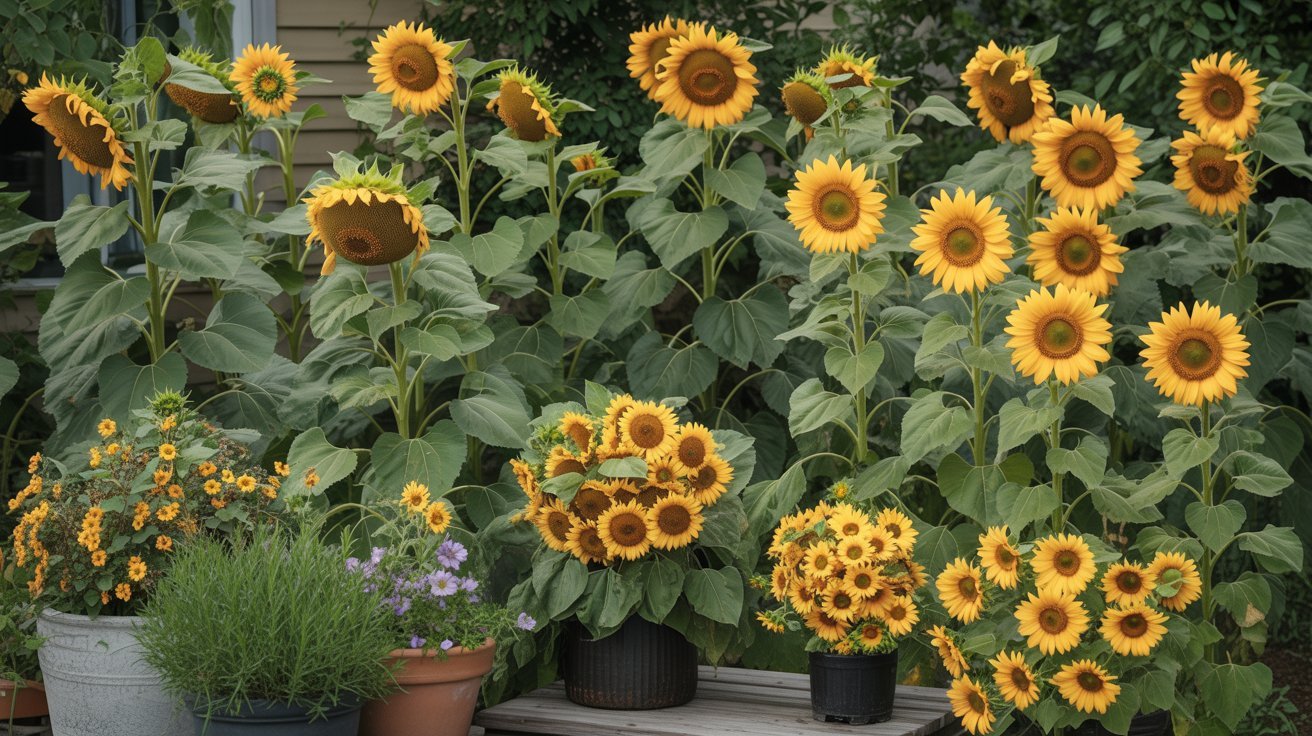
Picking the right sunflower type helps you get the best results for your space.
Tall Sunflowers
Mammoth and American Giant can grow 10 to 12 feet tall. These work great as borders or backdrops in your garden. Just make sure you have enough space for them.
Dwarf or Compact Varieties
Sunny Smile and Teddy Bear stay small at 1 to 3 feet tall. These are perfect for containers, patios, or small gardens. You can even grow them indoors near a sunny window.
Branching vs. Single-Stem Types
Single-stem sunflowers give you one big flower per plant. They’re simple and low-maintenance.
Branching types produce multiple smaller blooms on one plant. You’ll get more flowers over time, which is great for cutting. They need a bit more care but bloom longer.
How to Grow Sunflowers Step-by-Step
Follow these simple steps to grow healthy sunflowers from seed to bloom.
1. Pick the Right Location

Sunflowers need full sun to thrive. Choose a spot that gets 6 to 8 hours of direct sunlight each day.
Look for an area that’s protected from strong winds. Tall sunflowers can bend or break in heavy wind, so a sheltered location works best.
2. Prepare the Soil
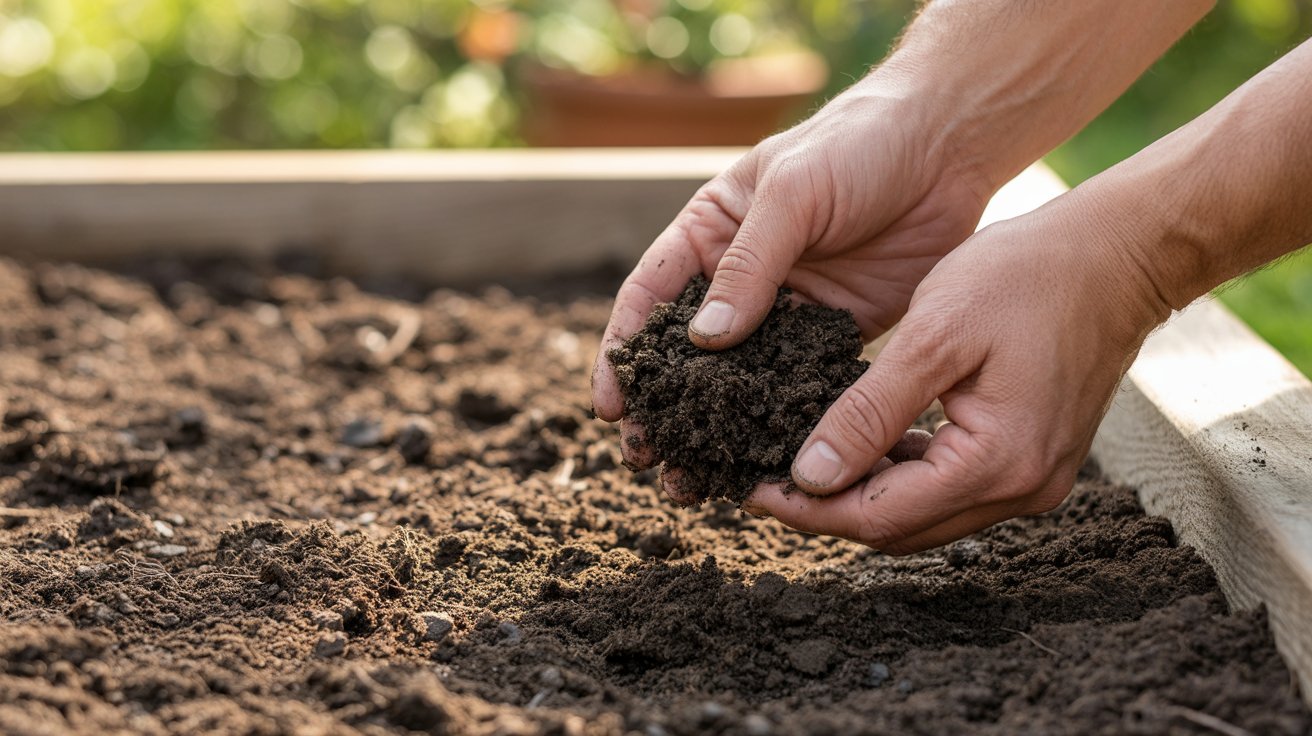
Good drainage is key. Sunflowers don’t like sitting in waterlogged soil. Make sure water can drain freely.
Mix in compost or organic matter to give your soil some nutrients. This helps your sunflowers grow strong and healthy.
The ideal pH range is 6.0 to 7.5. Most garden soils fall within this range naturally.
3. Planting Sunflower Seeds
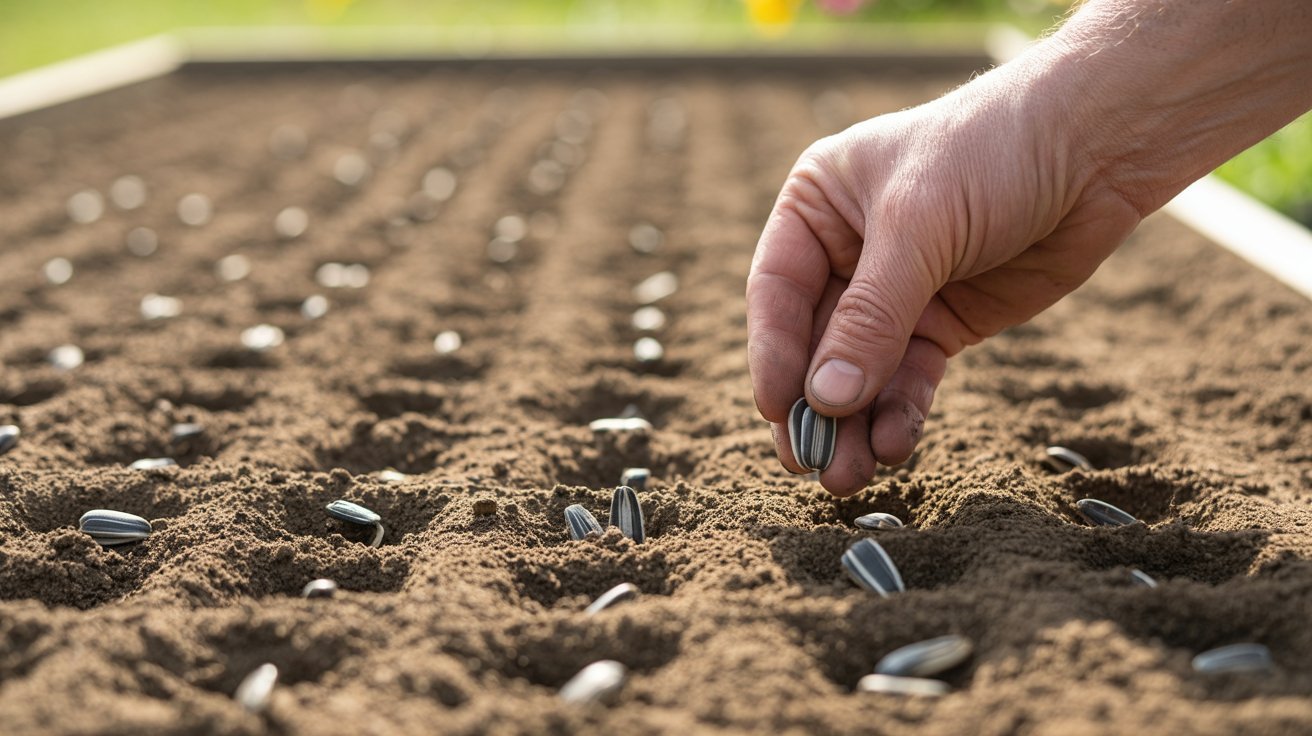
Wait until after the last frost to plant. The soil should warm up to at least 55°F or 13°C.
Plant seeds about 1 inch deep in the soil. Space them 6 to 12 inches apart depending on the variety. Larger types need more room.
You can plant seeds directly in the ground. Sunflowers don’t transplant well, so starting them where they’ll grow is best.
4. Watering and Fertilizing Tips
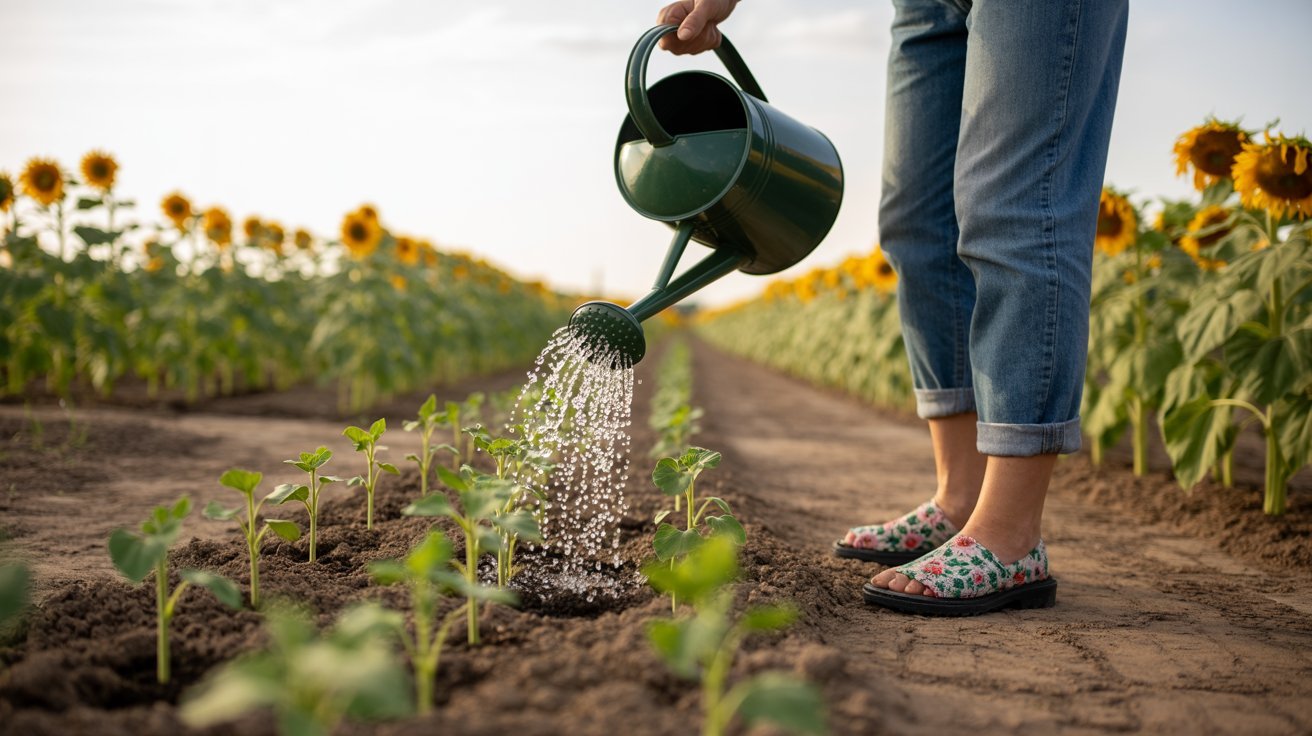
Keep the soil moist but not soaking wet. Water deeply a few times a week rather than shallow watering every day.
Young seedlings need consistent moisture. Once established, sunflowers can handle some dry periods.
Feed them lightly before they start flowering. Too much fertilizer can lead to weak stems and fewer blooms.
5. Supporting Tall Varieties
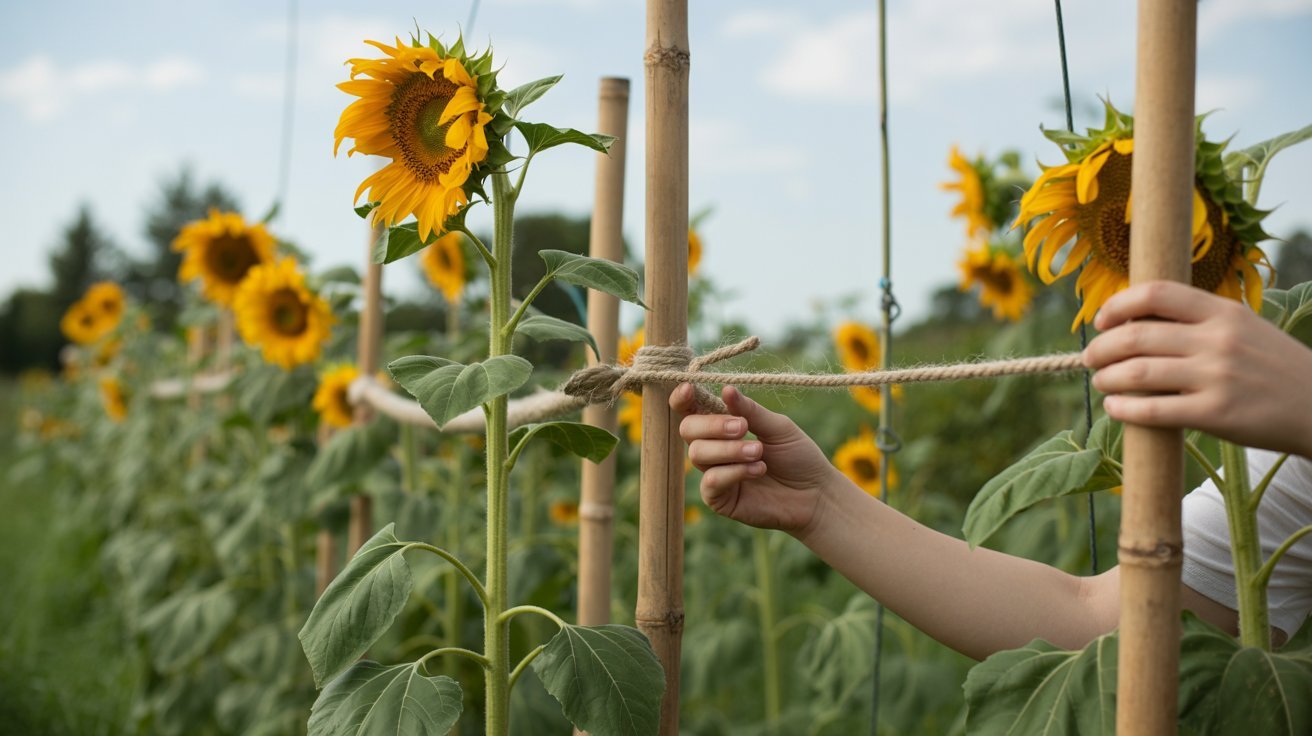
Tall sunflowers may need support as they grow. Use stakes or bamboo poles placed near the stem.
Tie the stem loosely to the stake with garden twine or soft ties. Don’t tie too tight or you’ll damage the plant.
If you live in a windy area, consider planting near a fence or wall for extra protection.
Common Problems and How to Fix Them
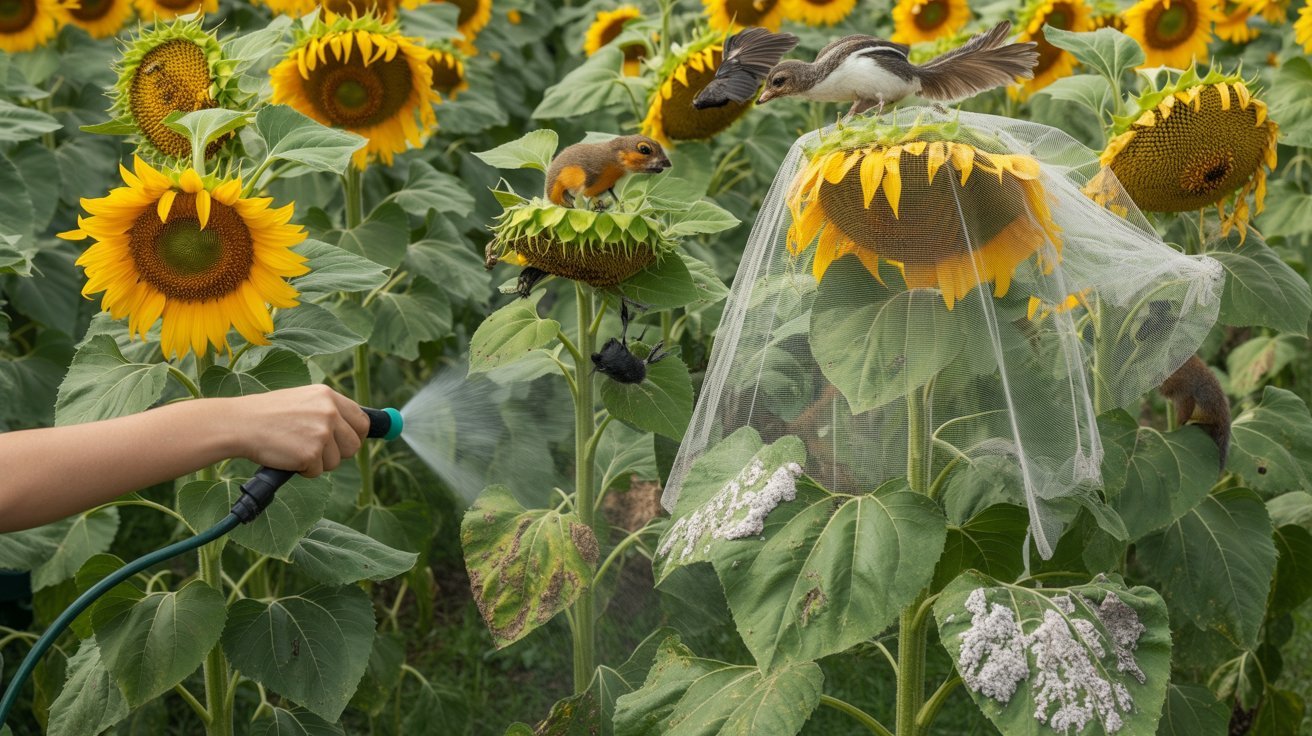
Even though sunflowers are easy to grow, you might run into a few issues. Here’s how to handle them.
Pests and Wildlife
Birds and squirrels love sunflower seeds. They’ll start munching on your flower heads before you get a chance to harvest.
Cover developing flower heads with netting or mesh bags. This keeps birds away while still letting your flowers breathe.
Aphids can cluster on leaves and stems. Spray them off with a strong stream of water. You can also use insecticidal soap for heavier infestations.
Planting marigolds nearby can help deter some pests naturally.
Yellowing Leaves or Stunted Growth
Yellow leaves often mean you’re watering too much. Check if your soil is staying too wet between waterings.
Poor drainage can cause the same problem. If water pools around your plants, you may need to improve your soil or move them to a better spot.
Lack of nutrients can also stunt growth. Add compost or a balanced fertilizer to give your plants what they need.
Fungal or Mildew Issues
White powdery spots on leaves signal mildew. This happens when plants are too crowded or don’t get enough air flow.
Space your sunflowers properly when planting. This allows air to circulate between plants and keeps leaves dry.
Water at the base of the plant rather than from above. Wet leaves encourage fungal growth.
Remove any infected leaves right away to stop the spread.
Conclusion
Sunflowers are honestly some of the easiest and most rewarding flowers you can grow. I’ve seen countless beginners succeed with them on their first try.
The joy of watching these bright blooms reach for the sky never gets old. Why not start with a couple of varieties this season?
You don’t need a huge garden or expert skills to make it happen. Ready to brighten your garden?
Grab a pack of sunflower seeds and get planting. Trust me, you’ll be glad you did when those first golden petals open up.
Frequently Asked Questions
Do sunflowers need a lot of water?
Sunflowers need regular watering when they’re young, about 2 to 3 times a week. Once they’re established, they’re quite drought-tolerant and can handle dry periods better than most garden plants.
Can I grow sunflowers in pots?
Yes, you can grow sunflowers in pots, especially dwarf varieties. Choose a container that’s at least 12 inches deep with good drainage holes, and make sure it gets full sun.
How long do sunflowers take to bloom?
Sunflowers typically bloom 70 to 100 days after planting. You’ll see sprouts in about 7 to 10 days, and then they grow quickly through the summer months.
Why are my sunflower heads drooping?
Drooping heads usually mean the flowers are too heavy for the stem or there’s not enough water. Stake tall varieties early and water deeply during hot weather to prevent this problem.
Can I save sunflower seeds for replanting?
Yes, you can save seeds from mature flower heads for next season. Let the heads dry completely on the plant, then remove and store the seeds in a cool, dry place until spring.