
I planted my first front yard black eyed susan garden three years ago. The golden blooms completely changed how my home looks from the street.
This guide shares everything I learned from real growing experience. You’ll get practical design ideas, planting steps, and care advice that actually works.
I made plenty of mistakes along the way. Now I can help you avoid those same problems and create a beautiful space faster.
Here’s what I’ll cover: Planning and planting your garden, Three proven design styles, Seasonal care from my own yard, Wildlife I’ve seen visiting, Beginner-friendly tips.
Let’s start growing your front yard garden today.
What Makes Black Eyed Susans Perfect for Front Yards
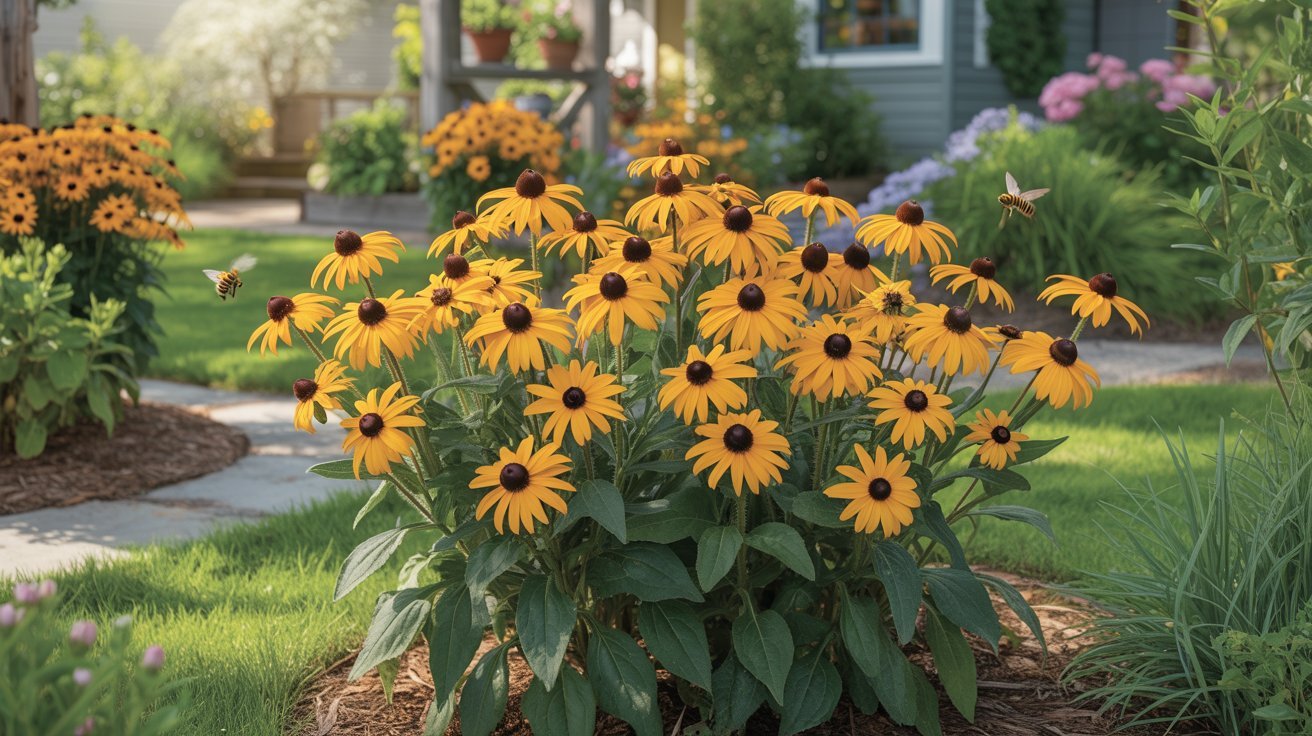
Rudbeckia plants offer bright color from midsummer through fall with almost no maintenance required.
They handle heat, drought, and poor soil better than most perennials. Their cheerful golden petals with dark centers create instant curb appeal.
Plus, they attract beneficial pollinators while deterring deer and rabbits.
These native plants give you maximum impact with minimal effort, making them ideal for busy homeowners who want a beautiful yard without constant work.
My Journey With a Front Yard Black Eyed Susan Garden
Creating a cheerful front yard garden filled with Rudbeckia that attracts pollinators and requires minimal fuss.
Finding the Charm of Rudbeckia
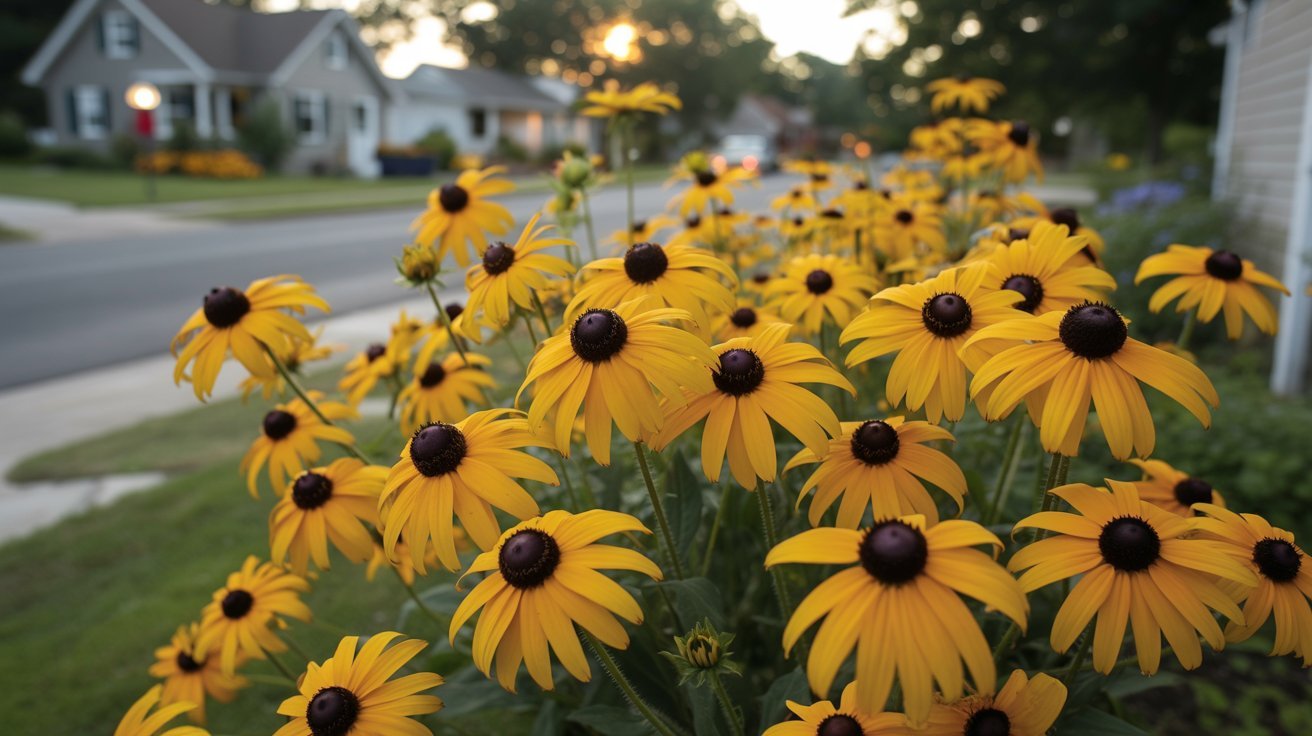
I first noticed black eyed susans at a neighbor’s house three summers ago. The bright yellow petals with dark centers caught my eye every time I drove past.
Something about their cheerful appearance made me stop and stare. They looked happy and carefree in the July heat.
I researched the plants and learned they were native to North America. That sold me immediately. I wanted flowers that belonged in my region naturally.
My local garden center had several varieties available. The staff recommended starting with the basics before trying specialty types.
Planning the Front Yard New Look
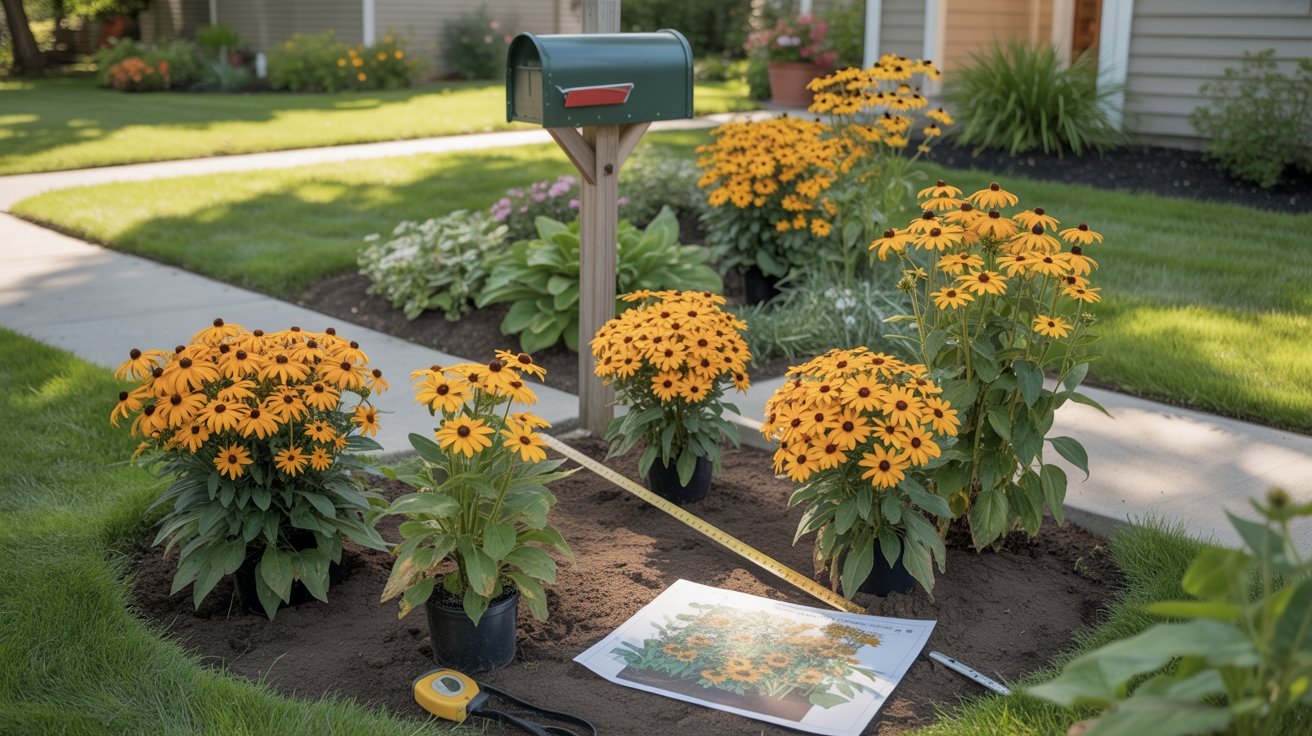
My front yard gets full sun for about eight hours daily. Perfect conditions for Rudbeckia.
I measured the space and sketched a rough layout. The area near the mailbox seemed ideal for a cluster of these flowers.
Rudbeckia hirta grows as an annual or short-lived perennial. It self-seeds readily and creates natural drifts over time.
Rudbeckia fulgida ‘Goldsturm’ is a perennial that returns reliably each year. It stays more compact and controlled.
I chose Goldsturm for areas close to the walkway. The hirta variety went further back where spreading wouldn’t cause problems.
Mixing native plants with well-behaved ornamentals gave me the best of both worlds. The garden would look intentional but still support local wildlife.
I bought ten Goldsturm plants and two packets of hirta seeds. That felt like enough to start without overwhelming myself.
Design Ideas for a Black-Eyed Susan Front Yard
Three distinct approaches to arranging Rudbeckia in your front yard based on different style preferences.
1. Cottage-Style Garden Look
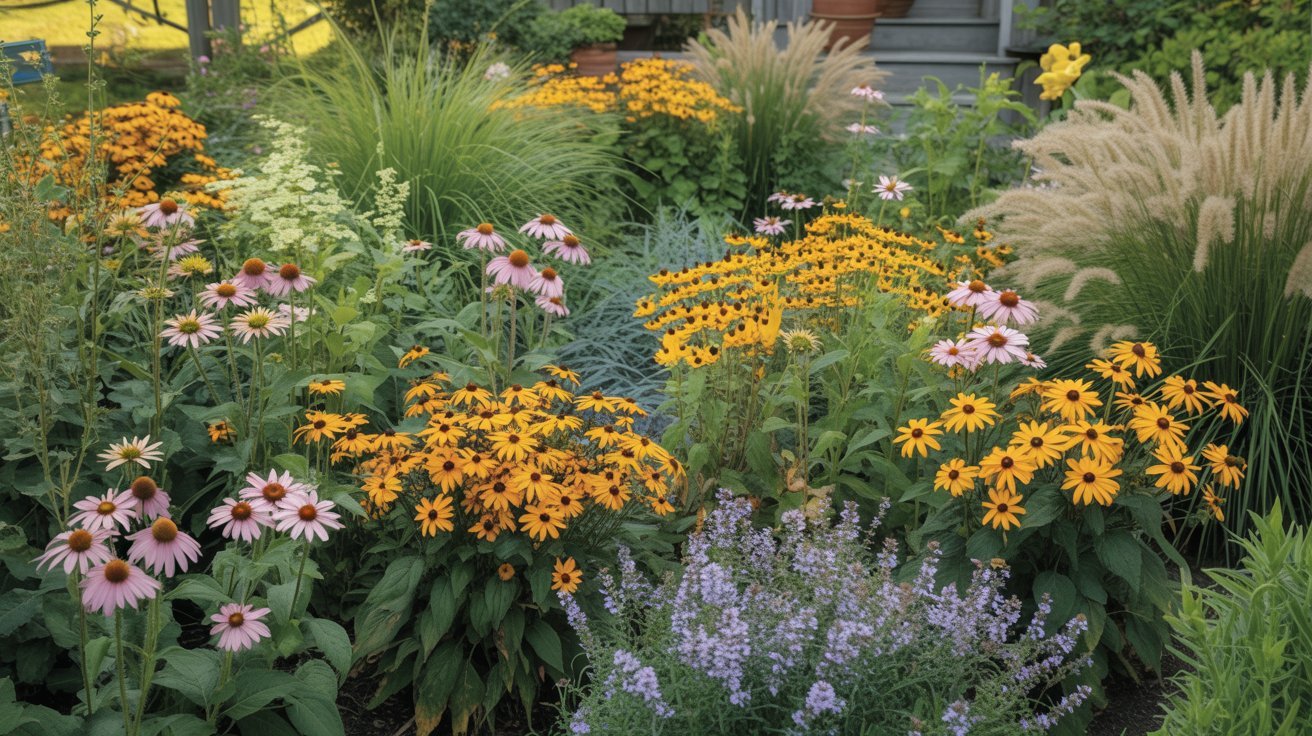
I planted my black eyed susans alongside purple coneflowers and ornamental grasses. The combination creates a soft, informal feel.
Height matters in cottage gardens. I placed tall grasses at the back, Rudbeckia in the middle, and lower lavender at the front.
Golden yellow next to purple creates strong visual contrast. By late summer, everything flows together naturally.
2. Low-Maintenance Pollinator Garden
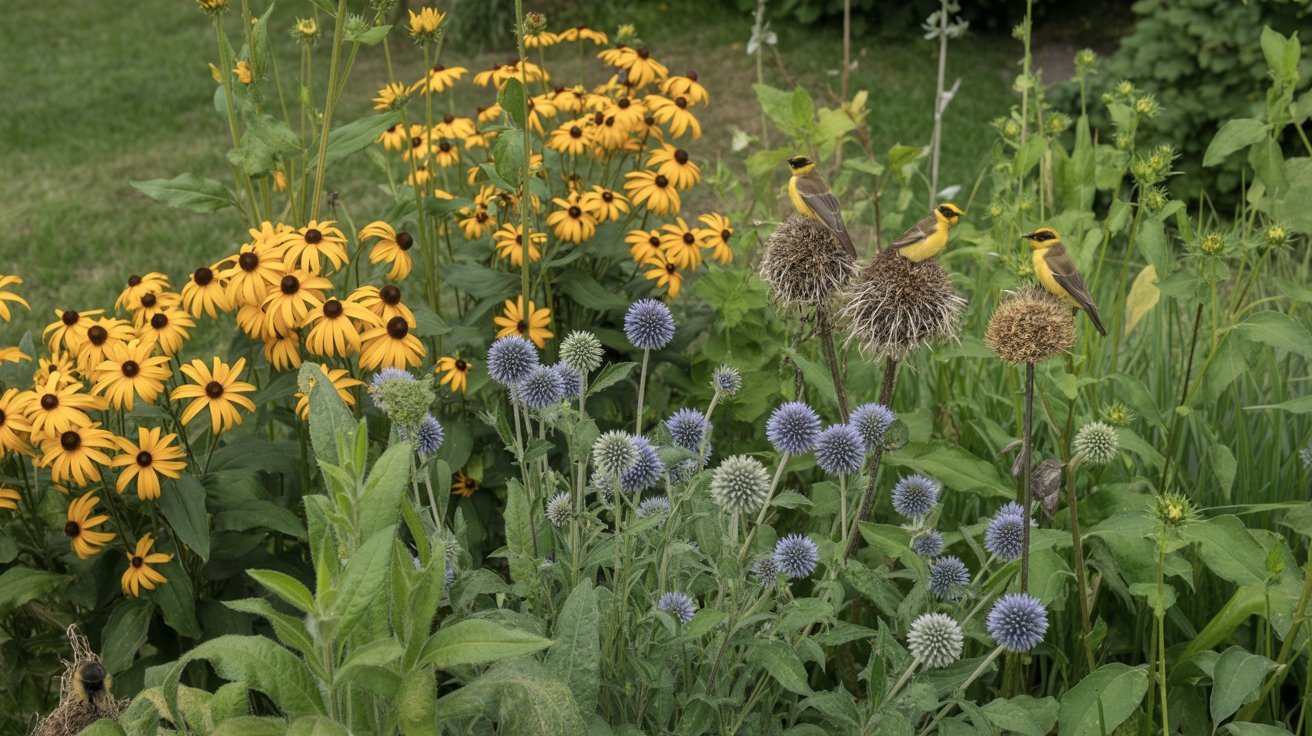
I paired Rudbeckia with drought-tolerant plants like globe thistle. Both handle dry spells without constant watering.
Seed heads stay on through winter. This feeds goldfinches and other small birds during cold months.
This approach works perfectly if you want maximum wildlife benefit with minimum effort.
3. Modern or Structured Front Yard Approach
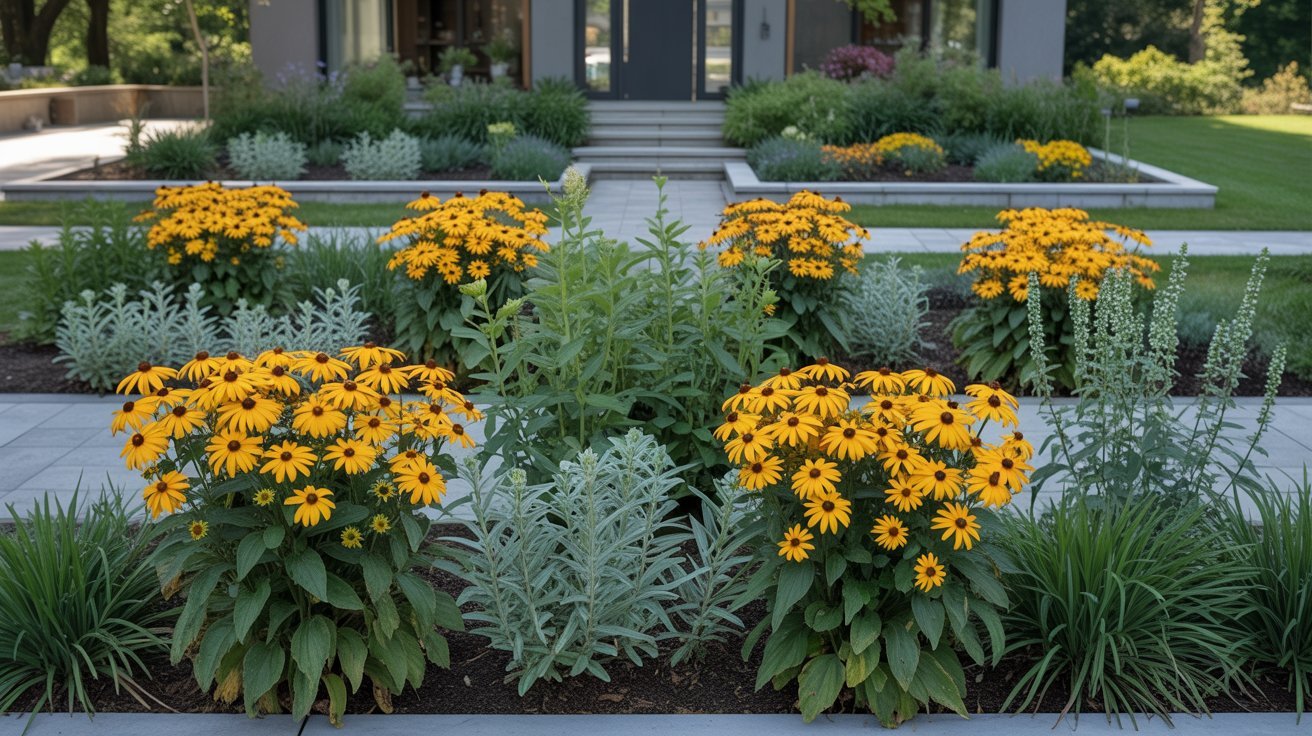
I planted Goldsturm varieties along my front walkway. They create consistent height and uniform golden color when blooming.
The flowers stand out against silver-leaved artemisia behind them. Adding plants with grey or blue-green foliage makes the yellow pop.
Foundation beds benefit from Rudbeckia planted in groups of three or five for a more natural look.
Planting and Care Tips from My Experience
Practical advice on timing, techniques, and common mistakes from actually growing these plants in my yard.
I planted my first batch in early May after the last frost. Fall planting works too. I added more plants in September, and they came back strong the following spring.
Here’s my basic planting process:
- Dig holes twice as wide as the root ball
- Mix compost into the native soil
- Plant at the same depth they were in the pot
- Water thoroughly right after planting
- Space plants 18 to 24 inches apart
- The spacing felt too far apart at first. By the second season, they filled in completely.
Lessons I learned along the way:
- My hirta variety self-seeded aggressively. Pull unwanted seedlings in spring when they’re small.
- Frequent shallow watering was my biggest mistake. It created weak root systems.
- I switched to deep watering twice weekly. The plants became much more drought-tolerant.
- My clay soil needed compost and sand added for better drainage.
- During extreme drought, heavy mulching kept soil moisture consistent without extra watering.
Seasonal Beauty: Watching the Garden Evolve
How your black eyed susan garden changes appearance and function throughout the year’s seasons.
Summer Glory
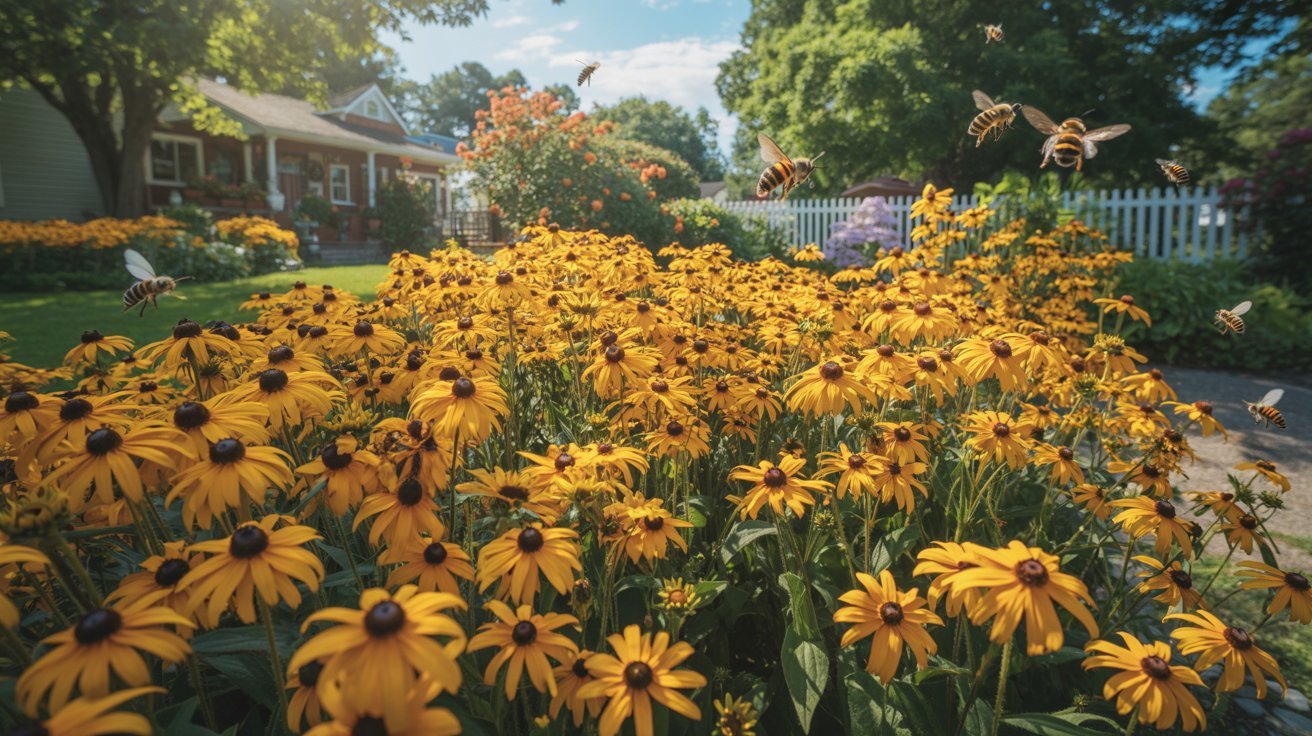
July through September brings peak bloom time. My front yard becomes a golden display that stops neighbors in their tracks.
Bees work the flowers constantly. I count dozens of pollinators on busy afternoons.
Heat doesn’t slow them down. While other flowers wilt in August, the Rudbeckia keeps performing.
Fall Texture and Color
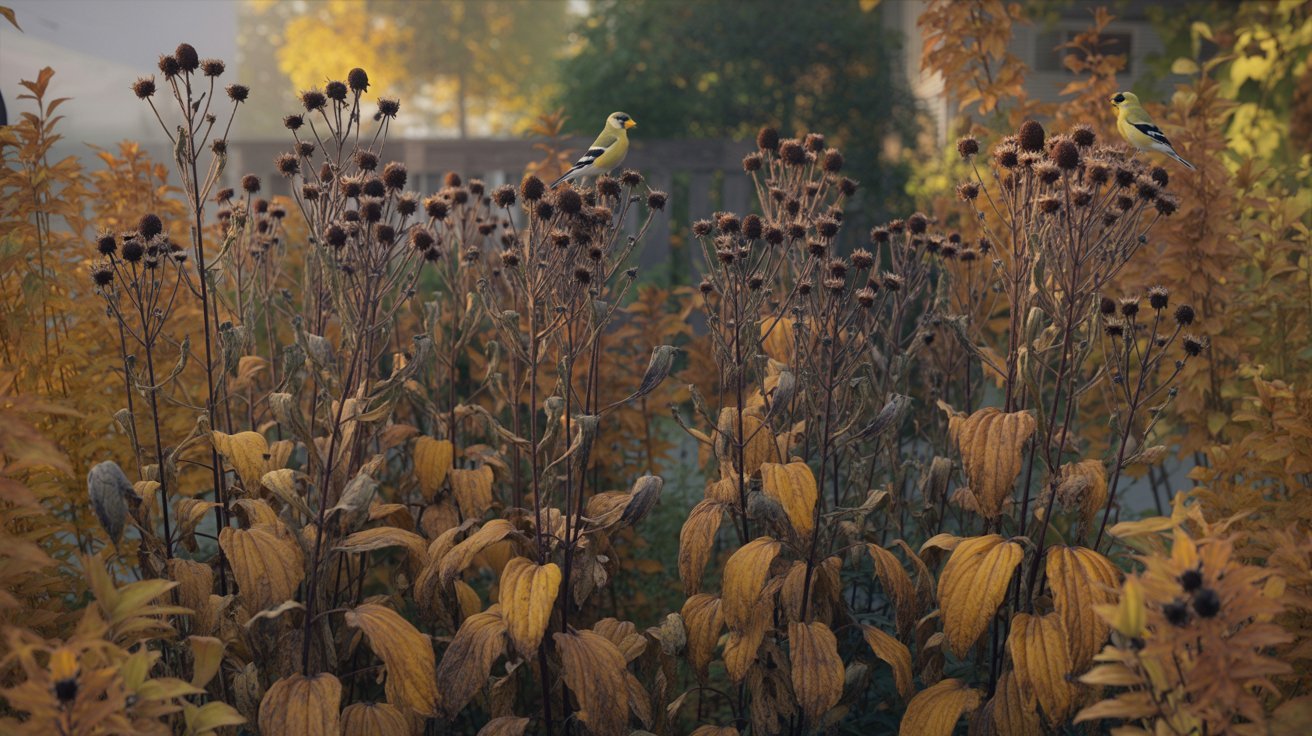
I leave seed heads standing after blooms fade. The dark seed cones add architectural interest against autumn’s changing colors.
Goldfinches arrive in October to feast on seeds. Watching them perch on swaying stems brings me genuine happiness.
Don’t cut everything down in fall cleanup. The wildlife needs those seeds.
Winter and Spring Prep
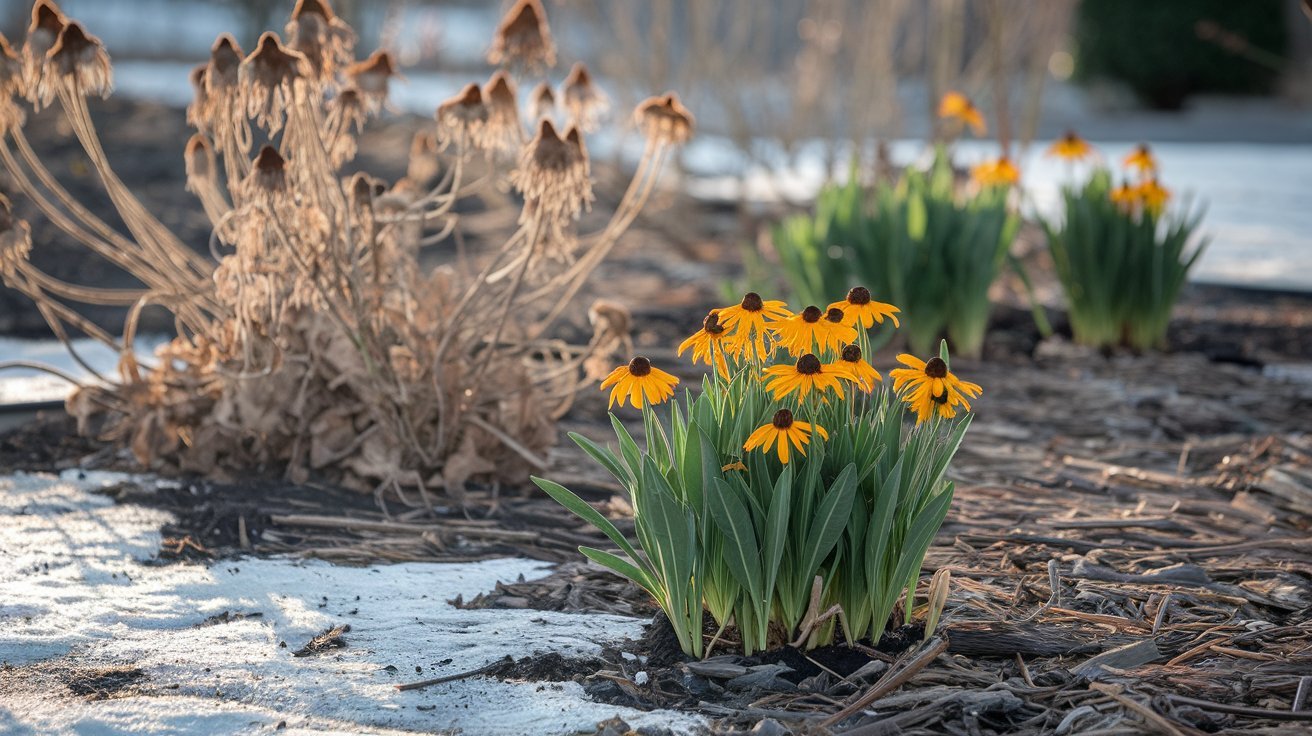
Dried stems provide shelter for beneficial insects through winter. I wait until late March to cut back last year’s growth.
New growth emerges quickly once soil warms. The delay doesn’t hurt the plants at all.
I cut stems about four inches from the ground in early spring. The new foliage covers the stubble within weeks.
Pollinator and Wildlife Encounters
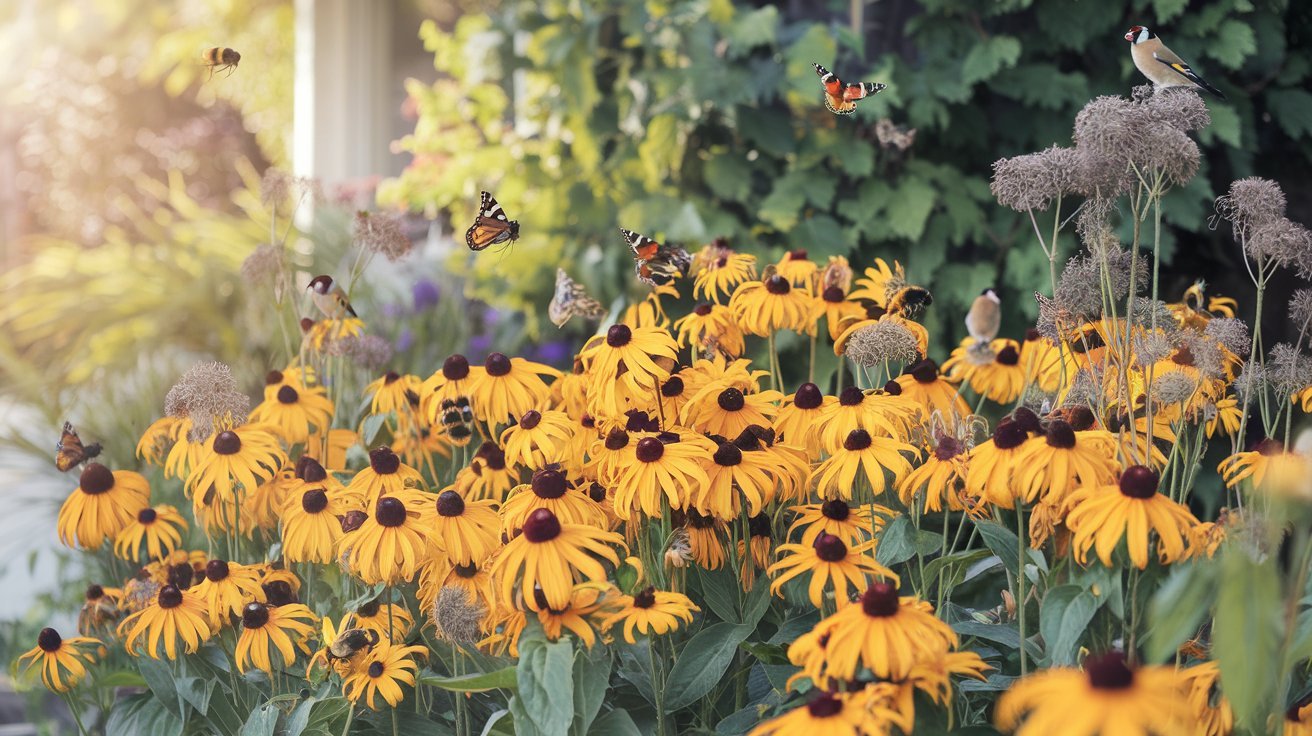
The bees, butterflies, and birds that visit black eyed susans regularly throughout the growing season.
Bumblebees love my Rudbeckia more than any other flower in the yard. I see them working the blooms from sunrise to sunset.
Butterflies visit frequently too. Painted ladies and swallowtails both stop by regularly during migration.
Goldfinches are my favorite visitors. They cling to seed heads in fall, pulling seeds out with precision.
I’ve created what feels like a small wildlife sanctuary. All from planting one type of flower.
The local biodiversity improved noticeably. More beneficial insects mean fewer pest problems on other plants.
I call it my “bee haven” when talking to neighbors. That simple phrase has inspired three other families on my street to add pollinator plants.
A small front yard garden makes a real difference for struggling pollinator populations.
Before and After: My Front Yard Transformation
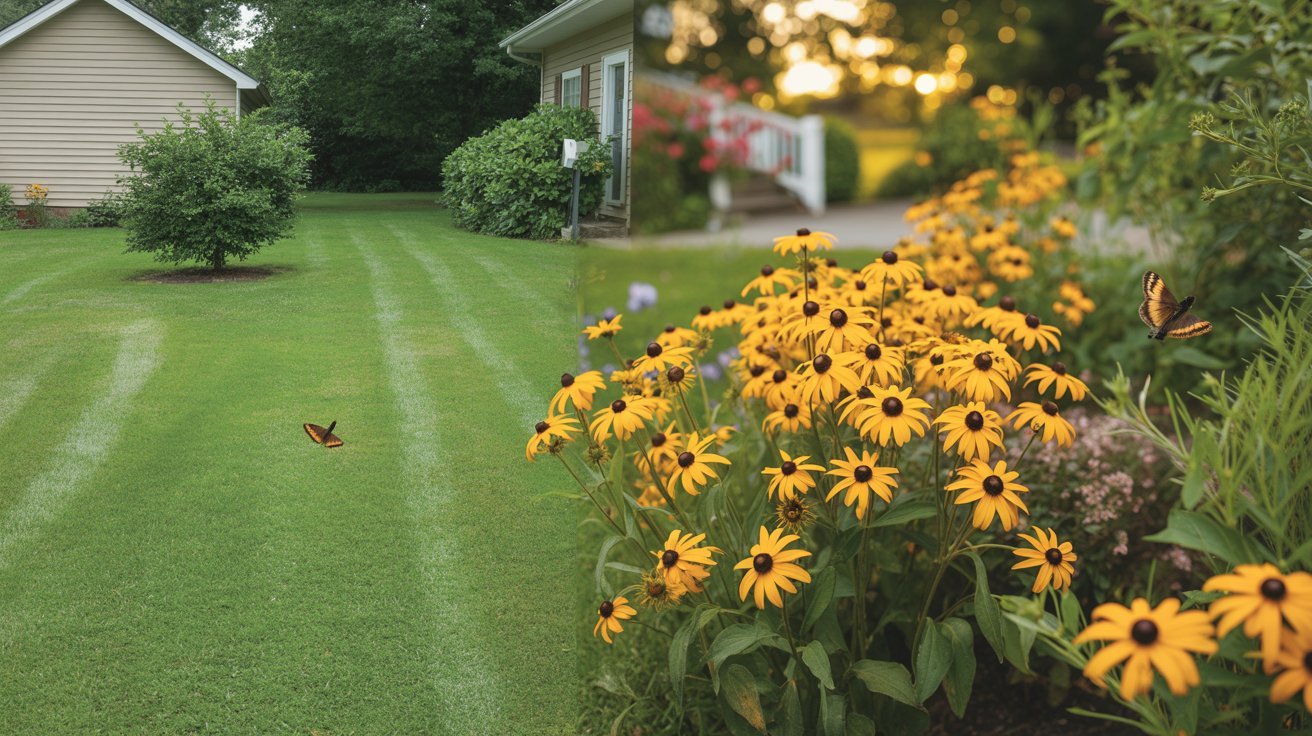
The visible and emotional changes that occurred after replacing the lawn with a black eyed susan garden.
My front yard used to be plain grass with a few shrubs. Functional but forgettable.
Now it’s a focal point of the neighborhood. People slow down while driving past to look at the blooms.
The change happened gradually. The first season looked sparse. The second year filled in nicely. By year three, it looked established and mature.
I removed about 400 square feet of lawn total. That’s less mowing and zero fertilizing on that section.
The emotional satisfaction surprised me most. I genuinely look forward to coming home now.
The initial investment was modest. Ten plants and two seed packets cost under fifty dollars.
Before photos show a boring stretch of grass. After photos show life, color, and movement.
Tips for Other Gardeners
Practical recommendations for varieties, companion plants, and beginning your own Rudbeckia garden successfully.
Recommended Rudbeckia varieties for front yards:
- Rudbeckia fulgida ‘Goldsturm’ stays compact and blooms reliably for years.
- Rudbeckia hirta creates a natural, meadow-like effect but self-seeds freely.
- Rudbeckia triloba offers smaller flowers in greater quantities for an airy look.
- Cherry Brandy variety has burgundy-red petals for color variation.
Companion plants that enhance color and texture:
- Purple coneflowers create perfect color contrast when planted in drifts.
- Ornamental grasses like ‘Karl Foerster’ add movement and vertical interest.
- Russian sage provides blue-purple flowers and silver foliage.
- Sedum ‘Autumn Joy’ extends interest into fall with pink flowers.
Advice for first-time growers:
- Start with five to seven plants before committing to larger numbers.
- Choose the Goldsturm variety if you’re nervous about aggressive spreading.
- Don’t overwater. These plants prefer slightly dry conditions.
- Expect little from first-year plants. The second year will amaze you.
- Accept some self-seeding and remove unwanted seedlings in spring.
Conclusion
My front yard black eyed susan garden brings me joy every single day during growing season. The golden blooms lift my mood instantly.
These plants give back more than they take. Minimal care produces maximum beauty and wildlife support.
Start with a small area if you’re hesitant. Even five plants make a noticeable difference.
I promise you’ll love watching pollinators work the flowers. It’s therapy after a stressful day at work.
What’s stopping you from planting your own golden retreat? Share your front yard plans or questions in the comments below.
Frequently Asked Questions
When is the best time to plant black eyed susans in my front yard?
Spring after the last frost works best, giving roots time to establish before summer. Fall planting (6-8 weeks before first frost) also succeeds well.
How much sun do black eyed susans need to bloom well?
They require at least 6 hours of direct sunlight daily for best blooming. Plants in partial shade will grow but produce fewer flowers.
Do black eyed susans spread aggressively and take over the garden?
Rudbeckia hirta self-seeds freely and can spread significantly. Goldsturm variety stays more contained and spreads slowly through rhizomes.
What maintenance do black eyed susans require throughout the season?
Water deeply during establishment, then they tolerate drought well. Deadhead for continuous blooms or leave seed heads for winter wildlife.
Can I grow black eyed susans in clay soil?
Yes, they tolerate clay soil reasonably well. Amending with compost improves drainage and results in healthier, more vigorous plants.